What Is a Filibuster? History, Rules & Famous Ones

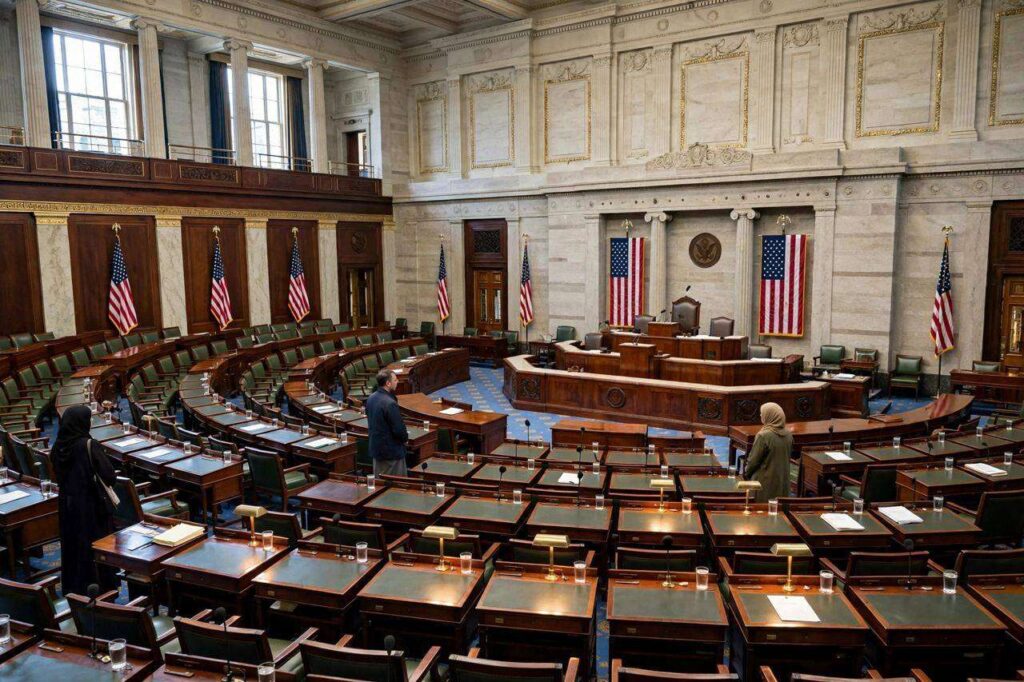
What is a filibuster? If you follow American politics even casually, you have heard the word — usually in a sentence like the bill was blocked by a filibuster or senators are threatening a filibuster. But what actually happens during one, and why does a single senator talking at length have the power to stop the entire United States Senate? The answer involves Senate rules, a 60-vote threshold, and a parliamentary quirk that has shaped American law for more than a century.
I cover politics for a living, and the filibuster is one of those topics where the popular image — a lone hero talking through the night, à la Mr. Smith Goes to Washington — barely resembles the modern reality. The real story is more procedural, more consequential, and honestly more interesting.
What Is a Filibuster: The Definition
A filibuster is a parliamentary tactic used in the United States Senate to delay or block a vote on a bill, nomination, or other matter by extending debate. The Senate’s rules traditionally allow unlimited debate, which means that as long as senators keep talking — or simply threaten to keep talking — the Senate cannot move to a final vote. A single senator, or a group of them, can therefore hold up legislation indefinitely unless a supermajority votes to end the debate.
The word itself comes from the Dutch vrijbuiter and Spanish filibustero, meaning pirate or freebooter — originally describing 19th-century American adventurers who launched unauthorized military expeditions. It entered the political vocabulary in the 1850s to describe legislators who were, in a sense, hijacking the legislative process.
How the Filibuster Actually Works
Here is the key mechanics. Unlike the House of Representatives, where the majority can cut off debate by simple majority vote, the Senate has historically protected extended debate. To force an end to a filibuster, senators must invoke cloture — a motion to close debate — which requires 60 votes out of 100.
That 60-vote threshold is the whole ballgame. In a Senate split 51-49 or even 55-45, the minority party can block most legislation simply by refusing to provide the 60 votes needed for cloture. The majority does not need to lose a vote on the bill itself; it just needs to fall short on the procedural vote to end debate, and the bill stalls.
There is an important nuance: the modern filibuster rarely involves anyone actually talking. Since rule changes in the 1970s allowed the Senate to work on other business during a filibuster, senators can simply signal their intent to filibuster — a silent or virtual filibuster — and the bill is set aside unless 60 votes materialize. The dramatic talking filibuster still happens occasionally, but most filibusters today are invisible: a threat, a headcount, and a bill that quietly dies.
A Brief History of the Filibuster
The filibuster was not part of the founders’ design — it emerged by accident. In 1806, the Senate cleaned up its rulebook and dropped the motion to end debate, apparently without realizing it had just made unlimited debate possible. The first true filibusters appeared in the 1830s and 1840s.
For much of its history, the filibuster was rare and genuinely grueling. In 1917, after a small group of senators blocked President Wilson’s proposal to arm merchant ships during World War I, the Senate adopted Rule 22, creating the cloture mechanism — originally requiring two-thirds of senators present. In 1975, the threshold was lowered to three-fifths of the full Senate: the 60 votes we know today.
The 1970s also brought the two-track system, which let the Senate conduct other business while a filibuster continued. This was meant as an efficiency reform, but it had an unintended consequence: filibustering became painless. No more all-night talking, no more cots in the cloakroom, no more public spectacle. The cost of obstructing fell to nearly zero, and the frequency of filibusters exploded. What was once an extraordinary measure became routine.
Famous Filibusters in History
A few filibusters have entered American legend — some heroic, some shameful, all memorable.
Strom Thurmond and the Civil Rights Act of 1957
Senator Strom Thurmond of South Carolina holds the record for the longest single-senator filibuster: 24 hours and 18 minutes, speaking against the Civil Rights Act of 1957. He reportedly prepared by taking steam baths to dehydrate himself so he would need fewer bathroom breaks. The bill passed anyway. The episode remains the starkest example of the filibuster used to obstruct civil rights.
The 1964 Civil Rights Act filibuster
Southern senators filibustered the landmark Civil Rights Act of 1964 for 60 working days — the longest filibuster in Senate history by a group. It was finally broken when 71 senators voted for cloture, and the bill became law. The episode is central to both sides of the modern debate: proof the filibuster can delay justice, and proof that determined majorities can overcome it.
Wendy Davis and Texas, 2013
State-level filibusters follow similar principles. Texas state senator Wendy Davis’s 13-hour filibuster against an abortion bill in 2013 — conducted under strict rules requiring her to remain standing and on topic — became a national moment, complete with a livestream audience in the hundreds of thousands. It showed the old-school talking filibuster still has theatrical power.
Recent talking filibusters
In 2025, Senator Cory Booker broke Thurmond’s record with a 25-hour speech on the Senate floor protesting the Trump administration’s policies. Like most modern talking filibusters, it did not single-handedly block legislation — it was a protest and a public statement, demonstrating how the tactic has evolved from procedural weapon to political theater.
Cloture, Holds, and the Nuclear Option
A few related terms worth knowing, since they come up whenever the filibuster is in the news.
- Cloture: the motion to end debate, requiring 60 votes. Invoking cloture successfully limits remaining debate to 30 hours and then forces a vote.
- Hold: an informal practice where a senator tells their party leader they will filibuster a bill or nomination, effectively pausing it. Holds are the quiet, everyday form of obstruction — no speech required.
- The nuclear option: a parliamentary maneuver to change Senate rules — including the filibuster threshold — by simple majority vote, despite the rules technically requiring a supermajority. It has been used to eliminate the filibuster for most nominations: first for lower-level nominees, then for Supreme Court nominees. Legislation, however, can still be filibustered — for now.
- Reconciliation: a special budget process that allows certain fiscal legislation to pass with a simple majority, bypassing the filibuster entirely. This is why major tax and spending bills often move through reconciliation.
The Debate Over Filibuster Reform
Whether the filibuster should exist in its current form is one of the longest-running arguments in American politics, and both sides make serious points.
Defenders argue it protects minority rights and forces compromise. In their telling, the 60-vote threshold prevents narrow majorities from ramming through sweeping changes, encourages bipartisanship, and provides stability — laws passed with broad support are harder to reverse. They point out that both parties rely on it when they are in the minority, which is why reform efforts usually stall: today’s majority is tomorrow’s minority.
Critics argue it has become a tool of pure obstruction that thwarts majority rule. They note the founders designed the Senate to allow majorities to govern, that the filibuster’s history includes blocking civil rights, and that the modern silent filibuster requires no effort or public accountability. Reform proposals range from requiring actual talking filibusters (making obstruction costly again) to lowering the threshold to 55 votes to eliminating it for legislation entirely.
My take as someone who watches this closely: the filibuster debate is really a debate about what the Senate is for. Is it a cooling saucer that slows down momentary passions, or is it a veto point that lets a minority of senators representing a minority of Americans block the majority’s agenda? Your answer to that question probably determines your answer on reform.
Filibusters Beyond the US Senate
The US Senate is the most famous venue, but similar tactics exist elsewhere. The Texas filibuster I mentioned follows stricter rules than the federal version. Some other legislatures have their own extended-debate traditions, though few grant a minority as much blocking power as the US Senate does. The Westminster parliaments — the UK, Canada, Australia — generally allow majorities to limit debate, making true filibusters rare. The American version is, characteristically, exceptional.
Frequently Asked Questions
How many votes does it take to break a filibuster?
Sixty votes out of 100 senators are needed to invoke cloture and end debate on most matters. For certain nominations, rule changes have lowered this to a simple majority of 51.
Can a filibuster be used on any bill?
Almost. Most legislation can be filibustered, but budget reconciliation bills and certain trade and military base-closure measures follow special procedures that limit or eliminate debate. Nominations for executive branch positions and federal judgeships, including the Supreme Court, are no longer subject to the filibuster.
What is the longest filibuster in history?
The longest single-senator filibuster was Senator Cory Booker’s 25-hour speech in 2025, breaking Strom Thurmond’s 1957 record of 24 hours and 18 minutes. The longest group filibuster was the 60-working-day effort against the Civil Rights Act of 1964.
Does the House of Representatives have the filibuster?
No. The House allows its majority to limit debate by simple majority vote, so extended-debate obstruction is not possible there. The filibuster is a Senate-only phenomenon at the federal level.
What is the nuclear option in the Senate?
It is a parliamentary maneuver in which a simple majority votes to reinterpret or change Senate rules — including the vote threshold for cloture — despite the rules normally requiring a supermajority. It has been used to remove the filibuster for presidential nominations but not for regular legislation.
Has the filibuster ever been eliminated?
Not entirely. Its scope has been narrowed over time — the 60-vote threshold replaced two-thirds in 1975, and the nuclear option removed it for nominations in the 2010s. But the legislative filibuster survives, and every serious attempt to end it has so far failed.
The filibuster endures because it serves whoever is in the minority, and in American politics, everyone is in the minority sooner or later. Whether you see it as a guardian of deliberation or an enemy of majority rule, understanding how it works is essential to understanding why Washington so often seems unable to act. The talking is optional. The 60 votes are not.