What Is a Parliamentary System? How It Works

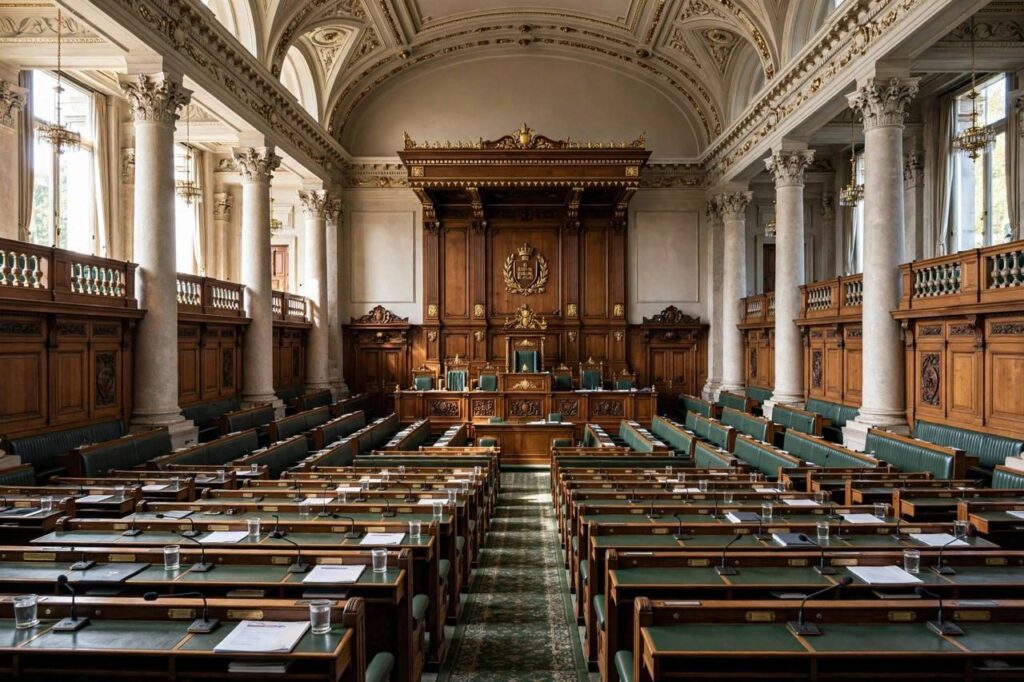
Imagine two democracies electing their leaders in completely different ways. In one, voters choose a president directly. In the other, voters elect a parliament, and the parliament chooses who runs the government. That second model is what is a parliamentary system: a system of government in which the executive derives its authority from, and is accountable to, the legislature.
Most of the world’s democracies actually use some version of this model, from the United Kingdom and Canada to India, Japan, and Germany. If you follow international news, you are watching parliamentary politics constantly. Here is how the machinery works.
What Is a Parliamentary System? The Basic Mechanics
In a parliamentary system, voters elect members of parliament. The leader of the party (or coalition) that commands a majority in parliament becomes the head of government, usually called the prime minister. The prime minister then appoints ministers, typically from among elected members, to run government departments.
The defining feature is the fusion of powers. Unlike a presidential system, where the executive and legislature are separately elected and can oppose each other for years, the parliamentary executive survives only while it keeps the legislature’s confidence. Lose a major vote, and the government can fall.
This creates a direct chain of accountability. The government must face parliament regularly, answer questions in open session, and defend its record. When it fails badly enough, it can be removed without waiting for the next scheduled election.
How It Differs from a Presidential System
The contrast with presidential systems, like that of the United States, is the easiest way to grasp it. In a presidential system, the president is elected separately from the legislature, serves a fixed term, and cannot be removed simply for losing legislative support. Gridlock is built in: a president from one party can face a legislature controlled by another for years.
Parliamentary systems trade that stability for responsiveness. A government that loses its majority can be replaced quickly, sometimes within weeks. But the same mechanism can produce instability: countries with fragmented parliaments sometimes cycle through governments rapidly, as Italy famously has.
Neither model is objectively superior. Presidential systems prize checks, balances, and fixed terms. Parliamentary systems prize accountability and the ability to change course fast. The right choice depends on a country’s history, culture, and political landscape.
Key Players: Prime Minister, Cabinet, and the Opposition
The prime minister is the head of government but not the head of state. That second role often belongs to a monarch (as in the UK, Canada, or Japan) or a largely ceremonial president (as in Germany or India). This split surprises people used to presidential systems, where one person holds both roles.
The cabinet is the prime minister’s team of senior ministers, who run departments and collectively set policy. In the classic Westminster model, the cabinet operates on collective responsibility: ministers publicly support government decisions even when they privately disagreed, or they resign.
The opposition, led by the largest party not in government, has a formal, institutional role. The leader of the opposition is an official position with staff and salary in many systems, embodying the idea that criticizing the government is a public service, not just partisanship.
Coalitions, Confidence Votes, and Collapses
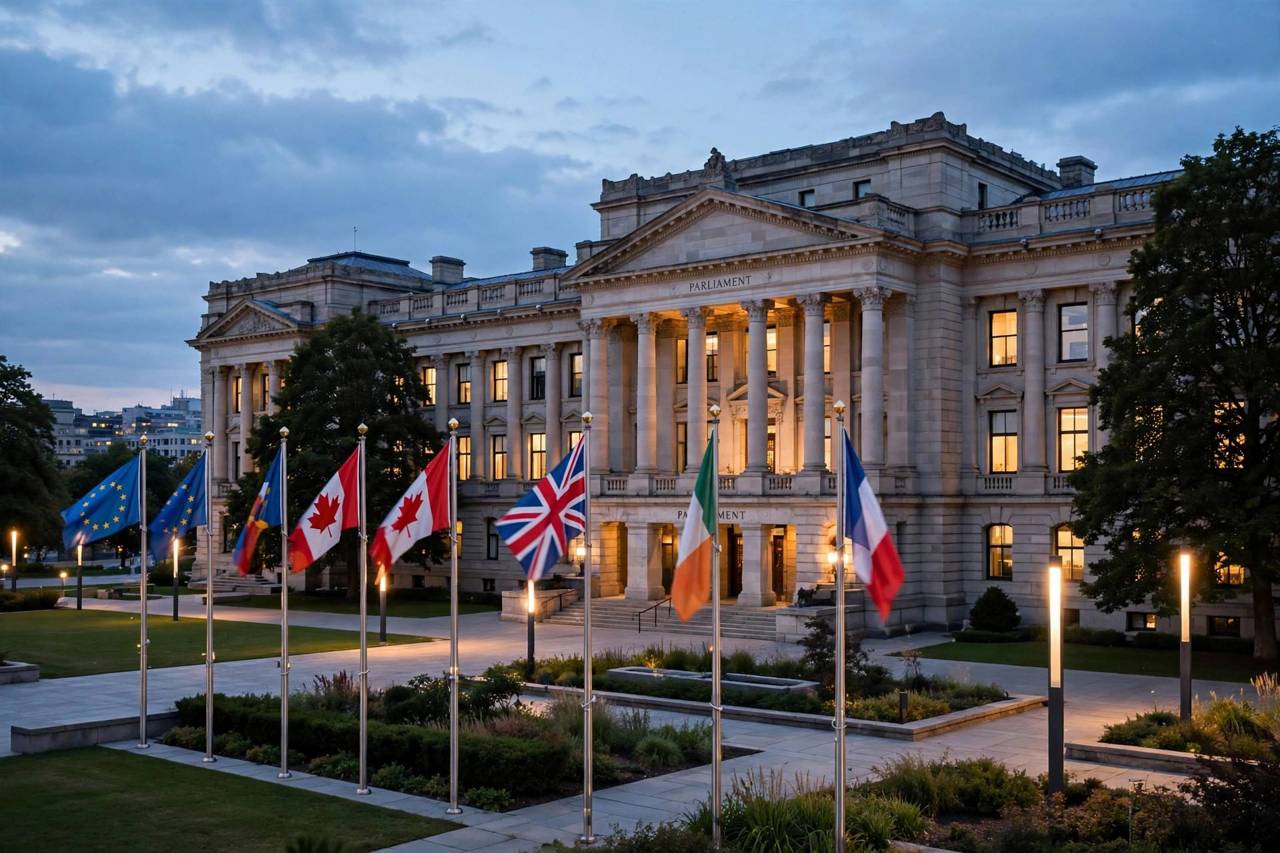
When no party wins an outright majority, the real drama begins. Parties negotiate coalitions, formal agreements to govern together, or looser confidence-and-supply deals where smaller parties support the government on key votes without joining it. These negotiations can take weeks and produce detailed policy contracts.
The confidence vote is the system’s pressure valve. If the government loses a vote of no confidence, it must resign or call new elections. This is both a threat and a tool: prime ministers sometimes stake their survival on a vote to force rebellious members of their own party into line.
Government collapses sound chaotic, and they can be, but the system is designed for them. Caretaker conventions keep the machinery running while a new government forms, and voters ultimately get the final word at the next election.
Variations Around the World
The Westminster model, originating in Britain, is the most copied: first-past-the-post elections, a powerful prime minister, and a ceremonial head of state. Canada, Australia, and India all adapt this template with local variations, including written constitutions and federal structures Britain lacks.
Germany uses a mixed-member proportional system designed to prevent both fragmentation and single-party dominance, with a constructive vote of no confidence that requires parliament to name a replacement before removing a chancellor. This was a deliberate lesson from the instability of the Weimar era.
France runs a hybrid, semi-presidential system: a directly elected president with real powers coexists with a prime minister accountable to parliament. When the president’s party lacks a parliamentary majority, the two must “cohabit,” an awkward but workable arrangement unique to the model.
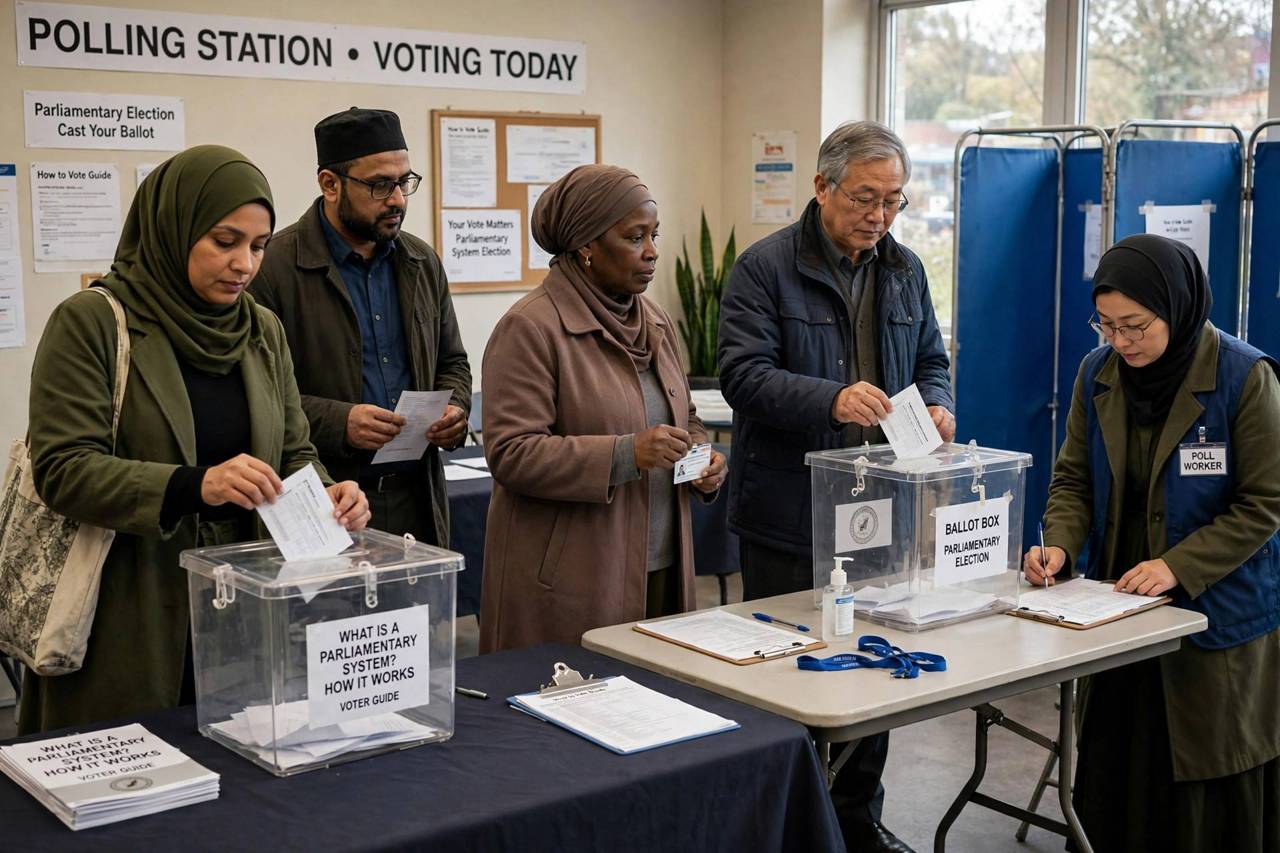
A Day in a Parliamentary Democracy
The system’s character shows in its rituals. In the UK’s Prime Minister’s Questions, the prime minister stands at the dispatch box weekly and takes unscripted questions from the opposition leader in front of the whole chamber. It is adversarial, theatrical, and remarkably direct accountability: the head of government must defend decisions in public, regularly, without a teleprompter.
Committee rooms do the quieter work. MPs scrutinize legislation line by line, summon ministers and experts to testify, and publish reports that can embarrass governments into action. Much of what parliament actually achieves happens here, away from the cameras.
Election nights have their own drama. Because the prime minister is not directly elected, the story is about seats, not just votes. Pundits track which party crosses the majority line, coalition negotiations begin before dawn, and a new government can form within days. It is democracy as a team sport.
Strengths and Weaknesses, Honestly Assessed
The great strength is decisiveness. A majority government can enact its program quickly, for better or worse. When the system works, voters get the change they voted for without years of gridlock. The great weakness is the same decisiveness: a majority government with weak internal dissent can push through poor legislation with little effective opposition.
Accountability is real but indirect. Voters do not choose the prime minister; they choose local representatives, and the prime minister emerges from the parliamentary arithmetic. Supporters call this a feature, keeping power with elected legislators. Critics call it a democratic deficit at the very top.
Stability varies by design. Two-party-dominant systems like the UK’s tend toward stable single-party governments. Proportional systems produce coalitions that are more representative but sometimes fragile. Electoral system choice shapes parliamentary behavior more than any constitutional poetry.
Why It Matters to You
Even if you live in a presidential system, parliamentary politics affects your life through trade deals, alliances, climate agreements, and global markets. Understanding how allied governments work, why a coalition collapse in Europe moves markets, why a no-confidence vote is routine rather than catastrophic, makes international news legible.
And the underlying questions are universal: how should a leader be chosen, how easily should they be removed, and who watches them in between? Every democracy answers differently. The parliamentary answer, government by those who command the legislature’s confidence, is the world’s most popular one. It is worth understanding on its own terms.
Parliamentary Systems and Everyday Life
The system’s effects show up in daily governance more than most people realize. Because the executive needs parliament’s ongoing support, policy can change fast after elections: a new majority means a new program, implemented within months rather than years. Citizens feel the difference quickly, for better or worse.
Question time and parliamentary debates make politics unusually visible. In Westminster systems, the weekly clash between prime minister and opposition leader is public theater with real stakes, and it shapes how citizens understand their government. You may disagree with the politics, but you always know who is accountable.
Coalition politics, common in proportional systems, means compromise is built into governing rather than treated as failure. Parties negotiate platforms openly, and voters can see which promises survived the deal. It is messier than single-party rule and arguably more honest about how plural societies actually work.
For citizens, the practical takeaway is engagement. In parliamentary systems, your local representative is your direct line to power in a way that matters: they choose the prime minister, they can bring down the government, and they need your vote to keep their seat. The chain from ballot to government is short, and that shortness is the point.
Frequently Asked Questions
What is a parliamentary system in simple terms?
It is a form of government where voters elect a parliament, and the parliament chooses the prime minister and government. The government stays in power only while it keeps parliament’s support.
Who leads a parliamentary system?
The head of government is the prime minister, chosen from the parliament’s majority. The head of state is often a separate figure, such as a monarch or ceremonial president.
What is the difference between parliamentary and presidential systems?
In presidential systems, the president is separately elected and serves a fixed term. In parliamentary systems, the executive comes from the legislature and can be removed by it at any time through a confidence vote.
Can a prime minister be removed before an election?
Yes. If the government loses a vote of no confidence, or the ruling party replaces its leader, the prime minister can be replaced without a general election.
Which countries use a parliamentary system?
The United Kingdom, Canada, Australia, India, Japan, Germany, Italy, Spain, and dozens of others use parliamentary or hybrid parliamentary models.
How often do parliamentary elections happen?
It depends on the country. Some, like the UK, have fixed maximum terms, currently five years, though elections can be called earlier. Others allow the prime minister to call snap elections at a politically favorable moment, within a maximum term set by law. And a lost confidence vote can trigger an early election at any time. The flexibility to go to the polls when the political moment demands it is one of the system’s defining features.
Is a prime minister more powerful than a president?
It depends on the moment. A prime minister with a solid majority can legislate faster than most presidents, who face separately elected legislatures and fixed terms. But a prime minister can be removed by their own parliament at any time, while a president serves a fixed term regardless of legislative opposition. Power in parliamentary systems is greater but more conditional.