What Is a Byline in Journalism? Formats, Examples, and Byline vs Dateline


You have seen thousands of them without ever stopping to think about what they are called. That small line at the top of a news article, the one that says By Jane Smith, has a name, a history, and a set of rules most readers never notice. So what is a byline in journalism? A byline is the line in a published article that names the author, usually the reporter who reported and wrote the story. It is how journalism gives credit, assigns accountability, and builds the trust that makes you believe what you are reading.
I have written more bylines than I can count, and I have also watched young reporters treat their first byline like a graduation ceremony, because that is what it is. In this guide, I will break down exactly what a byline is, show you the standard formats (including AP style for bylines), explain multiple and wire-service bylines, and clear up the most common confusion of all: byline versus dateline.
What Is a Byline? The Simple Definition
A byline is the credit line identifying the author of a news article. It typically appears just below the headline and above the body of the story, often formatted as “By [Name]” in print or as a clickable author name on digital sites. In broadcast journalism, the equivalent is the reporter’s sign-off at the end of a package (“Reporting from City Hall, I’m Jane Smith”), and in radio it is the voice itself.
The byline serves three jobs. First, credit: it tells the reader who did the work. Second, accountability: it tells the reader who stands behind the facts, and who to contact with corrections or tips. Third, branding: over time, readers learn which bylines they trust. When you click a story because you recognize the reporter’s name, the byline is doing its job.
The word itself has a charmingly literal origin. In old newspaper layout, the author’s name was set in type “by” the headline, on a line of its own, hence “by-line.” The hyphen eventually fell away, but the meaning never changed.
What Is a Byline in Journalism? Standard Formats (AP Style)
The Associated Press, whose style guide sets the standard for most American newsrooms, has specific conventions for bylines. If you are writing for a news outlet or studying journalism, these are worth knowing.
The single byline. The standard format is simply “By” followed by the reporter’s name: By Michael Torres. AP style uses the reporter’s full name or the professional name they are known by. Nicknames in quotes are fine if that is how the reporter is publicly known (“By ‘Chip’ Williams” is rare but acceptable).
Multiple bylines. When two or more reporters share reporting duties, all names appear. AP format joins them with “and”: By Jane Smith and John Davis. For three or more, use commas with “and” before the last: By Jane Smith, John Davis and Maria Lopez. Newsroom convention usually orders multiple bylines by contribution, with the reporter who did the most reporting listed first, though some outlets alphabetize. Either way, every listed reporter is expected to have done substantial work; lending a byline to someone who only made a phone call is considered a breach of ethics in most newsrooms.
Wire service bylines. Stories that come from wire services like the Associated Press or Reuters often carry a service credit instead of, or alongside, a personal byline. You will see formats like By The Associated Press or simply Associated Press at the top of the story. When a local outlet runs a wire story with light local editing, you might see something like By Staff Reports or From Wire Reports, which signals that the reporting was assembled from wire copy rather than original reporting.
Special bylines. Sometimes you will see bylines that credit contributors who are not staff reporters: By Dr. Susan Lee, Special to The Times for an expert guest column, or By Jane Smith, Investigative Reporter with a title attached. These exist to be transparent about who the writer is and why they are qualified to write the piece.
Byline vs Dateline: The Difference Explained
This is the confusion I see most often, so let us settle it clearly. The byline names the author. The dateline names the place where the story was reported (or the place the story is about), and it appears at the very start of the article text, usually in all caps, followed by an em dash or the wire-service marker.
It looks like this:
By Jane Smith (the byline, crediting the reporter)
WASHINGTON (AP) — The Senate voted Tuesday… (the dateline, telling you where and from which wire service)
A few dateline rules worth knowing. The dateline city is the place where the reporter gathered the news, not necessarily the reporter’s home base. AP style puts the dateline in all caps and, for domestic U.S. datelines, usually omits the state for major cities (WASHINGTON, not WASHINGTON, D.C., in AP copy, though many papers add it). The dateline also signals freshness: a dateline means a reporter was there, or at least that the reporting is anchored there.
Why does the distinction matter for readers? Because together, the byline and dateline tell you the two most important things about sourcing: who is telling you this, and where they were when they found it out. A story with no byline and no dateline is asking you to trust it on faith alone, and you should adjust your skepticism accordingly.

When Stories Do NOT Have Bylines
Not every article carries a reporter’s name, and the absence of a byline is itself information. Here are the common cases.
Staff editorials and institutional voice. Editorials represent the opinion of the publication, not an individual, so they traditionally run without a byline (or with a collective credit). The same goes for unsigned news briefs that are rewritten from wire copy.
Aggregated or rewritten content. Short items compiled from other reports sometimes run under “Staff” or with no byline at all, because no original reporting was done.
Safety. Reporters covering dangerous beats, organized crime, war zones, corruption, sometimes publish without bylines to protect themselves and their sources. This is standard practice at serious outlets and a sign of professionalism, not evasion.
Sponsored content. Paid content is supposed to be labeled clearly (“Paid Content,” “Sponsored”), and it should never carry a newsroom reporter’s byline, because that would imply editorial independence the piece does not have. If you ever see a real reporter’s byline on what looks like an ad, that is a red flag worth investigating.
Bylines in the Digital Age
Online, bylines have grown new powers. They are clickable, leading to author pages with a reporter’s bio, contact information, and every story they have written. This transparency is a trust signal: real reporters have track records you can check. Search engines also use bylines as part of how they evaluate content quality; a named, verifiable author with expertise in the topic is one of the signals that separates serious journalism from content-mill filler.
Digital bylines have also become battlegrounds. Fake news sites invent bylines, sometimes with AI-generated headshots, to look legitimate. The defense is the same as it has always been: click the byline. If it leads nowhere, or to an author page with no history, no photo, and no contact info, be cautious. A byline that cannot be verified is barely a byline at all.
Why Bylines Matter More Than You Think
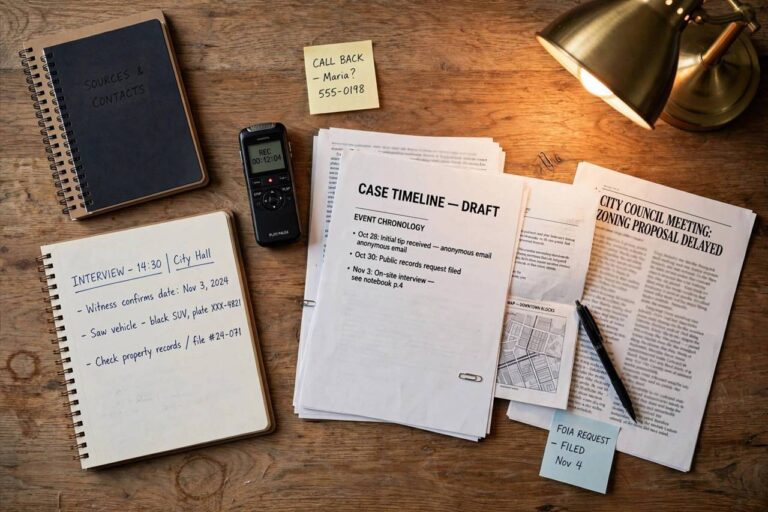
Here is what two decades in newsrooms taught me: the byline is the contract between the journalist and the reader. When I put my name on a story, I am saying “I checked this, and I will answer for it.” Readers cannot see the reporting process, the calls, the documents, the dead ends. The byline is the visible tip of all that invisible work.
That is also why bylines matter for media literacy. When you read a story, glance at the byline and ask three questions. Do I recognize this name, and do I trust it? Does the reporter’s beat match the story (a political reporter covering a medical trial is a yellow flag)? And is there a byline at all? Those three questions take five seconds and will save you from sharing more bad information than any fact-checking site ever will.
Frequently Asked Questions
What does “byline” mean in journalism?
A byline is the line in a published article that credits the author, usually the reporter who wrote it. It appears below the headline and tells readers who is responsible for the story’s reporting and writing.
How do you write a byline in AP style?
AP style formats bylines as “By” followed by the reporter’s name (By Jane Smith). Multiple reporters are joined with “and” (By Jane Smith and John Davis). Wire stories use a service credit like “By The Associated Press.”
What is the difference between a byline and a dateline?
The byline names the author of the story; the dateline names the location where the story was reported, appearing in all caps at the start of the article text (for example, WASHINGTON (AP) —). One tells you who wrote it, the other tells you where it comes from.
Can a story have more than one byline?
Yes. When multiple reporters contribute substantial reporting, all names are listed, typically in order of contribution. AP style joins two names with “and” and uses commas for three or more.
Why do some articles have no byline?
Stories may run without bylines when they are editorials, wire rewrites, briefs with no original reporting, pieces by reporters who need anonymity for safety, or properly labeled sponsored content.
Do bloggers and online writers use bylines?
Yes, and they function the same way: crediting the author and building trust. On digital sites, bylines are usually clickable links to author pages with bios and story archives, which helps readers verify the writer’s credibility.
Final Thoughts
The next time you read a news story, take one second to read the byline before you read the story. It will tell you who is asking for your trust, and whether they have earned it. In an era of infinite content, that single line might be the most important sentence in the article.