What Is Investigative Journalism? How Deep Reporting Works

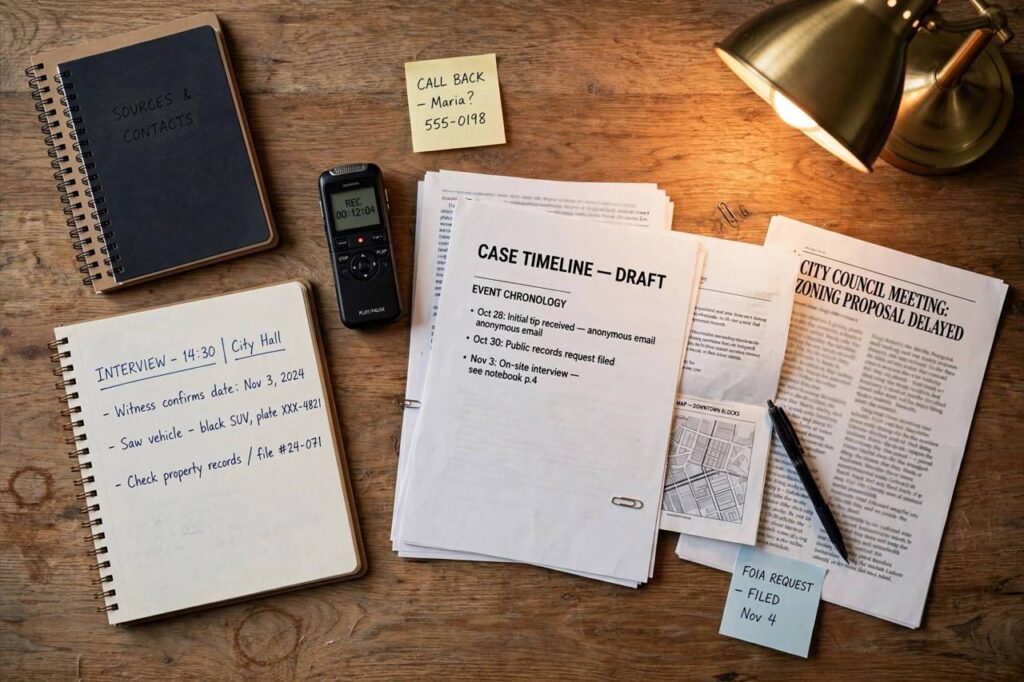
What is investigative journalism? Most people think it means reporters in trench coats chasing spies, but the real work is far less cinematic and far more impressive. Investigative journalism is the practice of digging past official statements and press releases to uncover facts that someone is actively trying to keep hidden — corruption, fraud, abuse of power — and doing it with documents, data, and months of verification. I have watched newsrooms treat a good investigation like a moonshot: expensive, slow, uncertain, and absolutely essential. Daily reporting tells you what happened today. Investigative reporting tells you what has been happening for years.
The distinction matters because the two kinds of reporting serve different jobs. A daily reporter covers the fire. An investigative reporter finds out the fire department knew the hydrants were broken and covered it up. Both are journalism. Only one of them requires someone to fight you for the information.
Investigative Journalism vs. Daily Reporting: What’s Actually Different
The practical differences come down to time, sources, and resistance. A daily reporter works on a deadline measured in hours, relies heavily on official sources and scheduled events, and publishes what can be confirmed quickly. An investigative reporter works on a timeline measured in weeks or months, builds sources from scratch, and expects institutions to obstruct them.
Here is how they compare head to head:
- Timeline: Daily reporting publishes in hours. Investigations publish in months — sometimes years.
- Starting point: Daily reporting starts with something known: an event, an announcement, a crime. Investigations start with a suspicion, a tip, or an anomaly in data.
- Sources: Daily reporting leans on officials and spokespeople. Investigations rely on leaked documents, whistleblowers, court records, and databases the newsroom has to obtain and clean.
- Resistance: Daily reporting faces PR spin. Investigations face legal threats, denied records requests, and sources who are afraid to talk.
- Method: Daily reporting reports what is happening. Investigations prove what has been happening — with a paper trail.
- Cost: A daily story costs a day of a reporter’s time. An investigation can cost a newsroom hundreds of thousands of dollars with no guaranteed result.
The line is not always clean. Beat reporters do small investigations all the time, and big investigations often break out of daily beats. But the core idea holds: investigative journalism is defined by original discovery of hidden wrongdoing, verified to a legal standard.
The Tools: Documents, Data, and Human Sources
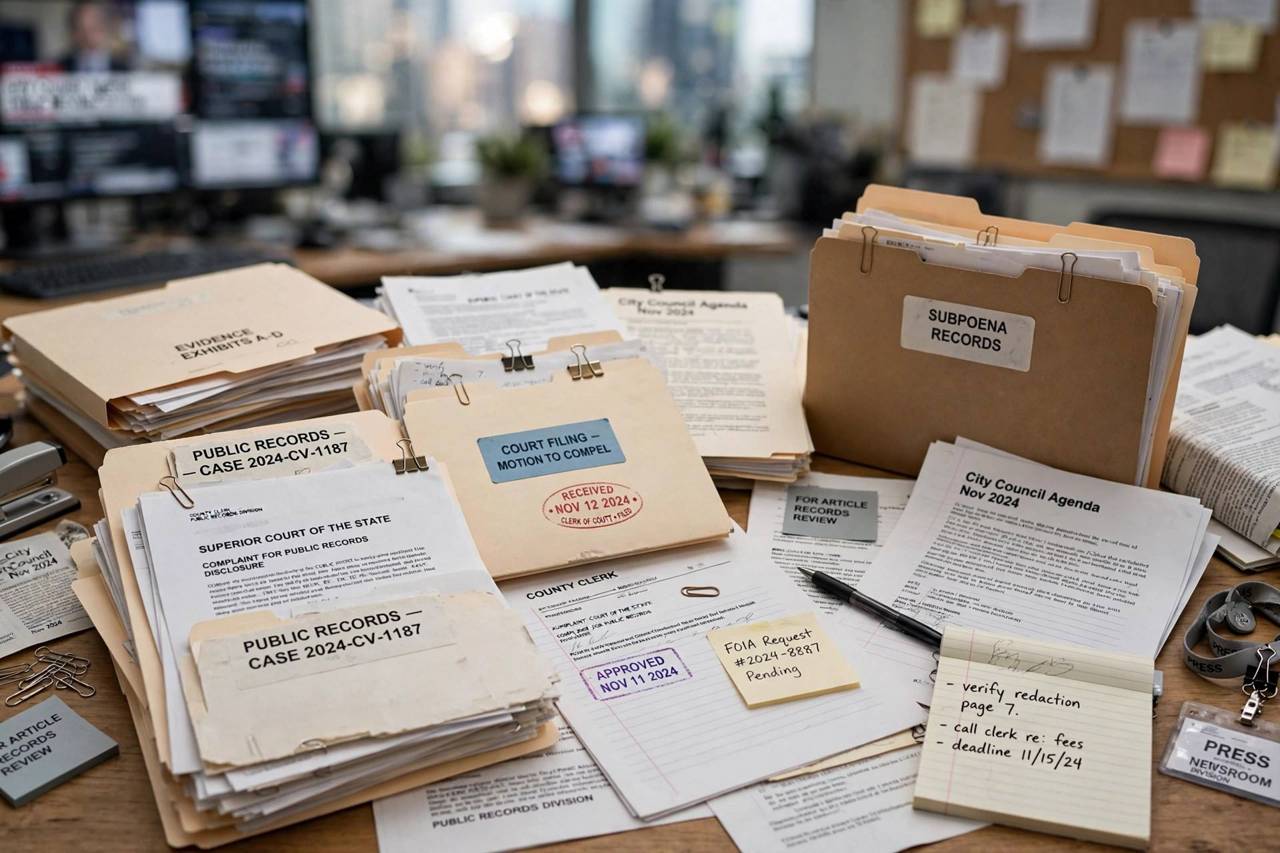
Modern investigations run on three legs. The first is documents: public-records requests, court filings, regulatory reports, leaked emails. Reporters I know have filed records requests that took two years and three lawsuits to fulfill — and the documents inside blew the story open. The second leg is data. Some of the best investigations of the last decade started with spreadsheets: mortgage data, campaign finance records, shipping manifests. Learning to analyze data is now as fundamental to investigative work as learning to knock on doors.
The third leg is human sources — people inside an organization who are willing to talk. Protecting those sources is the sacred duty of the job. This is where investigative journalism overlaps with press freedom law: reporters go to jail rather than name sources, because without that guarantee, no whistleblower would ever call.
Famous Examples That Show What It Looks Like
The Panama Papers (2016) remain the gold standard for scale: an anonymous source leaked 11.5 million documents from a Panamanian law firm to Germany’s Süddeutsche Zeitung, which shared them with more than 370 journalists in 80 countries through the International Consortium of Investigative Journalists (ICIJ). The reporting exposed offshore tax havens used by world leaders and led to resignations, investigations, and recovered billions in fines and back taxes worldwide. No single newsroom could have done it; it took a global consortium working in secret for over a year.
Closer to home for many readers, ProPublica has built its entire newsroom around the investigative model — nonprofit-funded, no daily deadline, every story an investigation. Its reporting on Facebook’s discriminatory ad targeting, the IRS’s audit practices, and machine bias in criminal sentencing algorithms shows what sustained investigative capacity looks like when it is protected from the daily news grind.
And the classic example every journalism student still studies: the Washington Post’s Watergate reporting, where Bob Woodward and Carl Bernstein spent months turning a break-in into the resignation of a president. The lesson of Watergate was not just that reporters can topple presidents; it was that they can do it only with documentation, source protection, and editors willing to defend the work.
How Investigations Are Built: The Real Workflow
An investigation usually begins with a tip or a hunch — a reader’s email, an odd number in a budget, a source who hints at something bigger. Then comes the quiet phase: records requests, database building, background interviews where the reporter is mostly listening. Reporters develop what they call a “no surprises” rule: before publishing, every person accused of wrongdoing gets contacted and given a chance to respond, on the record.
Fact-checking in investigative work is ferocious. Major newsrooms run investigations through layers of review — reporters, editors, standards desks, and often outside lawyers — because the subjects are powerful and the libel risk is real. This is why credible investigations carry such weight: by the time you read one, a small army of people has already tried to poke holes in it.

Why It Matters More Than Ever
Investigative journalism is expensive at exactly the moment newsroom budgets are thinnest. Local papers that once employed investigative teams have been hollowed out, which is why national nonprofit models like ProPublica and the ICIJ matter so much. But the demand has not dropped: every week, readers rely on investigations to learn what governments, corporations, and institutions hoped they would never find out.
The next time you read a story that changed a law, ended a career, or returned money to taxpayers, check how it was made. Odds are it was not a press conference. It was months of someone’s life, a stack of documents, and a source who trusted a reporter with the truth.
What Is Investigative Journalism? A Working Definition
Ask three editors and you’ll get three phrasings, but they converge on the same elements. Investigative journalism is systematic, in-depth, original research into matters of public importance where the key facts are being concealed — deliberately or through neglect. The Investigative Reporters and Editors organization, the trade group for this work, has long defined it by those three adjectives, and each one does heavy lifting.
Systematic means it’s not a lucky break. It’s a method: hypothesis, document trail, source development, verification. In-depth means it goes past the first answer — the press release says X, the documents say Y, and the reporter keeps going until the contradiction resolves. Original means the newsroom discovered it. Rewriting someone else’s investigation with fresh quotes isn’t investigative journalism; it’s aggregation wearing a costume.
Equally important is what it isn’t. A leaked document published as-is isn’t an investigation — it’s a leak. An opinion column accusing someone of corruption isn’t an investigation — it’s an accusation. And a long article about a complicated topic isn’t automatically investigative; length without original discovery is just long. The accountability test is the one that matters: did this reporting uncover something hidden, verify it rigorously, and give the powerful a chance to answer? If yes, it’s the real thing.
Who Pays for Investigations — and Why It Matters
Here’s the uncomfortable economics: investigations are the most expensive journalism to produce and the hardest to monetize directly. A six-month investigation might cost a newsroom $200,000 in salary, legal review, and document fees — and produce one story. The same money funds hundreds of daily stories that generate far more pageviews. By pure traffic economics, investigations are irrational. They exist because newsrooms decided some things are worth doing at a loss.
That decision has gotten harder as local news collapsed. The hollowed-out local paper can’t spare a reporter for six months, which is why the nonprofit model — ProPublica, the Marshall Project, dozens of regional nonprofit newsrooms — now carries so much of the weight. Foundations and donors fund what advertisers won’t. It’s also why legal defense matters: powerful subjects sue, or threaten to, and defending an investigation through a SLAPP suit (a strategic lawsuit against public participation) costs money that small outlets don’t have. Press freedom isn’t just a principle; it’s a budget line.
The takeaway for readers: when you see a great investigation, notice who funded it. Then consider supporting them. The business model of holding power accountable has never been more fragile — or more dependent on readers who understand what it costs.
Frequently Asked Questions
What is investigative journalism in simple terms?
It is in-depth reporting that uncovers hidden wrongdoing — corruption, fraud, abuse — through original research: documents, data analysis, and protected sources. Unlike daily news, it starts from a suspicion and proves it over months.
What is the difference between investigative journalism and regular reporting?
Daily reporting covers known events on deadline using official sources. Investigative journalism discovers unknown facts through months of document work, data analysis, and whistleblower sources, expecting institutions to resist. The key difference is original discovery of something hidden.
What are famous examples of investigative journalism?
The Panama Papers (11.5 million leaked documents exposing offshore tax havens, reported by 370+ journalists), ProPublica’s investigations into algorithmic bias and tax enforcement, and the Washington Post’s Watergate reporting are landmark examples.
How do investigative journalists protect their sources?
Through strict confidentiality practices — encrypted communication, careful handling of documents, and a professional and often legal commitment to go to jail rather than reveal a source. Source protection is considered essential to the work.
Who funds investigative journalism?
A mix of legacy newsrooms, nonprofit newsrooms like ProPublica funded by donations and foundations, and international consortia like the ICIJ that let hundreds of newsrooms share the cost of huge document leaks.
Can anyone do investigative journalism?
The skills are learnable — public-records requests, data analysis, source development — and independent journalists and small outlets publish real investigations. But the work requires time, legal caution, and editors willing to defend the story, which is why institutional backing matters.
Investigative journalism is slow, costly, and constantly under pressure — and it remains the clearest proof that journalism can hold power to account. Everything else in the news business is important. This is the part that changes things.