What Is a Wire Service in Journalism? How AP, Reuters and AFP Really Work


Here is a question I used to get a lot when I worked the metro desk: what is a wire service in journalism, exactly? Someone would read a story in the morning paper with a strange little credit line at the top — “By The Associated Press” or “Reuters” — and wonder why their local paper was running a story nobody in the newsroom had actually written. The answer is simpler than it sounds, and once you understand it, you start seeing wire copy everywhere: on news websites, on your phone’s news feed, in broadcast scripts, even in the background of stories that look like original reporting.
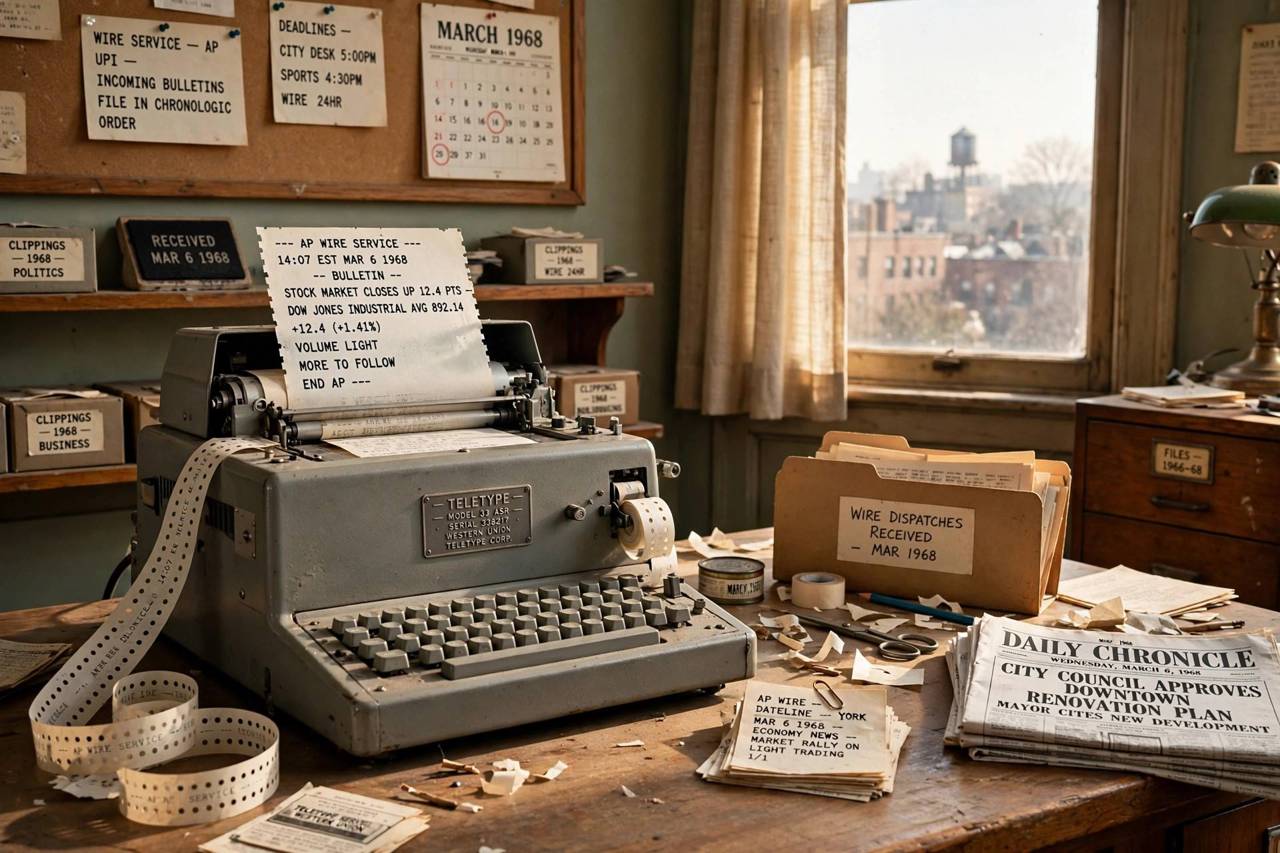
A wire service is a news organization that gathers and distributes reporting to thousands of media outlets at once. Think of it as a wholesaler for news. Instead of every newspaper, TV station and website sending its own reporter to every event on earth — an impossible expense — they subscribe to a wire service that stations reporters around the world and feeds the resulting stories out over a wire (originally a telegraph wire, hence the name). Subscribers get a constant stream of articles, photos and video they can publish as their own, usually with a credit line.
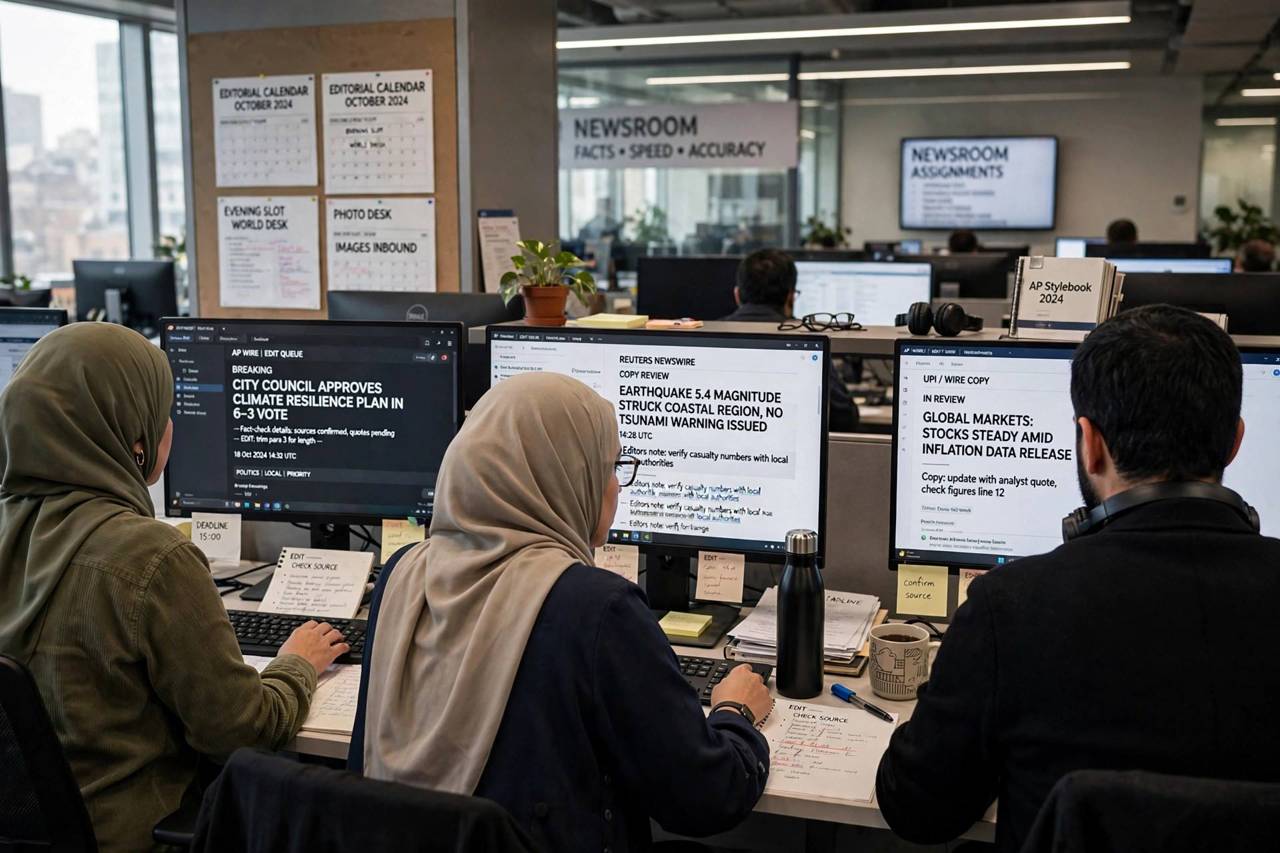
I have watched wire copy arrive in a newsroom in real time, and it is something to see. A major story breaks — a plane crash, an election result, a natural disaster — and within minutes a short “urgent” bulletin lands on the wire. Twenty minutes later it has grown into a fuller story. An hour later there are updates, quotes, reaction, and a photographer’s images. Every outlet in the country is working from the same raw material at the same time. That shared feed is the invisible backbone of modern journalism, and most readers never notice it is there.
What Is a Wire Service in Journalism? A Working Definition
Strip away the history and a wire service does three things. First, it gathers news — its reporters, photographers and videographers cover events wherever they happen. The big services keep bureaus in well over a hundred countries, so they are present at everything from United Nations sessions to earthquakes in places most newsrooms could never afford to staff. Second, it writes and packages that reporting into stories designed to be used by anyone: neutral in tone, light on local assumptions, written so an editor in another city or country can drop them straight into a newspaper or website. Third, it distributes everything instantly over digital feeds, satellites and APIs to subscribers around the world.
The business model matters here because it explains the tone of wire copy. Most major wire services are cooperatives or subscription businesses owned by or serving the news industry itself. The Associated Press, for example, is a not-for-profit cooperative owned by its American newspaper and broadcast members. Revenue comes from member dues and subscription fees, not from selling ads next to any particular story. That structure is exactly why wire writing leans neutral: a story has to be publishable by a conservative paper in Texas, a liberal paper in New York, a broadcaster in London and a website in Manila, all at once. Anything that smells of slant gets flagged, rewritten or killed, because the customers are thousands of editors with different audiences and zero tolerance for someone else’s editorializing showing up in their product.
The Big Three: AP, Reuters and AFP
When people ask what a wire service in journalism is, they are usually really asking about the big three names they keep seeing in credit lines. Here is who they are and how they differ.
The Associated Press (AP)
Founded in 1846 by five New York newspapers that wanted to share the cost of covering the Mexican-American War, the AP is the dominant wire service in the United States and the oldest of the three. It is a cooperative — its members are the news organizations themselves. AP reporters cover all fifty states, and its stylebook, the AP Stylebook, is effectively the house rulebook for American journalism; when your local paper writes “7 p.m.” instead of “7:00 PM,” that is AP style at work. If you have ever wondered why so many American news stories sound the same, a large part of the answer is that they literally come from the same wire.
Reuters
Reuters was founded in London in 1851 and built its early reputation on financial news delivered by carrier pigeon and telegraph. Today it is part of Thomson Reuters, a for-profit information company, and it remains the wire service of record for business and financial journalism worldwide. When markets move on a central bank announcement or a corporate earnings report, the first version most newsrooms see is usually Reuters copy. Its strength is speed and precision on money stories, and its reporting feeds directly into the terminals that traders and investors watch all day.
Agence France-Presse (AFP)
AFP is the French wire service, headquartered in Paris, with roots going back to 1835 — making it the oldest of the three. It operates in six languages and has a particularly strong presence in Africa, the Middle East and francophone regions where the other two services are thinner on the ground. Many of the wire stories you read about developments in French-speaking Africa originated with AFP bureaus. It is state-subsidized by the French government under a charter guaranteeing editorial independence, a model that works because the charter is taken seriously by everyone involved.
There are others worth knowing. Bloomberg has its own massive wire operation focused on business. The BBC and CNN run internal wires for their own networks. National services like the Press Association in Britain, Deutsche Presse-Agentur in Germany and Kyodo in Japan serve their domestic markets. And a newer breed of digital-native wires and photo agencies feeds the endless appetite of online publishers. But for a beginner, AP, Reuters and AFP cover about ninety percent of what you will ever encounter.
Why Wire Copy Reads the Way It Does
Regular readers develop a feel for wire copy without realizing it. Here is what gives it away, and why it is written that way on purpose.
It leads with the facts, fast. Wire stories are built for speed and for editors who may cut from the bottom. So the first paragraph — the lede — carries the entire story in miniature: who, what, when, where. If you only read twenty words of a wire story, you still know what happened. This is the inverted pyramid structure, and wire services use it more strictly than almost anyone else because they know an editor under deadline might run only the first three paragraphs.
It avoids local shorthand. A newspaper reporter can write “the governor” and assume readers know which one. A wire reporter cannot — the story might run in fifty countries. So wire copy names names, spells out titles, and explains context a local reporter would skip. That is also why wire stories sometimes feel slightly over-explanatory if you are reading them in the place where the news happened.
It is allergic to color. Wire reporters are trained to describe what can be verified and to leave adjectives at the door. “A chaotic scene” becomes “hundreds of people ran from the building.” This is not a lack of talent — many wire reporters are superb writers. It is a deliberate discipline: the story has to land in thousands of newsrooms without carrying one reporter’s mood with it. The neutrality that readers sometimes find bland is the product working exactly as designed.
It gets updated, not replaced. A breaking wire story is a living document. The first version might be two sentences. Then it grows through numbered “writethrus” — rewrites that fold in new reporting while keeping the same story identifier. Newsroom software tracks these versions, and editors learn to check whether they are running the latest writethru before they publish. When you see a developing story change substantially between your morning and evening read, you are usually watching writethrus accumulate.
It uses datelines honestly. That little city name at the top of a wire story — “WASHINGTON (AP)” — tells you where the reporter was when the story was filed, not necessarily where the news happened. Wire services are strict about this because a dateline implies firsthand reporting. Understanding datelines is one of the fastest ways to read news more critically, since it tells you whether you are getting eyewitness reporting or a rewrite of someone else’s.
Wire Service vs. Newspaper Reporting: What Is the Difference?
This is where the beginner’s picture gets complete. A newspaper reporter and a wire reporter do similar work — interviewing, verifying, writing — but they serve different masters, and the stories come out different.
Scope of audience. A newspaper reporter writes for one community. They know the readers, the local characters, the history, and they can lean on all of it. A wire reporter writes for everyone and no one in particular, which forces the broader, context-heavy style described above. The tradeoff is real: wire copy reaches the whole world, but it rarely has the texture of great local reporting.
Speed vs. depth. Wire services are optimized for being first with verified facts. A newspaper reporter — especially on an investigative or enterprise story — is optimized for depth, documents, and original findings. The best newsrooms use both: wire copy for the fast factual spine of a breaking story, their own reporters for the local angle, the second-day analysis, and the accountability work no wire service will do for them.
Bylines and accountability. Wire stories historically ran without individual bylines, credited only to the service. That has loosened over the years, but the culture still emphasizes the institution over the individual. A newspaper reporter’s name is on the story, and their reputation rises and falls with it. Neither model is inherently better; they just create different incentives.
Editorial voice. Newspapers have editorial pages, columnists, and an institutional voice their readers recognize. Wire services deliberately have none. When a newspaper runs wire copy next to its own editorials, you are seeing two different journalistic products side by side: one designed to inform as neutrally as possible, one designed to argue a point of view. Knowing which is which is basic media literacy, and it starts with noticing the credit line.
One more thing worth saying from experience: the decline of local news has made wire services more important, not less. As newsroom staffs shrink, more outlets lean harder on the wire for national and international coverage. That makes understanding what a wire service in journalism is not just trivia — it is how you understand where most of the news you read actually comes from.
Frequently Asked Questions
Is a wire service the same as a news agency?
Essentially, yes. “News agency” is the more common term outside the United States, and “wire service” is the American term rooted in the telegraph-wire era. AP, Reuters and AFP are all news agencies and wire services — the labels describe the same kind of organization.
Do wire services have a political bias?
Their business model punishes bias: they sell the same story to outlets across the political spectrum, and any detectable slant costs them subscribers. That does not mean their coverage choices — what to cover, how much, from whose perspective — are beyond criticism. But in day-to-day political reporting, wire copy is consistently among the most neutral text in journalism, because neutrality is the product.
Why do different websites publish the exact same article?
Because they all subscribed to the same wire story and ran it with little or no editing. When you see identical paragraphs on three different news sites with an AP or Reuters credit line, you are looking at wire distribution doing its job. It is not plagiarism — it is licensed syndication.
Can anyone subscribe to a wire service?
Wire subscriptions are priced for media businesses and are expensive, but much of the output is effectively free to readers because subscriber outlets publish it. Some services also offer limited public-facing products. The practical takeaway: you already read wire copy every day; now you know what the credit line means.
Are wire services dying in the internet age?
The opposite has happened so far. The internet multiplied the number of outlets that need fast, reliable copy and cannot afford foreign bureaus. What has changed is the format — wires now move photos, video, data feeds and live blogs alongside text — and the competition, as social media and aggregators fight for the same audience attention. But as a wholesale supplier of verified news, the wire model is arguably more central than ever.
The Bottom Line
A wire service in journalism is the wholesale layer of the news business: organizations like AP, Reuters and AFP that gather news worldwide and distribute it to thousands of outlets at once. Their copy reads fast, neutral and stripped of local color because it has to work everywhere. And once you learn to spot the credit line, you will never read the news the same way again — you will see the shared spine running underneath thousands of different front pages, and you will know exactly what you are looking at. If you want to understand the next link in the chain, it is worth learning how news feed algorithms decide which of those stories actually reach you.