What Is the Difference Between News and Opinion? A Reader’s Guide


One of the most useful questions a news reader can ask is also one of the simplest: what is the difference between news and opinion? I have watched smart, well-read people get tripped up by this — not because they are careless, but because modern news websites blur the line on purpose. The homepage mixes it all together. The same fonts, the same bylines, the same serious tone. And yet the difference matters enormously, because a news story and an opinion column are making two completely different promises to you.
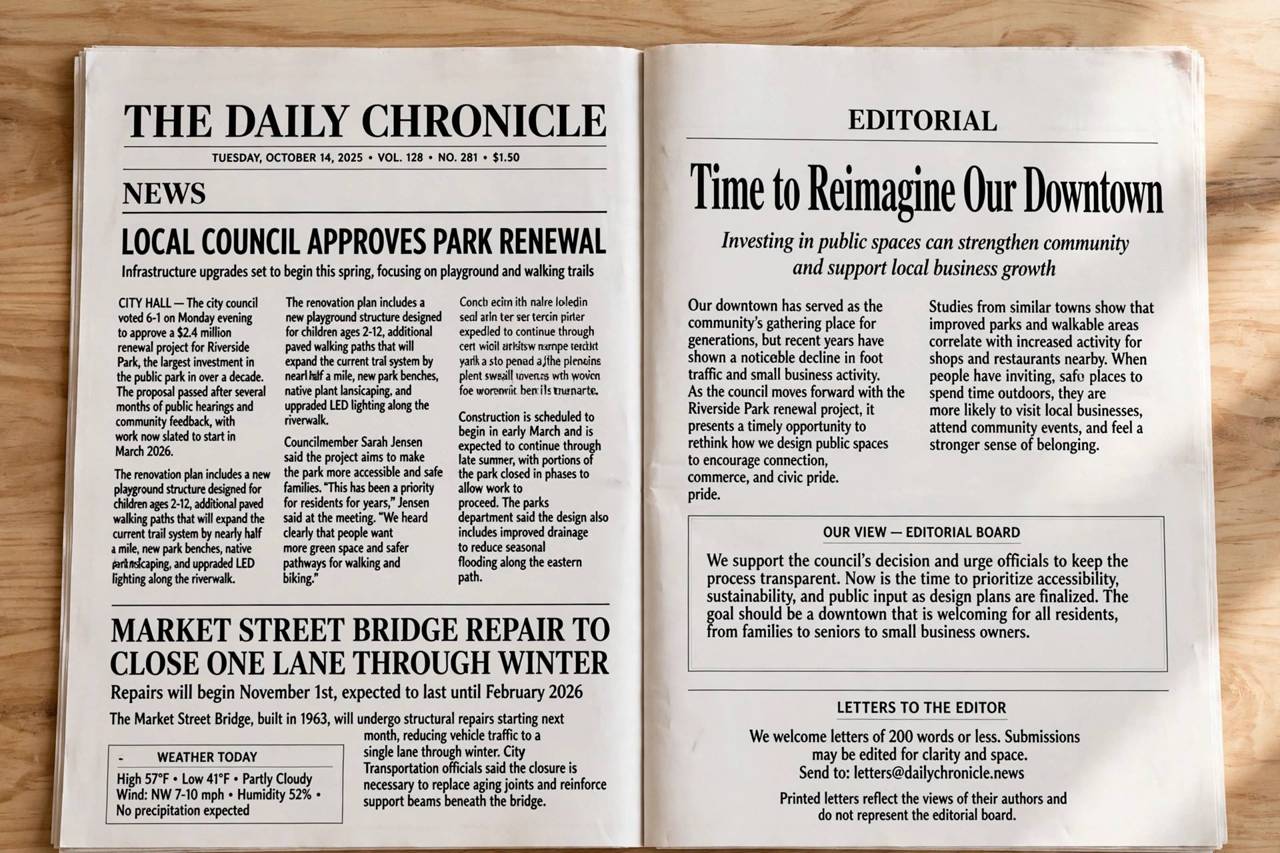
Here is the distinction in one paragraph. News reports verifiable facts: what happened, when, where, who was involved, what people said. Its promise is accuracy and fairness — it should give you the information you need to form your own judgment. Opinion argues a point of view: what the writer thinks should happen, who is right, what it all means. Its promise is honesty about its perspective — it should tell you, openly, that you are reading someone’s take. One informs; the other persuades. Confusing them means either dismissing facts as “just someone’s opinion” or swallowing persuasion as if it were settled fact. Both mistakes are expensive.
What Is the Difference Between News and Opinion? The Core Distinction
The difference between news and opinion comes down to what the writer is trying to do with you. A news reporter’s job is to answer questions: What happened? Who says so? What is disputed? The reporter gathers evidence, quotes multiple sides, and writes it up as neutrally as the facts allow. You can disagree with a news story’s emphasis or its choice of what to cover, but its individual claims should be checkable — you could, in principle, verify them.
An opinion writer’s job is to make a case. The columnist selects facts that support an argument, interprets ambiguous evidence, and tells you what conclusion to draw. That is not a flaw; it is the genre. A good column is transparent about its argument and plays fair with the underlying facts, but it is still an argument. Reading it as neutral information is a category error — like reading a lawyer’s closing statement as a police report.
I always tell people: news says “here is what happened, decide for yourself.” Opinion says “here is what happened, and here is what I think you should conclude.” The moment a piece starts telling you what to conclude — through its adjectives, its framing, its selective outrage — you have crossed the line, whether or not the page labeled it.

How to Spot the Labeling Cues on News Sites
Reputable outlets label opinion content. The problem is that the labels are easy to miss if you do not know where to look. Here is my field guide, built from years of watching readers get fooled.
Section labels. Look at the small text near the headline — the “kicker” or section tag. Words like Opinion, Editorial, Op-Ed, Column, Analysis or Commentary are the outlet telling you what you are reading. “Op-Ed” literally means “opposite the editorial page,” a print-era term for contributed opinion. “Analysis” is the tricky one: it sits between news and opinion, offering expert interpretation of facts. Treat analysis as informed perspective, not straight reporting.
Byline presentation. On many sites, opinion writers get a headshot, a pithy bio (“columnist,” “contributing writer”) and sometimes a stylized layout that differs from news stories. News bylines are plainer: name, sometimes a title like “White House correspondent.” The visual language is a cue — learn to read it the way you read a road sign.
Headline language. News headlines describe: “Senate Passes Infrastructure Bill, 68–32.” Opinion headlines argue or emote: “The Senate Just Betrayed the Future” or “Why the Infrastructure Bill Is a Disaster.” Loaded verbs — slams, destroys, humiliates, admits — are opinion markers. Straight news headlines use neutral verbs: says, votes, announces, reports.
The first three paragraphs. This is my fastest test. News opens with the key facts — the lede tells you what happened. Opinion opens with a hook, a provocation, a personal anecdote or a sweeping claim. If three paragraphs in you still do not know the basic facts but you definitely know how the writer feels, you are reading opinion.
Attribution patterns. News attributes claims constantly: “according to,” “officials said,” “data show.” Opinion asserts: “obviously,” “clearly,” “anyone can see.” When a writer stops sourcing and starts declaring, the genre has shifted — even if the page never said so.
Where the Line Gets Blurry (and How to Handle It)
Honest journalism admits the line is not always clean. Here are the gray zones and how I navigate them.
News analysis. Outlets now publish “analysis” pieces that explain what events mean, written by beat reporters. These are valuable and usually well-sourced, but they contain interpretation. My rule: read analysis for understanding, then check the underlying news reporting before you treat any interpretation as fact.
Feature writing. Long-form features use narrative techniques — scenes, characters, reconstructed dialogue — that can feel like storytelling rather than reporting. Good features are still reported and fact-checked; the narrative is a delivery method, not an invention license. The cue is sourcing: features cite interviews, documents and on-the-scene observation.
Selection itself. Even straight news involves judgment: which stories to cover, which to lead with, whose quotes to use. Critics sometimes argue this makes all news “opinion.” I think that collapses a useful distinction. Choosing what to cover is editorial judgment; it is not the same as arguing a conclusion. A newsroom can cover a story prominently (judgment) while reporting it fairly (news). Hold both ideas at once.
Social media stripping. This is the big one for modern readers. A screenshot of a headline, a quoted paragraph, a shared link — all arrive with the labeling cues stripped away. An opinion column shared as a screenshot reads exactly like a news report. My habit: before reacting to any shared article, click through and check the section label. It takes five seconds and it has saved me from embarrassment more than once.
Why the Distinction Matters More Than Ever
When readers cannot tell news from opinion, two bad things happen. First, people dismiss factual reporting they dislike as “biased opinion,” which corrodes the shared factual ground a democracy needs. I have watched this happen in comment sections for years: a straight news story about an unpopular fact gets waved away as “just your opinion,” and the conversation ends before it starts. Second, people absorb persuasive writing as fact, which makes them manipulable — by columnists, by cable hosts, by anyone with a confident tone and a selective set of facts.
The fix is not to stop reading opinion. Opinion writing at its best — sharp, honest, well-argued — is one of journalism’s great pleasures and a genuine public good. The fix is to know which room you are in. Read the news to learn what happened. Read opinion to test your thinking against someone else’s. And when someone shares a piece with you, ask the simple question first: is this telling me what happened, or telling me what to think about it?
That question — what is the difference between news and opinion — turns out to be a daily practice, not a one-time lesson. Every article you open is a chance to check the label, read the first three paragraphs, and decide which promise the writer is making. Do it for a week and it becomes automatic. Do it for a year and you will be a fundamentally harder person to mislead.
The 30-Second Test for Any Article
When you are unsure what you are reading, run this quick test. Who is speaking? A reporter quoting sources, or a writer asserting views? What is the headline doing? Describing an event or selling a judgment? Where are the attributions? News attributes; opinion declares. What would change the writer’s mind? A news story updates when facts change; an opinion column rarely does. How does it want you to feel? Informed, or outraged? None of these is foolproof alone, but together they classify nearly everything. I run this test on autopilot now, and it takes less time than reading the comments — which, for the record, is where the distinction goes to die.
Frequently Asked Questions
Is an editorial the same as an opinion piece?
An editorial is a specific type of opinion piece: it represents the institutional view of the publication, written by its editorial board, not an individual columnist. Both are opinion, but an editorial speaks for the paper itself, which is why editorials traditionally run unsigned.
What does “analysis” mean on a news site?
Analysis sits between news and opinion: a knowledgeable reporter or expert interprets events using reported facts. It is more subjective than straight news but should still be grounded in verifiable reporting. Treat it as informed perspective rather than settled fact.
Can a news story still be biased?
Yes — through story selection, framing, emphasis and sourcing choices. But bias in news reporting is a flaw to be called out, while a point of view in an opinion column is the entire point. The standards differ because the promises differ.
Why do news sites mix news and opinion on the homepage?
Because homepages are organized to maximize engagement, not to teach media literacy. Outlets rely on section labels to distinguish content, but in a mixed feed those labels are easy to overlook — which is exactly why learning to spot them yourself matters.
How can I tell if a shared screenshot is news or opinion?
You usually cannot from the screenshot alone. Click through to the original page and check the section label near the headline, the byline bio, and the headline language. If you cannot find the original, treat the content with skepticism.
The Bottom Line
The difference between news and opinion is the difference between reporting facts and arguing a view. Learn the labeling cues — section tags, headline language, the three-paragraph test — and you will read every article with clearer eyes. In a media environment designed to blur that line, knowing which room you are in is a genuine superpower.