How Do Journalists Protect Their Sources?


When people ask how do journalists protect their sources, they are usually picturing a parking garage at midnight — a whispered conversation, a brown envelope. The reality is less cinematic and far more technical. Protecting a source today is mostly about defeating surveillance: metadata, phone records, email logs, and security cameras. The envelope still exists, but the battle is fought in the digital trail.
I have spent years watching this world up close, and the single biggest misconception is that source protection is about loyalty or courage. It is not. It is about systems. The journalists who protect sources reliably are not the bravest ones — they are the ones with the most boring, disciplined habits. This is a plain-English look at how that actually works.
Why Anonymity Exists in the First Place
Journalists grant anonymity to sources for one reason: without it, important stories would never be told. A government employee who witnesses corruption, a corporate insider who sees fraud, a hospital worker who sees patients being harmed — these people usually cannot afford to put their names on the record. They would lose their jobs, face lawsuits, or worse.
But anonymity is not granted casually. Responsible newsrooms have rules: a reporter must know the source’s real identity (anonymous to the public, not to the reporter), the source’s information must be verifiable independently, and the reason for anonymity must be genuine risk, not mere embarrassment. Editors often review these decisions before publication. The phrase “sources say” that frustrates readers so much exists because the alternative — silence — is worse.
There is also a spectrum. “On background” means the information can be used but attributed vaguely (“a senior official”). “Off the record” means it cannot be published at all — it is only for the reporter’s understanding. Mixing these up causes real fights between reporters and sources, and the terms mean slightly different things in different newsrooms, which is why careful journalists negotiate the ground rules explicitly before a source starts talking.
Shield Laws: What They Protect (and What They Don’t)
Many people assume journalists have an absolute legal right to protect sources. They do not — at least not everywhere, and not in the way people think. In the United States, there is no federal shield law. Protection comes from a patchwork of state shield laws, which vary enormously: some states offer near-absolute protection, others offer almost none, and a few have no shield statute at all.
The key Supreme Court case, Branzburg v. Hayes (1972), declined to recognize a reporter’s privilege under the First Amendment, though a concurring opinion left the door open for case-by-case protection, and many federal courts have recognized a qualified privilege since. The practical result is uncertainty: a journalist subpoenaed in federal court cannot count on protection the way they might in a state with a strong shield law.
Elsewhere, the picture is mixed too. Many European countries recognize source protection as part of press freedom, and the European Court of Human Rights has called it a cornerstone of a free press. But even there, exceptions exist for national security and serious crimes. The honest answer is that legal protection is a layer of defense, not a guarantee — which is why the technical protections matter so much. A reporter who never possesses identifying information cannot be forced to reveal what they do not have.
Signal, SecureDrop, and the Reporter’s Toolkit
This is where source protection gets practical. Modern journalists use a set of tools designed to leave as little trace as possible:
- Signal. The encrypted messaging app has become the default for sensitive source communication. Messages are end-to-end encrypted, and Signal can be set to auto-delete messages after a chosen time. But Signal is not magic: the fact that two people contacted each other is still visible to anyone with access to phone records, even if the content is hidden. That is why the metadata discussion below matters.
- SecureDrop. An open-source system that lets sources submit documents to newsrooms anonymously through the Tor network. Major outlets run SecureDrop servers. The source never creates an account, and the submission is encrypted. It is the closest thing to a digital dead drop.
- Burner phones and air-gapped computers. For the highest-risk stories, reporters use separate devices purchased with cash, used only for one story, and kept powered off when not in use. Computers used to review sensitive documents are sometimes “air-gapped” — never connected to the internet at all.
- In-person meetings with phones left behind. Old-fashioned and still effective. A face-to-face conversation with both phones left in the car leaves no digital record of the contact. The parking garage cliché survives because it works.
Notice the pattern: every tool assumes the adversary — a government, a corporation, a hostile actor — can access some layer of the communication. The tools do not make communication invisible; they make specific layers of it unreadable.
Metadata: The Real Enemy
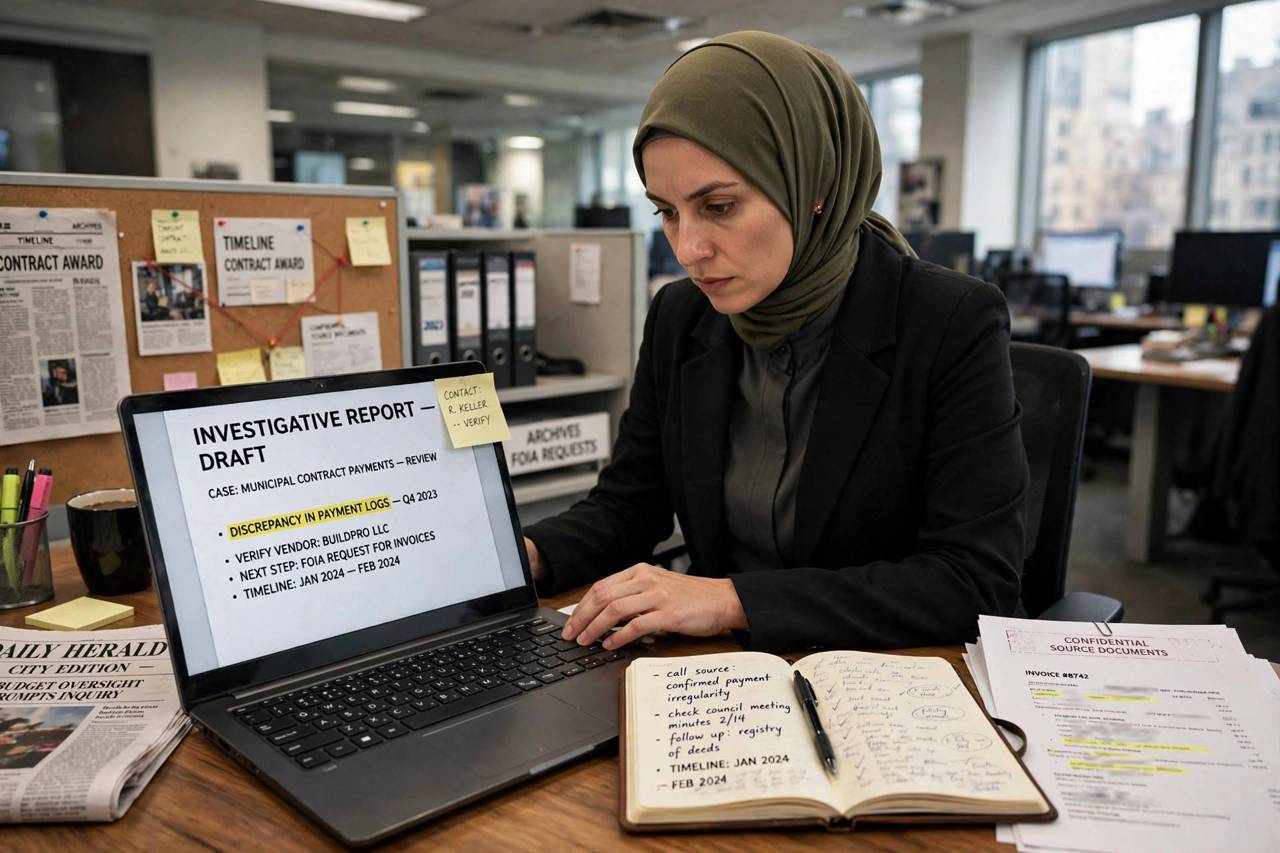
If there is one thing to take away from this article, it is this: the content of a conversation is rarely what exposes a source. The metadata does. Metadata is data about data — who called whom, when, for how long, from where. A leaked document’s content might be perfectly handled, but if phone records show a government employee called a reporter twelve times in the week before publication, the source is identified.
This is how sources actually get caught in the modern era. Investigators do not need to read the messages; they need the call logs, the email headers, the login timestamps, the security camera footage from the café. The famous cases of source exposure almost always turn on this kind of trail, not on a reporter breaking a promise.
Good reporters think in terms of the “contact graph” — the map of who talked to whom. Defeating it means minimizing contact points: fewer calls, no emails from work accounts, no meetings near either person’s home or office, payments in cash, devices that cannot be linked to either party. It is exhausting, which is why high-stakes reporting takes so long. Much of that time is operational security, not writing.
What Happens When a Source Is Exposed
When protection fails, the consequences fall on the source, not the journalist. Sources have lost careers, faced prosecution, and in some countries faced physical danger. This asymmetry is why newsrooms treat source protection as a moral obligation, not just a professional one — the reporter took the risk on the source’s behalf, and the reporter bears the responsibility.
There have also been cases of journalists going to jail rather than reveal sources. These standoffs are dramatic, but they are the last resort, not the plan. The plan is to never be in that position: to structure the reporting so that even under legal compulsion, there is nothing useful to reveal.
One underappreciated protection is simple: multiple sourcing. When a story rests on several independent sources, exposing one does not kill the story or identify the others. It also means the journalist can sometimes confirm information without ever using the most vulnerable source’s material directly.
How Do Journalists Protect Their Sources Day to Day
The tools get the headlines — Signal, SecureDrop, burner phones — but the day-to-day reality of how journalists protect their sources is mostly unglamorous discipline. It is habits, repeated until they are boring. Here is what that actually looks like inside a working newsroom.
Compartmentalization is the first habit. Reporters working a sensitive story keep it off the office network: no discussing details on company email or Slack, no saving notes to shared drives, no mentioning the source’s name — or identifying details — in any digital communication. Many reporters use code names or initials in their notes, so that a seized notebook or hacked account yields nothing useful. It feels paranoid until the first time it matters.
Source hygiene starts before the first conversation. Experienced reporters think about the contact trail before they ever reach out. That means not calling a potential source from a work phone, not emailing from an address tied to their identity, and choosing first-contact methods that leave minimal trace. The initial approach is often the most vulnerable moment — it is when both parties are least careful and the relationship is least established.
Newsrooms have protocols, not just instincts. Major outlets maintain written security practices: which encrypted tools are approved, how sensitive documents are stored (often on air-gapped machines in locked rooms), who is allowed to know a source’s identity (usually the reporter and one editor — sometimes only the reporter), and how long material is retained. The “need to know” principle is real: the fewer people who know, the fewer people who can leak, be hacked, or be compelled.
After publication, the job is not over. Notes, recordings, and communications related to a sensitive story are reviewed for retention: keep what is legally or journalistically necessary, securely destroy the rest. Some newsrooms have scheduled data-destruction policies for exactly this reason. And reporters stay alert to post-publication risks — a source who was safe during reporting can become exposed by the story’s aftermath, as subjects of investigations start hunting for who talked.
The through-line in all of this: protection is a process, not a promise. Any reporter can say “I will protect you.” The ones who mean it have a system — boring, disciplined, and practiced long before the sensitive story arrives.
Frequently Asked Questions
Can a journalist be forced to reveal a source in court?
Sometimes, yes. In the United States there is no federal shield law, so in federal court a journalist’s protection depends on a qualified privilege that courts apply case by case. Many states have stronger shield laws. Journalists have been jailed for contempt for refusing to comply with court orders, which is why reporters try to avoid possessing identifying information in the first place.
Is using Signal enough to stay anonymous?
No. Signal encrypts message content, but it does not hide the fact that two people communicated — phone records, app metadata, and device seizures can still reveal the contact. For high-risk situations, reporters layer Signal with disappearing messages, separate devices, and in-person meetings. No single tool provides complete protection.
What is the difference between “off the record” and “on background”?
“On background” generally means the information can be published without naming the source, using a vague attribution like “a senior official.” “Off the record” traditionally means the information cannot be published at all — it only informs the reporter’s understanding. The exact definitions vary between newsrooms, so careful journalists agree on the terms explicitly with each source.
Why don’t journalists just name their sources and be done with it?
Because the sources would stop talking. Whistleblowers and insiders face job loss, lawsuits, prosecution, and sometimes physical danger. Without credible promises of protection, the information that exposes corruption and abuse of power would stay hidden. Anonymity is the price of getting the story.
Has a source ever been harmed because a journalist failed to protect them?
Yes. Sources have been identified through careless handling of documents, sloppy digital security, and metadata left in published files — including the infamous cases where document properties or email headers revealed identities. Each failure tightened newsroom practices. Modern source protection is largely a catalog of lessons learned from past mistakes.
The Bottom Line
So how do journalists protect their sources? Through layered systems — legal, technical, and human — built on the assumption that every layer might fail. Shield laws where they exist. Encrypted tools used with discipline. Metadata hygiene that borders on paranoia. And above all, the understanding that the reporter’s job is to absorb risk so the source does not have to. The next time you read “according to people familiar with the matter,” remember: behind that vague phrase is a person who trusted a reporter with their livelihood, and a reporter who built a system to deserve that trust.