What Is NATO and What Does It Do? Explained

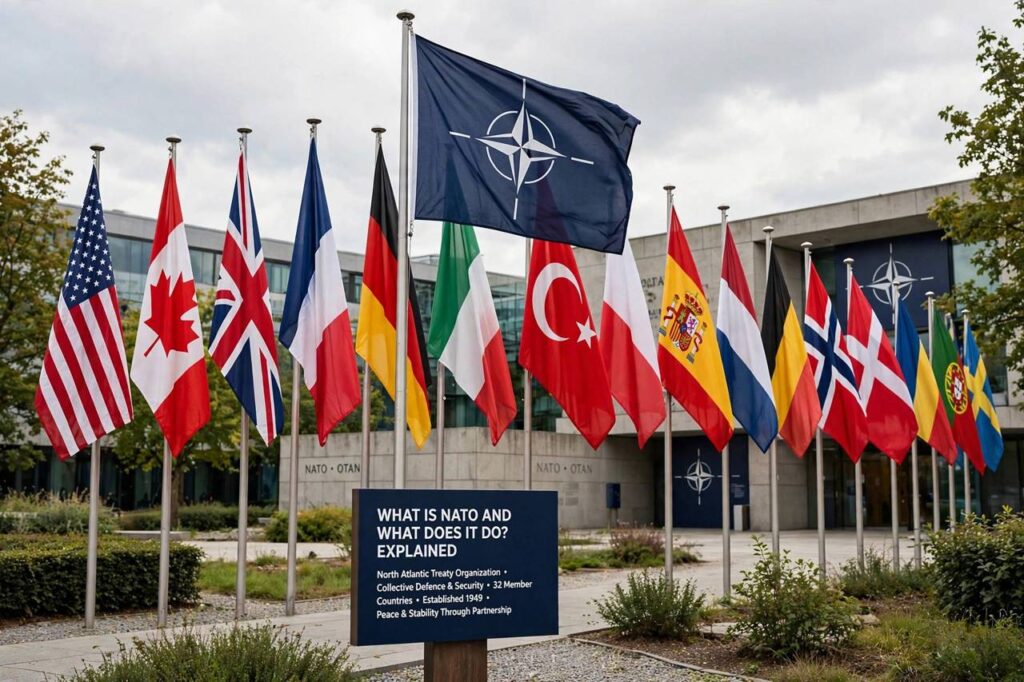
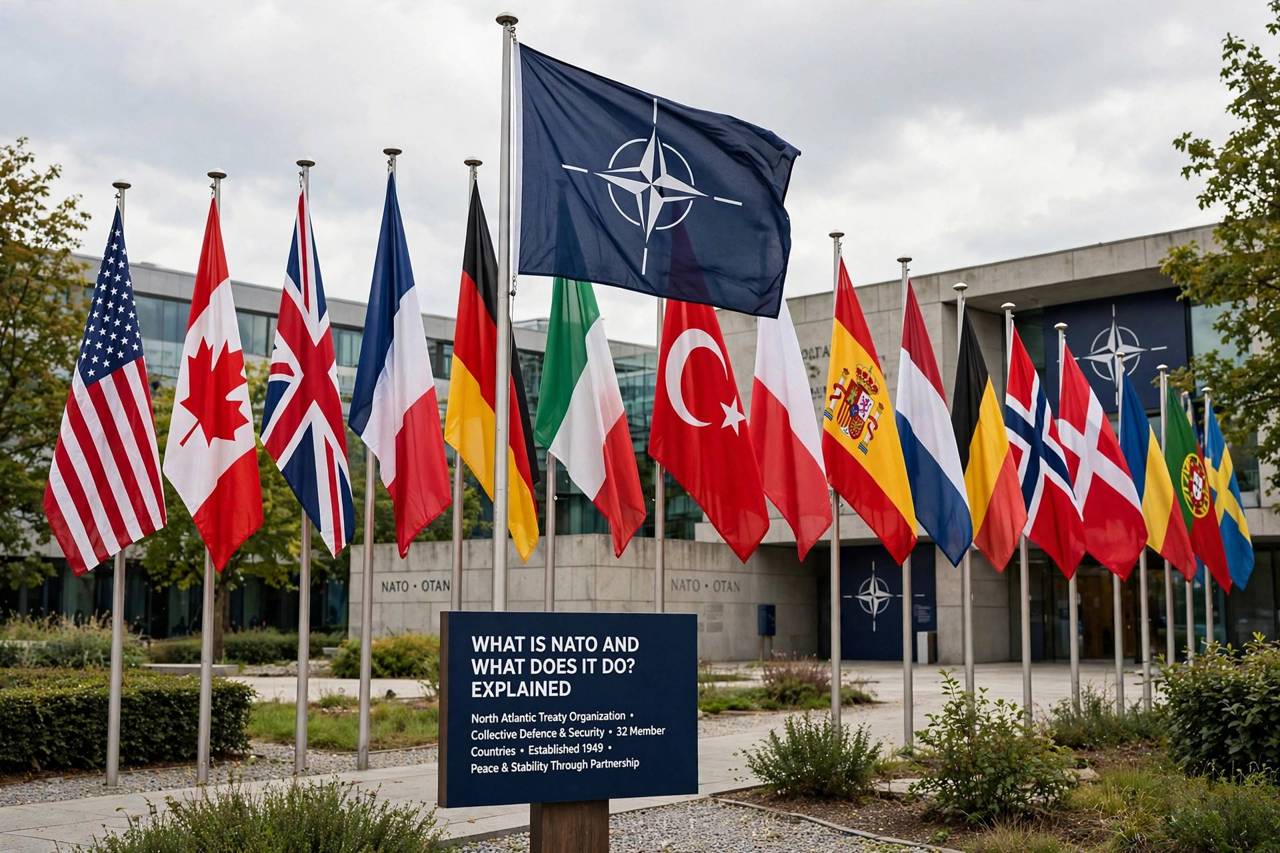
NATO appears in headlines constantly — summits, new members, military exercises, debates about defense spending — and yet most people couldn’t explain what it actually is beyond “some kind of military alliance.” So what is NATO and what does it do? The short version: NATO is a political and military alliance of 32 countries across North America and Europe, founded in 1949, built around a promise that an attack on one member is treated as an attack on all.
That promise — called collective defense — is the heart of NATO. But the alliance also does a great deal more: it sets military standards so allied forces can operate together, runs joint exercises and operations, and serves as a permanent forum where member governments consult on security issues. This guide explains what NATO is, how it started, how it works day to day, and what it actually does in the modern world.
What Is NATO and What Does It Do? The Basics
NATO stands for the North Atlantic Treaty Organization. It was created in 1949 when twelve countries — including the United States, Canada, the United Kingdom, and France — signed the North Atlantic Treaty in Washington, D.C. The context was the early Cold War: Western countries wanted a formal mutual-defense pact as a counterweight to the Soviet Union.
Today NATO has 32 member countries, spanning North America and Europe. The alliance has grown through successive rounds of enlargement, most recently with Finland joining in 2023 and Sweden in 2024 — both long-neutral countries whose decisions to join reflected how much the European security landscape had shifted.
NATO is an intergovernmental organization, meaning it’s made up of sovereign member states, not a super-government above them. Every member retains full sovereignty. Decisions are made by consensus — all 32 members must agree. That makes NATO slow to act sometimes, but it also means that when NATO does act, it acts with the full backing of every member.
The Core Idea: Collective Defense (Article 5)
The most famous part of the NATO treaty is Article 5. It states that an armed attack against one member “shall be considered an attack against them all,” and that each member will take “such action as it deems necessary, including the use of armed force,” to restore security.
Two things about Article 5 are widely misunderstood. First, it doesn’t automatically trigger war — each member decides for itself what response is necessary. The commitment is to treat the attack as an attack on all, not to follow a predetermined military script. Second, it has only been invoked once in NATO’s history: after the September 11, 2001 attacks on the United States. The alliance’s defining clause was used not in a Cold War showdown but in response to terrorism.
The power of Article 5 is mostly in deterrence. The idea is that no potential attacker can count on picking off one small member without facing the combined response of all 32. Whether that deterrence holds depends on credibility — which is why debates about defense spending and political commitment within the alliance matter so much.
What NATO Actually Does Day to Day
Beyond the headline-grabbing summits, NATO is a vast ongoing operation. Here’s what the alliance spends its time on:
Setting standards (interoperability)
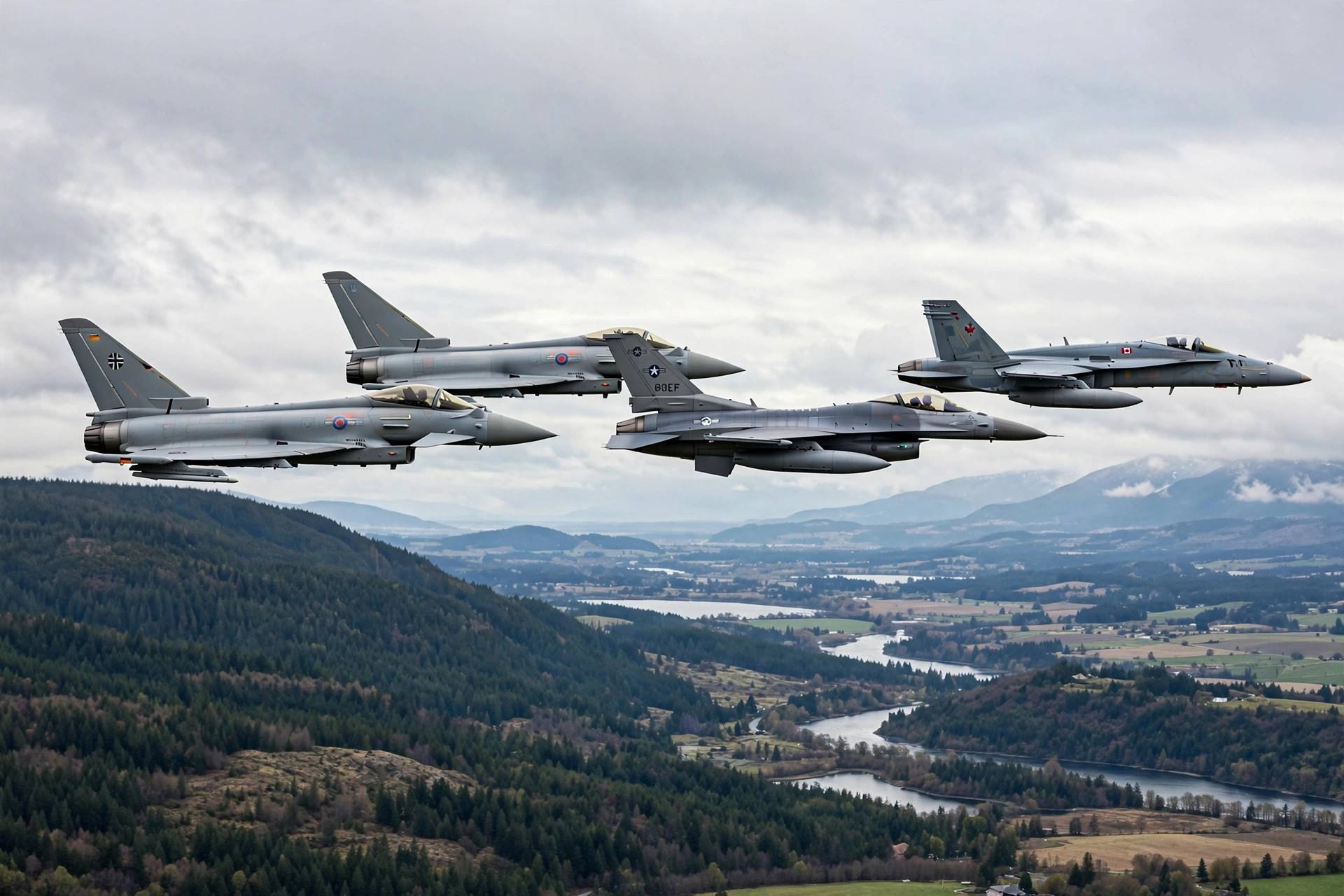
One of NATO’s least visible but most important jobs is standardization. For 32 countries’ militaries to operate together, their equipment, procedures, and communications have to be compatible — fuel types, ammunition calibers, radio frequencies, medical procedures, even the terminology in orders. NATO publishes thousands of standardization agreements covering all of this. Without them, multinational operations would be chaos.
Joint exercises and readiness
NATO runs large-scale military exercises where allied forces train together — practicing everything from naval operations to cyber defense to disaster response. These exercises test whether the alliance could actually fight together if needed, and they signal to potential adversaries that it can. NATO also maintains rapid-response forces: multinational units kept at high readiness to deploy quickly to a crisis.
Crisis management and operations
NATO has conducted real operations beyond its members’ borders. In the 1990s and 2000s, it intervened in the Balkans (Bosnia and Kosovo). After 2001, it led the International Security Assistance Force in Afghanistan — its largest and longest operation, lasting nearly two decades. It conducted an air campaign over Libya in 2011. And it runs ongoing missions including training Iraqi security forces and maritime security patrols.
Political consultation
The North Atlantic Council — NATO’s main decision-making body, where each member has a permanent representative — meets regularly to discuss security developments. This consultation function matters: it means allied governments are constantly talking to each other about threats, which reduces the chance of misunderstandings and uncoordinated responses.
New domains: cyber and space
NATO has formally recognized cyberspace and outer space as operational domains alongside land, sea, and air. A serious cyberattack on a member could potentially trigger Article 5 consultations. The alliance runs cyber defense exercises, shares threat intelligence, and helps members harden critical infrastructure. This reflects how warfare and security have evolved since 1949.
How NATO Is Organized
NATO has two main sides: the political and the military. On the political side, the North Atlantic Council makes decisions by consensus, chaired by the Secretary General — NATO’s top civilian official and public face. Below the Council are committees handling everything from defense planning to nuclear policy.
On the military side, the Military Committee (made up of members’ chiefs of defense) gives military advice, and two strategic commands run operations: Allied Command Operations (based in Belgium, responsible for all NATO military operations) and Allied Command Transformation (based in the United States, responsible for modernizing doctrine and capabilities).
NATO is funded in two ways. There’s common funding — members contribute to shared budgets for headquarters, joint operations, and infrastructure, based roughly on economic size. And then there’s the much-debated national defense spending: NATO’s guideline (not a binding rule) is that members spend 2% of GDP on defense. How many meet it, and whether the target should be higher, is a perennial argument.
Common Misconceptions About NATO
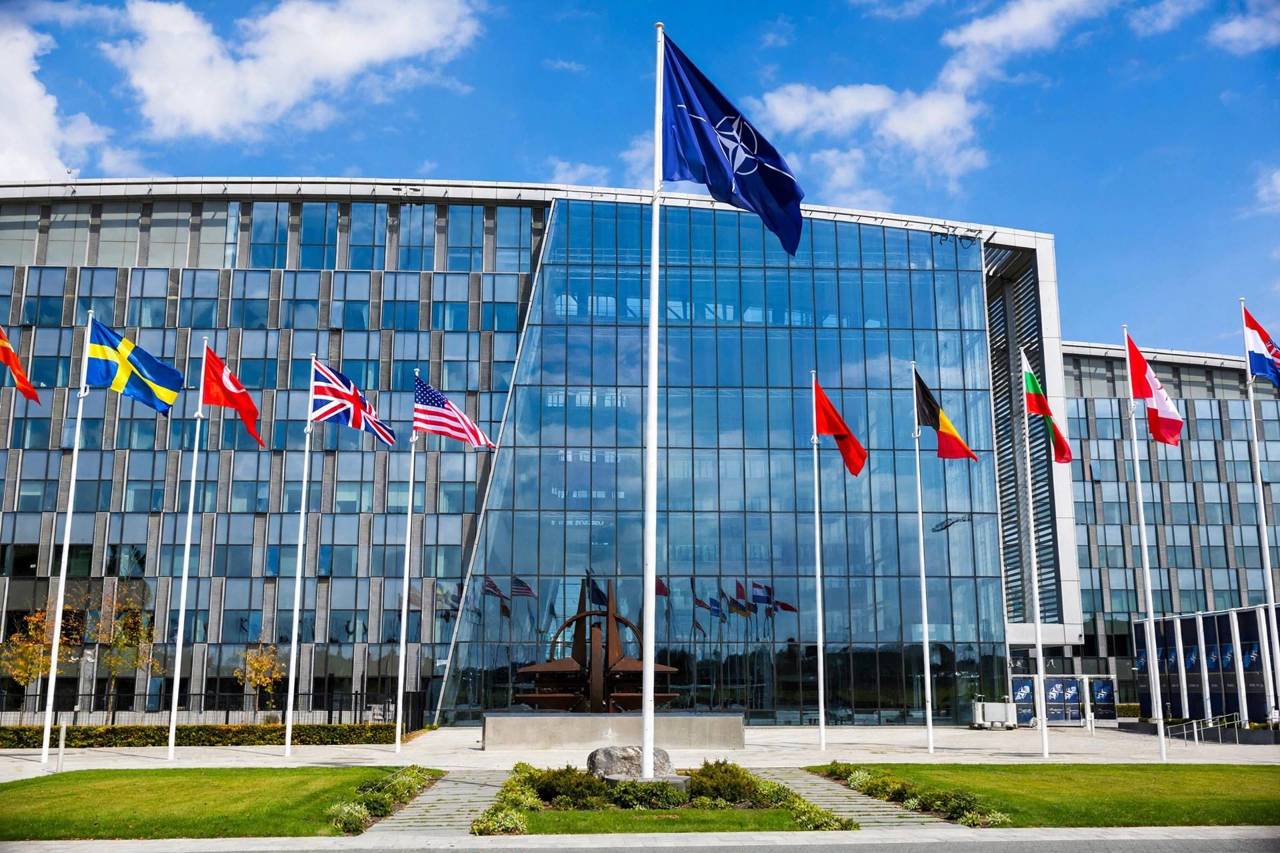
“NATO is an army.” It’s not. NATO doesn’t have its own standing army — it has command structures and rapid-response arrangements, but the troops, ships, and aircraft belong to member countries and are assigned to NATO as needed. When NATO “acts,” it’s member militaries acting under NATO command.
“NATO can force members to fight.” No. Consensus decision-making means no member can be compelled into an operation it opposes. Members opt into operations; several have sat out operations others joined.
“NATO is only about Russia.” It was founded with the Soviet Union in mind, but its operations have covered the Balkans, Afghanistan, Libya, counter-piracy, and disaster relief. The alliance’s agenda follows the security environment, not a single adversary — though deterrence in Europe has returned to center stage in recent years.
“New members join automatically.” Joining requires meeting political, economic, and military standards, completing a reform process, and winning unanimous approval from all existing members. Finland and Sweden’s accession took extensive negotiation. Membership is earned, not granted.
Why NATO Still Matters
After the Cold War ended, plenty of observers predicted NATO would fade away — its original adversary was gone. Instead, it enlarged, took on new missions, and adapted to new threats. The alliance’s persistence suggests it provides something members value beyond any single threat: a permanent framework for collective security, a forum for consultation, and the practical machinery — standards, exercises, command structures — that makes multinational cooperation possible.
Whether NATO’s current form is the right one for the decades ahead is a live debate — about spending, about enlargement, about priorities between Europe and other regions, about cyber and emerging technology. But the underlying question it answers hasn’t changed since 1949: when security threats cross borders, do countries face them alone or together? NATO is 32 countries’ answer: together.
How Countries Join NATO
Membership isn’t automatic or quick — it’s a deliberate multi-year process. A country that wants to join first signals its interest, then enters a dialogue with the alliance about political, economic, and military reforms. NATO looks for stable democratic governance, a market economy, civilian control of the military, and armed forces that can operate to NATO standards.
Candidates typically go through a Membership Action Plan — a structured program of annual reviews covering everything from defense budgets to judicial reform. When the alliance judges a candidate ready, all 32 existing members must unanimously approve an invitation. Then each member’s parliament ratifies the accession, and the new member signs the treaty. Finland’s path was unusually fast (under a year from application to membership); most take much longer.
This demanding process is part of what gives the alliance its cohesion. Every member has met the same bar and been vetted by every other member — which is exactly what makes the Article 5 promise credible.
Frequently Asked Questions
What is NATO in simple terms?
NATO (North Atlantic Treaty Organization) is a military and political alliance of 32 North American and European countries, founded in 1949. Its core principle is collective defense: an attack on one member is treated as an attack on all. It also standardizes allied militaries, runs joint exercises, and provides a forum for security consultation.
What does NATO actually do?
NATO sets military standards so allied forces can operate together, conducts joint training exercises, maintains rapid-response forces, runs real operations (past missions include the Balkans, Afghanistan, and Libya), coordinates cyber defense, and serves as a permanent consultation forum where member governments discuss security threats.
Which countries are in NATO?
As of 2024, NATO has 32 members, including the United States, Canada, the United Kingdom, France, Germany, Italy, Spain, Poland, Turkey, and — most recently — Finland (2023) and Sweden (2024). Membership requires meeting standards and unanimous approval from existing members.
Has NATO’s Article 5 ever been used?
Only once: after the September 11, 2001 terrorist attacks on the United States. NATO allies invoked Article 5 in support of the U.S., leading to allied involvement in Afghanistan. It has never been invoked for a conventional attack on a European member.
Is NATO the same as the UN?
No. The United Nations is a global organization of 193 countries focused on peace, development, and international law. NATO is a regional military alliance of 32 countries focused on collective defense. They sometimes cooperate, but they’re entirely separate organizations with different memberships and missions.