What Is a Brown Dwarf? The ‘Failed Star’ Where Scientists Just Found Clouds Like Earth’s


They form like stars but never learn to shine like them — and the nearest cold one has weather eerily like home.
A brown dwarf is an object that sits between a planet and a star: too massive to be a planet, too small to ignite nuclear fusion like a star. Instead it glows faintly from leftover heat of its formation. In October 2026, astronomers using the James Webb Space Telescope found active weather on WISE 0855, the coldest known brown dwarf — the first direct confirmation that water clouds on another world grow thicker and thinner over time, just like clouds on Earth.
What Exactly Is a Brown Dwarf?
Brown dwarfs begin their lives like stars. A cloud of gas collapses under gravity and heats up. But if the collapsing object never accumulates enough mass, the core never gets hot and dense enough to sustain the nuclear fusion that powers stars. The result is a “failed star” that slowly cools for billions of years.
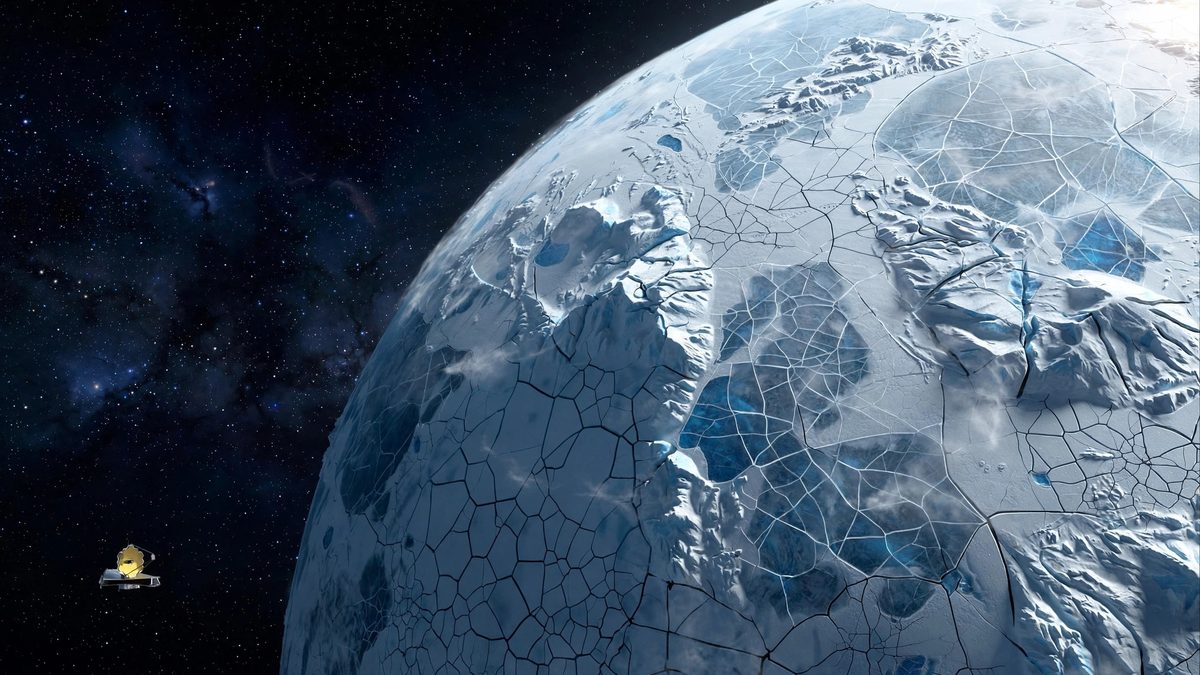
They are much bigger than planets but far dimmer than stars, which makes them hard to study. WISE 0855, the target of the new research, sits at the extreme end of this category. It has roughly twice the mass of Jupiter and nearly the same size, a temperature of about 265 kelvins (-8°C or 17°F) — colder than a winter night on Earth — and it floats freely through space, untethered to any star.
As researcher Brittany Miles told the University of Arizona, objects like this blur the line between categories: “Even though brown dwarfs are not true planets, they exhibit planet-like behavior. There is a spectrum of behaviors — not a hard line between brown dwarfs and planets.”
The Discovery: Weather on WISE 0855
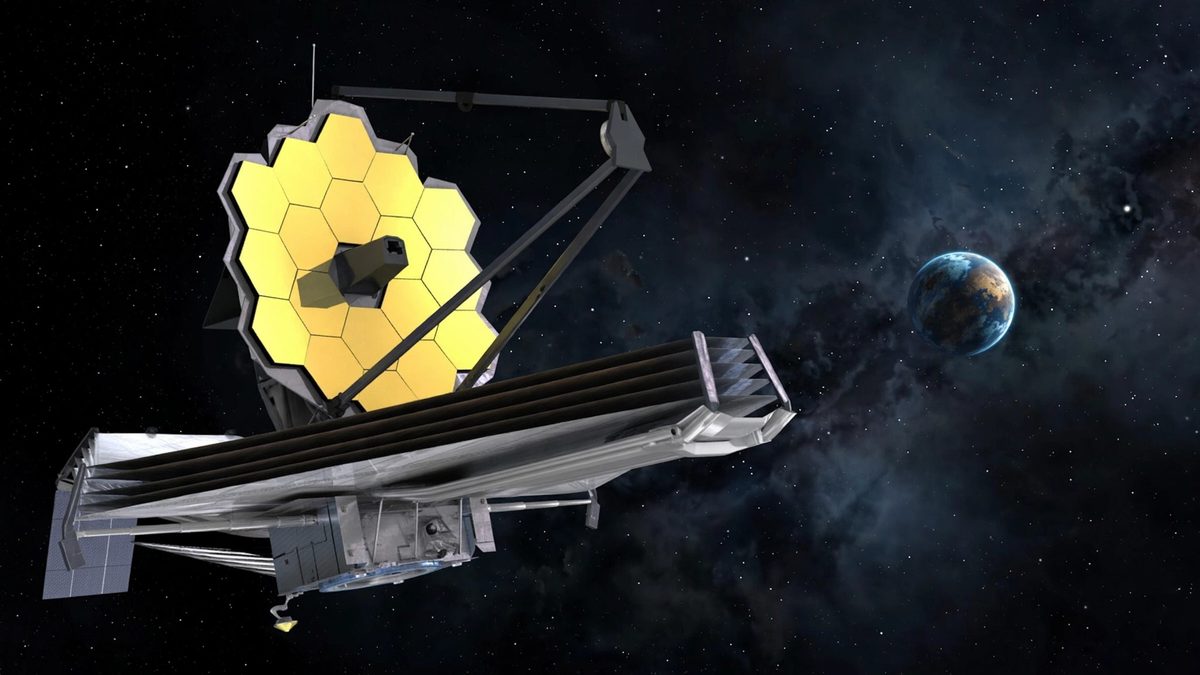
A team led by Brittany Miles, an assistant astronomer at the University of Arizona’s Steward Observatory, spent 11 hours staring at WISE 0855 with the James Webb Space Telescope, collecting a full spectrum of its light every 15 minutes. The result is the most detailed time-series portrait ever taken of this frigid world.
Two processes shape the object’s changing atmosphere, playing out at the same time:
1. Water clouds thicken and thin as the world rotates. High-altitude water clouds grow thicker and thinner over time. As WISE 0855 rotates, different patches of its atmosphere swing into view — regions with different cloud cover and temperatures, like watching a slowly turning patchwork of warmer and cooler areas. This is the first time scientists have directly confirmed that water clouds change thickness on a world outside our solar system.
2. Deep gases rise through convection. The telescope also picked up a rhythmic, wave-like signal tied to carbon monoxide and phosphine. These gases fluctuate because heat from deep inside the brown dwarf is constantly churning material upward toward the surface — the same way a pot of hot soup pushes warmer liquid up from the bottom.
Planetary scientists recognise this second process: on Jupiter, convective mixing dredges gases from deep, hot layers up into the visible atmosphere. The process is called disequilibrium chemistry, and while it had been observed in brown dwarfs before, watching it vary in real time, molecule by molecule, is new territory.
How Far Is 7.5 Light-Years?
A light-year is the distance light travels in one year — about 9.46 trillion kilometres. At 7.5 light-years, WISE 0855 is one of our closest cosmic neighbours: only the Alpha Centauri system and a handful of other stars are nearer. That proximity is exactly why it is such a valuable laboratory. It is close enough for JWST to collect a detailed spectrum of its faint light every 15 minutes, yet it behaves like the distant gas giant exoplanets astronomers are now beginning to study — giving scientists a test case they can observe in detail and then apply to worlds far farther away.
Why Only JWST Could See This
Before JWST, astronomers studying brown dwarfs had only photometry — simple measurements of brightness over time. That mixed the effects of clouds, chemistry and temperature all together, making it impossible to tell them apart.
JWST’s medium-resolution spectrograph changed that. It was sensitive enough to track variations across individual molecular features, letting the team separate the cloud signal from the chemistry signal. “Before JWST, we only had photometry, which mixed up the effects of clouds, chemistry, and temperature all together,” Miles said. “Now we can actually distinguish them.”
Interpreting the observations also required knowing how gases and clouds filter the light escaping the object. Co-author Mark Marley, director of the University of Arizona’s Lunar and Planetary Laboratory, described it as looking through a screen door: “The photons go through the atmosphere and escape to space. It’s like looking at the world through a screen door, where the screen is filtering out some of the light.”
The study has been accepted for publication in The Astrophysical Journal and builds on years of theoretical work, including atmospheric models Marley and other researchers developed and tested against observations of Jupiter.
Why This Discovery Matters
The real value of the finding goes beyond one cold world. The basic physics of convection, cloud formation and atmospheric chemistry that shapes Jupiter also operates on this cold, free-floating object more than seven light-years away. If those physics are universal, they apply to the gas giant exoplanets astronomers are now studying in earnest with JWST.
Miles and her team plan further observations to pin down WISE 0855’s rotation and investigate the three-dimensional structure and movement of its atmosphere. As she put it: “Weather happens everywhere, and some of our closest neighbors have skies worth watching.”
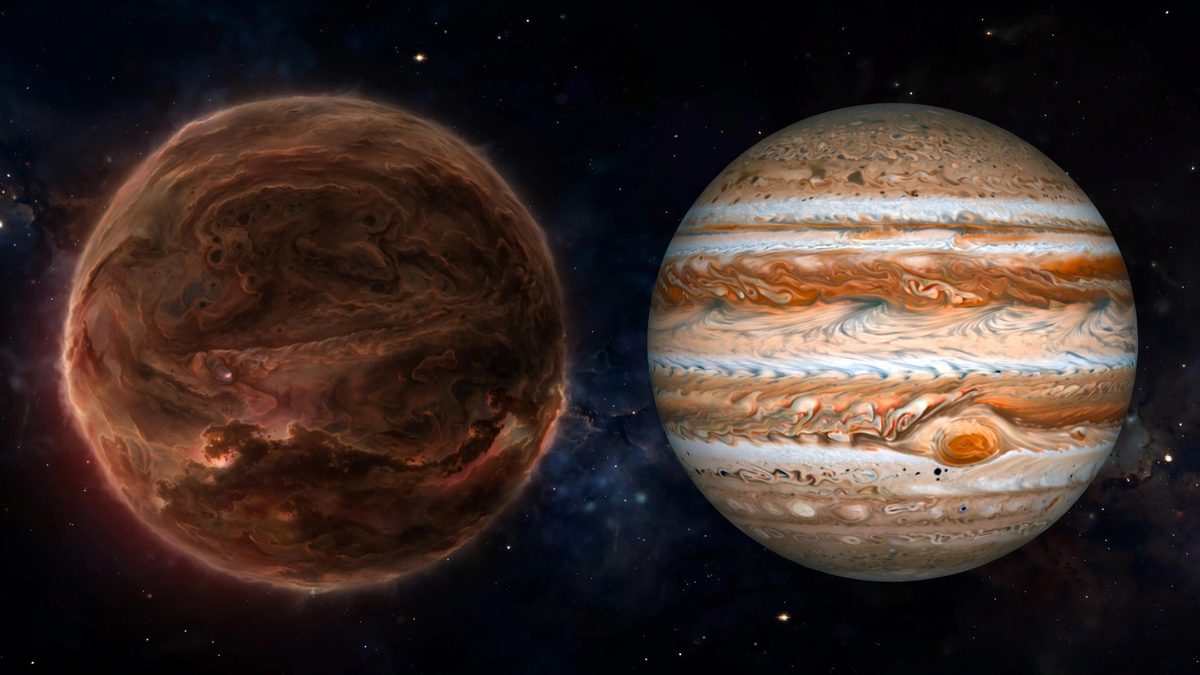
Key concepts: Brown dwarf · Substellar object · WISE 0855 · Water clouds · James Webb Space Telescope
A brown dwarf is an object between a planet and a star in mass: too massive to be classified as a planet, but too small to sustain the nuclear fusion that powers stars. It glows faintly from residual heat left over from its formation rather than from starlight.
WISE 0855 has a temperature of about 265 kelvins (-8°C or 17°F), making it the coldest known brown dwarf — colder than Earth’s surface. It has roughly twice Jupiter’s mass and nearly the same size.
The telescope team, led by Brittany Miles at the University of Arizona, observed the object for 11 hours and found two things happening at once: high-altitude water clouds growing thicker and thinner as the object rotates, and convection carrying carbon monoxide and phosphine upward from deep layers.
Earlier telescopes could only measure total brightness (photometry), which mixed clouds, chemistry and temperature together. JWST’s spectrograph could separate these signals, providing the first direct confirmation that water clouds change thickness on another world.
No. A brown dwarf simply does not have enough mass to ignite sustained nuclear fusion in its core. It will continue to cool and dim for billions of years.