It Spins Once Every 113 Seconds: The Fastest-Spinning Asteroid Ever Found Shouldn’t Be Able to Exist

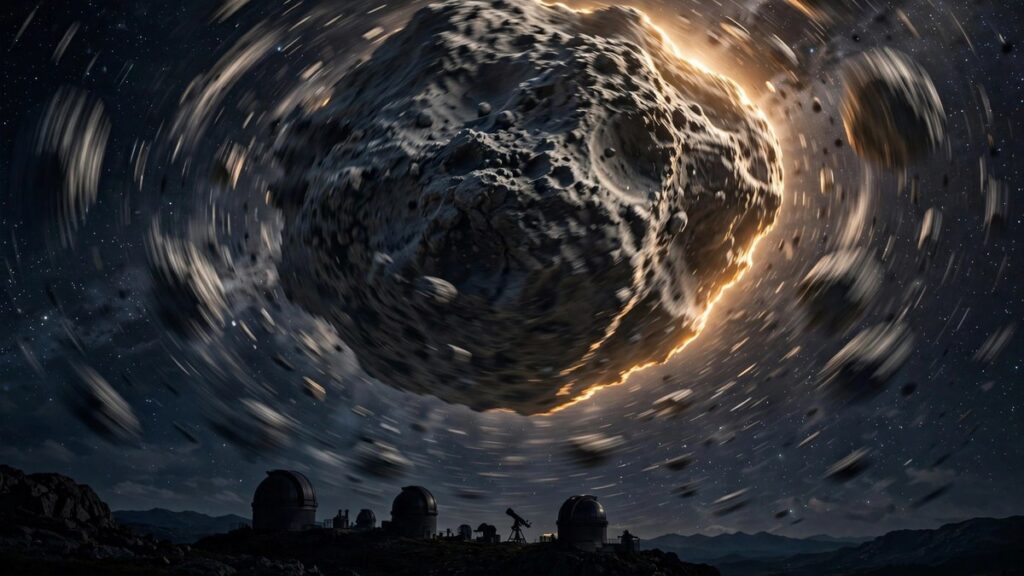
A mountain of rock spinning faster than physics says it should — 2025 MN45 is forcing astronomers to rethink what holds an asteroid together.
An asteroid named 491384, measuring 2.53 kilometres across, completes a full rotation once every 4.18 minutes — making it the largest ultra-fast-spinning asteroid ever reported. The discovery was made by a team led by Dmitrii Vavilov at the University of Washington using early data from the Vera Rubin Observatory, and reported in October 2026. An object that big spinning that fast should tear itself apart — so the fact that it holds together is forcing astronomers to rethink what asteroids are made of.
The Spin Barrier: Why This Is So Surprising
Most asteroids are thought to be “rubble piles” — loose collections of rock and dust held together only by their own weak gravity. There is a well-known limit to how fast such an object can spin: for asteroids larger than about 150 metres (490 feet), a full rotation almost never takes less than 2.2 hours. This is called the spin barrier.
The logic is simple. Spin a rubble pile too fast and centrifugal force overcomes its weak self-gravity — the object flings its own rocks into space. So any large asteroid spinning faster than the 2.2-hour barrier must be held together by something stronger than gravity alone.
Asteroid 491384 shatters that limit. At 2.53 kilometres (1.57 miles) across, it is roughly sixteen times larger than the 150-metre threshold — yet it spins around roughly once every five minutes, completing a rotation every 4.18 minutes. To avoid tearing itself apart, it must have substantial internal strength, making it far more like a single solid rock than a loose rubble pile.
How Astronomers Found It
You cannot watch an asteroid spin directly — it is just a point of light. Instead, astronomers measure spin from brightness. Most asteroids are irregularly shaped, so they reflect more or less sunlight as they turn. By tracking how that brightness rises and falls over time, researchers can estimate how fast the object is rotating.
The problem is data gaps. A telescope like the Vera C. Rubin Observatory in Chile can only catch asteroids at scattered, irregular moments, and those gaps can easily produce a wrong spin rate. Checking for these errors by hand is possible but becomes impossibly time-consuming when a survey observes millions of objects.
Vavilov’s team built new software that automates this. Their program — using a method called varying Fourier order — tailors its analysis to each asteroid individually, identifies gaps in coverage, and flags suspicious measurements. Where a single spin rate cannot be pinned down, the software instead offers a list of possible values, each with an estimate of how likely it is to be correct.
Applied to repeated brightness measurements in the Rubin DP2 catalogue, the software examined 9,417 asteroids and found 66 super-fast rotator candidates. Two were larger than 2 kilometres across and spun around roughly once every five minutes. Asteroid 491384 stood out as the largest ultra-fast rotator of all, and the research has been posted to the arXiv preprint server.
Why the Measurements Had to Be Automated
The software itself is part of the story. Telescopes like Rubin only catch asteroids at scattered, irregular moments, and those gaps can easily produce the wrong spin rate. Astronomers can check for these errors by hand, but not for the vast numbers of asteroids Rubin observes — so Vavilov’s team built a program that tailors its approach to each asteroid individually, identifies gaps in coverage and flags suspicious measurements. Where a single spin rate cannot be pinned down, the program instead offers a list of possible values, each with an estimate of how likely it is to be correct.
This matters beyond one record. With further improvements, the researchers hope the software can automate spin studies across large astronomical surveys. If many different asteroids show the same odd brightness readings in a single telescope exposure, that pattern can reveal the exposure itself as unreliable and flag it — a quality-control tool for the entire survey.
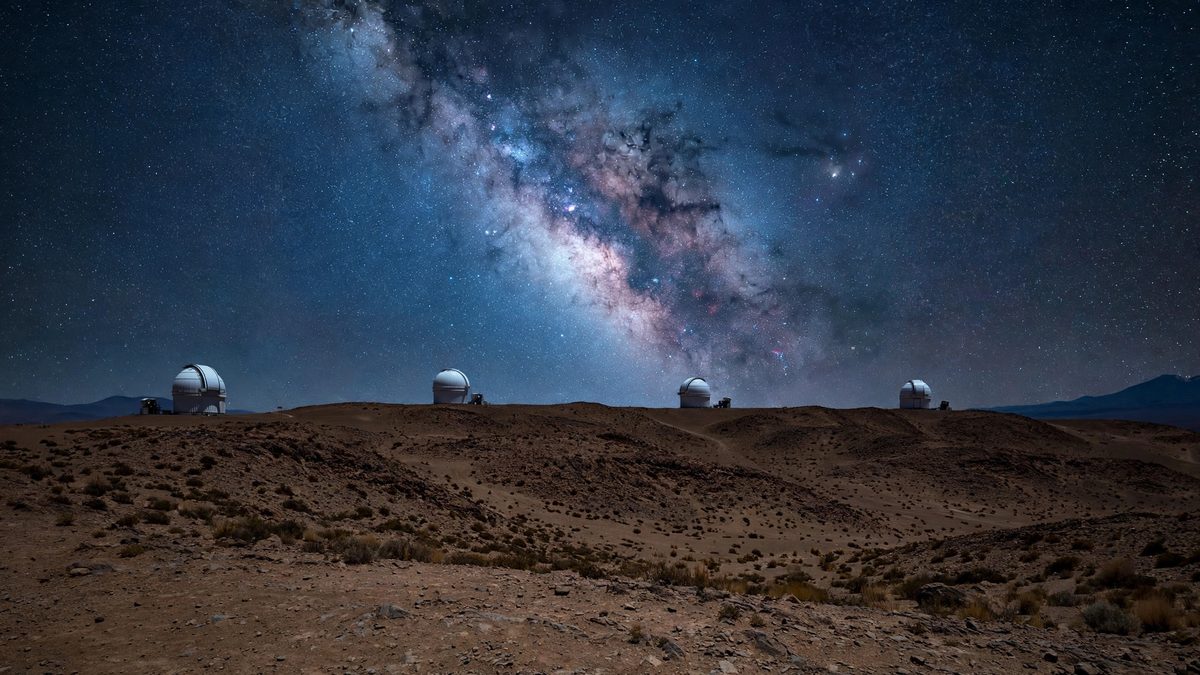
The Rubin Observatory has been breaking spin records since its first images. In earlier data, Vavilov’s team identified 19 large “super-fast rotators” in the observatory’s first nights of observations — asteroids over 500 metres wide spinning faster than once every 2.2 hours. The fastest of that earlier batch, a 710-metre asteroid called 2025 MN45, spins once every 1.9 minutes — faster than any asteroid more than 500 metres across ever seen, as New Scientist reported.
So 2025 MN45 holds the record for pure spin speed in its size class, while 491384 holds the record for the largest object spinning this fast. Both point to the same conclusion: a meaningful number of large asteroids are not rubble piles at all. As Vavilov said of the earlier record-holder, “even clay would not be enough to hold this asteroid together, so it’s probably one big rock or even solid metal.”
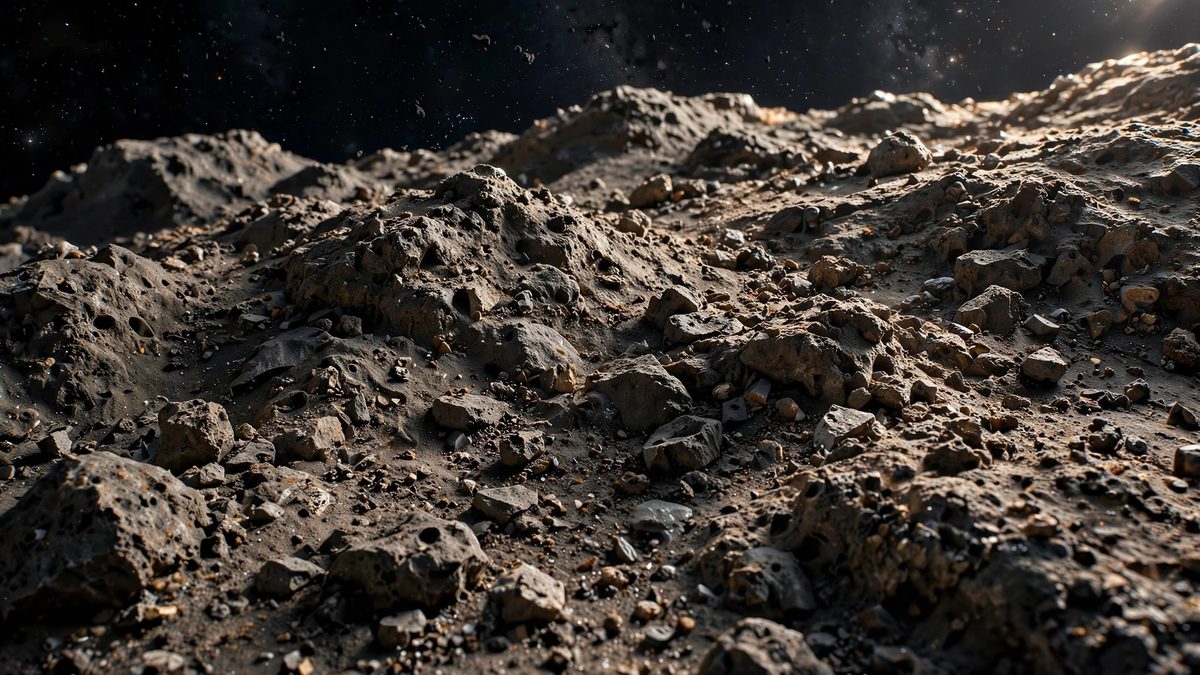
Why It Matters for How Asteroids Form
The spin barrier was one of the cleanest predictions in asteroid science, and these ultra-fast rotators are poking holes in it. If large asteroids can be solid bodies with real internal strength, then the standard story — that most large asteroids are gently assembled rubble piles — needs revision. The findings could ultimately change theories of how these bodies formed and evolved over the history of the solar system.
The Vera C. Rubin Observatory is expected to find many more of them. It carries the world’s largest digital camera — a 3,200-megapixel instrument roughly the size of a small car — and its planned 10-year survey of the southern sky will watch vast numbers of asteroids night after night. With better software to flag unreliable measurements automatically, astronomers expect a far clearer picture of how asteroids are put together and how fast they can spin.

Key concepts: Rubble-pile asteroid · Spin barrier · Vera C. Rubin Observatory · 2025 MN45 · Light curve
As of October 2026, asteroid 491384 — a 2.53-kilometre (1.57-mile) object that rotates once every 4.18 minutes — is the largest ultra-fast-spinning asteroid ever reported. It was found in Vera Rubin Observatory data by Dmitrii Vavilov’s team at the University of Washington.
Asteroids larger than about 150 metres are thought to be loose “rubble piles” held together only by weak gravity, so they rarely complete a full rotation in less than 2.2 hours. An object spinning faster than this must be held together by internal strength rather than gravity alone.
Because it must be a largely solid body rather than a rubble pile. To spin once every 4.18 minutes without disintegrating, the asteroid needs substantial internal cohesion — more like a single rock or even solid metal than a loose collection of boulders.
By tracking brightness. Irregular asteroids reflect more or less sunlight as they turn, so measuring how the brightness changes over time reveals the rotation period. New software can do this automatically while flagging unreliable measurements caused by gaps in observation.
No. This discovery is about understanding asteroid structure and formation, not about impact risk. The Vera Rubin Observatory’s ongoing sky survey will catalog far more of these objects and their orbits in the coming decade.