What Is the G7 Summit? Members, Purpose & 2026 Recap

What is the G7 summit? Strip away the motorcades and the lakeside photo ops, and it is this: once a year, the leaders of seven of the world’s largest advanced democracies — plus the European Union — sit in the same room for two or three days to coordinate on the global economy, security crises, and whatever emergency is dominating the headlines. There is no treaty to sign, no binding vote to take. The summit produces communiqués, joint statements, and coordinated policy — soft power, exercised at the highest level. I cover breaking news and current events, and in a world of hot takes I stick to verified facts, so this explainer covers the members, the history, what these summits actually accomplish, the serious criticisms, and a recap of the most recent meeting: the 52nd summit, held 15–17 June 2026 in Évian-les-Bains, France.
Whether you think the G7 is essential diplomacy or an expensive photo opportunity probably depends on what you believe summits are for. By the end of this, you will have the facts to decide for yourself.
What Is the G7 Summit? The Members
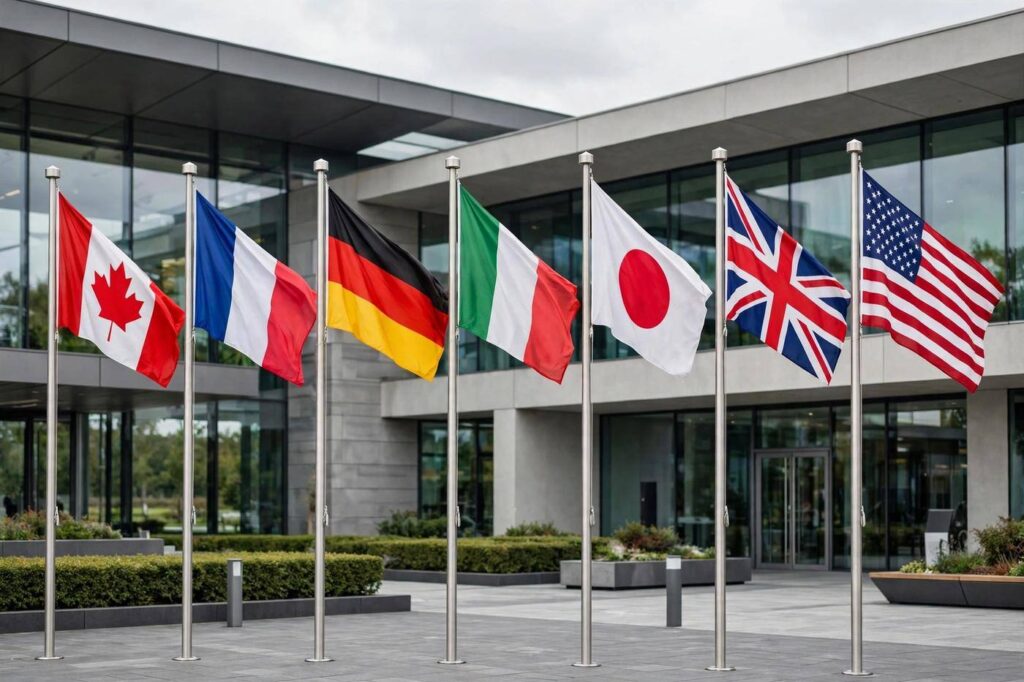
The “7” in G7 stands for seven member countries: Canada, France, Germany, Italy, Japan, the United Kingdom, and the United States. The European Union also participates as a “non-enumerated member” — it attends and negotiates but does not hold the rotating presidency or host summits.
Together these economies represent a huge share of global GDP and an even larger share of global political and military weight. That concentration is both the group’s power and the core of the criticism against it — more on that below.
Each year, one member holds the rotating presidency and hosts the leaders’ summit, setting the agenda. France held the presidency in 2026. And each summit invites guest countries beyond the membership — outreach partners chosen by the host. At Évian in 2026, the invited guests included Brazil, Egypt, India, Kenya, South Korea, Qatar, Ukraine, and the United Arab Emirates, reflecting France’s stated aim of widening the conversation beyond the traditional Western club.
A Short History: From Oil Crisis to Évian
The G7 was born in crisis. After the 1973 oil shock sent Western economies reeling, the leaders of six major industrial democracies — France, West Germany, Italy, Japan, the UK, and the US — met in 1975 at Rambouillet, France, to coordinate an economic response. Canada joined the following year, making it seven. For its first decade and more, the group was essentially an economic fire brigade: inflation, currency instability, energy shocks.
Russia joined in 1998, turning it into the G8 — and was suspended in 2014 after the annexation of Crimea, returning the format to seven. Over the decades the agenda sprawled far beyond economics into security, climate, development, health, and technology. The summits grew from intimate fireside chats into massive logistical operations with thousands of delegates, journalists, and security personnel.
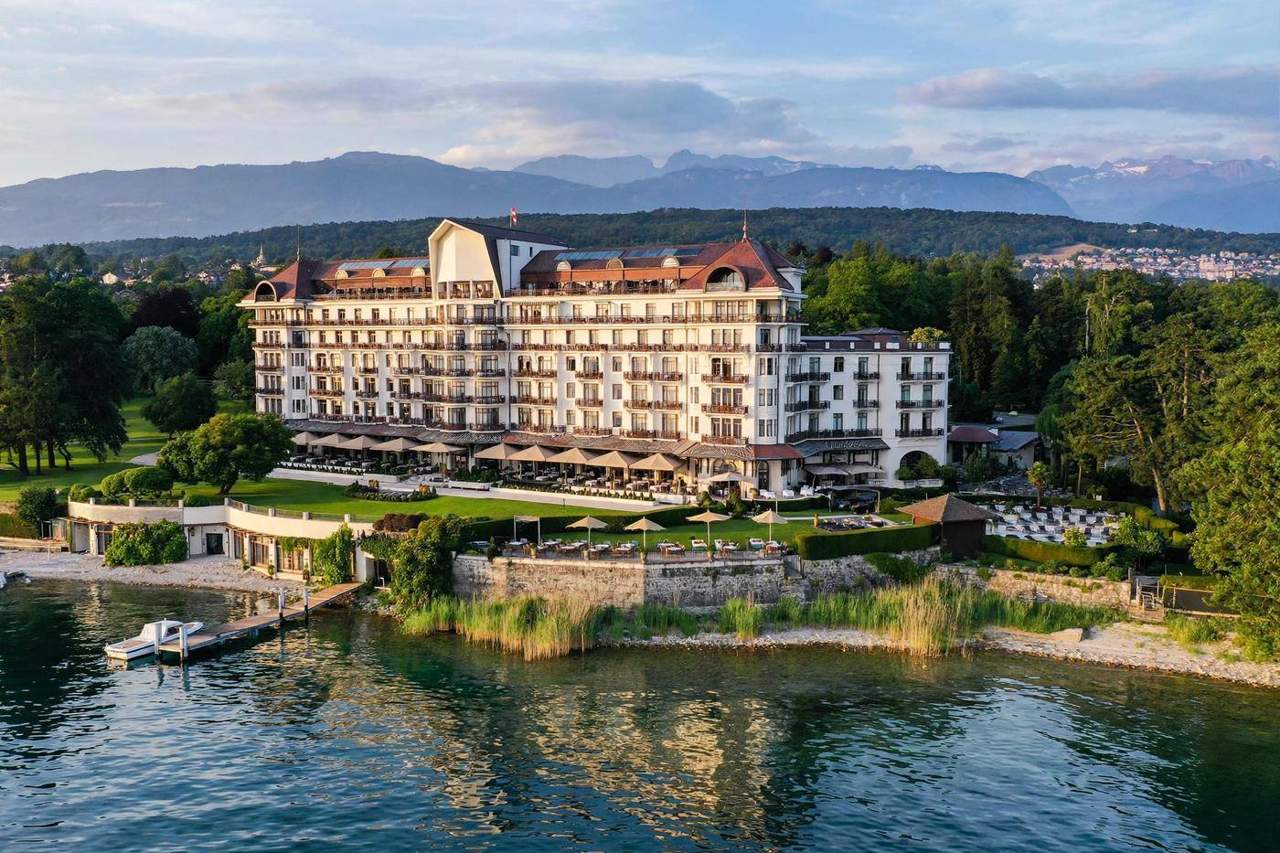
The 2026 summit returned to Évian-les-Bains, the French spa town on Lake Geneva — the same town that hosted the G8 summit in 2003, making Évian the first French town to host such a leaders’ summit twice. Leaders gathered at the Hôtel Royal from 15 to 17 June 2026, with Geneva, just across the Swiss border, serving as the main arrival point for delegations.
What Summits Actually Achieve
This is the honest question, and the honest answer is: less than the press releases claim, more than the cynics admit. G7 summits do not pass laws. What they do is coordinate — and coordination among the world’s biggest economies matters in specific, traceable ways.
Crisis coordination. The group’s finest hours have been rapid joint responses: coordinated sanctions regimes, synchronized central-bank action during financial panics, joint vaccine and aid commitments during health emergencies. When seven major economies move together, markets and adversaries notice.
Agenda-setting. Summits put issues on the global agenda that then flow into the G20, the UN, and national policy. Climate finance targets, anti-corruption standards, and global minimum tax discussions all spent time as G7 communiqué language before becoming broader policy.
Joint statements as signals. A joint statement on Ukraine or the Middle East does not end a war, but it signals unity to allies and adversaries alike — and disunity, when a summit fails to agree, is itself a signal the world reads carefully. Diplomats will tell you that the real work happens in the bilateral pull-asides between leaders on the summit margins, where the cameras are not.
At Évian in 2026, leaders issued joint statements covering Ukraine, the Middle East, critical minerals, and global economic imbalances. The critical-minerals discussion — strategies for securing supply chains independently of China — was widely reported as one of the summit’s substantive focuses, alongside next steps on a West Asia peace framework that had dominated headlines going into the meeting.
The Criticisms: The Case Against the G7
No honest explainer skips this. The G7’s critics make serious arguments:
It is unrepresentative. Seven wealthy democracies plus the EU do not reflect the actual distribution of global economic and demographic weight. The world’s most populous nations — India, China, Indonesia — are not members. Critics call it a rich-countries’ club making decisions that affect everyone, and the guest invitations, while real, do not change the membership math.
It produces words, not enforcement. Communiqués are not binding. Pledges on climate finance and development aid have a well-documented history of falling short of the announced numbers, and there is no mechanism to compel compliance. The gap between summit language and follow-through is the critics’ favorite exhibit.
It is enormously expensive. Hosting a modern summit costs the host country hundreds of millions, the vast majority of it security. The 2026 Évian summit illustrated the spillover vividly: with the venue sitting near the Swiss border, Switzerland — not a G7 member — deployed thousands of military personnel in support of security operations and absorbed significant costs and disruption, straining cross-border relations. Thousands of protesters gathered in nearby Geneva under the “No G7” banner, organized by a coalition of over 200 groups, highlighting grievances from economic inequality to climate inaction.
The format may be outdated. In a world where the G20 exists and power is diffusing, some analysts argue the G7 is a legacy format — useful for Western coordination, but no longer the steering committee of the global economy it once was.
Defenders counter that Western coordination is precisely the point: in a fragmenting world, a forum where aligned democracies can align quickly has value that a larger, more divided body cannot provide. Both arguments have merit, which is why the debate never ends.
How the Summit Works Behind the Scenes
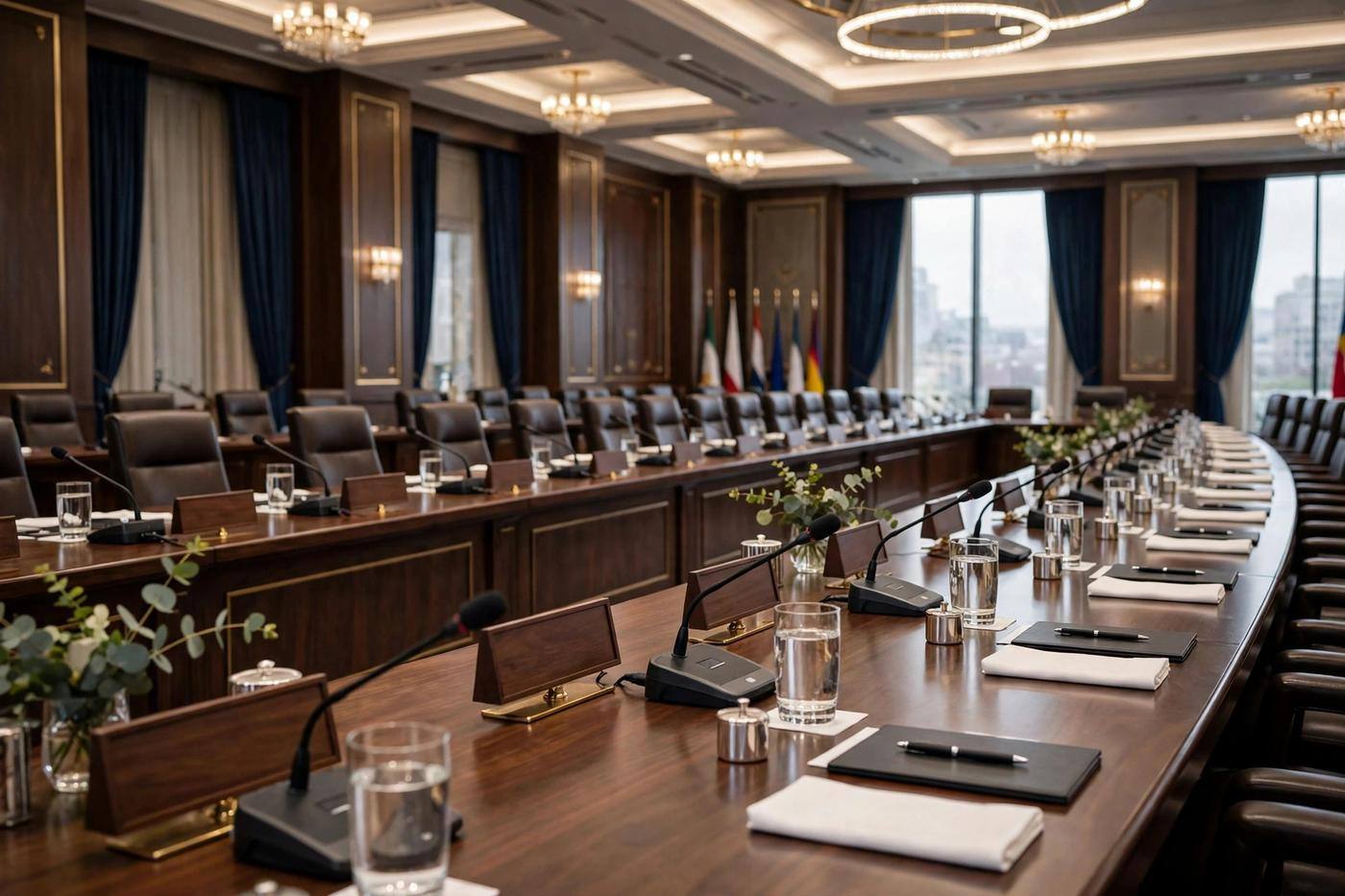
The leaders’ meeting is the tip of a year-long process. Each member appoints a “sherpa” — a senior official who negotiates the agenda and drafts the communiqué language for months in advance. Ministerial meetings (finance, foreign affairs, and others) happen throughout the presidency year, building toward the leaders’ summit. By the time the leaders sit down, most of the communiqué is already negotiated; the leaders resolve the remaining disagreements and handle the crises that erupted that week — because something always erupts that week.
Worth knowing: the G7 has no headquarters, no permanent staff, and no legal existence as an organization. It is a process, not an institution — which is why it can be nimble and why its commitments depend entirely on members following through at home.
G7 vs. G20 vs. BRICS: Why So Many Groups?
If the alphabet soup confuses you, you are not alone. The G20 is the bigger tent: 19 countries plus the EU and African Union, including China, India, Brazil, and Indonesia. It is more representative of the actual global economy but much harder to move — getting 20-odd diverse powers to agree is slow by design. The G7’s defenders argue this is exactly why the smaller group still matters: when seven aligned democracies need to coordinate fast, they can.
BRICS is the other pole: originally Brazil, Russia, India, China, and South Africa, now expanded further. It positions itself as the voice of the Global South and an alternative to Western-led institutions. The dynamic between these forums — G7 coordination on one side, BRICS asserting multipolarity on the other — is one of the defining structural stories of current geopolitics, and it is the backdrop against which every G7 summit now takes place.
None of these groups replaced the others. They overlap, compete, and occasionally cooperate, which is why summit season every year feels like a crowded calendar of competing group photos.
What Happens After the Cameras Leave
The summit ends, the motorcades leave, and then comes the part that determines whether any of it mattered: implementation. Each member government is supposed to translate communiqué commitments into national policy — budgets, regulations, legislation. Watchdog groups and think tanks track this follow-through year-round, scoring members on how many pledges they actually kept, and the scores are consistently mixed: strong on crisis coordination, weaker on long-term development and climate finance pledges.
This is the fairest lens for judging a summit. Not the family photo, not the joint statement’s adjectives — but what each capital did in the twelve months after. By that measure, summits are neither the triumphs their hosts claim nor the empty theater their critics allege. They are a coordination mechanism with a patchy record, which in international politics counts as roughly normal.
Frequently Asked Questions
Which countries are in the G7?
The G7 members are Canada, France, Germany, Italy, Japan, the United Kingdom, and the United States. The European Union participates as a non-enumerated member — it attends summits and negotiations but does not hold the rotating presidency. Guest countries are invited each year at the host’s discretion.
Where was the 2026 G7 summit held?
The 52nd G7 Summit was held 15–17 June 2026 in Évian-les-Bains, France, at the Hôtel Royal on Lake Geneva. France held the rotating presidency. It was the second time Évian hosted, after the 2003 G8 summit, and invited guests included Brazil, India, Kenya, South Korea, Ukraine, Qatar, Egypt, and the UAE.
What is the difference between the G7 and G20?
The G7 is seven advanced democracies (plus the EU) focused on coordination among aligned economies. The G20 is a larger forum of 19 countries plus the EU and African Union, including major emerging economies like China, India, and Brazil. The G7 is smaller, more like-minded, and faster to agree; the G20 is more representative but harder to move.
Are G7 decisions binding?
No. G7 summits produce communiqués, joint statements, and political commitments, but nothing legally enforceable. Implementation depends on each member acting through its own national laws and policies. This non-binding nature is both the group’s flexibility and the core of the criticism that summits produce more words than results.
Why was Russia removed from the G8?
Russia joined the group in 1998, making it the G8. It was suspended in 2014 after the annexation of Crimea, which the other members condemned as a violation of international law. The format reverted to the G7, and Russia has not been readmitted.