What Is Project Based Learning? Definition & Examples

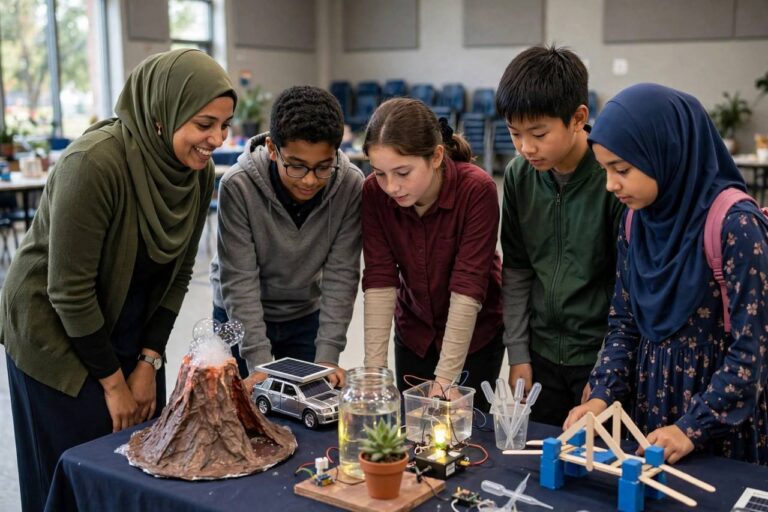
Every year, a few of my students ask why we are “doing a project” instead of just learning the material — and every year, by the end of the unit, they answer their own question. If you have ever wondered what is project based learning, here it is in a nutshell: students learn by working through a real, meaningful project, not by memorizing content for a test and forgetting it the next week. I have watched quiet kids become team leaders and chronic underachievers produce work that stunned their parents, all because the project gave them a reason to care.
This guide explains project-based learning (PBL) in plain English: the definition, the seven design elements that separate real PBL from a poster glued together the night before, concrete classroom examples, and how PBL differs from the traditional projects most of us grew up with.
What Is Project Based Learning? The Definition
Project-based learning is a teaching method in which students gain knowledge and skills by working for an extended period on a project that investigates and responds to an authentic, engaging, and complex question, problem, or challenge. That is the formal definition used by the Buck Institute for Education (PBLWorks), the leading authority on the method — but here is my classroom translation: instead of learning about something and then doing a project to prove it, students learn through the project itself.
The shift sounds subtle but changes everything. In a traditional unit on water quality, students read a chapter, take notes, and maybe test a sample at the end. In a PBL unit, students start with a driving question — “Is our town’s tap water safe?” — and learn the chemistry, the statistics, and the civic process because the project demands it. The knowledge has a job to do.
The 7 Design Elements of Real PBL
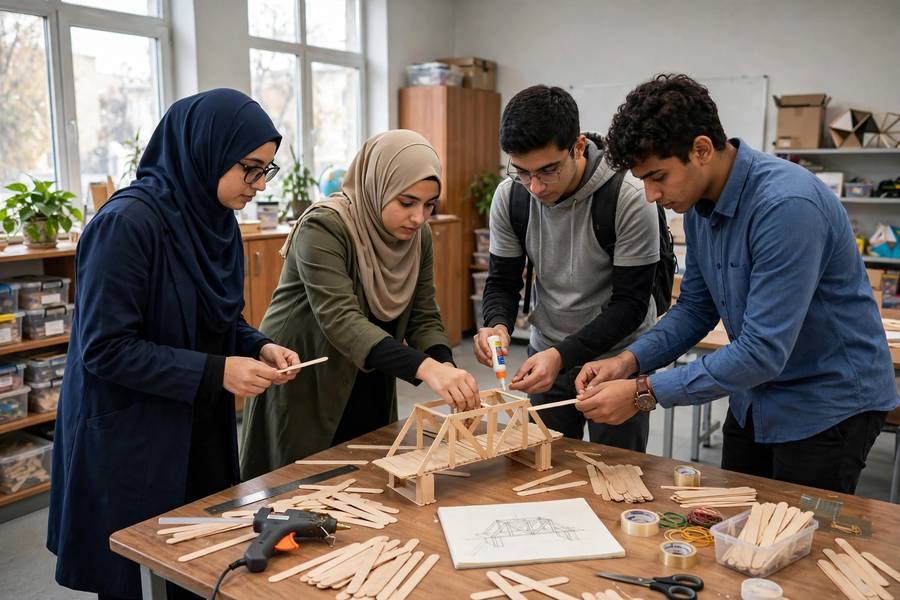
Not every classroom project qualifies as project-based learning. PBLWorks identifies seven essential design elements — I use this list as a checklist before I call anything PBL:
- A challenging problem or question. The project starts with a driving question that is open-ended and worth answering — not “make a poster about photosynthesis” but “how could our school reduce its carbon footprint?”
- Sustained inquiry. Students spend real time investigating — days or weeks, not one class period. They ask questions, find resources, and follow leads the way actual researchers do.
- Authenticity. The project connects to the real world: real audiences, real data, real impact. A letter to the actual city council beats a letter to an imaginary one.
- Student voice and choice. Students make real decisions — what to investigate, how to present it, how to divide the work. This is where ownership (and motivation) comes from.
- Reflection. Students regularly stop to think about what they are learning and how their thinking is changing. Reflection turns activity into understanding.
- Critique and revision. Students give each other structured feedback and revise their work, the way professionals do. First drafts are starting points, not final products.
- A public product. The work is presented to an audience beyond the teacher — parents, community members, experts. Knowing real people will see the work changes the effort students invest.
Miss most of these and you have a fun activity. Hit all seven and you have PBL — and the difference in student engagement is night and day.
Real Examples of Project-Based Learning
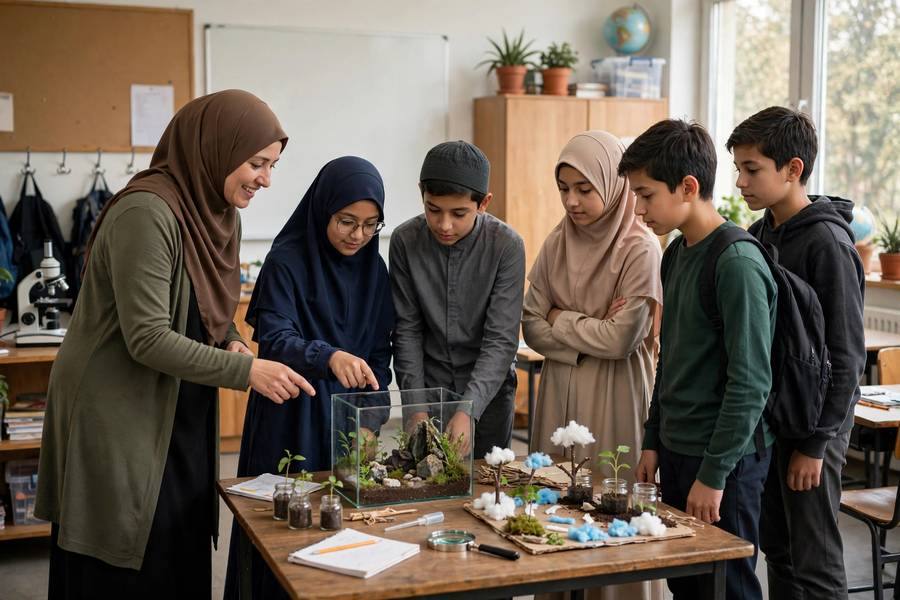
Abstract definitions only go so far, so here are PBL units I have seen work beautifully:
- Elementary — “How can we help the birds in our schoolyard?” Students research local bird species, design and build feeders, track visitors for a month, and present findings to the PTA. Science, math (data tracking), and writing, all inside one project.
- Middle school — “Design a tiny house for a family of four.” Students work with area, scale, budgeting, and sustainability constraints, then build physical or digital models and pitch them to a panel. Geometry stops being abstract when the bathroom does not fit.
- High school — “Is our tap water safe?” Students learn water chemistry, collect and test samples, analyze data statistically, research local policy, and present recommendations to the town council. Several of my students have done versions of this, and the council members always take notes.
- Across grades — “Create a museum exhibit.” Whether the topic is ancient Egypt or the Civil Rights Movement, students research like curators, write like exhibit designers, and open their museum to parents for an evening. The public product element shines here.
Project-Based Learning vs. Traditional Projects
This is the distinction that matters most, because most “projects” in school are not PBL at all:
- Traditional project: Learn the content first (lectures, textbook), then do a project at the end to show what you learned. The project is the dessert.
- PBL: Start with the project and learn the content because the project requires it. The project is the main course.
In the traditional model, a student who already knows the material coasts, and a student who struggled with the lectures has nothing to build the project on. In PBL, both students need the knowledge to move forward — the struggling student gets a reason to learn it, and the advanced student gets depth and complexity to chew on. Assessment shifts too: instead of one test score, I assess the process (research, collaboration, revision) and the product, often with rubrics students help design.
Does Project-Based Learning Actually Work?
Fair question, and one I asked before I committed to it. The research base is encouraging: multiple studies have found that students in well-designed PBL units perform as well or better on standardized assessments than peers in traditional instruction — and notably better on measures of deeper understanding, problem-solving, and retention months later. The effects are strongest for students who struggle in traditional settings, which matches exactly what I see in my classroom.
The honest caveats: PBL done badly — vague questions, no scaffolding, “figure it out yourselves” — is worse than a good lecture. It demands more planning from teachers, more class time per topic (so you cover fewer topics, but more deeply), and a tolerance for the productive mess of real inquiry. When I started, my first two PBL units were shaky. The third one changed how I teach. If you take one idea from this guide, make it this: the question matters more than the project. A great driving question pulls learning forward on its own; a weak one turns even the best-planned project into busywork. Spend your planning time on the question, and the rest gets easier.

PBL Across Different Subjects
One of the most common objections I hear is “that works for science, but not for my subject.” In my experience, PBL adapts to nearly everything — the driving questions just change shape. In math, students design a budget for a real school event or analyze whether the cafeteria’s pricing is fair, learning percentages and statistics because the answers matter. In history, students curate a museum exhibit or produce a documentary, wrestling with primary sources the way historians do. In language arts, students write and publish real books for younger students, run a class literary magazine, or create podcasts with genuine audiences.
Even subjects that seem lecture-bound bend toward PBL. World languages thrive on projects like planning a trip entirely in the target language or producing a cooking show. Art and music are naturally project-based already — the shift is adding the inquiry, critique, and public product structure. The through-line is always the same: a real question, real work, and a real audience.
Parents sometimes worry that PBL means less rigorous learning. In my experience it is the opposite: when a student must defend water-quality findings to actual town council members, they learn the chemistry better than they would for a multiple-choice test — because getting it wrong has real stakes. Rigor does not come from the format of the assessment. It comes from the authenticity of the work.
How to Start With PBL (for Teachers and Homeschoolers)
If you are a teacher curious about trying it: start small. Convert one unit, not your whole year. Pick a topic you know cold (so you can improvise when inquiry goes sideways), write a driving question that genuinely interests you, and plan the scaffolding — the checkpoints, mini-lessons, and feedback rounds that keep students from drowning. And steal shamelessly: PBLWorks and dozens of teacher communities share complete project plans.
Homeschooling families, take note: PBL is a natural fit for home education, where flexible schedules allow the deep dives that bell schedules interrupt. If you are exploring that path, this guide on how to start homeschooling covers the practical foundations — and PBL slots right into them.
Frequently Asked Questions
What is project-based learning in simple words?
Project-based learning is a teaching method where students learn by working on a real-world project over days or weeks — investigating a genuine question and creating something for a real audience — instead of just memorizing content for tests.
What are the 7 elements of project-based learning?
The seven design elements are: a challenging problem or question, sustained inquiry, authenticity, student voice and choice, reflection, critique and revision, and a public product. All seven together distinguish true PBL from ordinary classroom projects.
What is an example of project-based learning?
A classic example: students investigate whether their town’s tap water is safe — learning chemistry to test samples, statistics to analyze data, and civics to present recommendations to the local council. The project drives the learning.
Is project-based learning better than traditional learning?
Research suggests well-designed PBL matches or beats traditional instruction on standardized tests and does better on deep understanding and long-term retention. But quality matters enormously — poorly planned PBL underperforms a good lecture.
What is the difference between PBL and doing a project?
In a traditional project, students learn content first and the project demonstrates it at the end. In PBL, the project comes first and students learn the content because the project requires it. The project is the vehicle for learning, not the decoration on top.
Can project-based learning work for young children?
Absolutely — with age-appropriate scaffolding. Young children are natural inquirers; a kindergarten PBL unit like “how can we help the birds in our schoolyard” works because the question is concrete, the investigation is hands-on, and the audience (parents, the PTA) is real.