What Is STEM Education? A Complete Parent’s Guide

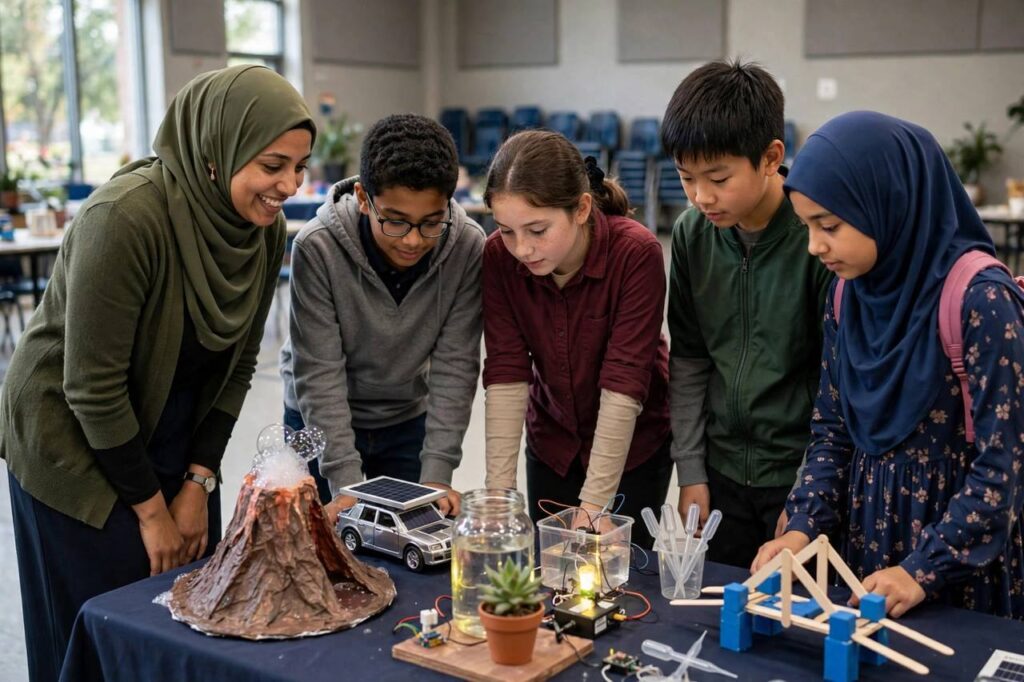
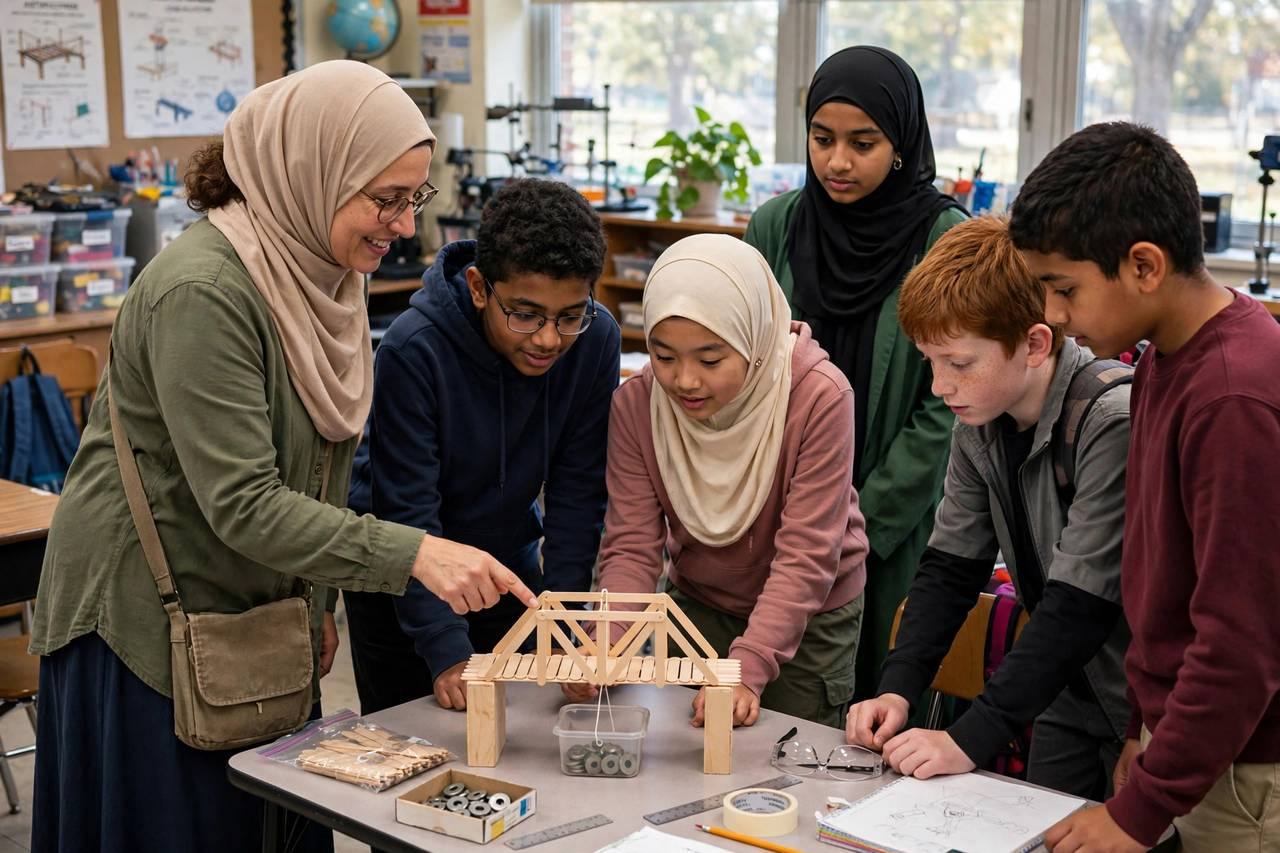
I still remember the first time a parent asked me, straight-faced, whether STEM education was a new kind of medicine. We were at a school science night, her son was showing off a bridge made of popsicle sticks, and she whispered the question like she was afraid it was obvious. It was not obvious at all. If you have ever quietly wondered “what is STEM education” — while nodding along in a parent-teacher meeting, say — this guide is for you. STEM stands for Science, Technology, Engineering, and Math, and it describes a way of teaching where those four subjects are woven together instead of being kept in separate boxes.
I have spent years in classrooms watching this approach in action, and I can tell you the dictionary definition only gets you halfway there. STEM education is not just a label on a curriculum. It is a philosophy about how children learn best: by doing, by building, by failing at something interesting and trying again. When your kid programs a robot to navigate a maze instead of filling out a worksheet about angles, that is STEM. When she tests which paper airplane design flies farthest and graphs the results, that is STEM too. The subjects stop being abstract topics to memorize and become tools for solving real problems.
What Is STEM Education? The Short Answer
At its simplest, what is STEM education? It is an integrated approach to learning that connects science, technology, engineering, and math around real-world problems. Instead of learning fractions on Monday, reading about ecosystems on Tuesday, and never connecting the two, students work on projects where all the subjects show up naturally. Designing a water filter for a village, for example, requires science (what is in the water), math (how much water needs filtering), engineering (how to build it), and technology (what tools and materials to use).
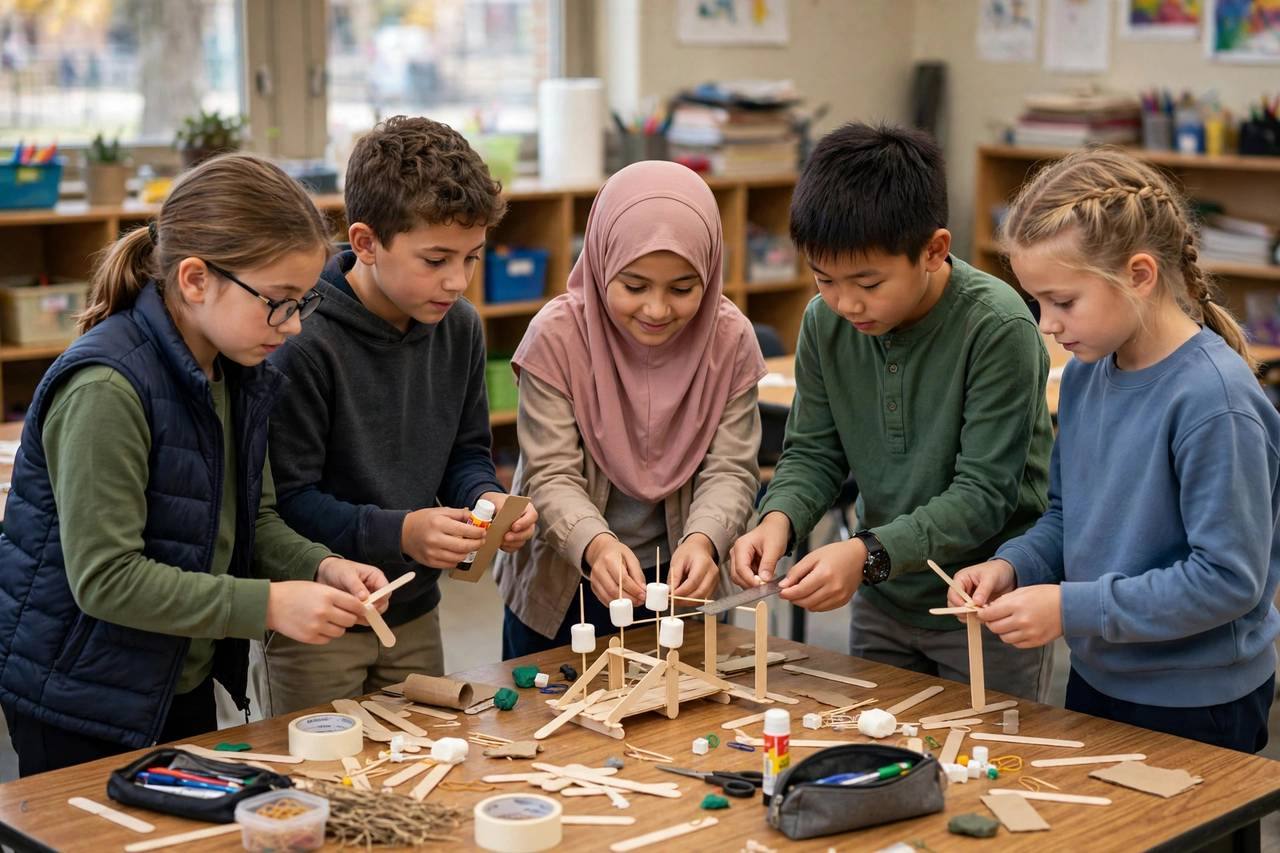
The word “integrated” does the heavy lifting there. A school that teaches excellent science and excellent math in completely separate rooms is not automatically a STEM school. The magic happens when a teacher deliberately builds lessons where the disciplines depend on each other. I once watched a fourth-grade class spend three weeks designing playgrounds for a fictional school. They measured areas, budgeted fake money, built scale models, and presented their designs to “the city council” (a panel of very serious fifth graders). Every single subject standard was covered. None of the kids called it math class.
Where the Idea Came From
The acronym itself is younger than most of the students it now describes. In the early 2000s, the U.S. National Science Foundation began using the term STEM to describe its funding programs for science, technology, engineering, and mathematics. The label stuck, and around 2009 it exploded into the mainstream as policymakers worried that students were falling behind in technical fields and that the future workforce would not be ready for an economy built on innovation.
But the idea behind it is much older. Hands-on, project-based learning goes back to educators like John Dewey, who argued a century ago that children learn by doing rather than by passively receiving information. What the STEM movement did was give that philosophy a name, a funding stream, and a sense of urgency. States rewrote standards, schools built maker labs, and “STEM night” became a fixture on the school calendar alongside the book fair.
It is worth knowing the history because it explains why STEM looks different everywhere you go. Some schools treat it as a dedicated class with robotics kits and 3D printers. Others treat it as a teaching method applied across every subject. Neither is wrong — the label covers a whole spectrum, and that flexibility is both its strength and the reason it confuses so many parents.
The Four Letters, Explained One by One
Let us open up the acronym and look at what each letter actually contributes, because each one brings something the others cannot.
Science: asking questions about how the world works
Science is the inquiry engine of STEM. It is the part where students ask “why” and “what if” and then test their guesses instead of just looking up the answer. In a STEM classroom, science is rarely confined to a textbook chapter. Kids might grow plants under different light conditions, test the pH of local water, or figure out why one material insulates better than another. The point is the habit of observation and evidence — skills that matter whether or not a child ever becomes a scientist.
Technology: the tools we build and use
Technology in STEM means far more than screens and apps, though those are part of it. The word really means any tool humans design to solve problems — from a simple lever to a coding platform. Students might learn to program with block-based languages, fly a drone to map a field, or simply use digital sensors to collect data for an experiment. The goal is not gadget worship; it is understanding that technology is something you create with, not just something you consume.
Engineering: designing solutions under constraints
Engineering is the heart of most STEM projects, and it is the letter most schools neglected before the STEM movement. Engineering asks students to design, build, test, and improve. The engineering design process — identify a problem, brainstorm, build a prototype, test it, improve it — is the single most valuable thinking routine STEM education teaches. It normalizes failure in a way traditional schooling rarely does. A bridge that collapses is not a bad grade; it is data.
Math: the language everything else is written in
Math is the thread that runs through the other three. Measuring, calculating, graphing, modeling — none of the other disciplines work without it. What STEM changes is the context. Instead of solving thirty identical equations, a student calculates the load her bridge must bear, or works out the gear ratio that makes her robot turn correctly. Math stops being a performance and becomes a tool, which is exactly what it is in adult life.
What About STEAM? Where the A Comes In
You may also have seen the term STEAM, with an A for Arts slipped into the middle. The idea is that design, creativity, and the humanities belong in the mix too — that a robot is better if someone thought about how it looks and feels, and that data is more powerful when you can communicate it beautifully. If you are trying to sort out the difference, I wrote a detailed side-by-side comparison of STEM vs STEAM education that walks through where the two approaches overlap and where they split.
My honest take after years in schools: the STEM-versus-STEAM debate matters less than people think. Good STEM teaching is already creative — designing an elegant solution is a creative act. And good art teaching already involves problem-solving. The letters are a convenient label; what matters is whether kids are making things, asking questions, and thinking hard.
What STEM Actually Looks Like in a Real Classroom
Forget the glossy brochures for a moment. Here is what I have actually seen when STEM is working well:
- A kindergarten class builds ramps from cardboard and tests which toy cars roll farthest, learning about slope and friction without hearing either word.
- Third graders design animal habitats in shoeboxes after studying ecosystems, then explain their design choices to visiting parents.
- Middle schoolers program microcontrollers to water the school garden automatically, combining coding with plant biology.
- High schoolers run a mock engineering firm, bidding on a contract to design a pedestrian bridge and defending their structural calculations.
Notice what all of these have in common: the students are producing something, the subjects are blended, and there is an audience beyond the teacher. That last part matters more than it seems. When kids know someone will actually see their work — parents, another class, a local engineer — the quality of their thinking jumps.
Why Schools Are Betting So Heavily on It
The push for STEM education is driven by two forces that reinforce each other. The first is economic: technical fields have grown faster than the overall job market for years, and employers consistently report that they need workers who can think quantitatively, use digital tools, and solve unstructured problems. Whether your child becomes an engineer or a nurse or a farmer, those skills transfer.
The second force is pedagogical, and frankly it is the one I care about more. Project-based, hands-on learning simply engages kids better than lectures do — especially kids who struggle in traditional classrooms. I have watched students who could not sit still through a forty-minute math lesson spend two hours debugging a robot without a single complaint. That is not a trick. It is what happens when the work feels real.
There is also an equity argument that deserves attention. For decades, technical subjects were quietly gated — certain kids were “math people” and others were not, and the sorting often fell along lines of gender, race, and income. Well-designed STEM programs, especially ones that start early and emphasize collaboration over competition, have a real chance to break that pattern by giving every child the experience of being a builder and an investigator.
The Criticisms Worth Taking Seriously
No honest guide would skip the other side. STEM education has real critics, and some of their points are strong.
First, the acronym can become a marketing gimmick. I have seen schools slap “STEM” on a brochure because they bought a single robotics kit, while changing nothing about how they teach. The label is no guarantee of quality — always ask what students are actually doing.
Second, an overemphasis on technical subjects can squeeze out the humanities. Reading, history, and the arts build empathy, communication, and judgment — the very qualities that keep technical skill from being used badly. The best STEM programs I have seen are in schools that fiercely protect their humanities too.
Third, there is a genuine debate about whether “integrated” projects sometimes teach each subject more shallowly than focused, sequential instruction would. A student can build a wonderful bridge while still being fuzzy on the underlying physics. Good teachers guard against this by making sure the project serves the learning, not the other way around.
How Parents Can Support STEM Learning at Home
You do not need a 3D printer or a coding bootcamp to support STEM at home. In my experience, the highest-impact things parents do are embarrassingly simple:
- Ask “how” and “why” questions and resist the urge to supply the answer immediately. “Why do you think the toast burned on that side?” is a science lesson.
- Let them take things apart. An old appliance destined for recycling is a better teacher than most toys. (Supervise, obviously.)
- Cook together. Recipes are chemistry and math in disguise — ratios, temperatures, reactions.
- Build things. Cardboard, tape, and recyclables are the original maker kit. Challenge your kid to build the tallest tower or a container that keeps an egg safe when dropped.
- Normalize “I don’t know, let’s find out.” Looking something up together models the single most important STEM habit: curiosity followed by investigation.
The thread running through all of this is agency. STEM education, at its best, teaches children that the world is not a finished product they must memorize but a puzzle they are allowed to work on. That is a big idea for a small person — and honestly, it is a good reminder for the rest of us too.
Frequently Asked Questions
What is STEM education in simple terms?
STEM education is a way of teaching science, technology, engineering, and math together through hands-on projects and real-world problems, rather than as four separate subjects. The core idea is that students learn better by designing, building, and testing things than by memorizing facts in isolation.
What age should STEM education start?
There is no official starting age, and the principles work surprisingly early — even preschoolers can explore cause and effect by building ramps or mixing colors. That said, most schools introduce structured STEM activities in elementary school and ramp up the complexity through middle and high school. At home, you can start the habits (curiosity, building, questioning) at any age.
Is STEM education only for kids who are good at math?
No — and that is one of its biggest strengths. Because STEM projects involve designing, building, communicating, and collaborating, students who struggle with traditional math worksheets often shine. The math is still there, but it arrives as a tool for solving an interesting problem rather than as an abstract exercise, which changes everything for many learners.
What is the difference between STEM and STEAM?
STEAM adds an A for Arts to the STEM acronym, arguing that creativity, design, and the humanities should be formally included. In practice, strong STEM programs already involve plenty of creativity, and strong arts programs involve problem-solving. The distinction matters less than the quality of the teaching — look at what students actually do, not which acronym the school uses.
Does STEM education actually improve test scores?
The evidence is mixed but generally encouraging: well-designed STEM programs tend to improve engagement and conceptual understanding, and many studies show gains in math and science achievement. But results depend heavily on implementation quality. A school that just rebrands its science class as “STEM” will not see much change, while one that genuinely integrates project-based learning often does.
So the next time someone asks what STEM education is, you will have a real answer — not just the acronym, but the idea: children learn these subjects best when they are tangled together in work that feels real. And to that parent at science night: the popsicle-stick bridge held. The engineering was sound.