What Is a First Look Wedding? Pros, Cons & Tips

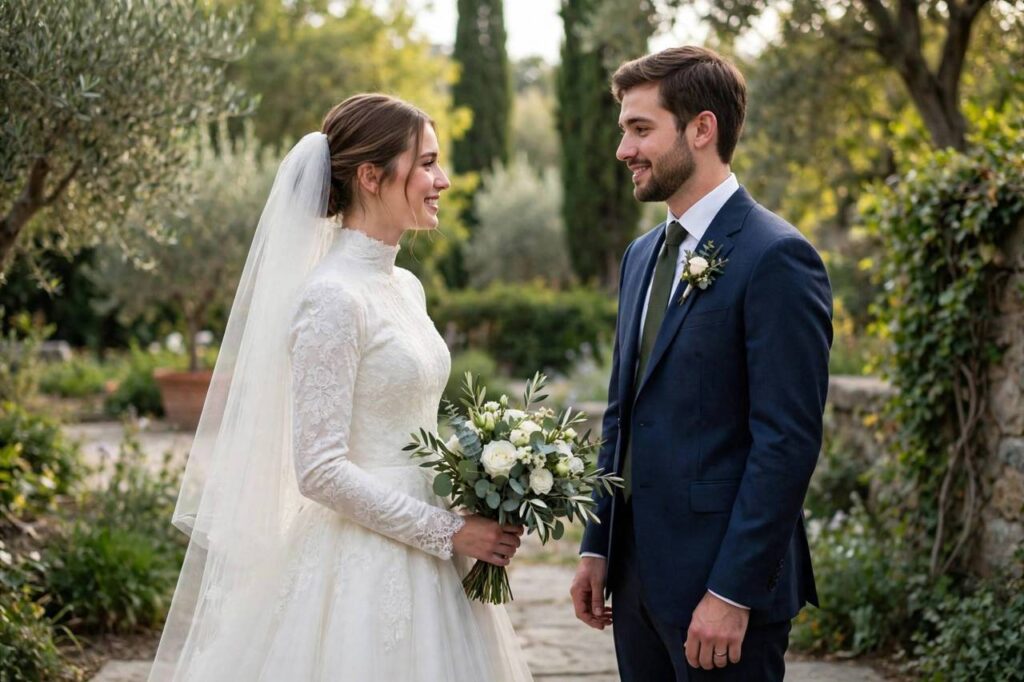
Picture this: it is your wedding day, you are in your dress, your heart is doing something irregular, and the person you love most is standing thirty feet away with their back turned. You tap their shoulder. They turn around. And for two whole minutes, before the chaos of the day swallows you both, it is just the two of you. That is a first look — and if you are wondering what is a first look wedding tradition all about, whether it is right for you, and what nobody tells you about the logistics, you are in exactly the right place.
I will be honest with you: the first look is one of those wedding topics where people have surprisingly strong opinions. Traditionalists will tell you it ruins the magic of the aisle moment. Photographers will tell you it is the best decision you will make all day. Couples who did it mostly say they would do it again. Couples who skipped it are split. My job is not to sell you on it — it is to give you the full, honest picture so the decision feels like yours, not something you were talked into by a vendor or talked out of by your grandmother.
What Is a First Look Wedding Moment, Exactly?
A first look is a private, planned moment before the ceremony when the couple sees each other for the first time on the wedding day. It is usually staged by the photographer in a quiet spot — a garden corner, an empty hallway, a scenic overlook — away from guests. The photographer positions one partner, brings in the other, and captures the reaction: the turn, the face, the hug, the tears. Then the couple gets a few private minutes together before the day’s schedule takes over.
It is worth knowing that this is a modern tradition, not an ancient one. The old custom of the couple not seeing each other before the ceremony comes from the era of arranged marriages, when the concern was literally that the groom might change his mind at the sight of the bride. Today, most couples have lived together for years. The first look is not breaking a sacred rule — it is updating a practical custom for couples who want a private moment in a very public day. That framing helps when the traditionalists in your family raise an eyebrow.
The first look is almost always photographed, and often filmed too, but at its core it is not a photo opportunity. It is a pocket of calm. Your wedding day will be the fastest day of your life — everyone says this, and everyone is right. The first look is the one moment engineered to slow it down.
The Real Pros: Why Couples Love Doing a First Look
You actually get to talk to each other. This is the reason couples cite most, and it surprised me the first few times I heard it. On a wedding day without a first look, many couples barely exchange a real sentence until the reception — the ceremony is formal, the receiving line is a blur, and suddenly it is 9 PM. The first look gives you a genuine, private conversation on the day you get married. That matters more than people expect.
It calms the nerves. Wedding-day anxiety is real, and it peaks in the hour before the ceremony when you are separated and spiraling. Seeing your person — the actual reason for all of this — dissolves that anxiety like nothing else. I have watched couples go from shaking to serene in about ninety seconds. Your partner is your calm. Use them.
The photos are better, and there are more of them. A first look lets your photographer shoot couple portraits, wedding party photos, and even family formals before the ceremony, in good light, while everyone is fresh and the hair and makeup are perfect. That means your cocktail hour is actually yours — you get to attend your own party instead of disappearing for an hour of photos while your guests wonder where you went.
Your timeline breathes. Without a first look, everything photo-related gets crammed between the ceremony and the reception. With one, the day has air in it. You can build in buffer time, actually eat, and stop feeling like you are being hustled from station to station. A relaxed couple photographs better than a stressed one, incidentally. The timeline benefit shows up in the pictures.
The Honest Cons: Why Some Couples Skip It
You lose the aisle reaction. Let us not pretend this is nothing. There is a specific, electric moment when the doors open and your partner sees you walking toward them in front of everyone you love, and a first look does dilute it. Couples who did the first look still cry at the aisle — I have seen it a hundred times — but it is a different cry. It is recognition rather than revelation. If that revelation moment is the thing you have dreamed about since childhood, that is a real cost. Honor it.
It requires an earlier start. A first look means hair and makeup start earlier, the photographer arrives earlier, and the whole day shifts forward. If you are not a morning person, or if your venue has tight getting-ready windows, this is a genuine logistical consideration, not a trivial one.
It can feel staged. Some couples find the choreography — stand here, wait for the tap, turn on cue — a little performative. A good photographer minimizes this, but if the idea of a scheduled emotional moment makes you cringe, listen to that instinct. The best wedding moments are the ones that feel like you.
Family politics. Sometimes the objection is not yours but your parents’. For some families, the not-seeing-each-other tradition carries real emotional weight. This is not a battle worth winning at the cost of the relationship. There are compromises — more on those below — that can give everyone most of what they want.
First Look Timeline Tips That Actually Work
If you decide to do it, the logistics make or break the experience. Schedule it 2 to 3 hours before the ceremony. That sounds like a lot, but it covers the first look itself (20 to 30 minutes including the private time after), couple portraits, wedding party photos, and family formals, with buffer built in. Rushing a first look defeats its entire purpose.
Pick the location in advance, with your photographer. You want good light, privacy from guests, and a clean background. This is a scouting conversation to have weeks before the wedding, not a game-time decision. Ask your photographer where the light will be at that hour — they think about this constantly, and the answer changes everything.
Build in truly private time. Tell your photographer you want five minutes after the first look with no cameras. Some photographers do this automatically; some need to be asked. Those five minutes — just the two of you, no audience, no posing — are the part couples remember most. Protect them.
Pad the getting-ready schedule. Everything takes longer than planned on a wedding day. Hair runs long, a button pops, someone cannot find the rings. If the first look has a hard start time, work backward with generous buffers. A calm morning produces a calm first look. And while you are building that schedule, a solid wedding planning checklist keeps the hundred other details from ambushing you in the final weeks.
Beautiful Variations: First Looks That Aren’t Just the Couple
The couple’s first look gets all the attention, but the concept has spawned some genuinely lovely variations. A first look with your dad (or mom, or whoever is walking you down the aisle) is one of the most emotional photos of any wedding day — that moment when a parent sees their child fully dressed as a bride or groom undoes even the toughest parents. Photographers consistently say these are among their favorite shots to capture.
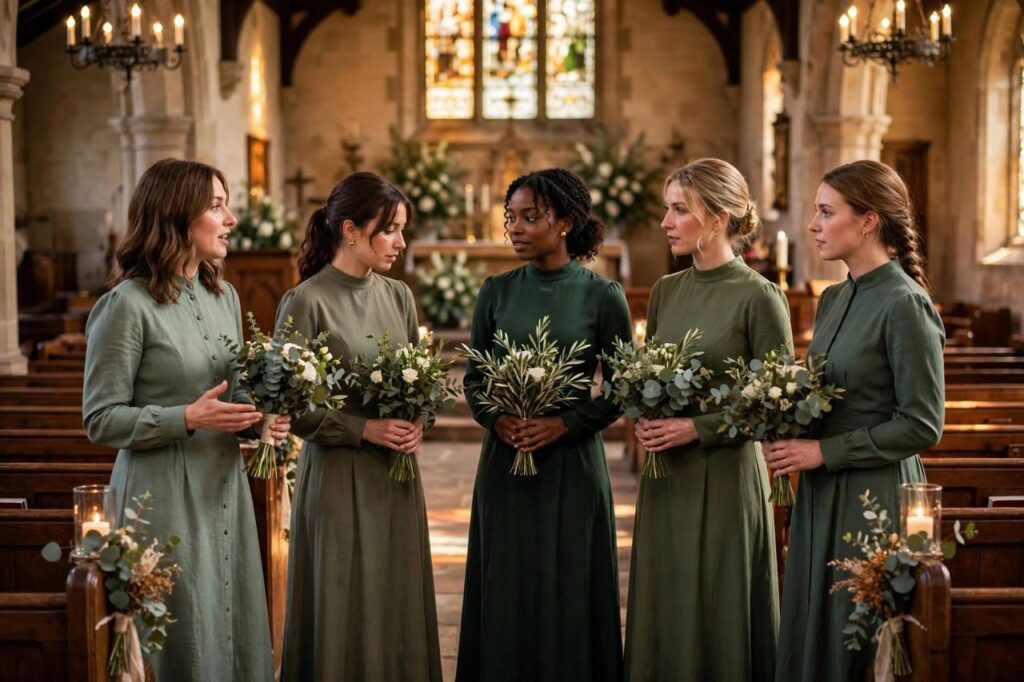
Couples are also doing first looks with their wedding party — a fun, high-energy reveal with your best friends that produces fantastic reactions and even better photos. And the first touch is a beautiful compromise for couples who want the connection without the visual reveal: you stand on opposite sides of a door or around a corner, hold hands, exchange letters or vows, and pray together, all without seeing each other. You get the calm and the intimacy; the aisle keeps its revelation.
My favorite variation might be the private vow exchange during the first look. Many couples now write personal vows they share privately at the first look, then keep the ceremony vows short and traditional. It solves the “crying too hard to get through the vows in front of 150 people” problem and gives the first look a weight beyond the photos. If you are writing your own vows, consider this structure seriously.
How to Decide: A Framework, Not a Verdict
Here is how I suggest couples think about it. First, name what matters most to you about the day. Is it the aisle moment? The party? The photos? Time alone together? Rank them honestly. If the aisle revelation is number one by a mile, skip the first look. If time together and good photos top the list, do it. There is no universally right answer — there is only the answer that fits your priorities.
Second, talk to your photographer early. A good wedding photographer has shot hundreds of weddings with and without first looks, and they can show you the difference in the galleries. Ask to see a full gallery from each type, not just the highlights. You will feel the difference in the day’s energy, and that feeling is data.
Third, check the logistics honestly. Look at your venue’s timeline, your vendors’ arrival times, and the light at the hour you would need. Sometimes the decision makes itself: a winter wedding with a 4 PM ceremony and sunset at 4:45 basically requires a first look if you want daylight portraits. Let the constraints speak.
And finally, remember what the day is actually about. I say this in everything I write because I mean it: a great wedding is not about the perfect day. It is about starting a marriage right. The first look decision will not make or break your marriage. Choose the version that lets you be most present with your person, and you will have chosen correctly. Oh — and when you are choosing the dress you will be revealing, our guide on how to choose a wedding dress is the practical companion to this emotional decision. Pack a wedding day emergency kit too — future you will be grateful.
Frequently Asked Questions
Does a first look ruin the moment walking down the aisle?
It changes it, but couples overwhelmingly say it does not ruin it. The aisle moment becomes about the ceremony and the crowd rather than the first sight — many couples report crying harder at the aisle because they were calm enough to actually take it in. If the surprise reveal is your dream, though, that feeling is valid and worth protecting.
How long should a first look take?
Plan 20 to 30 minutes for the first look itself, including a few private minutes afterward. Couple portraits typically take another 30 to 45 minutes, and wedding party and family photos add more. Most photographers recommend blocking 2 to 3 hours before the ceremony for the full pre-ceremony photo session.
What is a first touch instead of a first look?
A first touch is when the couple meets privately before the ceremony without seeing each other — holding hands around a corner or through a doorway, exchanging letters, or praying together. It gives you the calm and connection of a first look while preserving the visual surprise of the aisle moment.
Should we do a first look if our ceremony is in the evening?
It depends on the season and your photo priorities. For winter or late-fall weddings with early sunsets, a first look is often the only way to get daylight portraits. For summer evening weddings with plenty of light, it is purely a preference call about the experience you want.
Do both partners get ready separately if we do a first look?
Usually yes — you get ready separately, then meet for the first look. Some couples get ready in the same suite but in different rooms, or have one partner arrive at the venue already dressed. Your photographer and planner can help choreograph the logistics so the reveal still feels like a reveal.