Outdoor Wedding Planning Tips: What Every Couple Should Know

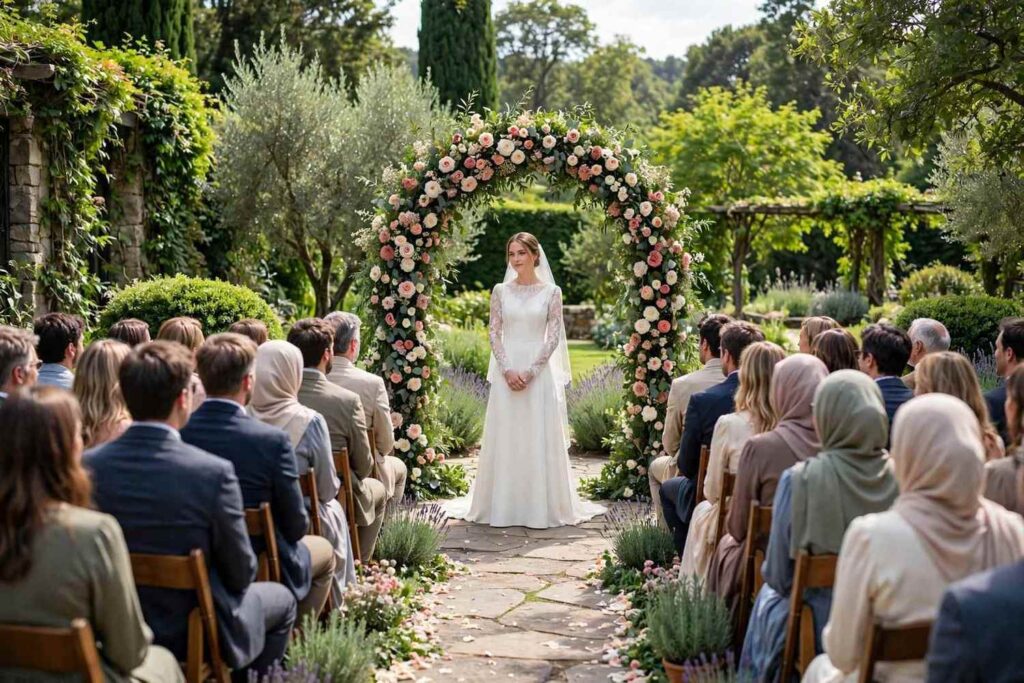
An outdoor wedding — vows under open sky, dinner as the sun goes down — is the dream for a reason. But Mother Nature doesn’t sign contracts, and outdoor weddings have a particular set of logistics that indoor venues handle for you. These outdoor wedding planning tips come from years of coordinating ceremonies in gardens, vineyards, beaches, and backyards: the practical stuff that separates a magical evening from a memorable disaster.
Weather: Plan A, Plan B, and Peace of Mind
Always have a real backup plan
This is the cardinal rule. A “backup plan” isn’t hoping it won’t rain — it’s a specific, booked alternative: a tent on standby, an indoor space at the venue, a clear decision deadline. Ask your venue exactly what happens in bad weather, get it in writing, and know the tent company’s rain-call deadline (often 48–72 hours out).
Rent the tent even if the forecast is perfect
Seriously. A tent isn’t just rain insurance — it’s shade, it’s wind protection, it’s where the lighting hangs. Many couples skip the tent to save money and spend the whole week before the wedding refreshing weather apps. The tent buys you something priceless: not thinking about the weather.
Check the sunset time
Plan your ceremony to end with at least an hour of daylight left for photos — golden hour portraits are worth scheduling around. In shoulder seasons, sunset times shift fast; a 6pm ceremony that’s perfect in June is dark by 6pm in October. Look up the actual sunset time for your date, not a vague memory of “summer evenings.”
Comfort: Your Guests Are Not as Hardy as You Think
Heat management
For warm-weather weddings: provide shade (tents, umbrellas, trees), cold water stations, hand fans or parasols as favours, and schedule the ceremony outside peak heat. Remind guests about sunscreen on your wedding website. Your photographer will thank you for avoiding the harsh midday sun anyway.
Cold-weather prep
For cool evenings: basket of blankets or pashminas, outdoor heaters (rent more than you think you need — they warm a smaller radius than advertised), hot drinks at the bar, and an enclosed tent option. Guests remember being cold far longer than they remember the centrepieces.
Footwear warnings
Grass and heels are enemies. Warn guests on the invitation or website (“ceremony on grass — block heels recommended”), provide heel protectors, or lay temporary flooring or aisle runners. Your wedding party will be standing a while — choose their shoes accordingly.
Sound, Light, and Power
Sound carries — or doesn’t
Outdoor acoustics are unforgiving. Wind, traffic, waves, and open space swallow unamplified voices. Rent a proper sound system with microphones for the officiant, readers, and toasts — even for 30 guests. Do a sound check at the same time of day as your ceremony, because wind patterns change.
Light the night properly
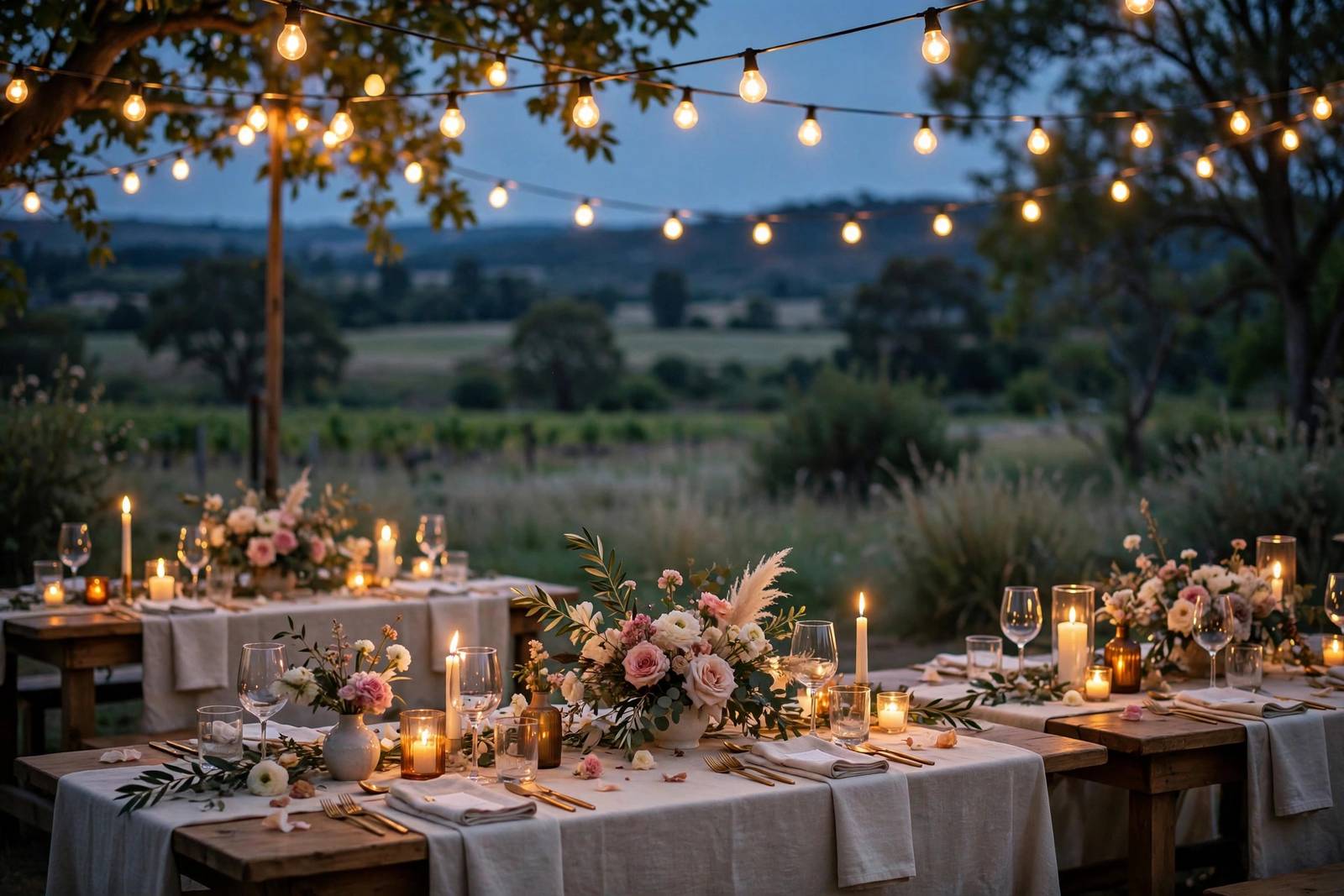
Outdoor venues get dark. String lights and candles create ambience but rarely provide enough functional light for catering, the dance floor, or pathways. Layer your lighting: ambient (string lights, lanterns), functional (dance floor and food stations), and safety (paths, stairs, parking). Your photographer needs to know the lighting plan in advance.
Power and generators
Remote outdoor venues often lack sufficient power. The band, caterer, lighting, and sound system all draw power simultaneously — get an electrician or your vendors to calculate the load, and rent a whisper-quiet generator with backup. Nothing kills a reception like a tripped breaker during the first dance.
Bugs, Wind, and Other Uninvited Guests
Have a bug strategy
For evening events near water or woods: professional spraying a few days before, citronella candles, bug spray baskets in the bathrooms. Mention it to the venue early — some have standing pest-control arrangements.
Secure everything against wind
Wind is the silent destroyer of outdoor weddings: toppled centrepieces, programs scattered across the lawn, veils in faces. Use weighted or low centrepieces, secure signage, and have a wind plan for decor. Ask your florist about wind-resistant designs — tall, top-heavy arrangements are a liability.
Consider the ground itself
Walk your venue after rain. Low spots become mud; slopes become hazards in formal shoes. Budget for flooring, matting, or gravel in problem areas. And confirm bathroom logistics — luxury restroom trailers for venues without facilities, placed discreetly but accessibly.
Permits, Neighbours, and Curfews
Public parks, beaches, and private estates often require event permits — apply early, as processing takes weeks. Check noise ordinances and curfews: many outdoor venues require music off by 10pm, which reshapes your timeline. Inform neighbours of private-property weddings; a heads-up (and maybe an invitation to the after-party) prevents noise complaints. Our broader wedding planning guide covers the legal and logistical checklist in full.
The Day-Of Outdoor Emergency Kit
Beyond the standard wedding emergency kit, outdoor weddings need extras: extra sunscreen and bug spray, a sewing kit for wind-torn hems, blotting papers, water bottles for the wedding party, umbrellas (white for photos, black for function), and a towel for wiping down damp chairs. Our wedding day emergency kit checklist has the complete list — print it, pack it, assign it to someone reliable.
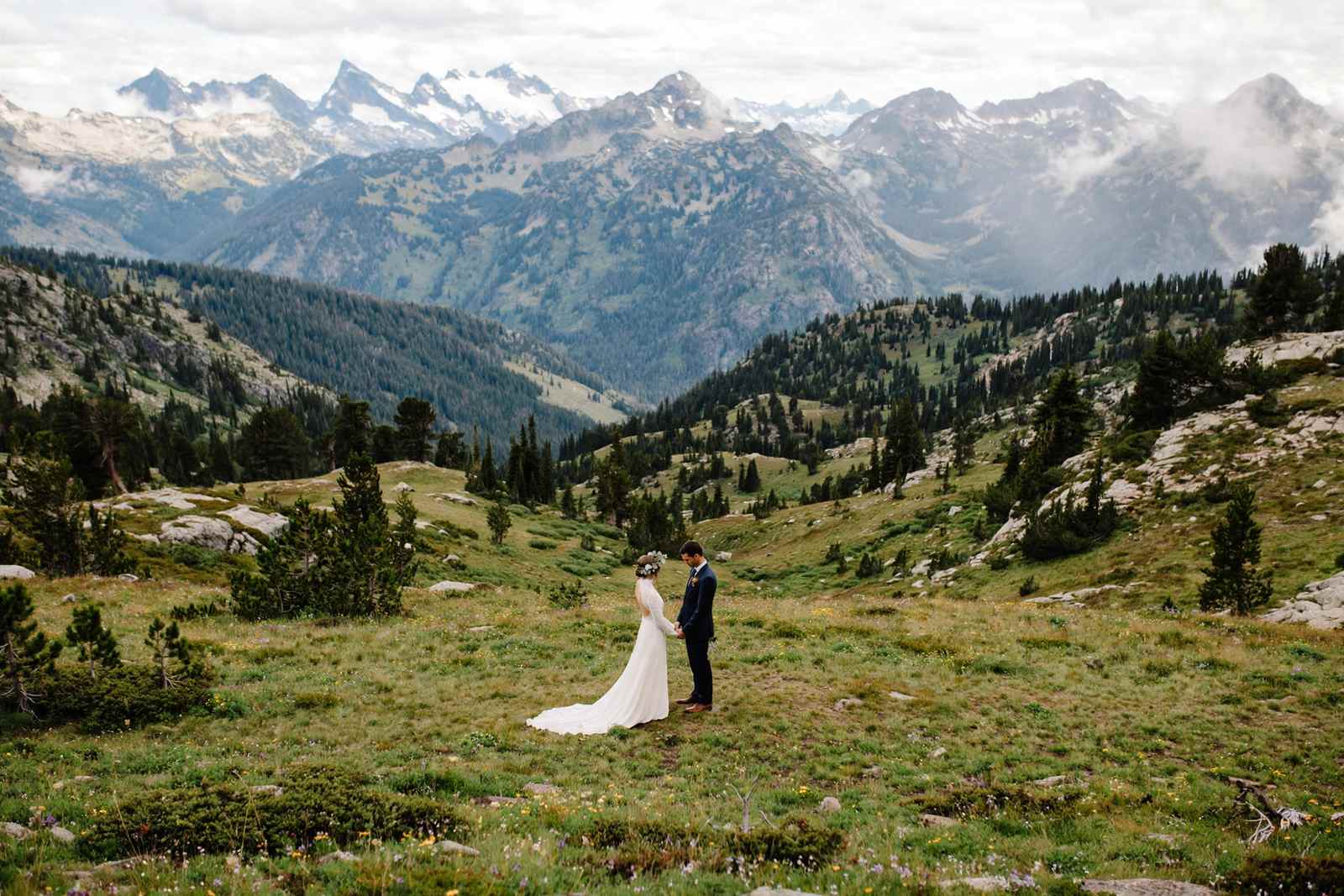
Outdoor Wedding Planning Tips: Building the Timeline
Outdoor wedding planning tips often skip the timeline — but timing is everything outdoors, where light, temperature, and weather all move on a schedule you don’t control. Here’s a sample timeline and the logic behind it.
The golden-hour ceremony
Work backward from sunset. You want the ceremony to end about 60–90 minutes before sunset: that gives you golden-hour portraits, then a transition into dinner as the light fades. So if sunset is at 7:30pm, aim for a 5:30pm ceremony start (30-minute ceremony, portraits 6:00–7:00, guests to cocktail hour). In summer with a 9pm sunset, a 7pm ceremony works beautifully and dodges the worst heat.
Vendor arrival times
Outdoor setups take longer than indoor ones — there’s no loading dock, no freight elevator, just a field and a truck. Tell vendors to arrive earlier than they think: caterers 3–4 hours before service (they’re building a kitchen from scratch), florists 3+ hours (heat wilts arrangements fast), band/DJ 2–3 hours for sound check. Build a 30-minute buffer into every arrival time. Outdoor setup in wind or heat goes slower than anyone estimates.
The midday gap problem
Avoid a ceremony-to-reception gap — outdoors, guests have nowhere comfortable to wait. If portraits need time, keep guests happy with a real cocktail hour (drinks, food, shade, music) in a different area of the venue. The transition itself can be lovely: ceremony in the garden, cocktails on the terrace, dinner under the tent. Movement keeps energy up.
Lighting cues through the evening
Plan your lighting to evolve: natural light for ceremony and cocktails, string lights and candles as the sun sets, then fuller lighting (dance floor spots, bar lighting) once it’s dark. Tell your photographer the lighting plan — they’ll plan their shots around it. And have a hard “lights full on” time for the last hour so vendors can tear down safely.
Teardown and curfew
Outdoor teardown takes longer and can’t happen in the dark without proper lighting. If your venue has a 10pm music curfew, plan teardown lighting and a 11pm vendor exit. Confirm who’s responsible for what: rental company collects their items, but who handles decor, gifts, and personal items? Assign it now, not at midnight when everyone’s exhausted.
The thread connecting all of this: outdoors, the environment sets the schedule, not you. Build the timeline around sun, temperature, and curfew — and build in buffers everywhere. A relaxed outdoor timeline with breathing room beats a packed one that collapses at the first delay.
Outdoor Wedding Decor That Survives the Elements
Beautiful outdoor decor means nothing if it’s face-down in the grass by cocktail hour. Here’s how to decorate for the elements, not against them.
Wind-proof your design
Choose low, heavy centrepieces over tall, airy ones — or secure tall designs with weighted bases and fishing line. Avoid loose petals, lightweight fabrics, and anything that functions as a sail. Ask your florist specifically for wind-resistant designs; they’ll know which mechanics hold. For signage, use A-frames or staked signs rather than easels, which topple in gusts.
Heat-proof your flowers
Heat is flowers’ worst enemy. Choose hardy varieties (roses, orchids, succulents) over delicate ones (hydrangeas wilt dramatically in heat). Keep arrangements in water until the last possible moment, store them in shade or air conditioning before the ceremony, and ask your florist about a “refresh” visit before the reception. For bouquets, a vase of water at the getting-ready location keeps them perky until showtime.
Choose decor that doubles as function
The smartest outdoor decor earns its keep: parasols as shade and photo props, blankets as warmth and texture, lanterns as lighting and centrepieces. Pashminas draped on chairs, fans as ceremony programs, citronella candles as table accents — when every pretty thing also solves a problem, your decor budget works twice as hard.
Have a weather-day decor kit
Pack a separate box: clear umbrellas (photogenic and functional), extra weights for linens, towels for wiping chairs, and a lint roller for petal-covered suits. Assign the kit to your coordinator or a reliable wedding-party member with instructions. The couples who handle a surprise shower gracefully are the ones who planned for it — and their photos often turn out better, all moody skies and dramatic light.
Frequently Asked Questions About Outdoor Weddings
What is the best month for an outdoor wedding?
It depends on your region, but late spring and early fall offer the most reliable weather in most climates — warm days, cool evenings, lower storm risk. Check historical weather data for your specific venue location, not just general seasonal advice.
Do I really need a tent for an outdoor wedding?
Yes — or at minimum a firm tent reservation you can activate on short notice. A tent protects against rain, provides shade, anchors your lighting, and removes weather anxiety. It’s the best insurance you can buy for an outdoor wedding.
How do you keep guests comfortable at an outdoor wedding?
Provide shade and water for heat; blankets, heaters, and hot drinks for cold; warn about footwear for grass; and control bugs with spraying and repellent stations. Comfort details are what guests remember most.
What happens if it rains on our outdoor wedding day?
Execute your backup plan: move to the tent, the indoor space, or the alternative venue you arranged in advance. Set a decision deadline (often 48–72 hours before, based on tent company policies) and commit to it — waffling helps no one.
How loud should music be at an outdoor wedding?
Check local noise ordinances first — many areas have 10pm cutoffs. Invest in a quality sound system with proper speakers (outdoor sound dissipates fast), and do a sound check at the same time of day as your event.