Morning of Wedding Timeline: A Calm, Realistic Schedule

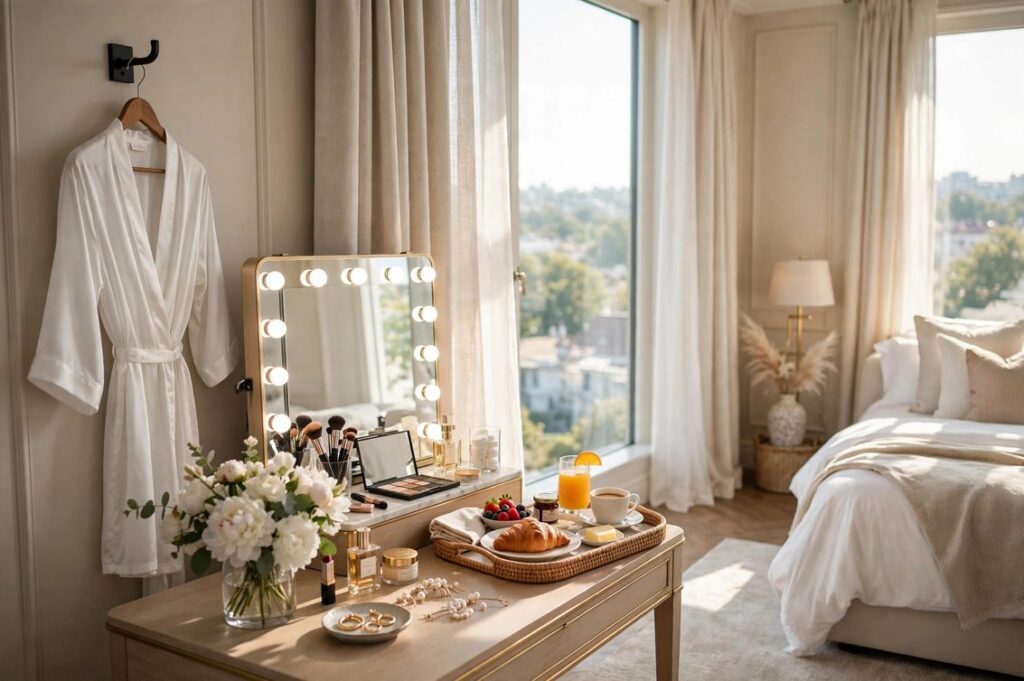
The wedding morning is the part of the day nobody photographs for Pinterest and everybody remembers. It sets the emotional temperature for everything after it — calm and unhurried, or frantic and tearful. A good morning of wedding timeline is the difference between the two, and here is the secret: it is not about discipline. It is about math. Hair and makeup take a fixed amount of time per person, photos take a fixed amount of time, and getting dressed takes longer than you think. Once you do the arithmetic honestly, the morning practically schedules itself.
I have watched dozens of wedding mornings, and the pattern is always the same. Couples who build their timeline backward from the ceremony start time — with real buffer blocks, not wishful thinking — float through the morning. Couples who squeeze everything into the smallest possible window spend the day apologizing to vendors. This guide gives you both the method and a complete sample schedule you can adapt to any ceremony time, plus the mistakes that derail mornings most often.
Morning of Wedding Timeline: How to Build Yours
Start with your ceremony start time and work backward. That is the entire method. Every other decision — when the photographer arrives, when hair and makeup begin, whether there is time for a first look — falls out of this one anchor. Write down your ceremony time, then subtract: travel time to the venue (if getting ready off-site), thirty minutes to get into your dress and do final touches, portrait time before the ceremony, hair and makeup for everyone, and thirty minutes of buffer you will almost certainly use.
The numbers that matter most are the hair and makeup blocks. Plan on 30 to 45 minutes per person for hair and another 30 to 45 for makeup, per artist. So with one hair stylist and one makeup artist working a bridal party of six, you are looking at roughly three hours of chair time — and the bride goes last, so her look is freshest. Two artists working in parallel cut that nearly in half. If your beauty team quotes you times, believe them; they have done this hundreds of times and they are not padding. The mornings that run late are almost always the ones where someone decided the team was exaggerating.
Two questions shape everything else. First: are you doing a first look? If yes, you need the couple dressed, touched up, and ready about an hour before the ceremony for portraits — which pulls the whole morning earlier. If no, portraits happen after the ceremony and the morning has more breathing room. Second: where is everyone getting ready? One shared suite beats three hotel rooms scattered across two floors, because every location change costs twenty unplanned minutes. Keep the wedding party, the beauty team, and the photographer in one place.
Realistic Time Blocks, Not Wishful Ones
Here are the blocks I use when I help couples plan, with honest durations. Hair and makeup: 45 minutes per person per service is the safe estimate — 30 if your team is fast, but plan for 45 and be delighted when it is less. Getting dressed: 30 minutes for the bride (buttons, lacing, jewelry, veil, shoes, final mirror check), 15 for everyone else. Getting-ready photos: 30 to 45 minutes of detail shots, robe photos, and candid moments while the room is still calm.
First look and portraits: 45 to 60 minutes if you are doing them before the ceremony — this includes travel to the portrait location if it is not where you got ready. Family formals: 30 minutes, before or after the ceremony depending on your plan. Breakfast and buffer: this is the one everyone skips and everyone needs. A real meal — not a protein bar at 11 — plus thirty minutes of unassigned time somewhere in the morning. Buffer is not wasted time; it is the shock absorber for the zipper that sticks, the flower girl who needs a nap, and the boutonniere that arrives late.
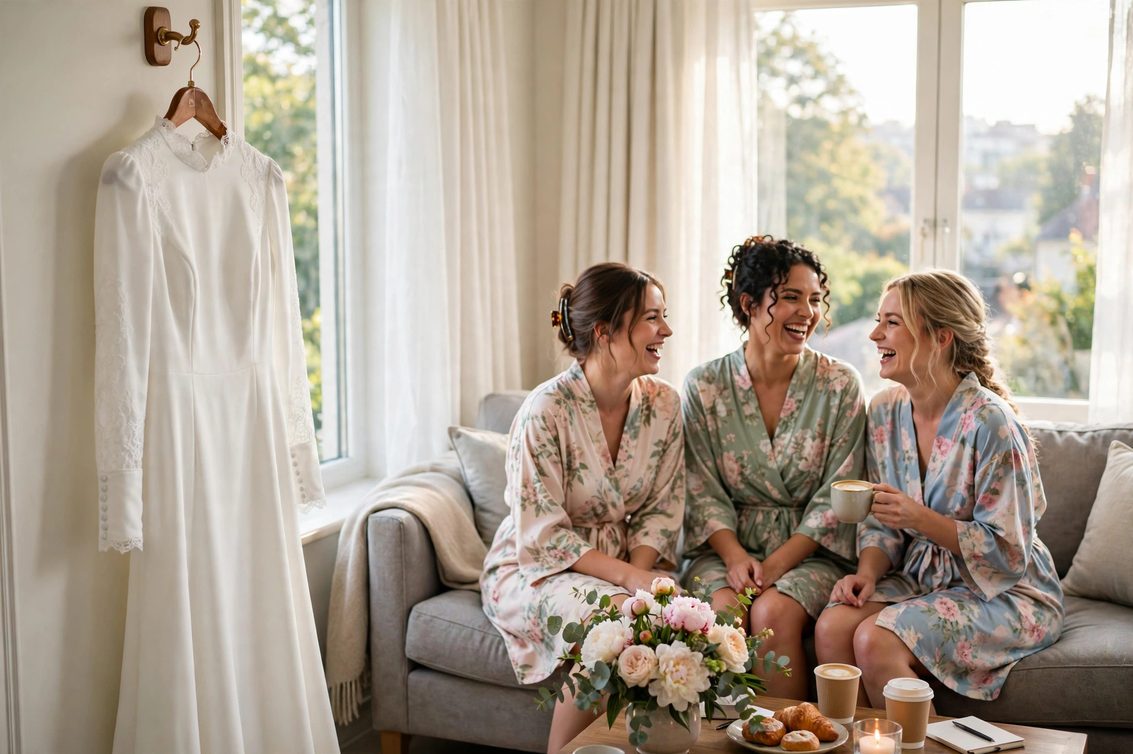
A Sample Morning of Wedding Timeline (4:00 PM Ceremony)
Here is a complete, realistic schedule for a 4:00 PM ceremony with a bridal party of five, one hair stylist, one makeup artist, and a first look. Adjust the blocks to your own numbers — the structure stays the same.
8:00 AM — Wake up, breakfast arrives. Eat a real breakfast. Seriously. This is the last calm meal of the day and the one your future self will thank you for. Keep the suite tidy-ish; the photographer will shoot details here.
8:30 AM — Hair and makeup begin. Bridesmaids and mothers of the couple go first, in the order the beauty team sets. The bride goes last. Put on a wedding-day emergency kit checklist review while you wait — confirm someone has the kit, the rings, the marriage license, and the vendor contact list.
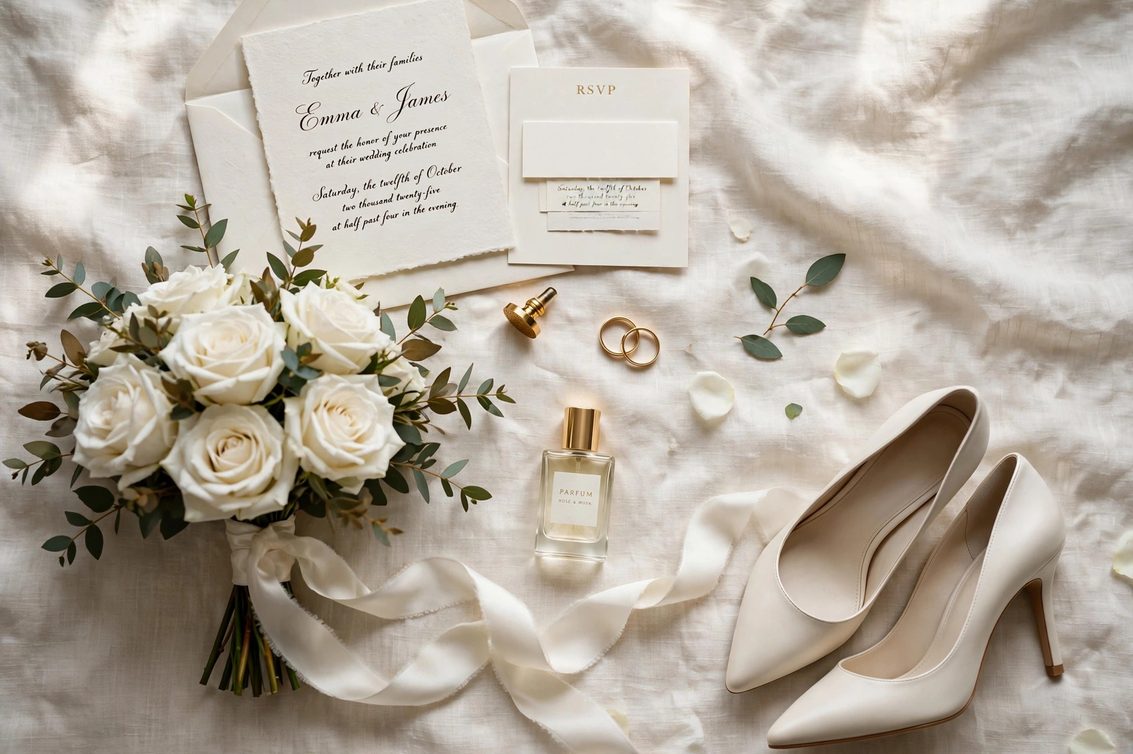
11:30 AM — Photographer arrives. Detail shots first: rings, invitation suite, bouquet, shoes, dress on the hanger. Then candid getting-ready photos while hair and makeup finish. This is also when the groom and groomsmen usually start getting ready in their own space.
12:30 PM — Lunch. Something substantial but not messy — wraps, grain bowls, fruit. Avoid anything that stains. This is the last food before the reception, so do not skip it.
1:00 PM — Bride gets dressed. Hair and makeup complete, dress on, jewelry, veil, shoes. One trusted person helps with buttons or lacing; everyone else gives you space. Allow the full thirty minutes even if it feels like overkill.
1:30 PM — First look and couple portraits. Private moment first, then portraits while hair and makeup are fresh. This is the best light of the afternoon for photos and the calmest part of the day emotionally — protect it.
2:30 PM — Wedding party portraits. Bridesmaids, groomsmen, then the full group. Have your shot list ready so nobody stands around deciding what is next.
3:15 PM — Buffer and touch-ups. Lipstick, powder, a breath, water. Hide the wedding party, line up for the processional, and let the last fifteen minutes be quiet.
4:00 PM — Ceremony. On time, unhurried, and with everyone fed, dressed, photographed, and calm.
If your ceremony is earlier or later, shift every block by the same amount — the structure does not change. A noon ceremony means a 4:30 AM beauty start for a party of five, which is exactly why smaller bridal parties and two artists matter so much for morning weddings.
The Morning Mistakes That Cause Lateness
Mistake one: the bride goes first in the chair. It feels logical — she is the most important person — but bridal hair and makeup last two to three hours on skin, and she needs to look fresh at the ceremony, not at 9 AM. Bride goes last. Always.
Mistake two: no designated timeline keeper. Someone who is not the bride, not the mother of the bride, and not emotionally involved needs to watch the clock and give five-minute warnings. A wedding planner or day-of coordinator does this naturally; without one, appoint your most organized friend and give them explicit permission to be bossy. For the bigger planning picture, a full wedding planning checklist helps you assign this role weeks ahead, not the night before.
Mistake three: getting ready in multiple locations. Every move between rooms, floors, or buildings costs twenty minutes you did not budget. One suite, everyone together, photographer included. The candid photos are better there anyway.
Mistake four: skipping the beauty trial. A trial is not vanity — it is scheduling. It tells your artists exactly how long your hair takes, which eliminates the biggest unknown in the whole morning. Book it at least a month out, and review wedding makeup timing tips so you know what to ask for at the trial itself.
Mistake five: the phone problem. Designate one person to hold the bride’s phone. Vendor calls, well-meaning relatives, and group-chat chaos all funnel to one calm human who filters. The bride does not check her phone on the wedding morning. This is non-negotiable in my book.
What the Groom’s Morning Looks Like
Groomsmen mornings are shorter but not effortless, and they deserve a timeline too. Plan on 60 to 90 minutes: shower and dress (30 minutes), boutonnieres and final grooming (15 minutes), portraits with the photographer (30 minutes), then travel or lineup. The groomsmen’s biggest risks are arriving late and forgetting things — assign one groomsman the checklist (rings if the best man does not have them, vows, gifts, the marriage license if it travels with him). A calm groom’s morning keeps the bride’s morning calm, because stress is contagious and so is ease.
Hotel Suite vs. Getting Ready at the Venue
Where you get ready changes the morning more than most couples expect. A hotel suite gives you space, mirrors, and room service, but adds a travel block — with hair, makeup, dress bags, and the wedding party — that you must schedule honestly, including loading and unloading time. Getting ready at the venue eliminates travel entirely and lets the photographer capture the space filling up around you, but confirm the getting-ready room has good natural light, enough outlets for hot tools, and a private bathroom. Whichever you choose, visit the space beforehand with your timeline in hand and walk it mentally: where does everyone sit, where do the artists set up, where do the dress and details get photographed. Five minutes of imagination now saves thirty minutes of improvisation later.
Quick Answers
What time should hair and makeup start on the wedding day?
Work backward from your ceremony: allow 30 to 45 minutes per person per service, with the bride going last. For a 4 PM ceremony with five people and one artist team, that usually means starting around 8:30 AM.
How long does it take the bride to get dressed?
Plan a full 30 minutes: dress, buttons or lacing, jewelry, veil, shoes, and a final mirror check. It always takes longer than it looks like it should, especially with help needed for the back of the gown.
Should the bride get hair and makeup done first or last?
Last. Bridal hair and makeup should be the freshest at ceremony time, so the bride goes into the chair after the bridal party and mothers are finished.
How much buffer time should a wedding morning timeline have?
At least 30 minutes of unassigned buffer somewhere in the morning, plus a real meal break. Buffer absorbs the small delays — stuck zippers, late deliveries, extra touch-ups — that happen at almost every wedding.
Do we need a first look to keep the morning calm?
Not necessarily, but a first look moves portraits before the ceremony, which makes the morning fuller and the post-ceremony period shorter. Without one, the morning is more relaxed but the reception’s first hour becomes portrait hour. Either works — just plan for whichever you choose.