How to Tell If Eggs Are Still Good: 5 Reliable Tests

Every home cook has stood in front of the fridge, holding a carton of eggs past its printed date, asking the same question: how to tell if eggs are still good without cracking one open and hoping for the best. I have been there more times than I care to admit — usually on a Sunday morning, pancake batter already mixed, with a dozen eggs I bought “a while ago” and a date on the carton that passed sometime last week.
Here is the good news: eggs stay fresh far longer than most people think, and there are simple, reliable tests that take seconds. In this guide I will walk you through the five tests I actually use, ranked from fastest to most definitive, plus exactly how long eggs keep in the fridge, freezer, and at room temperature — and what those confusing carton dates really mean.
The Quick Answer: How Long Do Eggs Actually Last?
Before we get to the tests, let us settle the question behind the question. According to U.S. food safety guidance, raw eggs in their shells keep 3 to 5 weeks in the refrigerator, counted from the day you bring them home — not from the date printed on the carton. Hard-boiled eggs (in the shell) last about 1 week refrigerated. Raw egg whites and yolks, beaten together or separated and stored in airtight containers, last 2 to 4 days in the fridge.
That means the “sell-by” or “best-by” date on your carton is more of a freshness suggestion than a safety deadline. Eggs processed under refrigeration standards can remain perfectly safe weeks after that date, as long as they have been kept cold and continuous. The tests below confirm it.
Test 1: The Float Test (Fastest and Most Popular)
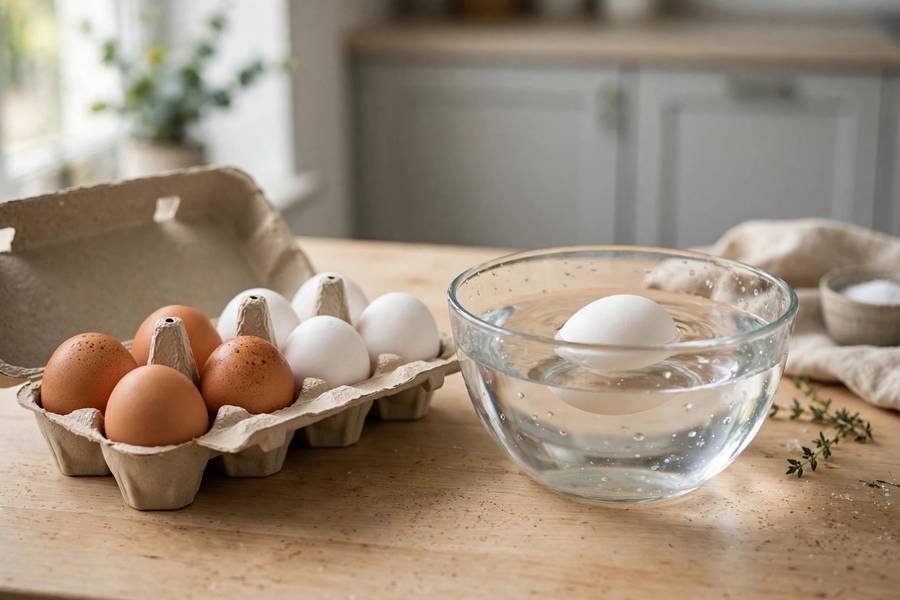
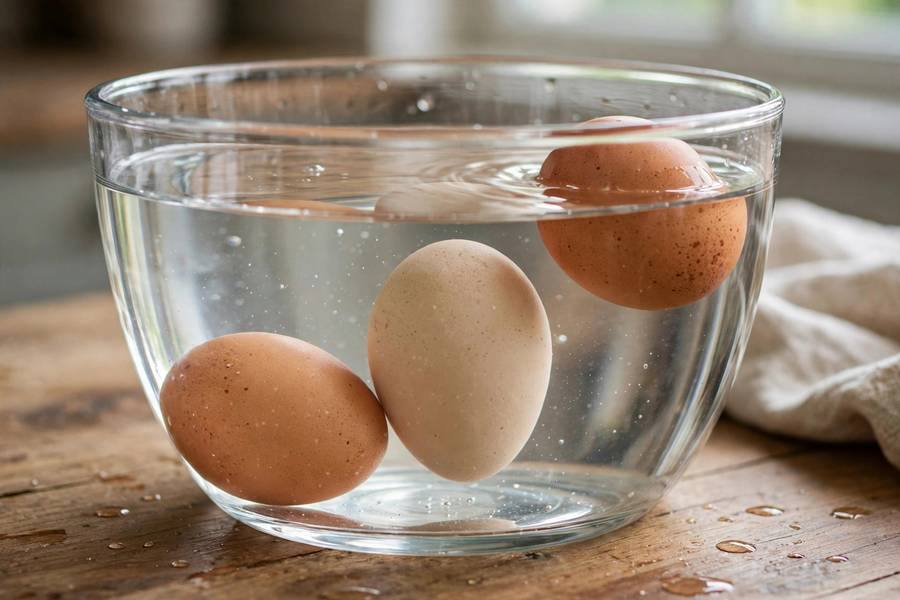
The float test is the classic for a reason — it takes ten seconds and needs nothing but a bowl of water. Fill a bowl or glass with cold water deep enough to cover an egg, then gently lower the egg in and watch what happens:
- Sinks and lies flat on its side: Very fresh. Use it for anything, including poaching.
- Sinks but stands upright or tilts: Older but still good. The air cell inside has grown, which is why it tips up. Fine for baking and scrambling.
- Floats to the surface: Throw it out. A floating egg has a large air pocket and likely bacterial gas buildup — not worth the risk.
Why does this work? Eggshells are porous. Over time, moisture escapes through thousands of tiny pores and air seeps in, enlarging the air cell at the egg’s wide end. The bigger the air cell, the more buoyant the egg. One caveat: a float test tells you about age, not safety with 100% certainty. Always pair it with the sniff test below, especially for eggs near the float line.
Test 2: The Sniff Test (The One That Never Lies)
If the float test is the fastest check, the sniff test is the most trustworthy. Your nose is remarkably good at detecting spoiled eggs, because rotten eggs release hydrogen sulfide — the unmistakable rotten-egg smell that no one mistakes for anything else.
Crack the egg into a separate small bowl (never directly into your batter or pan — one bad egg ruins the whole dish), then smell it. A fresh egg smells like nothing, or faintly eggy. A bad egg smells sulfurous, rotten, and unmistakable from a foot away. If there is any doubt, the answer is no: when in doubt, throw it out. This rule has never failed me.
Test 3: The Shake Test (Quick but Imperfect)
Hold the egg up to your ear and give it a gentle shake. A fresh egg makes almost no sound — the white is thick and holds everything in place. An older egg sloshes, because the white has thinned and the yolk moves freely inside.
I treat the shake test as a screening tool, not a verdict. Sloshing means the egg is old, not necessarily bad — confirm with the float or sniff test before tossing perfectly usable eggs.
Test 4: The Yolk and White Check (For Eggs You Have Cracked)
Already cracked the egg? Look at what is in the bowl. A fresh egg has a proud, domed yolk that sits high and a thick white that clings around it in two distinct layers. An older egg has a flatter, wider yolk and a thin, watery white that spreads across the bowl.
Older eggs are completely fine for scrambled eggs, omelets, and baking — in fact, slightly older eggs are easier to peel when hard-boiled, because the membrane separates more readily from the shell. Save your freshest eggs for poaching and frying, where structure matters.
Test 5: Reading the Carton Dates (The One Everyone Misreads)
Egg cartons carry two codes that confuse almost everyone:
- Sell-by / best-by / use-by dates: These indicate peak quality, not safety. Eggs are generally safe well beyond them if refrigerated continuously.
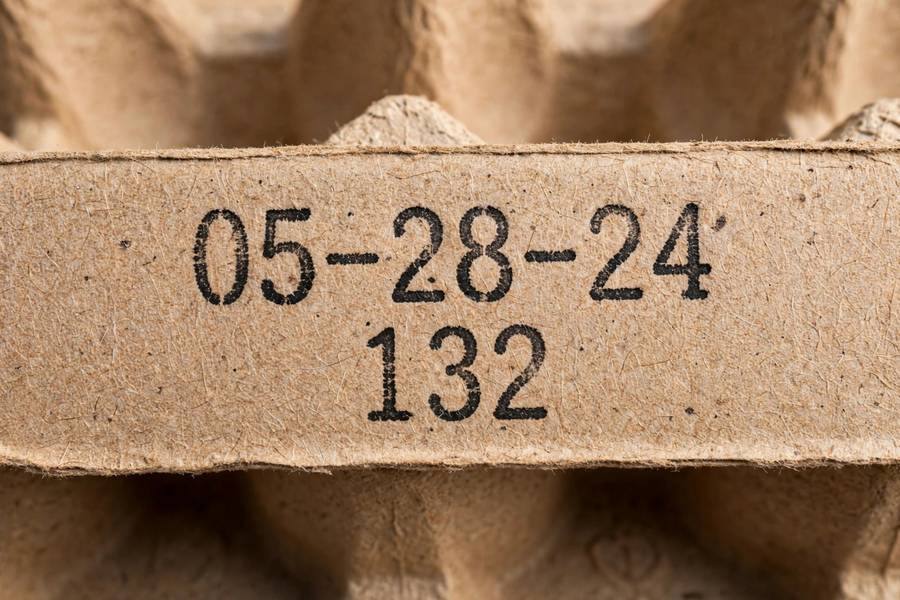
- The Julian date (pack date): Look for a three-digit number near the sell-by date. This is the day of the year the eggs were packed (001 = January 1, 365 = December 31). It tells you the egg’s true age — far more useful than the sell-by date.
I always check the Julian date when buying eggs. A carton packed at day 290 with a sell-by date a month out is fresher than a carton packed at day 240 with the same sell-by. It is a small habit that makes a real difference in how long your eggs last at home.
How to Store Eggs So They Stay Fresh Longer
Testing is only half the battle — storage decides how many of these tests you will ever need. A few rules I follow religiously:
- Keep eggs in the fridge, in the carton. The carton protects against absorbing fridge odors and prevents moisture loss. Store them on a middle shelf, not the door — the door is the warmest spot and temperature swings age eggs fast.
- Do not wash farm-fresh eggs until use. Eggs have a natural protective coating called the bloom. Commercial eggs are washed and must stay refrigerated; unwashed farm eggs keep at room temperature for a couple of weeks, but I refrigerate them anyway for safety.
- Freeze extras, do not just let them age. Beat whole eggs (or separate whites and yolks), add a pinch of salt or sugar per cup of yolks to prevent gelation, and freeze in ice cube trays, then transfer to freezer bags. Frozen eggs keep up to a year.
- Keep them cold and constant. Every hour at room temperature ages an egg roughly as much as a day in the fridge. Take eggs out only when you are ready to use them.
What About Cracked, Dirty, or Frozen-in-Shell Eggs?
A few edge cases I get asked about constantly. Cracked eggs: if the crack happened at home and the egg is otherwise fresh, crack it into a clean container and use it the same day — never store a cracked egg in its shell. If you bought the carton with a cracked egg inside, toss that one; bacteria may have entered. Dirty eggs: a little dirt or feather is fine — wipe, do not wash until use (washing removes the bloom). Frozen eggs: an egg that froze accidentally in a too-cold fridge is safe if the shell did not crack; thaw in the fridge and use promptly.
Common Myths About Egg Freshness
Myth: The sell-by date is an expiration date. It is not. It is the last day the store should sell them; you have weeks of safe use after. Myth: Brown eggs last longer than white eggs. Shell color comes from the hen breed and has zero effect on freshness or nutrition. Myth: You can tell freshness from the shell. You cannot — shell appearance tells you nothing about what is inside. Myth: Eggs must be used within a week of purchase. With proper refrigeration, 3 to 5 weeks is the standard guidance.
What to Do With a Carton of Old-but-Good Eggs
So the tests say your eggs are older but still safe — now what? Older eggs are actually better for some jobs. Hard-boiling is the classic: eggs that are a week or two old peel far more cleanly than farm-fresh ones, because the inner membrane loosens as the egg ages. Baked goods are another perfect destination — cakes, muffins, and quick breads do not care about yolk height, and the heat of the oven adds a safety margin. Frittatas, quiches, and strata happily absorb a dozen aging eggs at once.
What I avoid with older eggs: poaching (the thin whites spread into wispy ghosts), sunny-side-up fried eggs where a flat yolk looks sad, and anything served raw or barely cooked like homemade mayo or soft-scrambled eggs for pregnant guests. Match the egg to the job and nothing goes to waste.
Egg Freshness by Type: Duck, Pasteurized, and Liquid Eggs
Not all eggs follow the same rules. Duck eggs have thicker shells and a heavier bloom, so they typically outlast chicken eggs by a week or more under refrigeration — the same float and sniff tests apply. Pasteurized shell eggs (heated just enough to kill salmonella) keep about as long as regular eggs but cost more; they are the right choice for recipes served raw, like Caesar dressing or mousse. Liquid egg whites and beaten eggs from a carton are a different product entirely: once opened, use within 2 to 3 days, and never rely on the float test for them — the sniff test and the printed use-by date are your guides. And pickled eggs? Those are a whole different preservation method; refrigerated, they keep for months.
How to Tell If Eggs Are Still Good: My Recommended Order
If you only remember one thing from this guide, make it this sequence: check the Julian pack date for context, run the float test for speed, and confirm with the sniff test before cooking. Three steps, under a minute, and you will never again throw away a good dozen — or gamble on a bad one. Your Sunday pancakes are safe.
Frequently Asked Questions
How to tell if eggs are still good after the sell-by date?
Use the float test first: sink = good, float = bad. Then confirm by cracking into a separate bowl and smelling. Eggs kept continuously refrigerated are commonly safe 3 to 5 weeks from purchase, well past the sell-by date.
Can you eat eggs 2 months after the expiration date?
I would not. While eggs often stay safe weeks past their sell-by date, two months is beyond any standard guidance. Test them, but lean toward discarding — the risk is not worth a dozen eggs.
Why do my eggs float but smell fine?
A floating egg has a large air cell and is quite old. Smell alone is not a perfect screen for all bacterial contamination, so a floater should be discarded even if it does not smell rotten.
Do hard-boiled eggs last longer than raw eggs?
No — the opposite. Boiling removes the protective bloom, so hard-boiled eggs in the shell last only about 1 week refrigerated, less than raw eggs.
Is it safe to eat eggs with blood spots?
Yes. Blood spots are harmless and occur naturally during formation. Remove the spot with a knife tip if it bothers you; the egg is perfectly fine to eat.
How long can eggs sit out on the counter?
Commercially washed, refrigerated eggs should not sit out more than 2 hours (1 hour in hot weather). Unwashed farm-fresh eggs with the bloom intact can sit out for about 2 weeks, though refrigeration is still the safer choice.