How to Cut an Onion Without Crying: 8 Tested Methods


Every cook knows the scene: you are halfway through dicing an onion for dinner, and suddenly your eyes are streaming, your nose is running, and you are questioning all your life choices. Learning how to cut an onion without crying is not just about comfort — teary, squinting chopping is also less safe. I dice onions nearly every day in my kitchen, and I have tested every trick in the book, from the scientifically sound to the frankly silly. Here is what actually works, ranked honestly.
In this guide: the science of why onions make you cry (it is fascinating, I promise), eight methods ranked by effectiveness, the knife technique that matters more than any trick, and which popular hacks are myths.
Why Do Onions Make You Cry? The Science
When you cut an onion, you rupture its cells, releasing enzymes that convert sulfur compounds into a gas called syn-propanethial-S-oxide — the lachrymatory factor (literally “tear-maker”). This gas drifts up to your eyes, where it reacts with your tears to form a mild sulfuric acid. Your eyes burn, you tear up to flush it out, and the cycle continues as long as you keep cutting.
Two things follow from the science. First, anything that reduces the gas reaching your eyes helps — ventilation, barriers, distance. Second, anything that reduces cell damage helps — a sharp knife crushes fewer cells than a dull one, releasing less gas. Every effective method below works through one of these two mechanisms. Every myth fails because it does neither.
The 8 Methods, Ranked by How Well They Work
1. Use a very sharp knife (the foundation)
The single most effective step, and the one most people skip. A razor-sharp knife slices cleanly through cell walls; a dull knife crushes and tears them, releasing far more irritant. Hone your knife before onion duty and the difference is immediate and dramatic. If you do nothing else on this list, do this. Everything else is a supplement to sharp steel.
2. Chill the onion first (30 minutes in the fridge)
Cold slows the enzymatic reaction that produces the tear gas. Thirty minutes in the refrigerator (not the freezer — frozen onions turn mushy) noticeably reduces tearing. I keep a couple of onions in the fridge perpetually during heavy cooking weeks. Do not chill cut onions uncovered; they will perfume everything nearby.
3. Cut near running water or a fan
The gas rises from the cut surface to your eyes — interrupt its path. Cutting next to a running faucet, under the range hood fan on high, or with a small fan blowing across the board (away from your face) disperses the gas before it reaches you. The range hood method is my daily driver: board next to the stove, fan on, minimal tears.
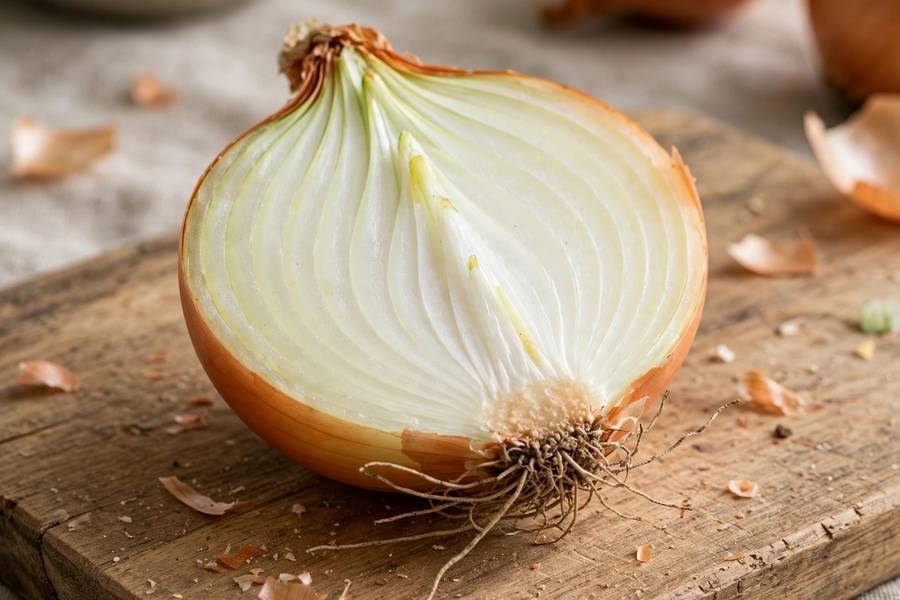
4. Leave the root end intact until last
The root end (the hairy little nub) contains the highest concentration of sulfur compounds. Cut the onion in half through the root, peel, then dice with the root holding the layers together — and save the root nub for last, or discard it early. This is proper technique anyway (the root keeps the onion from falling apart), and it measurably reduces the worst of the fumes.
5. Wear glasses or onion goggles
A physical barrier works on pure physics: sealed or wraparound glasses keep the gas off your eyes. Regular glasses help somewhat; swim goggles or purpose-made onion goggles work completely. You will look ridiculous. Your eyes will not care. I keep a cheap pair of lab goggles in the kitchen drawer and have zero shame about it.
6. Cut under water (for small jobs)
Submerging the onion washes the gas away before it becomes airborne. It works — but it is awkward, the pieces float everywhere, and you lose some flavor compounds to the water. Practical only for a quick dice of half an onion, not for real cooking volume. A compromise: cut the onion in half under running water to get past the worst initial burst, then finish on the board.
7. Breathe through your mouth
Breathing through your mouth instead of your nose reduces the gas drawn across your nasal passages (which also sting) and slightly reduces eye irritation for some people. It is free and always available. The effect is modest — this is a helper, not a solution — but combined with a sharp knife and the root-end technique, it contributes.
8. The microwave trick (15–20 seconds)
A brief microwave burst (or 30 seconds of warm — not hot — water soak) partially deactivates the enzymes. It works mildly, but it starts cooking the onion’s outer layers, which affects texture in raw preparations like salsa. Fine for onions destined for a long braise; skip it for anything served fresh.
Proper Onion-Cutting Technique (Matters More Than Tricks)
Technique beats gadgets. Here is the method I teach every new cook:
- Halve through the root: Cut off the top, halve the onion pole-to-pole through the root end, keeping the root intact.
- Peel: Remove the papery skin from each half.
- Make horizontal cuts: With the flat side down, cut 2–3 horizontal slices toward (but not through) the root.
- Make vertical cuts: Slice vertically, again stopping short of the root, at your desired dice width.
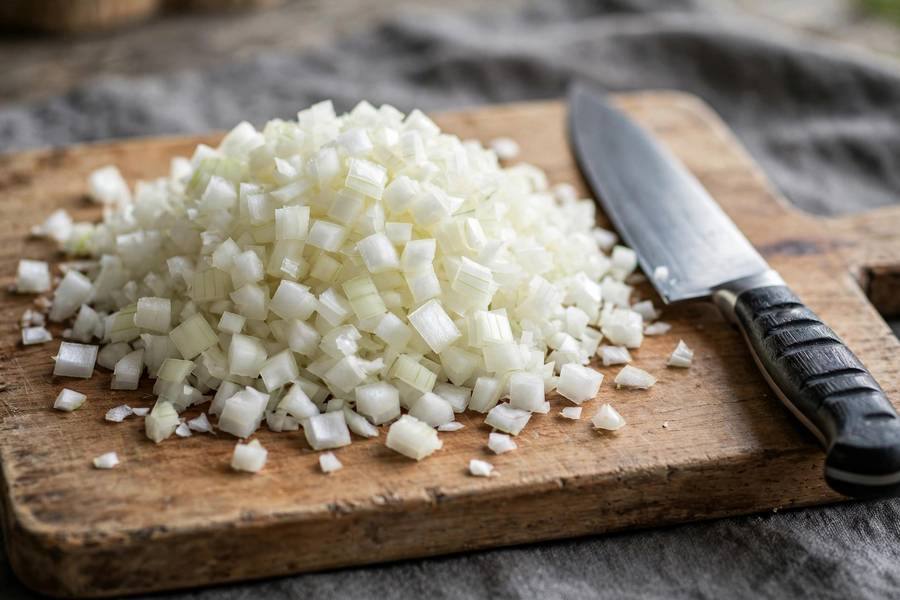
- Cross-cut: Slice across to release a neat dice, working from the top toward the root.
- Finish the root: The last bit with the root attached gets minced or discarded — it held everything together so you could work quickly.
Speed matters too: the less time the cut surfaces sit exposed, the less gas accumulates. Work confidently, keep the pieces moving into the pan or bowl, and the whole job is over before your eyes fully register a complaint.
What Professional Chefs Do Differently
Watch a line cook dice twenty onions without flinching and you will notice it is not tricks — it is fundamentals executed at speed. Professionals keep knives genuinely sharp (honed daily, sharpened regularly), work fast enough that exposure time stays short, and cut in ventilated kitchens where range hoods the size of cars pull air constantly. They also prep onions in batches: peel and halve everything first, then power through the dicing in one focused burst rather than stretching the job across an hour of intermittent cutting.
The home-kitchen translation: sharpen your knife, turn on the range hood, prep all your onions at once, and work with purpose. There is also a mental component — cooks who expect tears get tense and slow down, which makes it worse. Treat it like any other prep task: set up, execute, move on. After a few weeks of daily practice, you will wonder what the fuss was about.
Myths That Do Not Work
Let us clear the folk remedies. Holding a matchstick or wooden spoon in your teeth: no mechanism, no effect — the gas does not care about your mouth props. Sticking your tongue out: same story. Chewing gum: you breathe through your mouth slightly more, which is the only reason it seems to help a little — method #7 without the mint. Lighting a candle nearby: the flame is far too small to burn off meaningful amounts of gas; it is ambiance, not chemistry. Rubbing lemon juice on the board: pleasant smell, zero effect on syn-propanethial-S-oxide.
The pattern: if a trick does not reduce cell damage or block/disperse the gas, it is theater. Trust the physics.
Choosing Low-Tear Onions
Not all onions are equal offenders. Sweet onions (Vidalia, Walla Walla, Maui) contain less sulfur and bring fewer tears — a legitimate strategy for raw preparations. Red onions are generally milder than yellow. Yellow storage onions — the everyday workhorse — are the most potent, especially after months in storage when sulfur compounds concentrate. And shallots, while technically potent, are small enough that the job is over fast. When a recipe allows flexibility, onion choice is prevention.
Storing Cut Onions Without Stinking Up the Fridge
Once you have conquered the chopping, do not waste the results. Diced or sliced onions keep 7–10 days refrigerated in an airtight container — and I mean genuinely airtight, because onion odor migrates through flimsy lids and plastic wrap to perfume your butter, your berries, everything. Glass containers with locking lids are the gold standard; a zip-top bag with the air pressed out is the backup.
For longer storage, diced onions freeze beautifully: spread on a sheet tray, freeze solid, then bag. They go straight from freezer to hot pan with no thawing — perfect for weeknight cooking. And whole uncut onions? Cool, dark, dry, and ventilated — a pantry or cellar, never the fridge (moisture makes them sprout and rot), and never next to potatoes, which release gases that spoil onions faster. Store them right and the humble onion rewards you twice: no tears today, no waste tomorrow.
How to Cut an Onion Without Crying: The 60-Second Version
If you are mid-recipe and need the answer now: grab your sharpest knife, turn the range hood fan on high, keep the root end intact until the last cuts, and work quickly. That combination alone eliminates most tears for most people. Add chilled onions and goggles for the full zero-tear setup — and save the folk remedies for someone else’s kitchen.
Frequently Asked Questions
How to cut an onion without crying?
Use a very sharp knife (most important), chill the onion 30 minutes beforehand, cut near running water or a range hood fan, and leave the root end intact until last. Sealed goggles eliminate tearing entirely if you want zero tears.
Why do onions make you cry?
Cutting ruptures onion cells, releasing enzymes that create syn-propanethial-S-oxide gas. The gas reaches your eyes and forms a mild sulfuric acid on contact with tears, causing burning and tearing.
Does chilling an onion really prevent crying?
Yes — cold slows the enzymatic reaction that produces the tear gas. Thirty minutes in the refrigerator makes a noticeable difference. Do not freeze the onion, which ruins its texture.
Do onion goggles actually work?
Yes, completely — they are a physical barrier, and the gas cannot reach your eyes. Even regular glasses help somewhat. It is the most foolproof method on this list, vanity aside.
Which onions make you cry the least?
Sweet onions (Vidalia, Walla Walla) have the lowest sulfur content and cause the least tearing. Red onions are milder than yellow storage onions, which are the most potent — especially after long storage.
Is it bad if onion makes your eyes water?
No — it is uncomfortable but harmless. The tearing is your eyes flushing out a mild irritant, exactly as designed. If you wear contact lenses, consider removing them first, as the gas can get trapped under lenses and sting more.