What Colors Go with Beige Clothing? A Pairing Guide

Beige is the color everyone owns and nobody knows what to do with. It sits in your closet looking expensive and sensible, and every morning you stare at it thinking: what on earth goes with this? I hear you. Beige is secretly one of the hardest neutrals to style — not because it clashes with everything, but because the wrong beige pairing looks washed out while the right one looks like quiet luxury. So let us settle this properly: what colors go with beige clothing, how to match them to your beige’s undertone, and the outfit formulas that never fail.
Here is the thing most color guides skip: “beige” is not one color. It is a family — warm beiges with golden undertones, cool beiges that lean gray, pinkish beiges, deep camel beiges that are practically brown. The colors that sing with one beige can fall flat with another. Once you learn to read your beige’s undertone, pairing becomes intuitive instead of anxious. That is the real skill here, and it takes about two minutes to learn.
What Colors Go With Beige Clothing? The Quick Answer
Beige pairs beautifully with white, black, navy, olive, burgundy, camel, chocolate brown, soft pink, sage green, and denim blue. Those are the safe, always-correct answers. But “safe” is just the starting point — the interesting pairings depend on whether your beige runs warm, cool, or neutral, and on the occasion you are dressing for.
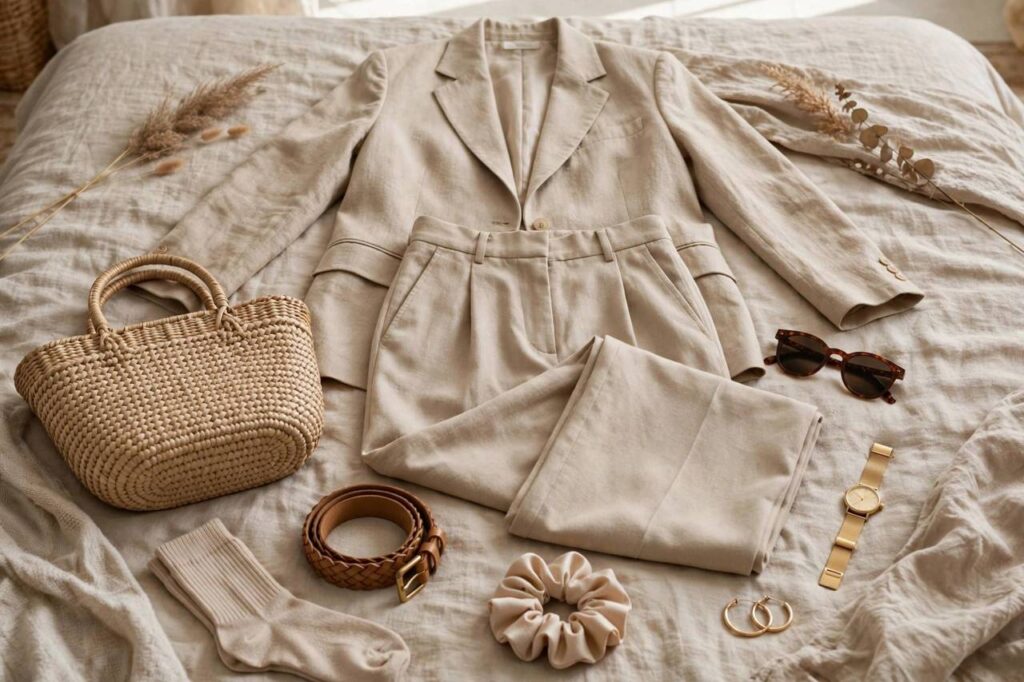
The universal rule: match undertones, then add contrast. Warm beige loves warm companions (camel, rust, olive, chocolate). Cool beige loves cool companions (gray, navy, sage, black). And every beige benefits from one element of contrast — a dark shoe, a rich accessory, a deeper layer — because beige-on-beige with no contrast is where outfits go to look unfinished. Contrast is what makes beige look intentional instead of accidental.
First, Find Your Beige’s Undertone (2-Minute Test)
Hold the beige garment next to a pure white piece of paper in natural daylight. Does the beige look yellow, golden, or peachy next to the white? That is warm beige — the most common kind, including camel, tan, and khaki. Does it look gray, pinkish, or taupe-like? That is cool beige. Can you barely tell, or does it just look like… beige? That is neutral beige, the easygoing middle child that plays well with almost everything.
You can also do the vein test on your wrist, which tells you about your undertone: greenish veins suggest warm undertones (warm beiges will glow on you), bluish veins suggest cool (cool beiges are your friend), and a mix means you are neutral and can wear the whole family. The garment’s undertone and your undertone do not have to match perfectly, but when they harmonize, the effect is noticeably more flattering.
Why does this matter so much? Because the number one beige complaint — “it washes me out” — is almost always an undertone mismatch. A cool, grayish beige on warm golden skin can look draining. The same person in a warm camel beige looks radiant. It is not the beige. It is the beige.
The Pairing Chart: Warm Beige
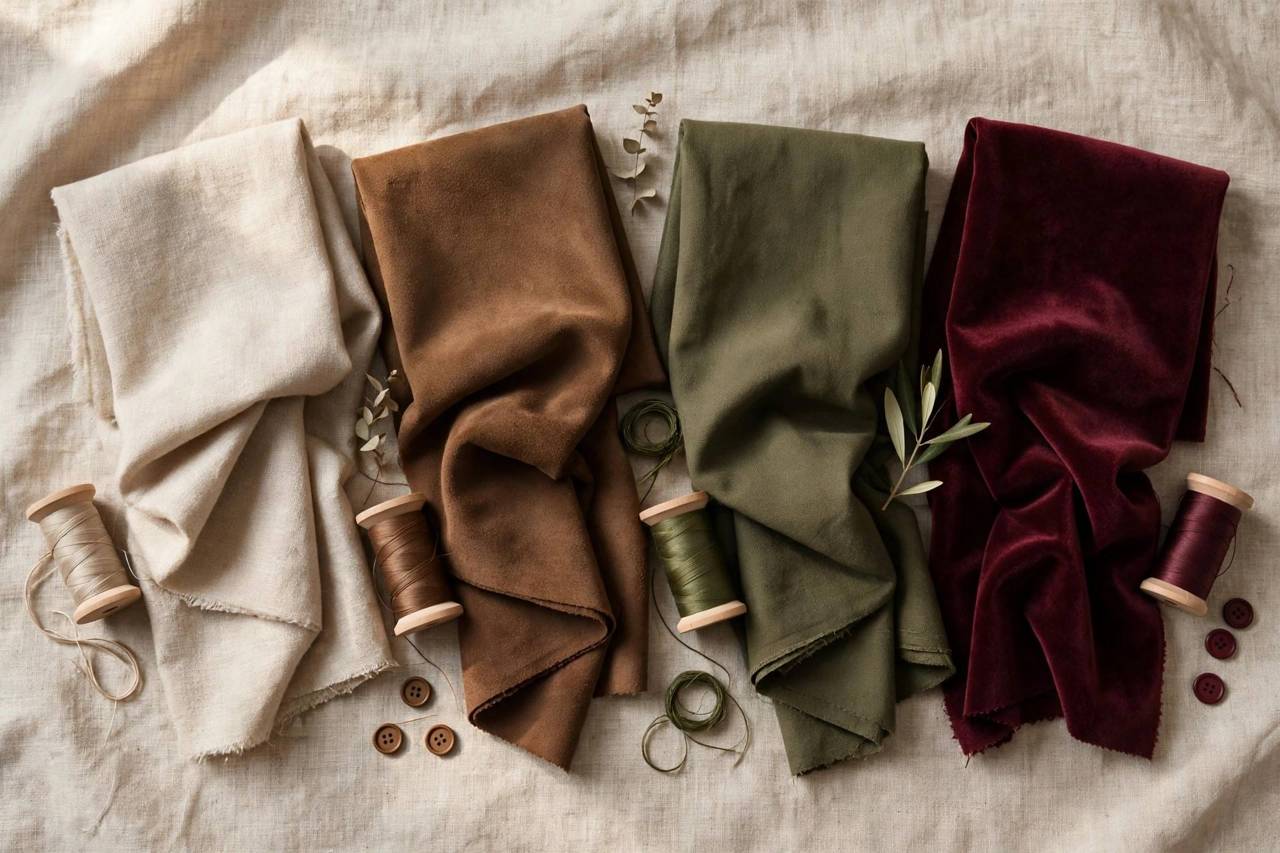
Warm beige — camel, tan, khaki, golden sand — is the richest and most forgiving member of the family. Its best partners:
Chocolate brown and espresso: The classic luxury pairing. A camel coat over chocolate trousers, or a tan sweater with dark brown boots, reads expensive in every lighting. This is the combination that built a thousand “quiet luxury” mood boards, and it deserves its reputation.
Olive and forest green: Warm beige and olive are earthy siblings — they share golden undertones and look effortlessly coordinated. An olive utility jacket over a beige knit is a fall uniform for a reason.
Rust, terracotta, and burnt orange: For when you want warmth with energy. These are bold but harmonious — they sit near beige on the warm side of the spectrum and add life without clashing.
Cream and ivory: Softer than white against warm beige, cream creates a tonal, monochromatic look that is elegant rather than stark. The key is varying textures — a cream silk blouse with beige wool trousers — so the outfit has depth.
Burgundy and oxblood: The power pairing. Deep red against warm beige is rich, confident, and perfect for evenings. A burgundy bag or shoe with a beige outfit is the fastest way to make neutrals look deliberate.
The Pairing Chart: Cool Beige
Cool beige — greige, stone, taupe-leaning beige — is the minimalist’s neutral. Crisp, modern, and slightly aloof. Its best partners:
Black: Cool beige and black is the sharpest combination in this whole guide. A stone blazer over black trousers, or beige wide-leg pants with a black turtleneck — clean, architectural, impossible to get wrong.
Navy: Softer than black but equally reliable. Navy brings depth to cool beige without the severity of black, making it ideal for work settings where you want polish without hardness.
Gray (especially charcoal): Tonal dressing at its best. Layering cool beige with gray creates a sophisticated gradient — think greige coat, gray sweater, charcoal trousers. Keep the textures varied so it reads as intentional layering, not a uniform.
Sage and eucalyptus green: The cool answer to olive. Muted, calm, and beautiful against stone and greige tones. This pairing has a serene, Scandinavian quality that works wonderfully for casual and workwear alike.
Soft white (not bright white): Against cool beige, stark bright white can look harsh. Choose soft white, off-white, or light gray instead — the gentler contrast flatters the cool palette.
The Pairing Chart: Neutral Beige
Neutral beige — the true middle, neither golden nor gray — is the most versatile. It takes partners from both the warm and cool lists. If your beige is neutral, you have the easiest job in this guide:
Denim blue, every wash: Beige and denim is a timeless casual pairing. A beige trench over jeans, a beige sweater with dark indigo denim — it works in literally every wash from white to raw indigo.
White: Crisp white shirts, tees, and sneakers electrify neutral beige. This is the clean summer combination — beige linen trousers, white shirt, done.
Camel-on-beige tonal looks: Layering different depths of neutral beige — a deeper camel coat over a lighter beige knit — creates rich monochrome outfits. The trick, again, is texture contrast: mix knit, leather, wool, and cotton so the tones have something to play against.
Blush pink and dusty rose: Soft, feminine, and surprisingly versatile. These muted pinks warm up beige without overwhelming it — lovely for spring and for occasions where you want to look approachable.
Occasion Outfits: Beige Formulas That Never Fail
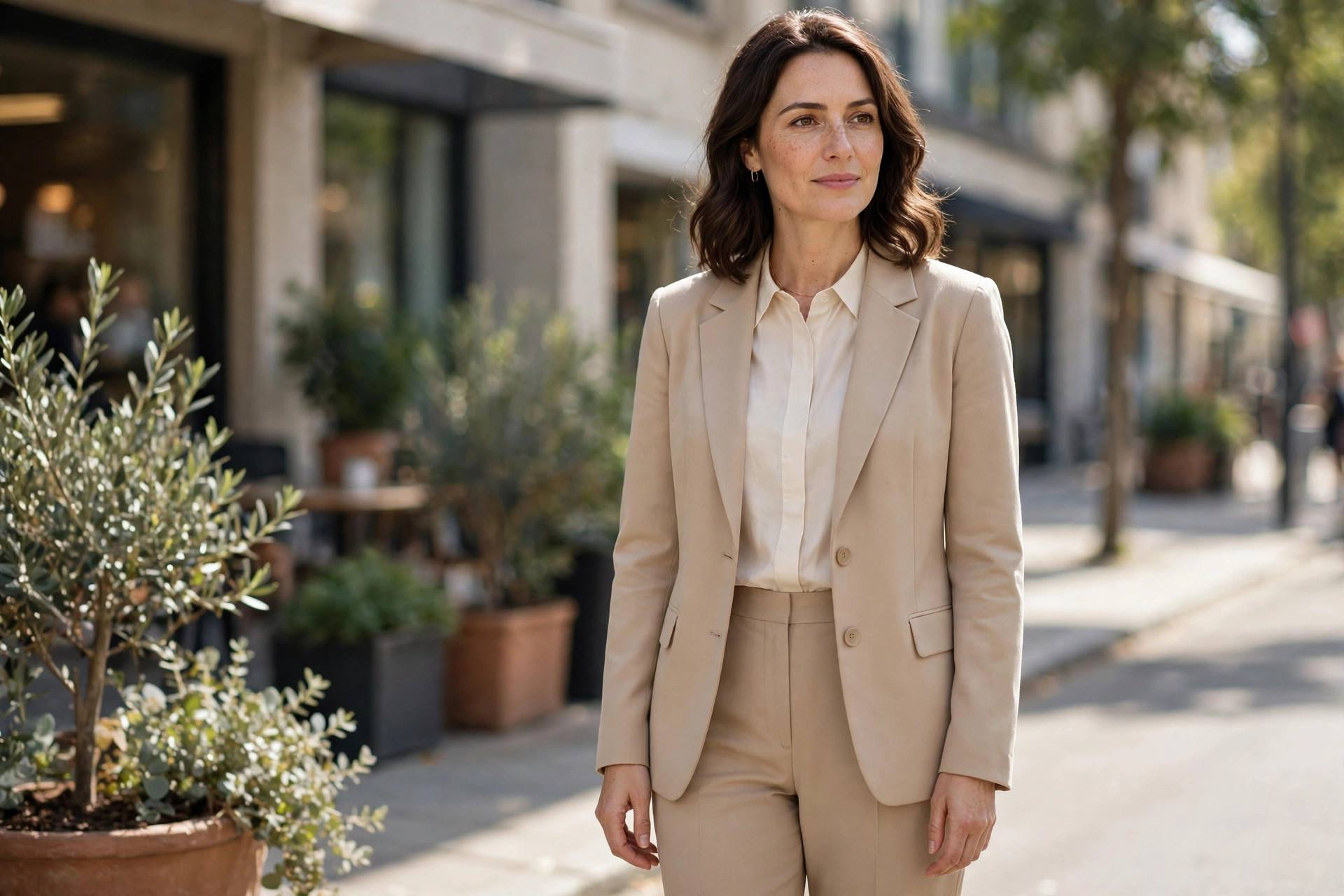
Work: Beige blazer + white or cream blouse + navy or charcoal trousers + brown or black loafers. Understated, authoritative, and appropriate everywhere from creative studios to client meetings. The blazer does the heavy lifting; everything else supports it.
Weekend casual: Beige knit sweater + medium-wash jeans + white sneakers + a tan crossbody bag. Comfortable, put-together, and zero thought required once you own the pieces.
Evening: Beige satin or silk top + black wide-leg trousers + burgundy or metallic heels + gold jewelry. The sheen of the beige fabric against dark trousers is quietly glamorous — you will look dressed up without a single sequin.
Wedding guest: A beige or champagne midi dress + metallic or nude heels + a contrasting clutch in burgundy or forest green. Check the dress code first — beige is wedding-appropriate in most settings, but avoid anything that could photograph as white. When in doubt, add the colored accessory. Speaking of celebrations, if you are dressing for the party after the wedding, these wedding after-party outfit ideas will take you from ceremony to dance floor.
Fall/winter: Camel or beige wool coat + chocolate sweater + dark denim + brown leather boots. This is the seasonal uniform for a reason — every piece earns its place, and the whole thing looks considered with almost no effort.
Beige Mistakes to Avoid
Beige from head to toe in one flat tone and texture. Monochrome beige can be stunning, but it needs varied shades and textures. One flat beige in one flat fabric looks like a uniform, not an outfit.
Ignoring the wash-out effect. If a beige makes you look tired, it is the wrong beige for your skin, not a sign you “cannot wear beige.” Try one shade deeper or switch the undertone. The right beige exists for everyone.
Pairing beige with neon or ultra-bright colors. Beige’s whole character is softness and restraint. Screaming brights next to it create a visual argument. If you want color with beige, choose the muted, dusty, or deep versions — sage instead of kelly green, burgundy instead of cherry red.
Forgetting the third piece. Beige outfits come alive with a third element — a scarf, a belt, a bag, a jacket. Two beige pieces can look unfinished; three pieces look styled. This is the cheapest upgrade in fashion: one accessory changes the whole read.
And if beige has you thinking about rebuilding your wardrobe around versatile neutrals rather than accumulating random pieces, a capsule wardrobe guide is the natural next step — beige is the backbone of every good capsule, and now you know exactly what to pair it with.
Frequently Asked Questions
Does beige go with black?
Yes — especially cool or neutral beige. Beige and black is a sharp, modern combination: think a stone blazer over black trousers. With warm golden beige, brown is usually more harmonious than black, but black still works if you want deliberate contrast.
What colors should you not wear with beige?
There are no absolute bans, but neon and ultra-saturated brights fight beige’s soft character — choose muted or deep versions instead. Also beware of pairing beige with a color so close in tone that the outfit looks muddy; you want either harmony (shared undertones) or clear contrast, not the murky middle.
Can you wear beige and white together?
Absolutely — it is a classic. With warm beige, choose cream or ivory for a softer transition; with cool or neutral beige, crisp white creates beautiful contrast. Vary the textures so the light tones have depth.
Is beige flattering for everyone?
Yes, once you find your undertone. Warm skin glows in golden, camel beiges; cool skin suits greige and stone; neutral skin wears the whole family. “Beige washes me out” almost always means wrong undertone, not wrong color family.
What shoes go with a beige outfit?
Nude-for-you heels or flats elongate the leg with dresses; brown leather boots or loafers ground beige trousers; white sneakers keep it casual; and a burgundy or metallic shoe adds deliberate contrast for evenings. Match the shoe’s formality to the occasion first, the color second.