How Do Economic Sanctions Work? A Plain-English Guide

When a government does something the rest of the world condemns — invades a neighbor, builds banned weapons, crushes dissent — the response you hear about most is sanctions. Headlines announce them, leaders threaten them, and then… life seems to go on. So how do economic sanctions work, really? Are they a serious weapon or diplomatic theater? The honest answer is both, depending on the design. Sanctions are one of the most-used and least-understood tools in international politics, and understanding their mechanics explains a huge amount of what you see in the news.
I cover this topic the way I cover everything: verified facts first, clearly labeled. Sanctions policy shifts with administrations and events, so I will focus on the durable mechanics — the types, the enforcers, the economics of why they bite or fail — rather than today’s headlines, which will be outdated by the time you read this. What follows is the structural explanation that stays true no matter which country is in the crosshairs this year.
How Do Economic Sanctions Work? The Core Idea
Economic sanctions are penalties one country (or group of countries) imposes on another to change its behavior — without using military force. The mechanism is straightforward: restrict the target’s access to money, trade, technology, or markets until the cost of continuing the offending behavior outweighs the benefit. It is economic pressure as an alternative to war.
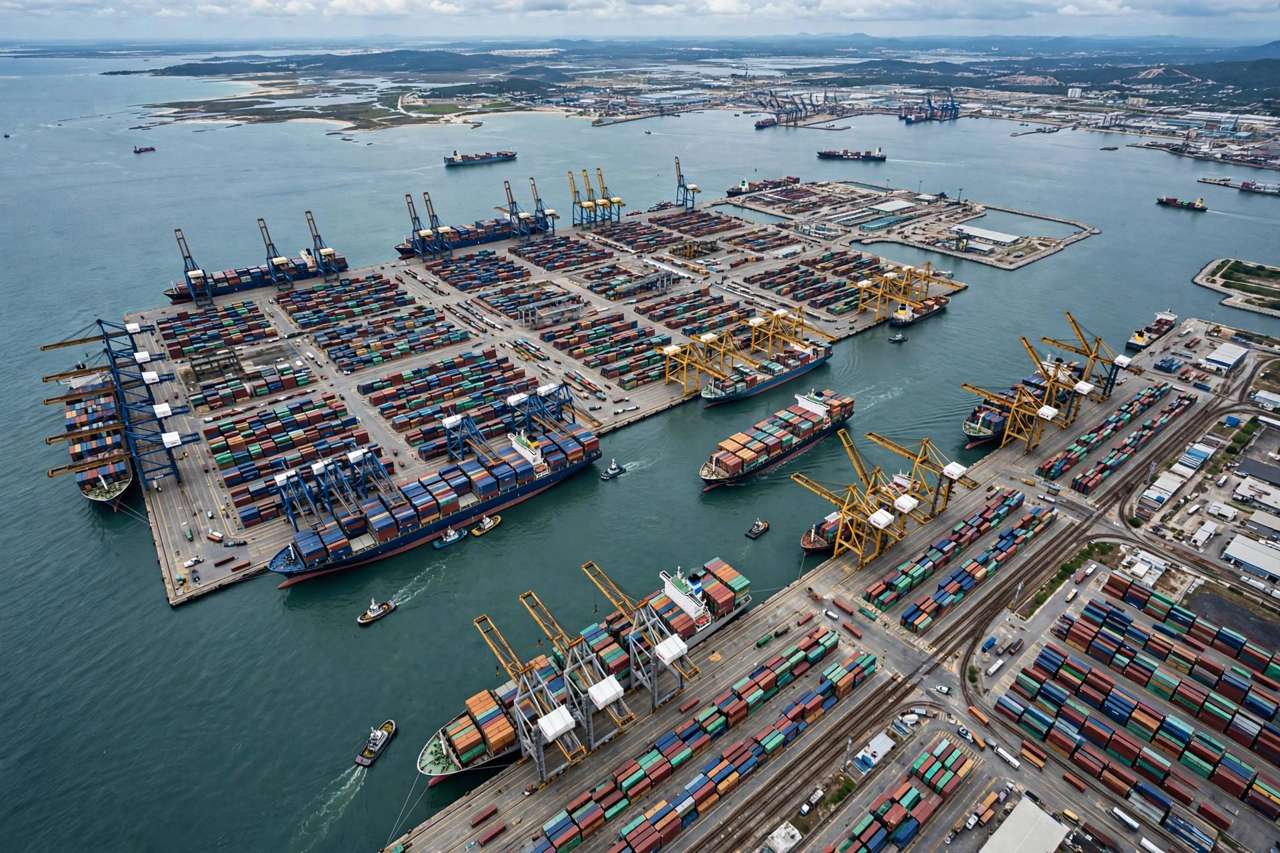
The logic rests on a simple premise: modern economies are interconnected, and severing those connections hurts. A country that cannot sell its oil, cannot access the global banking system, or cannot import critical technology faces real economic pain — falling currency, inflation, shortages, unemployment. The sanctioning countries bet that this pain will translate into political pressure: either the leadership changes course, or the population (or elites) pressure the leadership to change course.
That bet does not always pay off, which is the central tension of the entire sanctions enterprise. But before we get to effectiveness, you need to understand the machinery — because “sanctions” is not one thing. It is a toolkit, and different tools do very different damage.
The Types: From Comprehensive Embargoes to Targeted Measures
Comprehensive sanctions are the blunt instrument: broad bans on trade, investment, and financial dealings with an entire country. Historically, these were the default — sweeping embargoes that affected whole economies and, inevitably, whole populations. The humanitarian costs of comprehensive sanctions became a major controversy, because when you strangle an economy, ordinary citizens suffer first and most.
Targeted or “smart” sanctions are the modern preference: measures aimed at specific individuals, companies, or sectors rather than entire populations. Asset freezes on named officials. Travel bans on elites. Restrictions on specific industries like arms, oil, or finance. The theory is precision — punish the decision-makers and their enablers while sparing civilians. In practice, precision is hard, and targeted sanctions still ripple outward into the broader economy.
Financial sanctions deserve their own category because they are often the sharpest tool. Cutting banks off from international payment systems, freezing central bank reserves held abroad, blocking access to dollar-denominated transactions — these strike at the circulatory system of a modern economy. A country can survive without imported luxury goods. It struggles to function without access to global finance.
Secondary sanctions are the controversial extension: penalties on third parties — companies or countries not involved in the original dispute — for doing business with the sanctioned target. This is how one country’s sanctions become effectively global: a foreign bank faces a choice between doing business with the sanctioned country or maintaining access to the sanctioning country’s financial system. Most choose the latter. Secondary sanctions are powerful and widely resented, including by allies.
Who Imposes Sanctions and Who Enforces Them
The UN Security Council can impose sanctions binding on all member states — the closest thing to global consensus. But Security Council action requires agreement among the permanent members, each holding a veto, which means UN sanctions only happen when the great powers align. That is rare, which is why most sanctions regimes are unilateral or coalition-based rather than UN-mandated.
Individual countries and blocs impose the majority of sanctions. The United States is by far the most active, through the Treasury Department’s Office of Foreign Assets Control — OFAC — which administers sanctions programs, maintains lists of sanctioned individuals and entities, and enforces violations with severe penalties. The European Union, the United Kingdom, and other countries run parallel regimes, often coordinated with Washington but sometimes diverging.
Enforcement is where sanctions succeed or fail, and it is largely a banking story. Global banks comply with US sanctions not out of loyalty but out of self-preservation: the penalties for violations are enormous, and losing access to the US financial system is an existential threat to any major bank. This compliance cascade — governments threaten, banks comply, businesses follow — is what gives sanctions their reach. It is also why sanctions evasion has become a sophisticated industry of its own, involving shell companies, transshipment through third countries, and increasingly, cryptocurrency.
Real Examples: What Sanctions Have Looked Like in Practice
The historical record is the best teacher here. Sanctions on Iran — tightened over its nuclear program — restricted oil exports and cut Iranian banks off from global finance, contributing to severe currency depreciation and inflation. The economic pressure was a factor in bringing Iran to nuclear negotiations, though the sanctions did not by themselves resolve the underlying dispute.
Sanctions on Russia following the invasion of Ukraine represented the most extensive sanctions regime ever assembled against a major economy: central bank asset freezes, exclusion of banks from payment messaging systems, oil price caps, and export controls on technology. The Russian economy contracted and adapted simultaneously — finding new trade partners, rerouting energy exports, building parallel financial channels — demonstrating both the power and the limits of even maximal sanctions against a large, resource-rich state.
Sanctions on North Korea show the opposite extreme: one of the most sanctioned countries on earth, under UN and unilateral measures for its weapons programs, yet the regime has endured for decades. Isolation was already near-total, the leadership proved willing to let the population bear extraordinary hardship, and enforcement leaked through neighboring trade. Maximum pressure met maximum resistance.
And there are quieter successes people forget. Sanctions were part of the pressure campaign that helped end apartheid in South Africa — combined with internal resistance and diplomacy, economic isolation contributed to a political transformation. The lesson across all these cases: sanctions are most effective as part of a strategy, paired with diplomacy and clear demands, rather than as a standalone punishment.
Do Sanctions Actually Work? The Evidence
This is the question everyone asks, and the scholarly answer is genuinely mixed. Studies of sanctions episodes find that they achieve their stated goals in a minority of cases — estimates vary, but roughly a third is a commonly cited figure, and even that depends heavily on how you define success. Sanctions impose costs far more reliably than they change behavior.
Several factors predict effectiveness. Clear, achievable demands matter enormously — sanctions work best when the target knows exactly what to do to get relief. Multilateral coordination beats unilateral action, because a target that can simply trade elsewhere barely feels the pain. The target’s economic structure matters: diversified, globally integrated economies are more vulnerable than isolated or self-sufficient ones. And time cuts both ways — sanctions need time to bite, but targets also use time to adapt, find workarounds, and rally domestic support against the “foreign bully.”
The humanitarian dimension is the persistent moral shadow. Even “smart” sanctions affect populations — when elites lose revenue, public services and imports suffer downstream. Sanctions advocates argue this is still preferable to war; critics argue the civilian cost is routinely understated and the political gains overstated. Both claims have evidence behind them. This is one of those topics where certainty is usually a sign someone is selling something.
The Human Cost and the Debate
Any honest discussion of sanctions has to confront who pays. Economic contraction means medicine shortages, food price spikes, and collapsing public services — and these land hardest on people with the least power, not the officials whose names are on the sanctions lists. Authoritarian leaders have repeatedly demonstrated willingness to let their populations absorb enormous pain rather than concede, which raises a hard question about whether the suffering purchases anything.
Defenders make three arguments. First, the alternative — military action — kills more people faster. Second, sanctions signal international condemnation, which has value even when behavior does not change immediately. Third, well-designed targeted sanctions really can constrain specific capabilities, like weapons programs, even when they fail to topple regimes.
Critics make three counterarguments. First, the civilian harm is real, measurable, and borne by people who did not choose the policies being punished. Second, sanctions often strengthen authoritarian leaders by giving them a foreign enemy to blame for domestic failures. Third, overuse degrades the tool — every evasion network built to beat today’s sanctions makes tomorrow’s sanctions easier to beat. I report both sides because both sides have a case, and you deserve to weigh them yourself.
Frequently Asked Questions
What is the difference between sanctions and an embargo?
An embargo is a specific type of sanction — a ban on trade with a country, usually comprehensive. Sanctions is the broader category covering embargoes plus targeted measures like asset freezes, travel bans, financial restrictions, and export controls. All embargoes are sanctions; not all sanctions are embargoes.
What is OFAC?
OFAC — the Office of Foreign Assets Control — is the US Treasury Department office that administers American sanctions programs. It designates sanctioned individuals and entities, issues licenses and guidance, and enforces violations with civil and criminal penalties. Because of the dollar’s role in global finance, OFAC decisions ripple through the entire international banking system.
Can sanctioned countries just trade with someone else?
Partly, and this is the central enforcement challenge. Targets reroute trade through willing partners, use intermediaries and shell companies, and develop alternative payment systems. Secondary sanctions are designed to close these escape routes by threatening third parties, but evasion is a constant cat-and-mouse game.
Do sanctions hurt ordinary citizens?
Yes — this is well documented. Even targeted sanctions depress the broader economy through reduced trade, investment flight, and currency pressure, and the effects reach ordinary people through prices, shortages, and public services. The humanitarian impact is the most serious and persistent criticism of sanctions as a policy tool.
How do sanctions end?
Through political agreement: the sanctioning authority lifts or eases measures when its conditions are met, or when policy changes. Lifting is often gradual and conditional, used as leverage in negotiations. Some sanctions regimes have lasted decades, which is why targets often doubt that compliance will actually bring relief — a credibility problem that undermines the tool itself.