What Is the World Economic Forum? Davos Explained

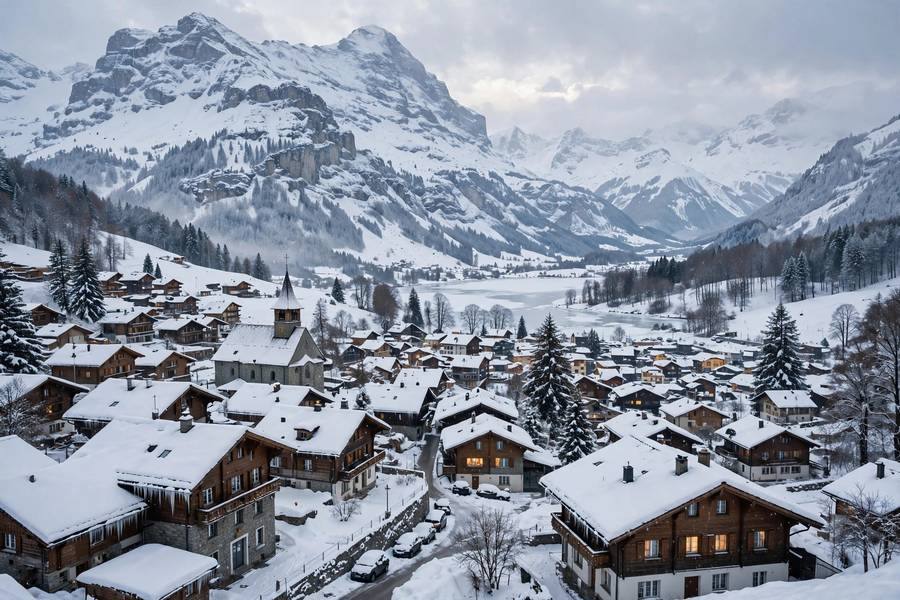
Every January, the small Swiss town of Davos fills with private jets, heads of state, and billionaires — and every January, the rest of us ask the same thing: what is the World Economic Forum, and why does a meeting in the Alps matter to anyone else? I cover global institutions for a living, and the WEF is one of the most misunderstood organizations in public life: too secretive for its critics, too self-important for its skeptics, and genuinely influential in ways neither caricature captures.
This is an independent explainer — no corporate gloss, no conspiracy framing. Just the history, what the Forum actually does, who attends and why, what it has accomplished, and the serious criticisms leveled against it.
What Is the World Economic Forum? The Basics
The World Economic Forum (WEF) is an international nonprofit organization headquartered in Geneva, Switzerland, best known for hosting an annual meeting in Davos each January. Founded in 1971 by German economist Klaus Schwab as the European Management Forum, it began as a gathering focused on European business management practices and evolved into a global convening platform for leaders in business, government, academia, and civil society.
The Forum describes its mission as “improving the state of the world” through public-private cooperation. In practice, it functions as a high-level networking and agenda-setting institution: it does not pass laws, command armies, or govern anyone. Its influence comes from convening power — getting the right people in the same room — and from the ideas, reports, and initiatives that emerge from its programs.
A Brief History: From 1971 to Davos
The Forum’s trajectory mirrors the globalization era. Founded in 1971, it rebranded as the World Economic Forum in 1987 and moved its annual meeting permanently to Davos-Klosters. The 1990s and 2000s were its ascendancy: as markets globalized, Davos became the place where the global elite coordinated — where trade deals were discussed, where developing nations pitched investors, where the phrase “Davos Man” entered the lexicon to describe the footloose global executive class.
The 2008 financial crisis dented its prestige — the institution most associated with globalization had not seen the crash coming — and the Forum spent the 2010s repositioning around themes like inequality, climate, and the Fourth Industrial Revolution (Schwab’s term for the fusion of digital, physical, and biological technologies). In 2020 it launched the “Great Reset” initiative, proposing that the pandemic recovery be used to reshape economic systems — a proposal that generated enormous controversy and became a lightning rod far beyond its actual policy content.
What Happens at the Davos Annual Meeting?
The public image — billionaires skiing between panels — is not wrong, but it misses the structure. The annual meeting combines:
- Public sessions: Panel discussions and speeches on the year’s theme (past themes have included climate action, AI governance, and economic resilience), many streamed online.
- Private bilateral meetings: The real action. Heads of state, CEOs, and ministers hold closed-door meetings to negotiate deals, coordinate policy, and build relationships. Much of Davos’s value is diplomatic speed-dating.
- Initiative launches: New partnerships and commitments — on tropical forest conservation, vaccine distribution, digital inclusion — are announced with the assembled leaders as witnesses.
- The fringe: Companies, NGOs, and governments rent venues around Davos for their own events, creating a parallel conference of thousands.
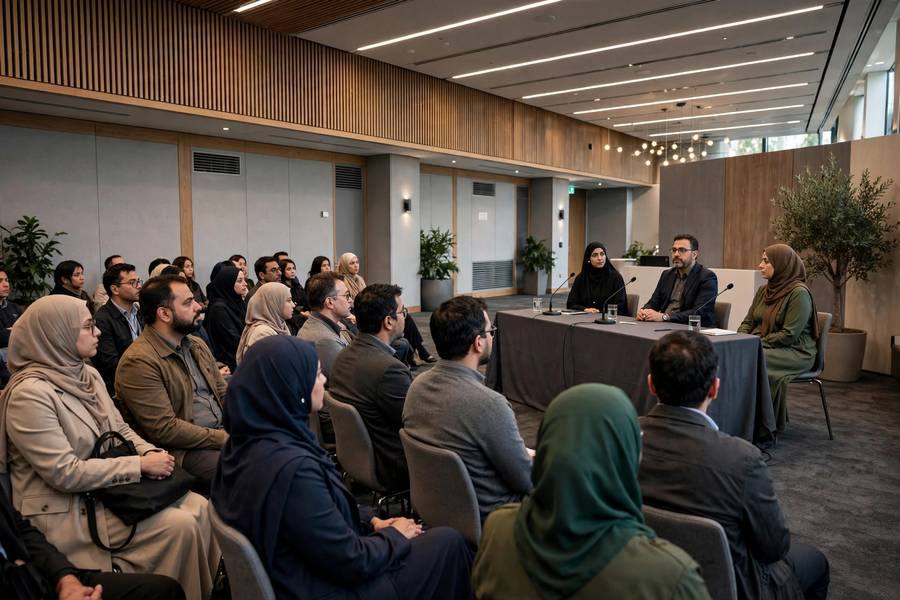
Attendance is by invitation, and participation fees for corporate members run into the hundreds of thousands of dollars — one reason critics call it a rich people’s club. Journalists attend in large numbers, and in recent years the Forum has expanded digital access, though the core remains resolutely in-person and exclusive. If you ever wondered why the same faces appear in the photos every year, that is why: the guest list barely changes.
What Does the WEF Actually Do Year-Round?
The Davos meeting is the flagship, but the Forum operates year-round through several channels. It publishes influential research — most famously the Global Risks Report, an annual survey of what leaders worry about, and the Global Competitiveness Report ranking economies. It runs ongoing initiatives on issues like ocean conservation, cybersecurity norms, and AI governance, convening working groups that produce frameworks and best practices.
It also hosts regional meetings around the world and maintains a network of affiliated communities — including the Young Global Leaders program, which has become a credential in its own right. Whether these activities amount to meaningful impact or elaborate networking is, as we will see, one of the central debates about the institution.
Who Funds It and Who Attends?
The Forum is funded primarily by its corporate members — roughly a thousand large companies that pay annual membership fees, with top-tier “strategic partners” paying the most. This funding model is both its strength (independence from any single government) and the root of its most persistent criticism: an institution funded by multinational corporations will inevitably reflect corporate perspectives on global problems.
Attendees at the annual meeting typically number in the thousands, including dozens of heads of state and government, central bankers, UN officials, Nobel laureates, activists, and journalists. The mix is deliberate — the Forum’s theory is that progress requires all stakeholders in the room. Critics note who is not in the room: the workers, small farmers, and ordinary citizens most affected by the policies discussed.
The Criticisms: Taking Them Seriously
Fair-minded criticism of the WEF falls into several buckets, and they deserve honest treatment:
- Democratic deficit: Unelected business leaders and officials shape global agendas with no democratic accountability. Decisions affecting billions get discussed by thousands.
- Elite capture: Corporate funding means corporate framing — problems get defined in ways that favor market-friendly solutions and disfavor structural critiques of corporate power itself.
- Hypocrisy on climate: Thousands of private jets descending on a ski resort to discuss carbon emissions is, at minimum, a terrible look — and critics argue the Forum’s climate initiatives have produced more pledges than results.
- The Great Reset controversy: The 2020 initiative’s vague, sweeping language about reshaping capitalism fueled conspiracy theories about secret global control. The Forum’s actual proposals were standard stakeholder-capitalism fare, but the episode revealed how poorly elite institutions communicate with skeptical publics.
- Ineffectiveness: The gentlest critique: for all the convening, Davos produces declarations, not enforcement. The world’s biggest problems — climate, inequality, conflict — have worsened across the Forum’s decades of meetings.
My own read after years of watching: the WEF is best understood as a mirror of the global elite consensus at any given moment — useful for understanding what powerful people think the agenda is, but a poor guide to what will actually change. Treat Davos as a weather vane, not a steering wheel. And when you read coverage of the next annual meeting, ask the question the press releases never answer: who was not in the room, and what would they have said?
The WEF and Technology: AI, Crypto, and the Fourth Industrial Revolution
In recent years, technology governance has become one of the Forum’s signature themes. Schwab’s “Fourth Industrial Revolution” framing — the blurring of physical, digital, and biological systems — put AI, biotechnology, and automation at the center of Davos agendas. The Forum has convened AI governance dialogues, published frameworks for responsible AI deployment, and hosted debates on cryptocurrency regulation that brought central bankers and crypto founders into the same rooms.
This is where the Forum’s convening model arguably works best: emerging technologies need norms before they need laws, and getting regulators, companies, and researchers talking early has genuine value. It is also where the criticism bites hardest — when the companies building AI systems are also funding the institution writing AI governance frameworks, the line between coordination and self-regulation gets blurry. Watch this space: how the world governs AI will be shaped in rooms like these, whether or not the public is invited. Understanding that dynamic matters more than memorizing the Forum’s org chart.
Why the World Economic Forum Still Matters
Despite everything above, dismissing the Forum entirely misses something real. In a fragmented world with weakening multilateral institutions, Davos remains one of the few places where adversaries and competitors actually meet face to face. Diplomatic breakthroughs have been seeded there; business deals that built factories and created jobs were negotiated in its hallways; and the personal relationships formed over those January days shape decisions made in capitals all year. The Global Risks Report genuinely shapes how institutions plan.
The deeper question the WEF raises — who gets to set the global agenda, and by what right — is worth asking about every powerful institution, elected or not. Understanding the Forum is really about understanding how power works when it operates through convening rather than commanding.
Frequently Asked Questions
What is the World Economic Forum in simple terms?
The World Economic Forum is a Swiss nonprofit that hosts an annual meeting of global leaders in Davos, Switzerland, each January. It convenes business executives, heads of state, and experts to discuss global issues — it influences through ideas and networking, not through laws or governing power.
Who founded the World Economic Forum?
German economist Klaus Schwab founded it in 1971 as the European Management Forum; it became the World Economic Forum in 1987. Schwab led the organization for decades, shaping it into the global institution it is today.
What happens at Davos?
The annual meeting combines public panel discussions on global issues, private bilateral meetings between leaders (where much of the real business happens), launches of new initiatives, and a large fringe of corporate and NGO events around the town.
Is the World Economic Forum a government organization?
No. It is an independent nonprofit funded mainly by corporate membership fees. It has no governing authority over any country — its influence comes from convening powerful people and publishing research, not from any official power.
Why is the WEF controversial?
Critics cite its lack of democratic accountability, corporate funding, the optics of elites discussing inequality and climate at a luxury ski resort, and the controversy around its 2020 “Great Reset” initiative. Supporters argue it fills a gap in global coordination.
Can ordinary people attend Davos?
The annual meeting is invitation-only with very expensive corporate participation fees. However, many sessions are streamed publicly, and the Forum runs open digital initiatives — but the core networking happens in person among invitees.