How to Serve in Table Tennis: Rules & Beginner Drills

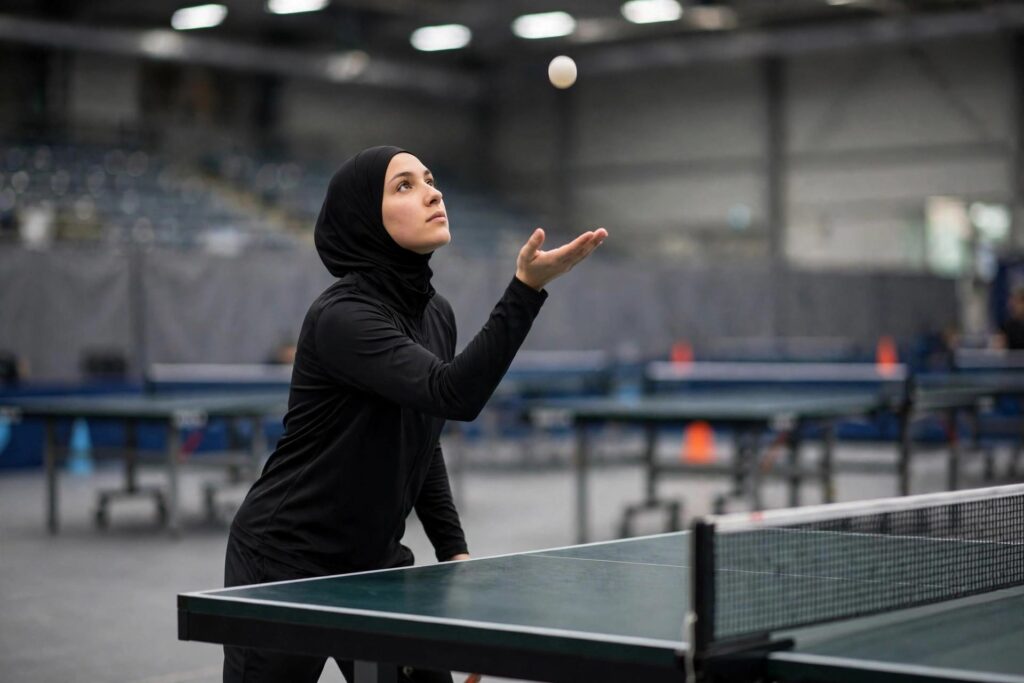
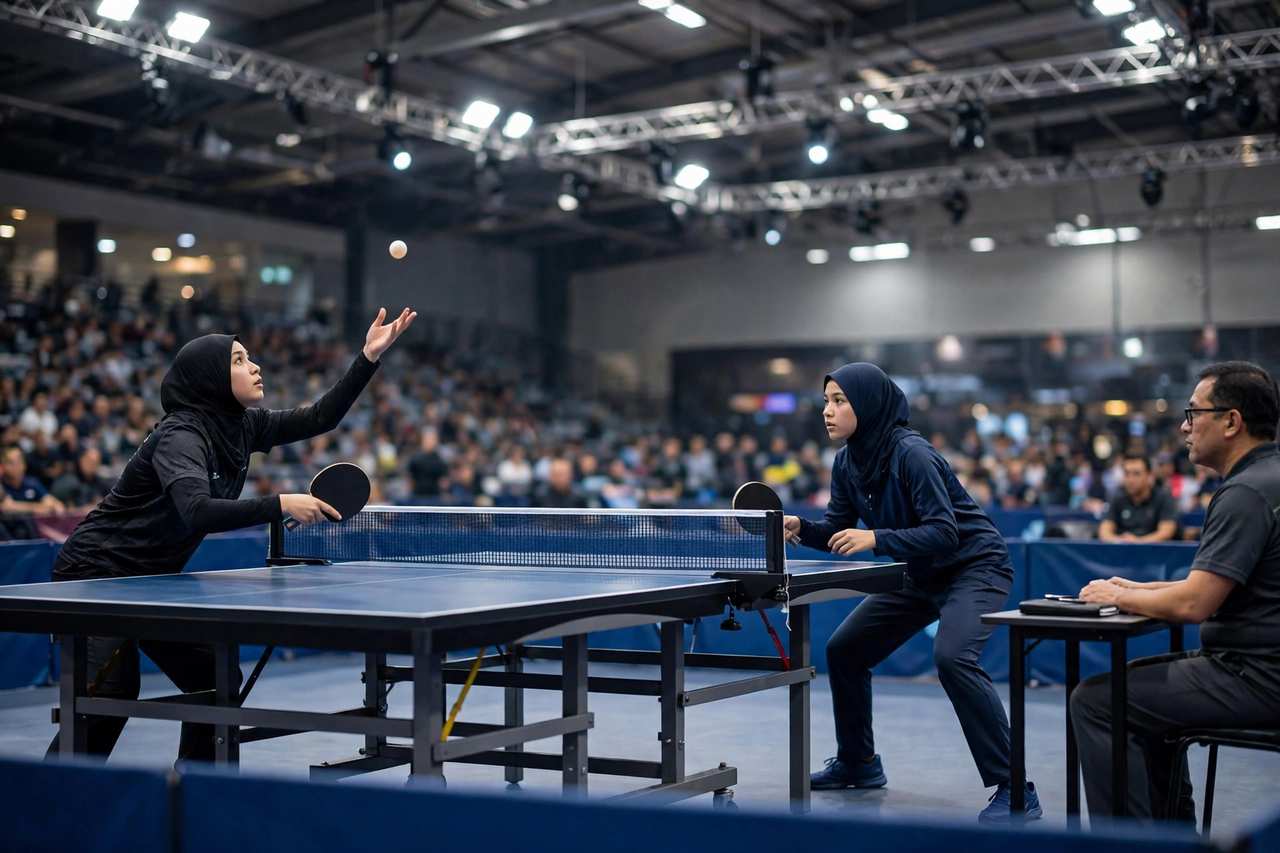
The serve is the only shot in table tennis you fully control. No opponent’s spin to read, no rally chaos — just you, the ball, and the table. And yet it’s where beginners lose the most free points, because most casual players serve illegally without knowing it. Palm-cupped ball, low toss, hidden contact — in a real match, every one of those is a point for your opponent. There are no second serves in table tennis.
Here’s the competitor’s-eye view: the five ITTF rules that make a serve legal, the mechanics that make it effective, the drills that build it, and the faults that cost real points — including at the Olympic final.
Why the Serve Matters
Two facts that change how you think about serving:
- An illegal serve is a free point for your opponent. Not a warning, not a re-serve — a point. Gone. In a game to 11, gifting two or three points on illegal serves is often the difference between winning and losing.
- There is no second serve. Unlike tennis, you don’t get a backup. Every serve has to be legal and effective, first time, every time.
That combination — high stakes, no safety net — is why the serve deserves dedicated practice, not just the casual “tap it over” most beginners do.
The 5 Legal-Serve Pillars (ITTF)
The ITTF service rules reduce to five pillars. Memorize them; everything else is technique.
1. Open Flat Palm
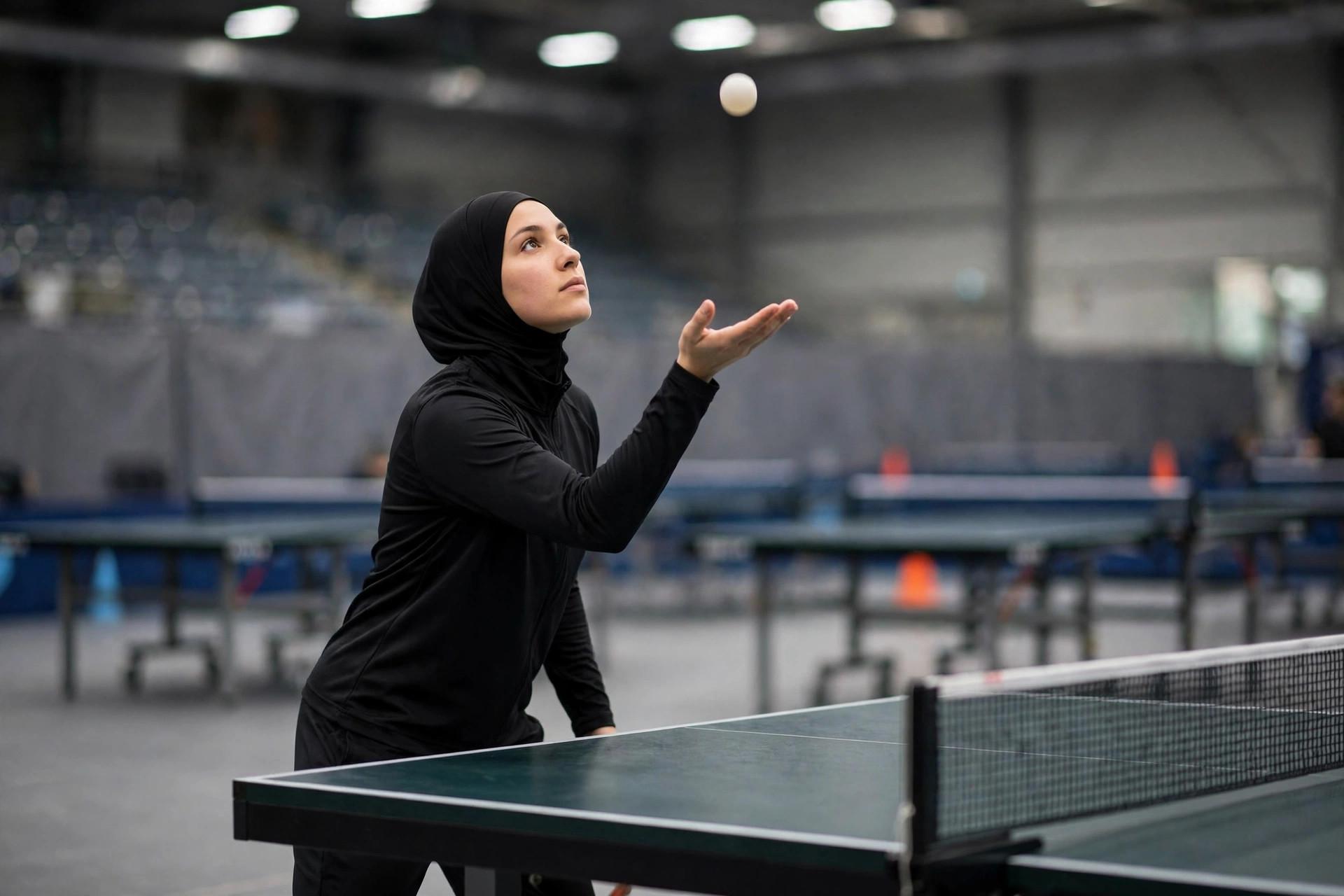
The ball must rest freely on your open, flat palm — not cupped in your fingers, not gripped, not pinched. The palm faces up, the ball sits still. The reason: a cupped hand lets you impart finger spin on the toss, which is illegal. Flat palm, free ball, no tricks.
2. Toss at Least 16cm, Nearly Vertically
The toss must rise at least 16cm (about 6.3 inches) from the palm, and travel nearly vertically — within 30 degrees of vertical. Here’s the intuition for the height: the net is 15.25cm tall, so the rules require your toss to clear net height. A lazy two-inch flick-toss is the most common illegal serve in casual play, and it’s illegal precisely because it hides the contact.
3. Total Visibility
The ball must be visible to the opponent from the toss all the way to contact. No hiding it behind your body, your arm, your shoulder, or your shirt. This is the rule that ended careers at the top level (more on Ding Ning below). If the umpire can’t see the ball through the whole motion, it’s a fault.
4. Contact Behind the End Line, Above the Surface, on the Descent
Three contact conditions, all at once: you must strike the ball behind the table’s end line (not over the table), above the playing surface, and while the ball is on its way down from the toss — not on the way up. Strike it on the rise and it’s illegal, even if everything else was perfect.
5. The Two-Bounce Rule
The serve must bounce on your side first, then on your opponent’s side. One bounce each. Miss your own side entirely, or bounce twice on yours, and the serve is dead — point to the opponent.
Gear Check
The rules assume standard equipment, and beginners should know the specs:
- Ball: ITTF-approved, 40mm diameter, 2.7g weight — the modern standard.
- Rubber: one side red, one side black — and you must show both to your opponent before the match. The color rule exists so opponents can read your spin. Hiding your rubber is its own violation.
Basic Serve Mechanics for Beginners
Rules memorized? Now the motion:
- Stance: stand behind the end line, sideways to the table, weight balanced.
- Toss: open palm, ball resting free — toss it straight up at least 16cm. Practice the toss alone until it’s vertical and consistent; most serve problems are actually toss problems.
- Strike: as the ball descends, strike it with a controlled brushing motion, contacting behind the end line and above the surface.
- Follow-through: finish the motion naturally — a choked, stabbed follow-through usually means you rushed the contact.
Slow it down. A legal, consistent, boring serve beats a flashy illegal one every single time. Flash comes later.
Adding Spin Safely
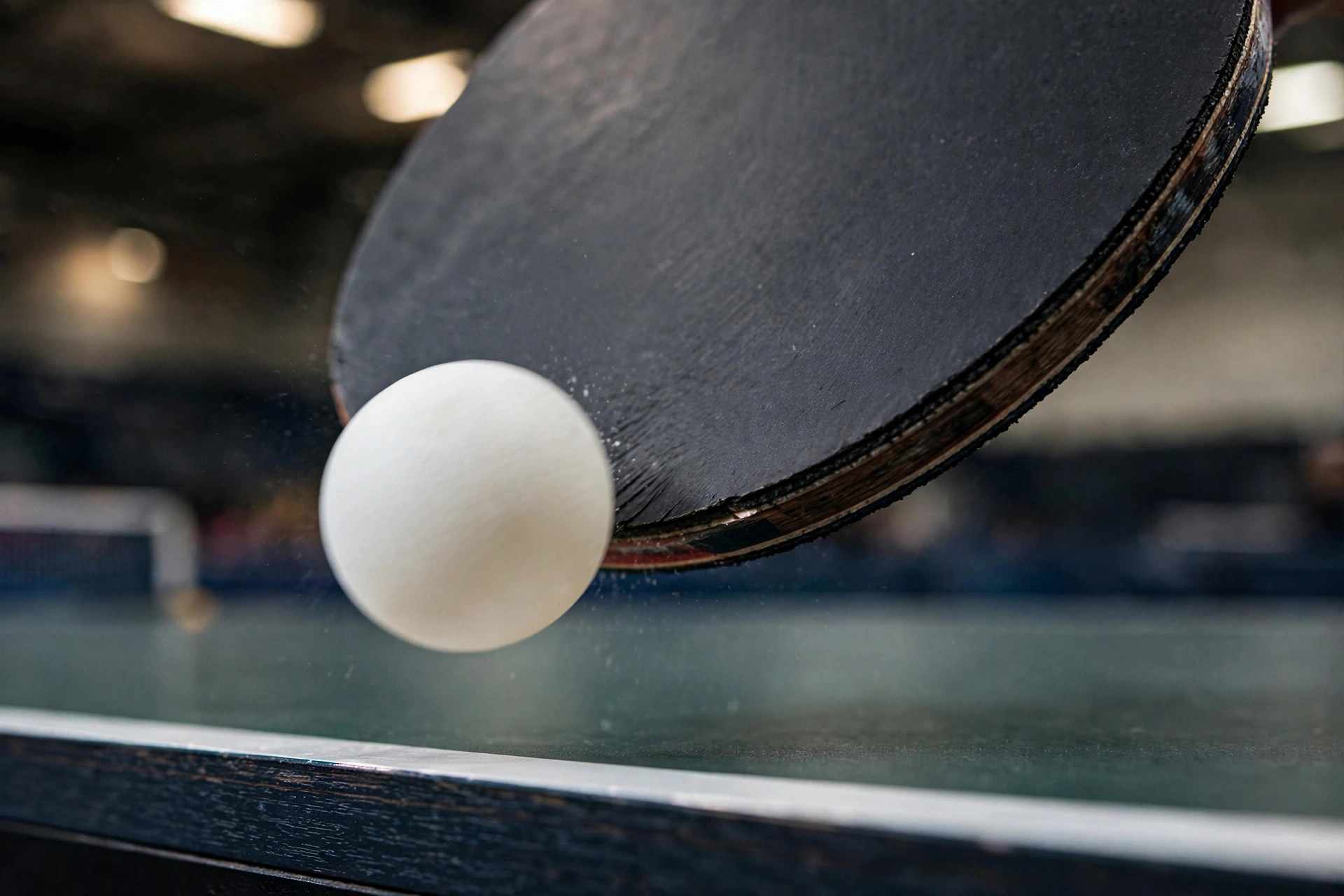
Spin is what turns a serve from “legal” into “dangerous.” The critical rule: spin must come only from the racket — never from the fingers. Any finger manipulation during the toss or contact is illegal.
The three basic spins:
- Backspin — brush under the ball; it floats and stays low, then dies on the bounce
- Topspin — brush over the ball; it kicks forward aggressively off the bounce
- Sidespin — brush across the ball; it curves in the air and jumps sideways on the bounce
Start with backspin — it’s the most forgiving and the most useful for beginners. Combine spins later. (Start with the spin mechanics here — named serves like the pendulum or tomahawk come later, with a coach.)
Doubles Serve Rules
Doubles changes the geometry:
- Diagonal only: the serve must go from your right half to the opponent’s right half — diagonally across the table.
- The center line is in. The white center line counts as part of the right half, so clipping it is fine.
- 2-point service rotation: service alternates every 2 points (same as singles), rotating through all four players in order.
The diagonal constraint makes doubles serving a precision skill — you’re aiming at half the table you normally would.
Lets and Faults
Net-cord lets: if the serve hits the net but still lands legally on the opponent’s side, it’s a let — the serve is replayed, no penalty. There is no limit on lets; you can (in theory) hit ten lets in a row and keep re-serving. After enough lets the umpire may start watching closely, but the rule allows unlimited replays.
Faults: anything else wrong — illegal toss, hidden ball, wrong bounce, contact over the table — is an immediate point for the opponent. No warnings for the serve itself. Repeated or deliberate violations can escalate to yellow and red cards from the umpire, but the first fault already cost you the point.
4 Practice Drills
- Wall verticality drill. Stand facing a wall and practice your toss — the ball should go straight up and come straight back down to your palm. If it’s drifting, your toss isn’t vertical. Fix the toss before you fix the serve.
- Net-height benchmark. Hold your paddle vertically next to the net: the net is 15.25cm, your toss must clear 16cm. Toss the ball and check it rises above your paddle’s top edge. Build the muscle memory of a legal-height toss.
- Slap-the-hip visibility drill. Practice your service motion with your free hand slapping your hip at contact — if your body is hiding the ball at any point, you’ll feel the motion break. The drill trains the “nothing hidden” body position.
- End-line shadow drill. Stand 6 inches behind the end line and practice the full motion without a ball — shadow serving. It ingrains the behind-the-line contact point so deeply that match pressure can’t move it.
Common Beginner Faults
- Palm-cupping flick — tossing from cupped fingers instead of a flat palm. Fix: practice the open-palm toss against the wall drill until it’s automatic.
- Diagonal hook toss — the ball arcs sideways instead of rising vertically. Fix: slow down; a rushed toss is always a crooked toss.
- Table-invasion strike — contacting the ball over the table instead of behind the end line. Fix: the 6-inches-back shadow drill.
- Hidden contact — body or arm blocking the opponent’s view. Fix: the slap-the-hip drill, and have a practice partner confirm they can see the ball throughout.
Pro Case Study: Ding Ning, 2012 Olympic Final
This isn’t theoretical. In the 2012 London Olympic final, China’s Ding Ning — one of the greatest players ever — was penalized 3 service points for illegal serves (toss height and visibility violations). Three points, in an Olympic final, against a fellow Chinese player, with a gold medal on the line.
If the serve rules can bite the world #1 on the biggest stage in the sport, they can bite you at the club. Learn the five pillars. Drill them until they’re boring. Then go win points instead of giving them away.
For the racket-sport family: how-to-serve-a-tennis-ball is the tennis cousin (different sport, same serving discipline), pickleball-rules covers the other paddle sport’s rulebook, and tennis-scoring-explained sorts out the scoring vocabulary.
Frequently Asked Questions
What are the 5 rules of serving in table tennis?
Open flat palm, toss at least 16cm nearly vertically (within 30°), ball visible throughout, contact behind the end line above the surface on the descent, and the two-bounce rule (your side, then theirs).
How high must you toss the ball when serving?
At least 16cm (about 6.3 inches) — just above the 15.25cm net height — and the toss must travel within 30 degrees of vertical.
Can you serve from anywhere on the table?
In singles, yes — any position behind the end line. In doubles, the serve must go diagonally from your right half to the opponent’s right half.
What happens if you serve illegally?
Your opponent gets the point immediately — there are no second serves and no warnings for the serve itself. Repeated violations can bring umpire cards.
Is it legal to hit the net on a serve?
Yes — if the serve hits the net cord but still lands legally, it’s a let and the serve is replayed. There is no limit on lets.
Do doubles have different serving rules?
Yes: serves must travel diagonally (right half to right half, center line counts as in), with the standard 2-point service rotation through all four players.