Basic Rules of Volleyball for Beginners (Explained)

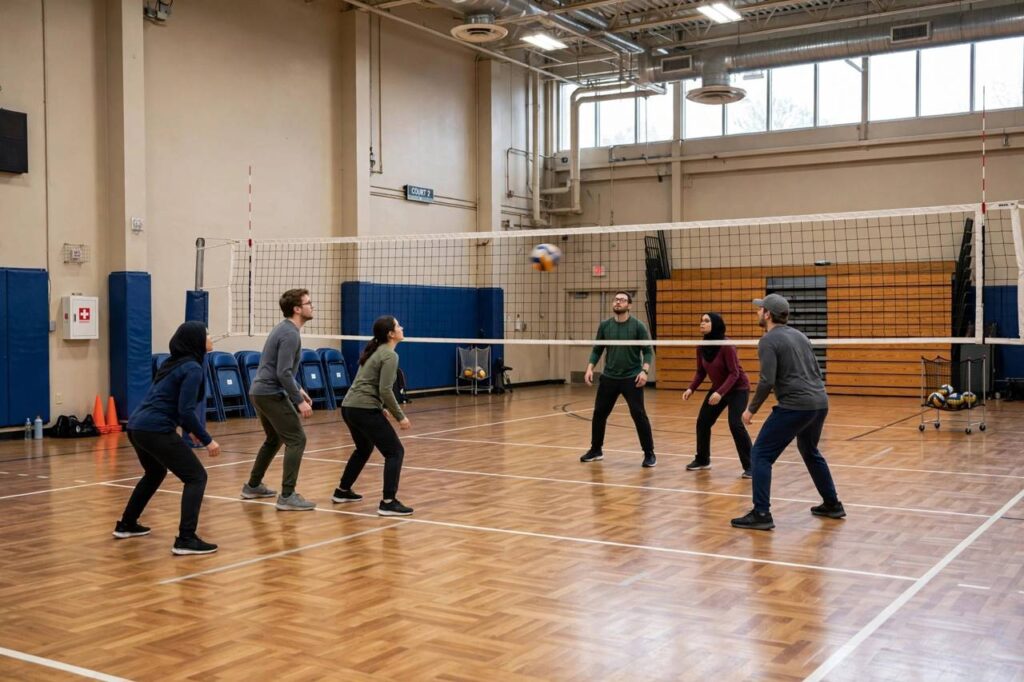
Volleyball looks chaotic the first time you watch it — six people per side, the ball never touching the ground, everyone rotating in patterns that seem random. But underneath the apparent chaos is one of the most elegantly structured games in sports. These basic rules of volleyball for beginners cover everything you need to understand or play your first game: how scoring works, what each player does, and the handful of rules that actually come up in real play.
The Objective and the Court
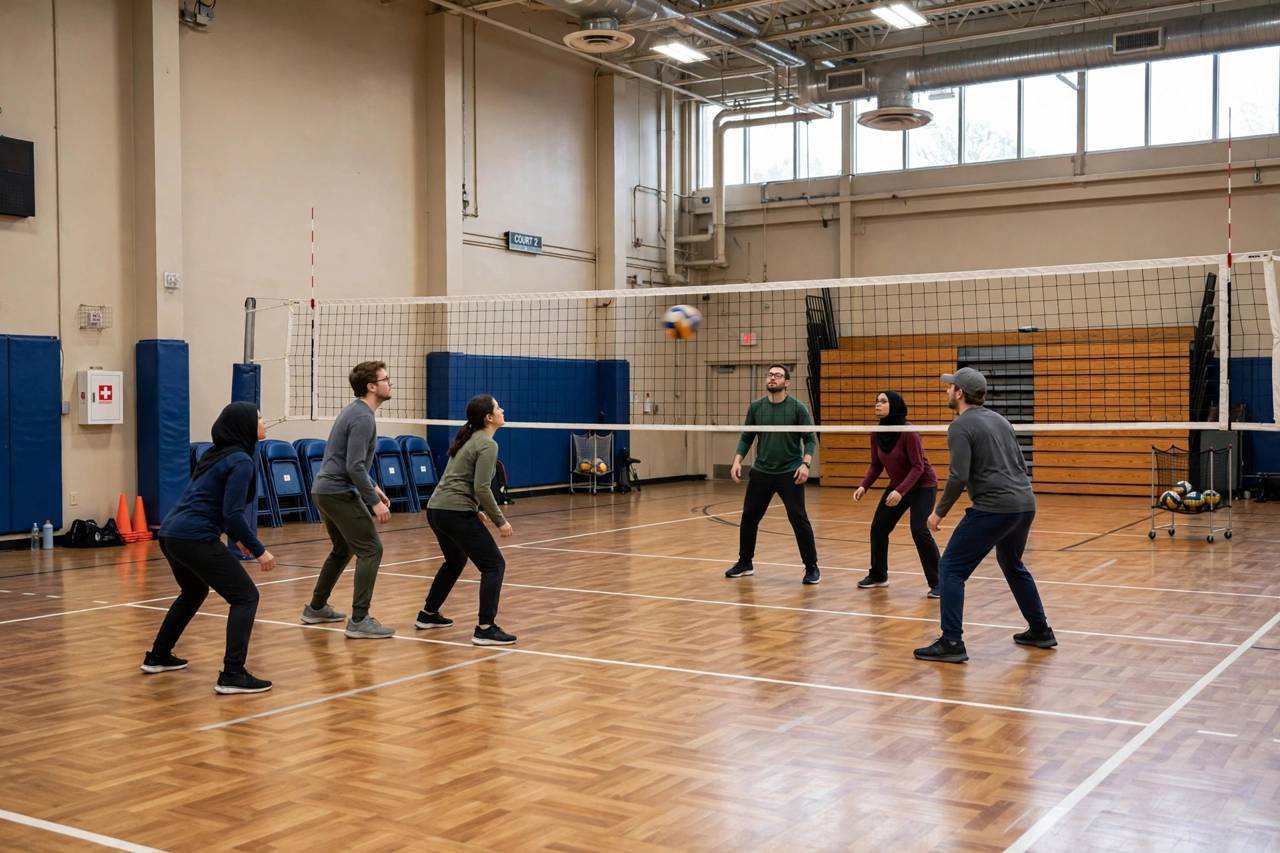
The goal is simple: send the ball over the net and have it touch the opponent’s floor, while preventing the same thing on your side. Each team has six players on an indoor court, divided by a net (2.43 meters high for men’s play, 2.24 meters for women’s). The court is 18 by 9 meters — smaller than it looks on television, which is why rallies feel so fast.
Beach volleyball is the same sport with different numbers: two players per side, a slightly larger ball, and no rotation rules. Everything below describes the indoor six-player game, which is what most beginners encounter first.
Scoring: Rally Point System
Volleyball uses rally scoring: every rally produces a point for one team, regardless of who served. Win the rally, get the point. Matches are best-of-five sets; the first four sets go to 25 points, and a deciding fifth set goes to 15. Crucially, you must win a set by two points — play continues past 25 until someone leads by two.
This system replaced the old side-out scoring (where only the serving team could score) and made matches dramatically faster and more predictable in length. For beginners, the practical takeaway: every single rally matters, and comebacks are always possible because the trailing team scores on every rally it wins.
The Three-Hit Rule
Each team gets a maximum of three contacts to return the ball. The classic sequence is bump (forearm pass), set (overhead fingertip pass), spike (attack hit) — but any three contacts in any order work. A single player may not hit the ball twice in succession, with one exception: a block does not count as one of the three hits, and the blocker may play the ball again immediately after blocking.
The ball must be cleanly hit, not caught or thrown. “Carrying” or “lifting” the ball — letting it rest in your hands momentarily — is a fault. Beginners get called for this more than anything else; the fix is quicker, crisper contacts. Think of your hands as a trampoline surface, not a basket.
Serving and Rotation
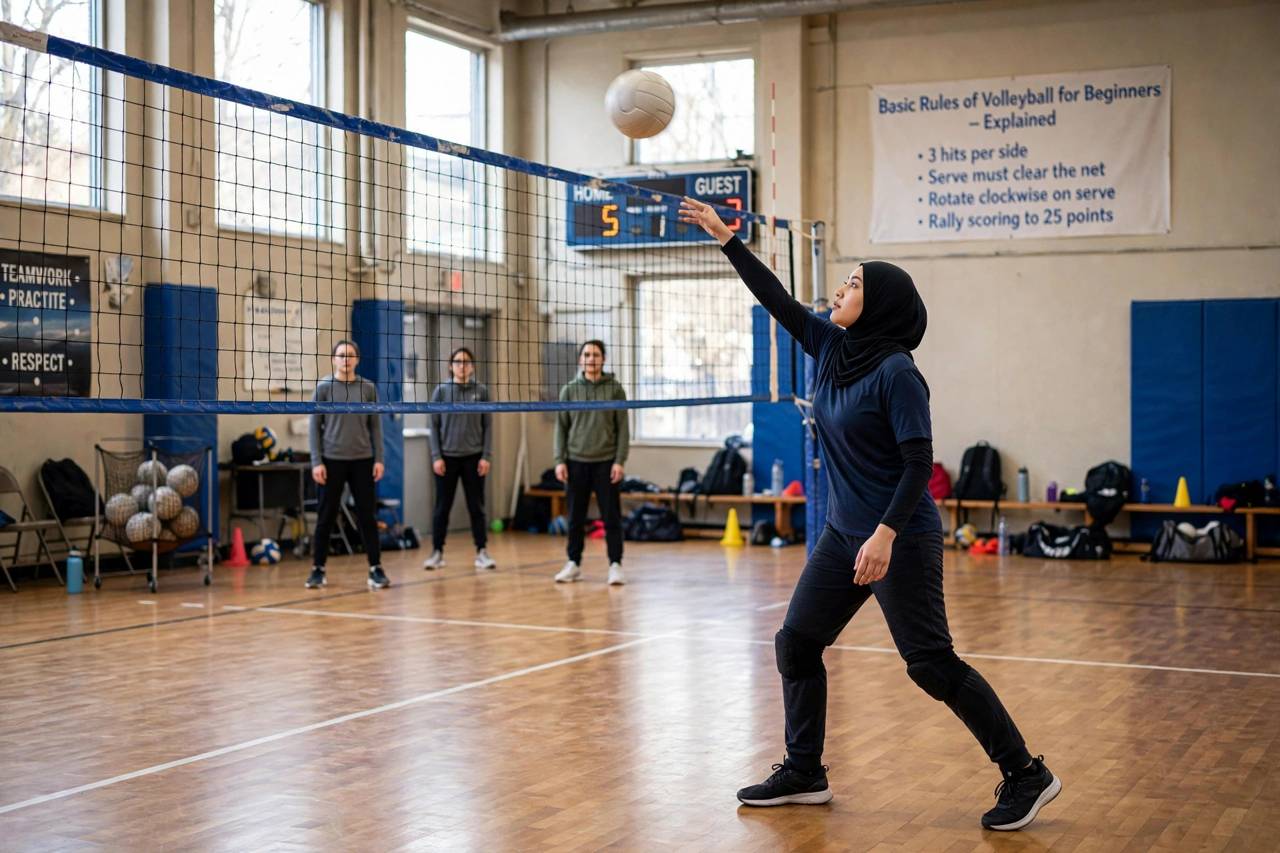
The serve starts every rally, delivered from behind the end line. The serve must cross the net without touching it on the way over — actually, under current rules, a serve that clips the net and lands in is legal (a “let serve”), though it is still bad luck. If the serve lands out or into the net without crossing, the point goes to the other team.
When the receiving team wins the rally, they earn the point and the serve — and the team rotates one position clockwise. This is the rule that confuses beginners most, but it exists for fairness: everyone plays both front-row and back-row positions over the course of a set. You must be in your correct rotational position when the ball is served; once the serve is in play, you can move freely.
Positions: Who Does What
Setter. The quarterback — usually takes the second contact and delivers hittable sets to attackers. Needs soft hands and quick decisions.
Outside hitter. The primary attacker, hitting from the left side. Gets the most sets and needs a strong swing.
Opposite (right-side hitter). Attacks from the right and blocks against the opponent’s outside hitter. Often the backup setter in emergencies.
Middle blocker. Lives at the net, blocking and quick-attacking. Usually the tallest player on the court.
Libero. The defensive specialist in a contrasting jersey. Cannot attack above net height or serve (in most rule sets), but digs everything. The libero replaces back-row players freely without counting as a substitution.
Defensive specialist. A back-row substitute brought in for serving or digging. Think of them as the libero’s backup.
Common Faults Beginners Should Know
Net touch. Touching the net during play is a fault (reaching over it to block is fine; touching it is not).
Foot fault on serve. Stepping on or over the end line while serving.
Four hits. A fourth team contact before the ball crosses — the rally ends immediately.
Back-row attack violation. A back-row player attacking the ball above net height from in front of the attack line.
Out of rotation. Being in the wrong serving position when the ball is served — the most common beginner violation, and the reason coaches drill rotation endlessly.
Tips for Your First Games
Call “mine” loudly — most beginner points are lost to hesitation between two players, not to skill. Move your feet before the ball arrives; flat-footed players watch balls land. And learn to serve consistently before learning to serve hard — a serve that lands in bounds every time is worth more than a rocket that misses half the time. Nobody remembers the beginner who hit one great spike; everyone remembers the one whose serves kept the rallies alive.

Basic Rules of Volleyball for Beginners: Cheat Sheet
Objective: land the ball on the opponent’s floor; don’t let it land on yours. Players: 6 per side indoors. Scoring: rally point — every rally scores; sets to 25 (15 in the decider), win by 2; best of 5. Hits: max 3 per side; no player hits twice in a row (block doesn’t count). Serve: from behind the end line, must cross the net. Rotation: clockwise when you win the serve back; be in position at the moment of serve. Faults to avoid: touching the net, catching/throwing the ball, four hits, foot faults, back-row attacks from the front zone. Learn these and you can play — everything else is refinement.
The Three Skills to Practice First
1. The forearm pass (bump). The foundation of everything. Platform: press your forearms together, thumbs side by side, elbows straight. Contact the ball on the fleshy part of the forearms, not the wrists. Move your feet to get behind the ball rather than reaching — reaching is where shanks come from. Practice against a wall: bump, let it bounce, bump again. Boring? Extremely. Essential? Completely.
2. The serve. Underhand to start — it is legal, reliable, and nobody judges it at beginner level. Stand behind the line, hold the ball in one hand, swing the other like a pendulum, and contact the ball’s lower half so it arcs over. Once you can land ten in a row, learn the overhand float serve. A consistent serve is the single most valuable beginner skill because every rally starts with you.
3. Reading the ball. Not a technique but a habit: watch the ball from the moment it leaves the opponent’s hands, call “mine” early and loudly, and move before you think you need to. Beginners lose most points standing still, not lacking skill. Volleyball rewards the player who moves first more than the player who hits hardest.
Volleyball Lingo for Beginners
Dig: a defensive save, usually a forearm pass on a hard-driven ball. Set: the overhead fingertip pass that prepares an attack — the setter’s art. Spike (attack/hit): the hard downward hit meant to end the rally. Block: jumping at the net to intercept an attack; doesn’t count as a team hit. Ace: a serve the other team can’t return. Side out: winning the rally when the other team served (earning the serve back). Rally: the back-and-forth sequence between serves. Let serve: a serve that clips the net and lands in — legal, lucky, and mildly infuriating.
Indoor vs. Beach Volleyball: Key Rule Differences
The beach game tweaks the formula in ways that matter. Two players per side instead of six — no substitutions, no rotation, no specialized positions; both players do everything. Sets to 21 instead of 25 (15 in the decider), best of three. No open-hand tips: beach rules forbid redirecting the ball with fingertips (the “dink” is illegal on sand) — attacks must be clean hits. Setting is stricter: hand sets are judged harshly; slightly imperfect sets that pass indoors get called on the beach, so most beach players bump-set. Side switches: teams swap sides every 7 points (every 5 in the decider) to neutralize sun and wind advantages. The sand, the wind, and the two-person coverage make beach volleyball arguably harder per player — which is why indoor players respect it enormously.
Where to Play as a Beginner
You don’t need a league to start. Many cities have open gym nights and recreational leagues with beginner divisions — search for “recreational volleyball” plus your city, and look for explicitly beginner-friendly listings. Pickup games at parks (grass volleyball is forgiving on the joints and the ego) are the lowest-pressure entry point. If you’re learning with friends, a cheap net and a ball in a backyard is enough for months of progress. One etiquette note for open gyms: rotate in fairly, call your hits loudly, and don’t apologize excessively for mistakes — everyone was a beginner, and the regulars respect effort over skill.
Frequently Asked Questions
How many players are on a volleyball team?
Six players per side on the court in indoor volleyball, with up to six substitutes on the roster. Beach volleyball is played two versus two.
How does scoring work in volleyball?
Rally scoring: every rally earns a point for the winning team. Sets go to 25 points (15 in a deciding fifth set), and a team must win by two points. Matches are best of five sets.
What are the three hits in volleyball?
Each team may touch the ball up to three times before sending it over the net. The standard pattern is bump, set, spike — but any three legal contacts work, and a block does not count toward the three.
What is a libero in volleyball?
The libero is a defensive specialist who wears a different-colored jersey, plays only in the back row, and can substitute freely. Liberos excel at digging and passing but cannot attack the ball above net height.
Can the ball touch the net on a serve?
Yes — under current rules, a serve that clips the net and lands in bounds is legal play. If it hits the net and does not cross, or lands out, the serving team loses the rally.