What Is Offside in Soccer Explained: A Simple Guide



If you have ever wondered what is offside in soccer explained in plain language, here it is in one sentence: A player is offside if they are nearer to the opponent’s goal than both the ball and the second-to-last opponent when the ball is played to them, unless they are in their own half or level with the defender. That sentence confuses everyone the first time they read it, so let’s break it into pieces you can actually picture. I played competitively through college, and I still see fans, and plenty of players, get this rule wrong every weekend. By the end of this guide, you will understand it better than most people shouting at the television.
The point of the rule is simple: it stops attackers from camping next to the goal waiting for a long ball. Without offside, soccer would devolve into goal-hanging and endless punts. The rule forces teams to build play, time their runs, and defend with a coordinated line. Everything fiddly about it exists to serve that one purpose.
The Rule in Plain English
Forget the legal wording for a moment. Picture the field. When your teammate kicks the ball forward to you, freeze the frame at the exact moment their foot strikes the ball. Now look at your position. If any part of your body you can legally score with, so your head, torso, or feet, but not your arms, is beyond the second-to-last opponent (usually the last defender, since the goalkeeper is typically the last), and you are in the opponent’s half, you are in an offside position.
Three conditions must all be true at the moment the ball is played: you are in the opponent’s half, you are ahead of the second-to-last opponent, and you are ahead of the ball. Miss any one of those, and you are onside. The classic image is a striker standing behind the defensive line when the pass is made. That is offside. The same striker making the same run but timing it a half-second later, arriving level with the defender as the ball is kicked, is onside and through on goal.
Position vs. Offense: A Crucial Distinction
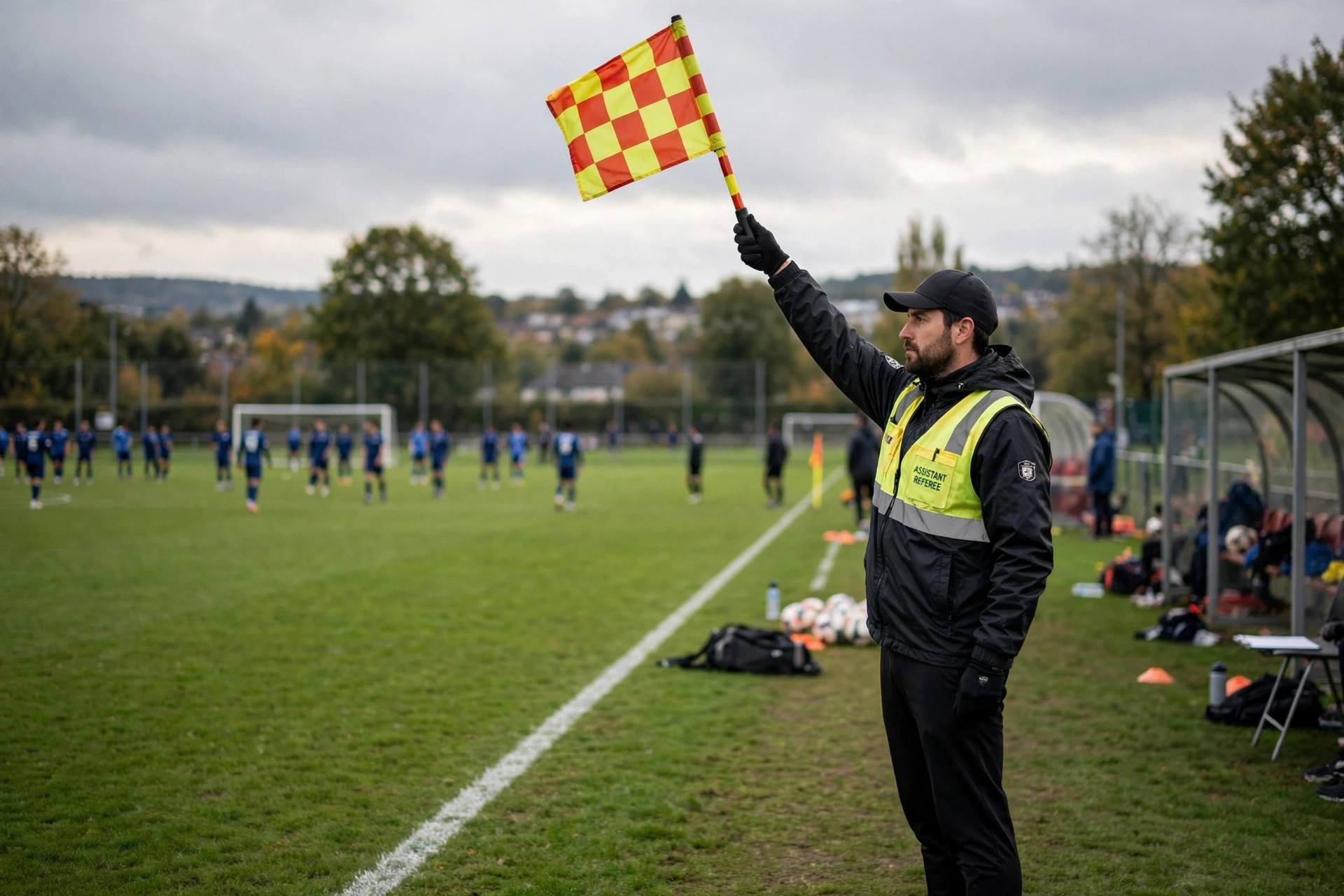
Here is what most people miss: being in an offside position is not an offense by itself. The flag only goes up if the player in that position becomes involved in active play. Standing beyond the last defender while the ball is on the other side of the field? Perfectly legal. The offense happens when the offside-positioned player touches the ball, interferes with an opponent (blocking the goalkeeper’s view is the classic case), or gains an advantage from a rebound.
This is why you see attackers standing in offside positions without punishment: they are decoys, dragging defenders with them, and as long as they don’t touch the ball or interfere, play continues. It is also why a player can be in an offside position when the ball is played, realize it, and stand still with their hands up while a teammate runs onto the pass. Smart players do this constantly.
The Exceptions: When Offside Does Not Apply
Three restarts are exempt from offside entirely: goal kicks, throw-ins, and corner kicks. You cannot be offside directly from any of these, which is why you will see attackers lurking right at the edge of the box on a corner without a murmur from the officials. It feels wrong the first time you notice it, but it is the law.
There is also the deliberate-play reset. If a defender deliberately plays the ball, with control, not a deflection or a desperate block, and it falls to an attacker who was in an offside position, that attacker is now onside. The offside calculation resets at the moment of the defender’s deliberate touch. Deflections and saves do not reset it; a controlled pass or clearance does. This distinction decides big goals every season.
Common Misconceptions
Let me clear up the ones I hear most. You cannot be offside in your own half, ever; the rule only applies in the opponent’s half. Being level with the second-to-last opponent is onside; the attacker gets the benefit of the doubt, which is why VAR draws those agonizing lines. The goalkeeper counts as an opponent, so if the keeper rushes out, the second-to-last opponent might be a defender near the goal line, and attackers can be caught offside by a nearly empty net.
Hands and arms don’t count for offside position, for either attacker or defender, since you cannot score with them. And offside is judged when the ball is played, not when it is received: a player who starts onside and runs beyond the defense to collect the pass is fine, while a player who starts offside and drops back to collect it is still offside.
VAR and the Modern Game
Video review changed offside from a linesman’s judgment call into a geometry problem. VAR freezes the frame at the ball’s release and measures attacker against defender, sometimes down to centimeters. It is more accurate and considerably less fun, producing long delays for decisions about a kneecap. Recent trials of semi-automated offside technology aim to make these calls faster and more consistent, and the direction of travel is clear: the human eye is being assisted out of the process.
My take, for what it is worth: the spirit of the rule was always about preventing goal-hanging, not about measuring armpits. But precision is the price of fairness at the top level, and the game has chosen fairness. For a deeper look at how the rule is applied in match situations, our guide to the offside rule in soccer walks through real-game scenarios.
How Defenses Exploit the Rule
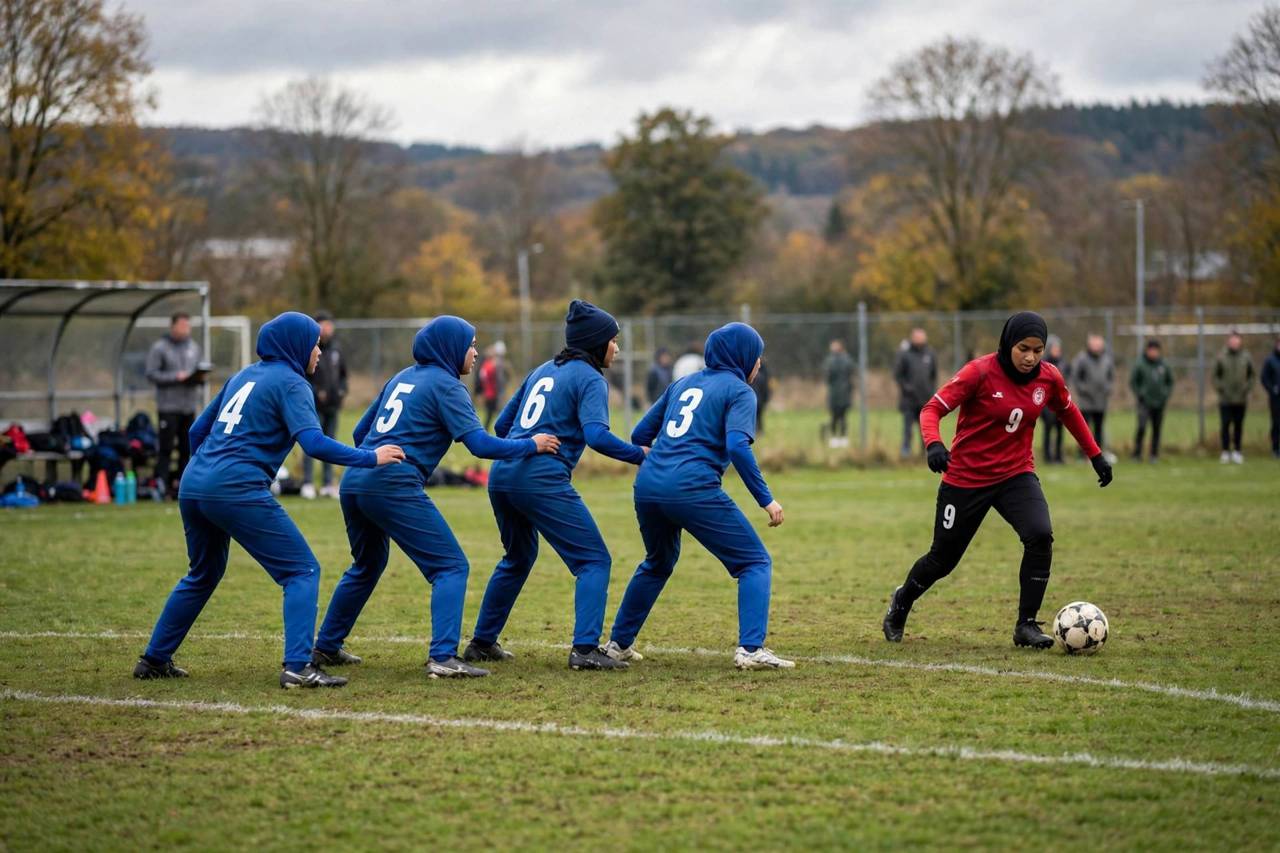
Understanding offside explains half of defensive tactics. The offside trap is the famous one: defenders step up in unison just as the pass is played, stranding the attacker beyond them. It is high-risk and beautiful when it works, catastrophic when mistimed. More common is simply holding a high line: defending far from goal compresses the space attackers have to run into, but one mistimed step and the striker is through.
Attackers counter with timed runs, starting level and exploding past the line as the ball is struck, and with the bend of the run, arcing to stay onside until the last moment. The duel between the defensive line’s step and the striker’s run is one of the game’s great recurring battles, and now you can actually see it happening.
What Is Offside in Soccer Explained With a Play-by-Play
Let’s walk through a real sequence. Your team wins the ball at midfield. Your striker stands near the halfway line, level with the last defender. Your midfielder looks up and plays the through ball. At the exact moment of the kick, the striker is level with the defender: onside. The striker sprints past the defensive line, collects the ball behind them, and scores. The goal stands, because offside was judged at the kick, not at the collection. Now replay it with one change: the striker is two yards beyond the defender when the ball is kicked. Same sprint, same finish, but the flag goes up and the goal is disallowed. The entire difference is the striker’s position in that frozen split-second. That is the whole rule, and once you can see that freeze-frame in your mind, you will never be confused again.
Offside Drills for Youth Coaches
Teaching offside to young players works best through doing, not lecturing. Run a simple drill: two lines of defenders hold a line across the field while attackers practice timing runs onto through balls, with the coach calling onside or offside at each attempt. Players learn the timing in their legs faster than in their heads. Another good exercise is the freeze game: blow the whistle at random moments and have everyone check whether the attackers are onside, training the habit of glancing across the line. Keep it fun and keep it moving; the rule clicks somewhere around the tenth repetition, and then it clicks forever.
Offside and the Spirit of the Game
Strip away the VAR lines and the freeze-frames, and the offside rule exists for a beautifully simple reason: soccer should reward teams that build attacks, not players who loiter by the goal. Every controversy about armpits and kneecaps is really an argument about where to draw the line between clever attacking and cheating the contest. The rule has survived more than a century of tactical evolution, from the days when three defenders were required to today’s two, because that core purpose never changed. Understand the spirit and the letter starts making sense; the game wants goals earned by timing and teamwork, and offside is how it insists on it.
Test Yourself: Three Quick Scenarios
Scenario one: a striker stands in an offside position but never moves toward the ball while a teammate scores from distance. Goal stands; no involvement, no offense. Scenario two: a shot rebounds off the post to an attacker who was offside when the shot was taken. Flag up; gaining an advantage from a rebound counts. Scenario three: a defender’s miscontrolled clearance falls to an offside-positioned attacker. Play on; the defender’s deliberate play resets offside. If you got all three, you understand the rule better than most match commentators.
Frequently Asked Questions
Can you be offside from a throw-in?
No. Offside does not apply at throw-ins, goal kicks, or corner kicks. These are the three exemptions written into the laws of the game.
What does second-to-last opponent mean?
It means the second-nearest opponent to their own goal line, usually the last outfield defender, since the goalkeeper is typically the last. If the goalkeeper has rushed out, an outfield defender near the goal line becomes the last opponent, changing the calculation.
Is it offside if the player doesn’t touch the ball?
Not automatically. Being in an offside position is only penalized if the player becomes involved in active play: touching the ball, interfering with an opponent, or gaining an advantage from a rebound off the frame or an opponent.
Do arms count in offside decisions?
No. Only parts of the body you can legally play the ball with count: head, torso, legs, feet. Arms and hands are excluded for both attackers and defenders.
Can you be offside in your own half?
No. Offside only applies in the opponent’s half of the field. A player in their own half when the ball is played cannot be offside regardless of defender positions.