


I’ve rewound the same goal four times. You know the one — the striker times the run perfectly, the cross comes in, the net bulges, the stadium erupts, and then the flag goes up. Half the crowd is celebrating, half is furious, and the commentator says “let’s look at this again” in that careful voice that means nobody’s sure.
That’s the offside rule in soccer. The most argued-about law in the sport, the one that ruins perfect goals and starts bar debates, and — once someone explains it right — genuinely not that complicated. I played competitively through college, and I still can’t watch a game without taking notes. So let me walk you through it with real game moments, precisely, the way I’d explain it to a friend who just got into the sport.
The Rule in One Paragraph
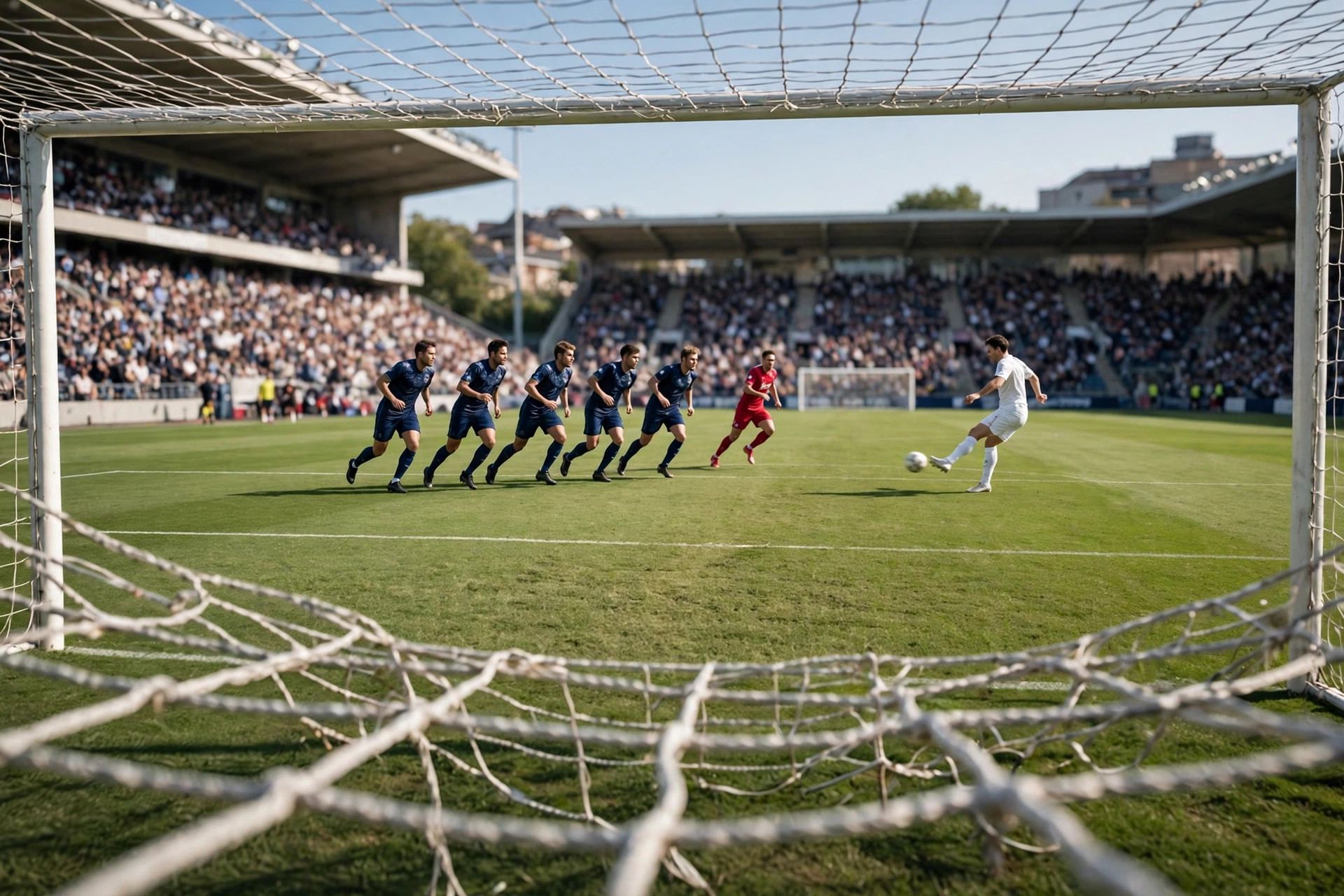
Here it is, plain words first: a player is in an offside position if they are nearer to the opponent’s goal line than both the ball and the second-to-last opponent when the ball is played to them by a teammate — and then it only becomes an offense if they get involved in active play.
Read that twice. It’s dense, but every word earns its place. The rest of this article is just unpacking that paragraph with pictures in your head.
The Three Conditions (All Must Be True)
An offside offense needs three things happening at once. Miss any one of them, and there’s no offense — play on.
1. Position: ahead of the second-to-last opponent. When your teammate plays the ball forward, you can’t be closer to the opponent’s goal than the second-to-last defender. Usually that’s the last outfield defender (the goalkeeper is normally the “last” opponent). So picture the defensive line: if you’re standing beyond it, you’re in an offside position. Note the word position — being in an offside position is not, by itself, an offense. You can stand there all day. It only matters if the ball comes to you.
2. Timing: judged at the moment the ball is played. This is the part that breaks brains. Offside is NOT judged when you receive the ball — it’s judged at the instant your teammate kicks or heads it. So a striker can start their run level with the last defender, sprint past everyone, and collect the ball ten yards beyond the line — perfectly legal, because at the moment of the pass they were onside. Watch for this next time you see a great through-ball goal: the run starts onside, and the finish happens offside-position, and it’s all legal. Timing is everything.
3. Involvement: active in the play. Standing in an offside position doing nothing is fine. It becomes an offense when you touch the ball, interfere with an opponent (blocking the keeper’s view is the classic one), or gain an advantage from being there (like scoring off a rebound when you were offside at the initial shot).
What “Level” Actually Means
“Level with the second-to-last opponent” means onside. Level is your friend.
But in the VAR era, “level” is measured to the centimeter — which drives everyone crazy. If any part of your body you can legally score with — head, torso, feet, even a knee — is ahead of the defender, you’re offside. Arms don’t count (you can’t score with your arm, at least not legally). This is why we’ve all seen goals disallowed because a striker’s toe was an inch ahead, or the famous “armpit offsides” where a shoulder leaning forward did it.
I’ll be honest: I have mixed feelings about millimeter offsides. The technology is precise, but the spirit of the law was to stop goal-hanging, not to measure kneecaps. Still, the rule as enforced is the rule — and now you know why celebrations get cut short by a three-minute VAR check.
The Exceptions: When Offside Can Never Be Called
Three restarts are completely exempt from offside. Memorize these and you’ll win arguments:
- Goal kicks. A player can stand anywhere — even beyond every defender — when a goal kick is taken. This is why you sometimes see a striker camped near the halfway line at a goal kick. Legal.
- Throw-ins. Same deal. Receive a throw-in in an offside position and it’s fine.
- Corner kicks. Also exempt. (Which makes sense — the ball’s already at the goal line.)
And one more fundamental exception: you cannot be offside in your own half. The offside position only exists in the opponent’s half. So if you receive the ball on your side of halfway, no flag, ever, no matter where the defenders are.
These exceptions exist because restarts are meant to give the attacking team a clean start — penalizing offside there would defeat the purpose. (It’s also why long-throw specialists are so dangerous.)
“Interfering With Play”: The Passive Offside Puzzle
Now the genuinely tricky part. Remember: offside position alone is not an offense. So what turns position into a punishable offense? Three things:
- Touching the ball. Obvious. You receive it, you’re offside, flag goes up.
- Interfering with an opponent. You block the goalkeeper’s line of sight, you challenge a defender for the ball, you make a move that clearly impacts a defender’s ability to play. The classic controversy: a player in an offside position stands in the keeper’s sightline as a shot comes in, then ducks at the last second. Did they interfere? Refs and fans will argue about that one forever.
- Gaining an advantage. You were in an offside position when your teammate shot, the keeper parries it, and you tap in the rebound. Offside — because your position gave you the advantage on the rebound.
This is the section that explains the goal you were furious about. “But he never touched it!” — right, but he was standing in the keeper’s sightline, or he challenged the defender who was trying to clear it. The flag isn’t always about the player who scored. Sometimes it’s about the player who made the goal possible.
How VAR Changed Everything
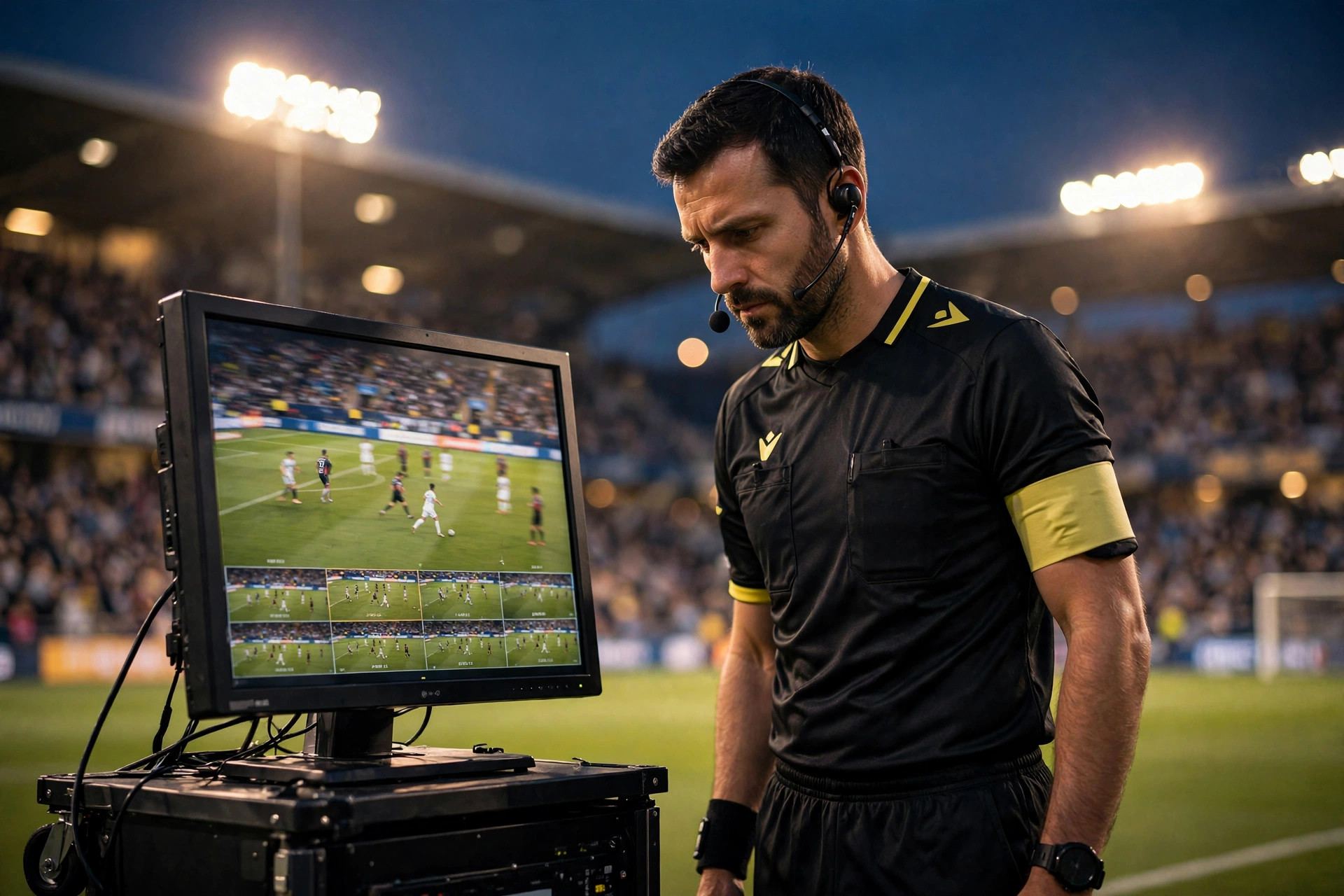
Before VAR, offside was a human judgment made in real time by an assistant referee sprinting down the touchline, trying to watch the passer’s foot and the runners simultaneously — one of the hardest jobs in sports. They got a lot right and some wrong, and the game moved on in seconds.
VAR changed the deal completely. Now every goal is checked, and offside calls that no human eye could make — a toe ahead, a leaning shoulder — get flagged after minutes of line-drawing. It’s more accurate and somehow more infuriating. We’ve traded the occasional wrong call for long delays and goals disallowed by anatomy. Semi-automated offside tech is speeding up the checks at the biggest tournaments — worth knowing how the World Cup tournament itself works before the next one, since you’ll be seeing these reviews constantly.
Why the Rule Exists at All
Quick history, because it makes the rule make sense. In the earliest days of football, there was no offside law as we know it, and teams quickly figured out the cheat: leave a striker standing next to the opponent’s goal, hoof the ball upfield, tap it in. It was called goal-hanging, and it was ruining the game — why build an attack when you can just camp a player by the goal?
The offside law forces the game to be played between the lines — teams must earn chances through passing and movement, not by stationing someone by the goalmouth. Every version of the rule since 1863 has negotiated between “let attackers attack” and “don’t let them cheat.” The modern law is that negotiation, refined over 160 years.
So when someone says offside is a stupid rule, here’s the answer: without it, soccer becomes long-ball tennis. The rule is what makes the midfield matter.
5 Things Everyone Gets Wrong About Offside
The misconceptions I hear every single season:
1. “The flag means it was offside.” No — the flag means the assistant thought it was offside. With VAR, plenty of flags get overruled. The flag is an opinion; the review is the verdict.
2. “You can’t be offside if you don’t touch the ball.” Wrong, as we covered — interfering with play or gaining an advantage counts. The player who never touches it can still be the reason for the flag.
3. “Offside is judged when the player receives the ball.” The most common mistake. It’s judged at the moment the ball is played by the teammate. This single correction clears up about half of all offside arguments.
4. “The goalkeeper always counts as one of the two.” Usually, but not always. If the keeper has rushed out ahead of a defender, the “second-to-last opponent” might be two outfield players. The law counts opponents, not positions.
5. “Being in an offside position is a foul.” It’s not even a foul — it’s punished with an indirect free kick, and merely standing there is nothing at all. You can loiter beyond the defensive line all match if the ball never comes near you. (Your coach will hate it; the ref won’t care.)

Frequently Asked Questions
A player is offside if, when a teammate plays the ball to them, they are nearer to the opponent’s goal than both the ball and the second-to-last defender — and they then get involved in active play. All three parts (position, timing, involvement) must be true. It’s judged at the moment the ball is played, not when it’s received.
No. Throw-ins are one of three restarts completely exempt from offside (along with goal kicks and corner kicks). A player can receive a throw-in from any position, even beyond every defender. This is why long-throw specialists are so dangerous in attacking areas.
If any scorable part of the attacker’s body (head, torso, legs, feet — not arms) is exactly in line with the second-to-last defender, the attacker is level, and level means onside. In the VAR era this is measured precisely, which is why goals get disallowed for a toe or shoulder being marginally ahead.
Yes — normally the goalkeeper is the ‘last opponent,’ so the second-to-last opponent is the deepest outfield defender, and being level with or behind that defender keeps you onside. But if the keeper rushes out ahead of a defender, the counting changes: the law counts the two nearest opponents to the goal line, whatever positions they play.
Because offside punishes more than touching the ball. A player in an offside position who interferes with an opponent (like blocking the goalkeeper’s view or challenging a defender) or gains an advantage (like scoring a rebound from an offside position at the initial shot) commits the offense without ever touching the ball first.
More accurate, less satisfying. VAR catches offsides no human could see — a toe or armpit ahead — which is technically correct but feels against the spirit of a law meant to stop goal-hanging. Semi-automated offside technology is speeding up the checks, but the debate about whether millimeter offsides should count isn’t going away.
Watch the Line, Not the Ball
Next time you watch a match, try this: when the ball is played forward, watch the defensive line and the runners at the exact moment of the pass — not the ball. You’ll start seeing offside the way assistant referees do, and those controversial calls will stop feeling random. The flag isn’t the enemy of good goals; it’s the reason the goals that count had to be earned.
And the next time someone at the bar says “there’s no way that was offside, he barely touched it” — you’ll know exactly what to tell them. For more breakdowns like this, check out my other sports explainers, and if all this talk of running the lines has you thinking about your own fitness, here’s the best time to get your own training in. See you at the next controversial goal — I’ll be the one rewinding it.