What Are the Basic Rules of Tennis? A Beginner’s Complete Guide


Tennis looks simple until you try to follow a match and realize the scoring goes 15, 30, 40 — then somehow “deuce” — and nobody can explain why. I’ve been there, watching a match with friends, nodding along while completely lost. Here’s the good news: tennis rules are genuinely straightforward once someone explains them properly. Whether you want to watch matches intelligently, start playing yourself, or just stop feeling confused at family gatherings, this guide covers every basic rule you need. Here are what are the basic rules of tennis — scoring, serving, and gameplay explained simply.
The Objective: What Are You Trying to Do?
Tennis is beautifully simple at its core: hit the ball over the net and into your opponent’s side of the court in a way they can’t return. Win enough points to win games, win enough games to win sets, win enough sets to win the match. Every rule in tennis exists to structure that basic contest fairly.
Matches are played one-on-one (singles) or two-on-two (doubles), on a rectangular court divided by a net. You score when your opponent fails to return the ball legally — they hit it into the net, hit it out of bounds, let it bounce twice, or fail to get it over the net.
The Court: Know Your Boundaries
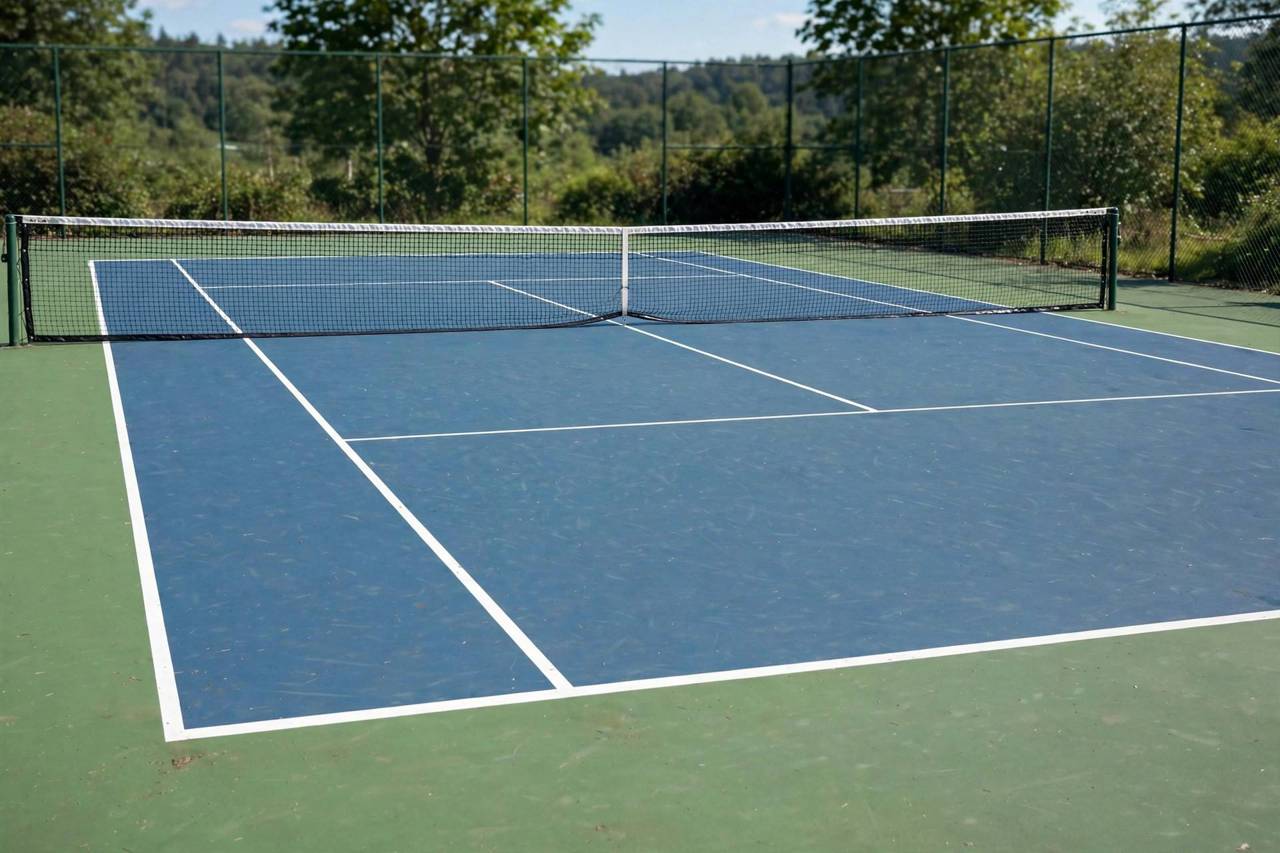
The court is 78 feet long. For singles, it’s 27 feet wide; for doubles, 36 feet wide (the extra strips on each side are the “doubles alleys” — out of bounds in singles, in play in doubles).
Key lines to know:
- Baseline: the back boundary line. Serves must land beyond the service line; rallies can use the full court to the baseline.
- Service boxes: the two rectangles on each side of the net. Serves must land in the diagonally opposite service box.
- The net: 3 feet high at center, 3.5 feet at the posts. If your shot hits the net and drops on your own side, you lose the point.
A ball landing on the line is IN — “in” includes touching any part of the line. This is one of the most misunderstood rules by casual viewers: if it catches the line, it’s good.
What Are the Basic Rules of Tennis Scoring? The 15-30-40 System
Here’s the part that confuses everyone. Tennis scoring goes:
- Zero points = “love” (yes, really)
- First point = 15
- Second point = 30
- Third point = 40
- Fourth point = game (if you’re ahead by two)
The server’s score is always announced first: “30-15” means the server has 30, the receiver has 15. When both players have 40, it’s called deuce. From deuce, you must win two consecutive points to take the game: winning one point gives you advantage (“ad-in” if you’re serving, “ad-out” if receiving). Win the next point and you take the game; lose it and you’re back to deuce. Games can theoretically go on indefinitely — some have lasted 20+ minutes.
Why 15-30-40? The most popular theory traces it to medieval French clock faces (15, 30, 45 minutes), with 45 shortening to 40 over time. Whatever the true origin, it’s one of sport’s most charming quirks. If you want the full deep dive, my guide to tennis scoring explained covers every scenario including tiebreaks.
Games, Sets, and Matches: The Hierarchy
Points build into a hierarchy:
- Game: first to 4+ points with a 2-point margin. Players alternate serving each game.
- Set: first to 6 games with a 2-game margin (e.g., 6-4). If it reaches 6-6, a tiebreak is played (first to 7 points, win by 2) in most formats.
- Match: best of 3 sets (most matches) or best of 5 sets (men’s Grand Slams). Win 2 of 3, or 3 of 5, and the match is yours.
This structure is why tennis has no clock — a match lasts until someone wins the required sets. Most matches run 1.5 to 3 hours; epics have stretched past 5. The hierarchy also creates the sport’s famous drama: you can win more total points and still lose the match, because what matters is winning the right points at the right moments.
Serving Rules
The serve starts every point, and it has specific rules:
- Stand behind the baseline — stepping on or over it before contact is a foot fault.
- Serve diagonally into the opposite service box.
- You get two attempts (first and second serve). Miss both = double fault = lose the point.
- If the serve clips the net but lands in the correct box, it’s a “let” — replay the serve, no penalty.
- Alternate the serving side each point: start from the right (deuce court), then left (ad court), alternating throughout the game.
- The server gets 25 seconds between points (enforced more strictly at pro level).
The serve is the only shot you fully control, which is why it’s such a weapon — a great serve can win free points. If you’re learning to play, nailing the basic mechanics early pays massive dividends; check out how to serve a tennis ball for the technique breakdown.

Rally Rules: What Happens After the Serve
Once the serve lands legally, the point is live. The core rally rules:
- The ball must land in bounds on the opponent’s side.
- It may bounce once before you hit it (you can also volley it before it bounces). Two bounces = you lose the point.
- You must hit it over the net — into the net or into the stands = point lost.
- You cannot touch the net with your body or racket during a point.
- You cannot reach over the net to hit the ball (it must cross to your side first).
- Hitting the ball twice with one swing (a double-hit) loses the point.
- If the ball hits you (your body) before bouncing, you lose the point.
That’s essentially it. Everything else is tactics.
Doubles Rules: The Key Differences
Doubles uses the wider court (alleys are in), and adds a few wrinkles:
- Serving order and receiving positions rotate in a set pattern.
- Partners alternate serving games, and the receiving team chooses who receives each game (then they alternate points within the game).
- Communication and positioning (one up at net, one back — or both back) become strategic weapons.
- The server’s partner and receiver’s partner have designated sides they must start on.
Doubles is faster, more net-oriented, and in many ways more fun for beginners — you cover half the court and share the pressure.
Common Rule Situations You’ll See
Let on serve: serve clips net, lands in = replay. No penalty, unlimited lets.
Foot fault: server steps on/over baseline before contact = fault. Called more at pro level; casual players rarely enforce it strictly.
Hindrance: deliberately distracting your opponent (shouting during their swing, etc.) = lose the point. Involuntary sounds (a grunt) are fine.
Ball rolling onto court: in casual play, call a let and replay the point. Safety first — nobody wants a turned ankle.
Line calls: in matches without officials, players call their own lines — the honor system. Call it as you see it; when in doubt, the benefit goes to your opponent. This sportsmanship tradition is one of tennis’s finest features.

Etiquette: The Unwritten Rules
- Warm up with your opponent cooperatively before competing.
- Call the score before each serve so everyone’s on the same page.
- Return balls to the server at a reasonable pace — don’t make them chase.
- Shake hands (or tap rackets) at the net after the match, win or lose.
- Keep your cool. Racket-smashing makes great TV and terrible tennis culture.
Tennis has one of the strongest etiquette traditions in sports — it makes the game more enjoyable for everyone, from first-timers to veterans.
A Scoring Walkthrough: Follow a Game Point by Point
Let’s make the scoring concrete. Imagine you’re serving, and here’s how a game might unfold:
- You win the first point → 15-love (your 15, their love).
- Your opponent wins the next → 15-all.
- You win two in a row → 40-15.
- Opponent wins one → 40-30. You need one more point to take the game.
- Opponent wins again → deuce (40-40).
- You win the next → advantage in (ad-in). One more and the game is yours.
- Opponent wins → back to deuce. The tension builds.
- You win two straight → game. Take a breath — one game down.
Now multiply that across games to win a set (6 games, win by 2), and sets to win the match. Once you’ve followed one game like this — ideally while watching a real match — the system clicks permanently. The quirky numbers stop feeling random and start feeling like the rhythm of the sport.
Ready to Play? Your First Steps
Knowing the rules is step one; holding a racket is step two. Tennis is one of the most beginner-friendly sports to start as an adult: public courts are widely available and often free, a decent starter racket costs less than a nice dinner out, and you can have genuine rallies within your first few sessions. Take one group lesson early — it prevents bad habits that take months to unlearn — then find a practice partner at your level and just play. Now you know what are the basic rules of tennis. The rules you’ve just learned will make every session ten times more enjoyable, because you’ll actually understand the game you’re playing.
FAQ
Why is zero called “love” in tennis?
The most accepted theory traces it to the French word “l’oeuf” (the egg), referring to the egg-like shape of a zero. English speakers corrupted it to “love” over centuries. It’s one of several French-origin terms in tennis — “deuce” comes from “deux” (two), referring to needing two points.
How many sets are in a tennis match?
Most matches are best-of-3 sets (first to win 2). Men’s singles at Grand Slam tournaments are best-of-5 (first to win 3). Doubles matches are typically best-of-3 with a match tiebreak sometimes replacing the third set.
What is a tiebreak in tennis?
When a set reaches 6-6, a tiebreak game is played to decide it: first to 7 points (win by 2), with players alternating serves every two points. It replaces playing the set out indefinitely and keeps matches from lasting forever.
Can the ball hit the net and still be in play?
During a rally, yes — if your shot clips the net cord and drops over onto your opponent’s side in bounds, it’s a live ball and the point continues (much to the frustration of your opponent). On a serve, a net-clipped serve that lands in the box is a “let” and the serve is replayed.
What happens if a tennis ball hits the line?
It’s in. A ball touching any part of the line is considered good — this applies to all lines including the baseline and sidelines. “Out” means the entire ball landed outside the line with no contact.