How Many Players Are on a Basketball Team? Rules Guide

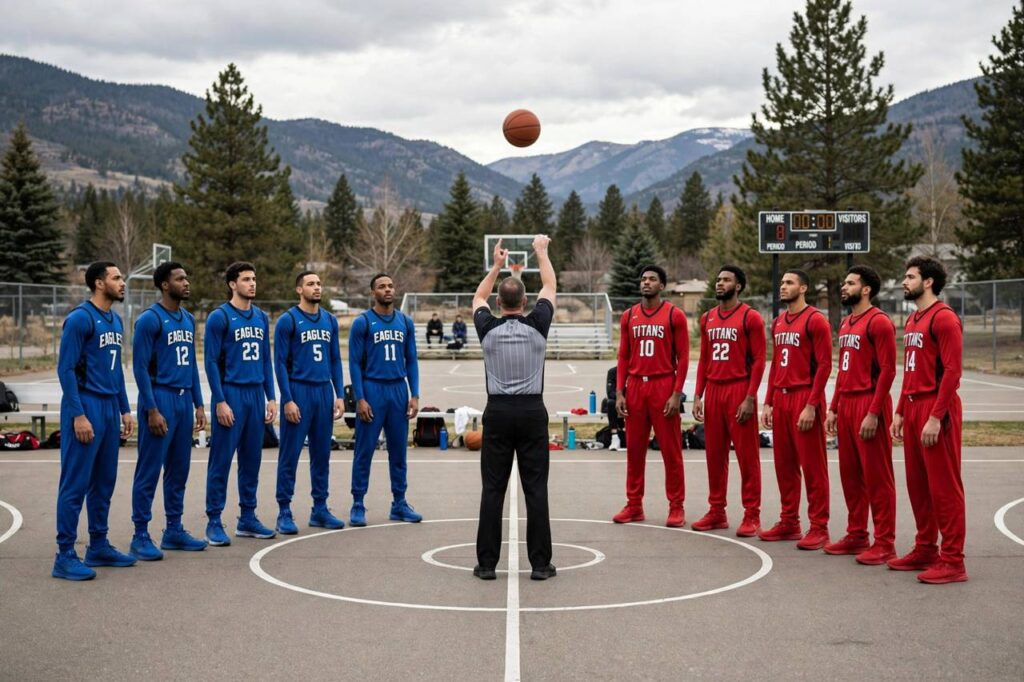
It sounds like a simple question until you watch a game and start counting: five players a side on the court, but a whole row of teammates in warmups on the bench. So how many players are on a basketball team? The answer depends on the level — the NBA, college, and youth leagues all set different roster limits, and the number dressed for a given game is different again. This guide breaks down the official numbers at every level, explains active rosters versus total rosters, and covers how substitutions and foul trouble shape who actually plays.
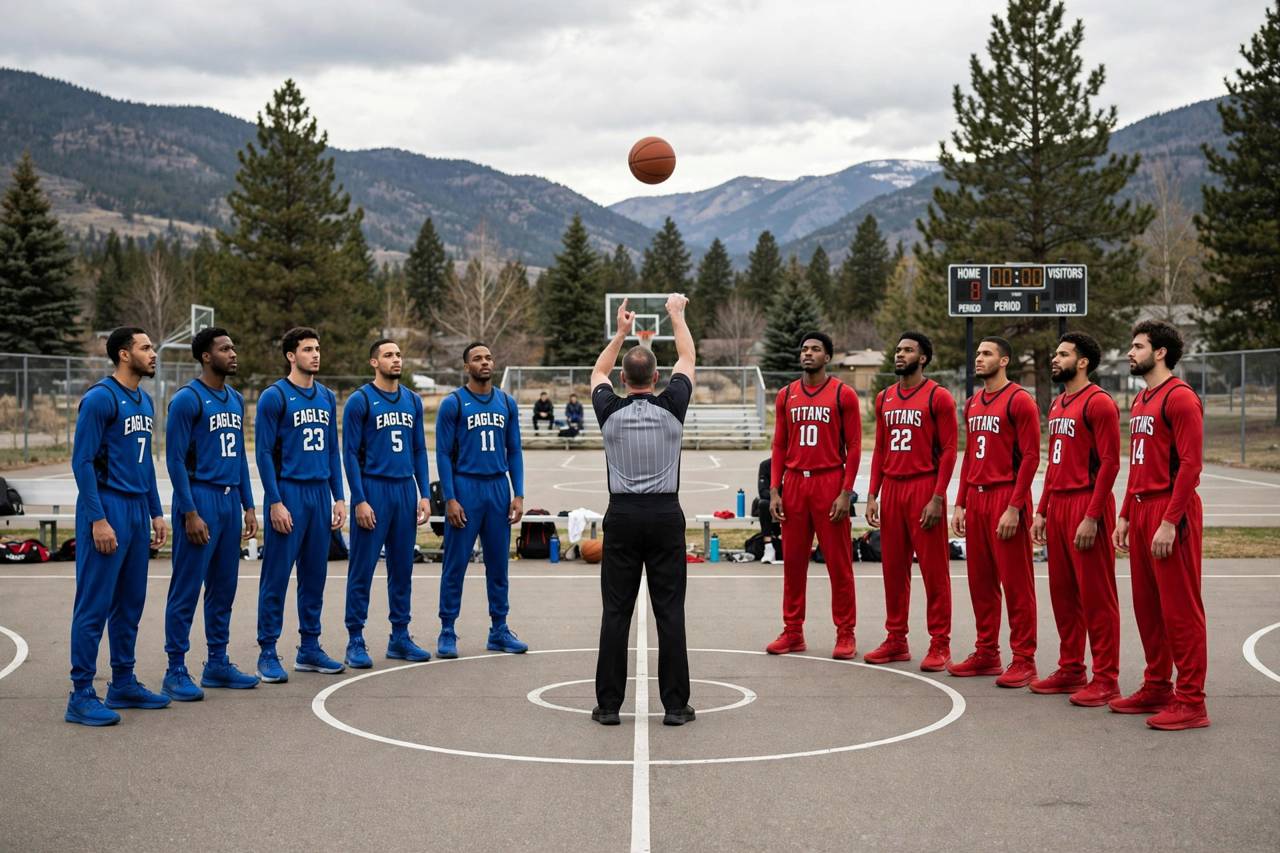
On the Court: Five Per Side
At every level of organized basketball, each team plays five players on the court at a time. Those five traditionally fill five positions: point guard, shooting guard, small forward, power forward, and center — though modern basketball increasingly blurs these roles into guards, wings, and bigs. The five-on-five format is universal, from the NBA to elementary school leagues, and it is what makes basketball’s spacing and rotations work. Everything else — roster sizes, bench limits, substitution rules — varies by competition, but the five on the floor never changes.
NBA Roster Rules
An NBA team carries 15 players on its standard roster during the regular season, plus additional two-way contracts that split time between the NBA club and its G League affiliate. However, only 13 players can be in uniform and available for a given game — the active list — with the rest listed as inactive. Teams must dress at least eight players to play. The two inactive spots give coaches flexibility for rest, minor injuries, and development assignments without churning the roster. Playoff rosters follow similar active-list rules. So when someone asks about an NBA team, the complete answer is: 15 under contract, 13 suited up, 5 on the floor.
College Basketball: NCAA Limits
NCAA Division I men’s and women’s teams can carry up to 15 players on scholarship, and total rosters including walk-ons (non-scholarship players) often run to 15 or 16. For any given game, all rostered players are generally eligible to dress, though coaches typically rotate 8 to 10 in meaningful minutes. Walk-ons are a beloved college tradition — practice players who earn their spot without athletic aid and occasionally become fan favorites or even contributors. The scholarship cap is the binding constraint: it keeps the competitive field level and forces coaches to recruit precisely rather than stockpile talent.
High School and Youth Leagues
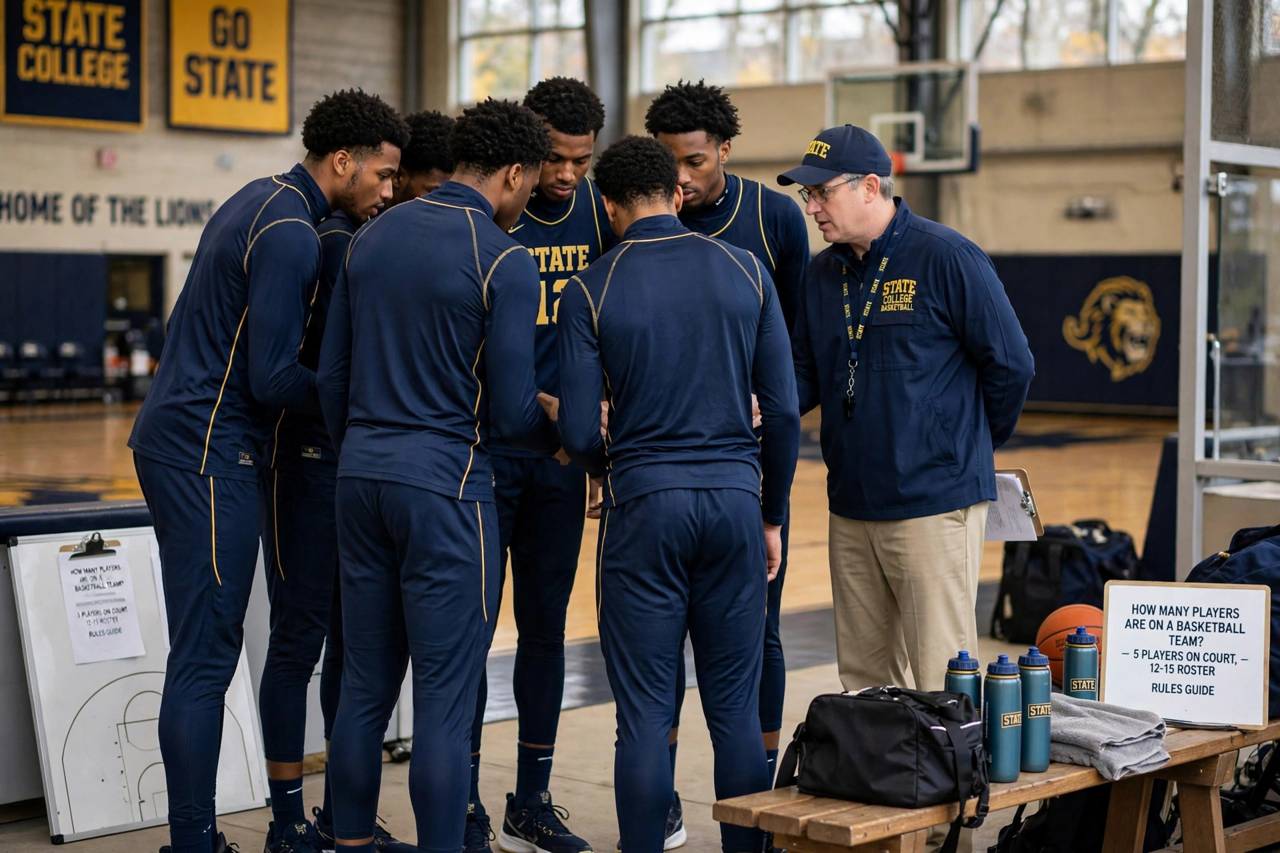
Below college, the numbers get more flexible. High school varsity teams typically carry 12 to 15 players, governed by state association rules that set maximum roster sizes for tournament eligibility. Junior varsity and freshman squads run similar numbers. Recreational youth leagues are the most variable: many cap rosters at 10 to 12 to guarantee playing time, since development — not winning — is the point. Some leagues mandate minimum playing time per child, which effectively limits how many kids a coach can carry. If you are signing a child up, the roster size tells you a lot about the league’s philosophy: smaller rosters usually mean more minutes for everyone.
International and Olympic Basketball
FIBA competitions, including the Olympics and World Cup, use 12-man rosters — noticeably tighter than the NBA’s 15. Twelve players dress for each game, and the shorter roster puts a premium on versatility: every player must defend multiple positions and contribute on both ends. The 12-man limit also shapes national team selection drama, since stars get cut and role players become essential. Three-on-three basketball, now an Olympic sport in its own right, uses rosters of four (three on court plus one substitute) — a completely different game built for half-court play.
Substitutions, Fouls, and Who Actually Plays
Basketball allows unlimited substitutions during stoppages, which is why roster depth matters so much. Coaches manage foul trouble — players foul out after six personal fouls in the NBA, five in college, high school, and FIBA play — by rotating fresh defenders in. A typical NBA rotation uses 9 or 10 players in a competitive game; blowouts extend the bench. Starters average the heaviest minutes, sixth men provide scoring punch off the bench, and end-of-bench players develop in practice and garbage time. Understanding the roster explains what you are watching: when a coach goes deep into the bench early, it usually signals foul trouble, rest management, or a matchup search.
Roster Construction: How Teams Are Built
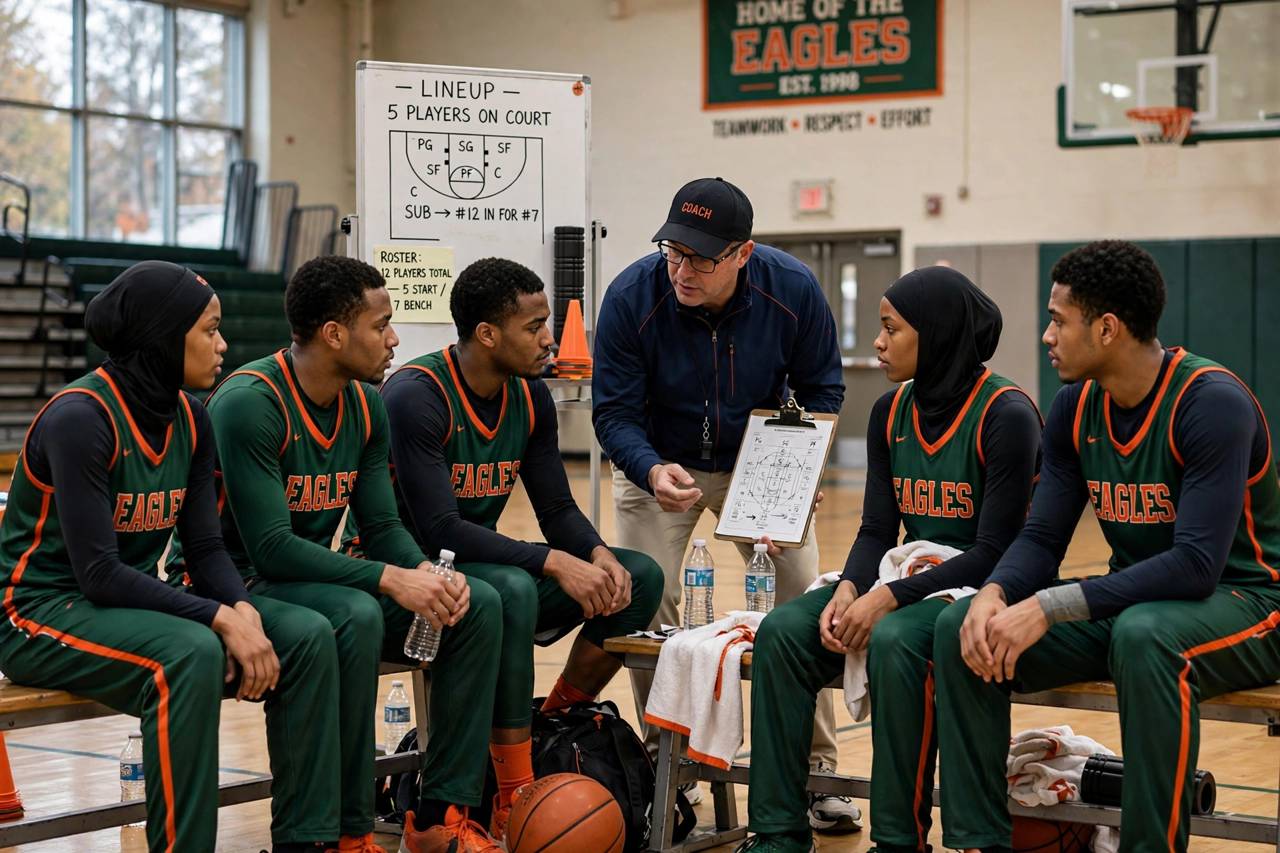
Modern rosters are built around balance: ball-handlers, shooters, defenders, and rim protection, with enough versatility to survive injuries. The salary cap constrains NBA construction — stars consume huge cap shares, so champions are usually built on value contracts around them. College coaches recruit to fill specific roles years in advance. Youth coaches just need enough bodies to practice five-on-five with subs. Across all levels, the trend is toward positionless versatility: the most valuable roster spots go to players who can guard multiple positions and play multiple roles. That is the deeper answer to how many players are on a basketball team — as many versatile ones as the rules and budget allow. For context on the game itself, see how long a basketball game lasts, and if you want to work on fundamentals, start with how to shoot a basketball.
How Many Players Are on a Basketball Team? Quick Reference by Level
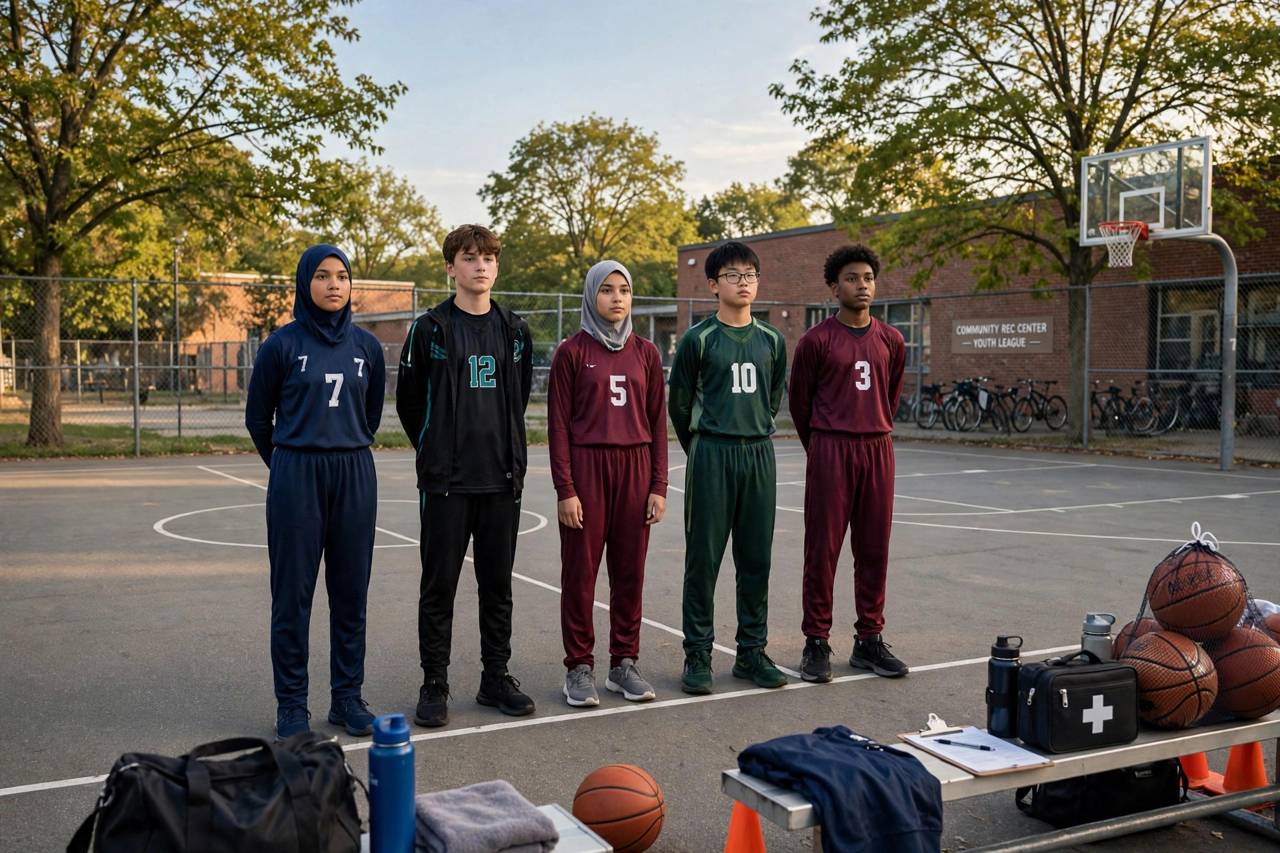
Bookmark this breakdown. NBA: 15 players under standard contract, 13 active on game day, 5 on the court. WNBA: 12-player rosters, a tighter limit that makes every spot precious. NCAA Division I: up to 15 scholarship players, usually 15 to 16 total with walk-ons. High school varsity: typically 12 to 15, set by state associations. Youth recreational leagues: commonly 10 to 12, sized for playing time. FIBA/Olympics: 12 players, all eligible each game. 3×3 basketball: 4 per roster (3 on court, 1 substitute). The pattern is clear: the higher the level, the larger the roster — but the five on the floor never changes. When commentators mention a “deep bench,” they mean the 8th through 12th players can genuinely contribute, a luxury only well-built rosters enjoy.
The Five Positions, Explained Simply
The numbers only make sense with the roles. The point guard (the “1”) runs the offense, handles the ball, and sets up teammates — think of a quarterback-distributor hybrid. The shooting guard (the “2”) scores from the perimeter and defends the opponent’s backcourt. The small forward (the “3”) is the versatile wing: scoring, rebounding, defending multiple positions. The power forward (the “4”) plays near the basket with strength — rebounding, interior scoring, physical defense. The center (the “5”) anchors the paint: rim protection, rebounding, close-range scoring. Modern basketball blends these — many teams now talk about guards, wings, and bigs instead — but the five-man structure still shapes every rotation decision a coach makes. Understanding positions turns roster numbers from trivia into insight about how a team actually plays.
Understanding the Bench: Roles Beyond the Starters
The roster numbers tell you how many players a team has; the roles tell you what they do. The sixth man is the first substitute — often a scorer who changes games off the bench and sometimes finishes them. The “3-and-D” wing defends the opponent’s best perimeter player and hits three-pointers, a role every modern team covets. The rim protector anchors the defense from the center position, deterring drives just by standing near the basket. The veteran presence may play sparingly but stabilizes the locker room and mentors young players. Then there are the developmental players — rookies and two-way contracts learning the system in practice and limited minutes. A championship roster needs all of these, which is why general managers obsess over picks 8 through 15, not just the stars. The next time you watch, ignore the ball for a few possessions and watch the bench unit’s chemistry — it reveals the coaching staff’s real plan.
Roster Exceptions: Injuries and Hardship Rules
Rosters are not as rigid as they look. When injuries pile up, leagues provide relief valves. The NBA allows teams to sign replacement players under hardship exceptions when multiple players are unavailable — a rule fans saw used extensively in recent seasons. Injured players can be moved to inactive status, freeing a game-day spot without cutting anyone. In college, medical redshirts preserve a player’s eligibility after season-ending injuries. Youth leagues handle it more simply: injured players just sit, and short-handed teams play on. These exceptions exist because a fixed roster meeting a chaotic season needs flex. They also create some of sports’ best stories — the emergency signing who becomes a rotation player, the walk-on thrust into minutes. Roster rules set the structure; exceptions write the drama.
Youth Basketball: What Parents Should Ask
If you are choosing a league for your child, roster size is one of the most revealing questions you can ask. Smaller rosters mean more playing time and more touches of the ball — the things that actually develop young players. Ask whether the league guarantees minimum minutes; the best-run youth leagues do. Ask about practice-to-game ratios, because development happens in practice, not on the bench. And ask how teams are balanced — nothing kills enthusiasm like a season of blowouts. The right league cares more about your child’s experience than its win-loss record, and the roster rules usually tell you which kind you are looking at.
Frequently Asked Questions
How many players are on a basketball team in the NBA?
NBA teams carry 15 players on the standard roster, with 13 eligible to dress for each game and 5 on the court at a time. Two-way contract players add developmental depth beyond the 15.
How many players can be on the court at once?
Five per team at every level of organized basketball, from youth leagues to the NBA. This is universal across all major rule sets.
How many players are on a college basketball team?
NCAA Division I teams can have up to 15 scholarship players, with total rosters including walk-ons typically running 15 to 16. Coaches usually rotate 8 to 10 players in meaningful minutes.
How many players are on an Olympic basketball team?
Twelve. FIBA competitions including the Olympics use 12-man rosters, with all 12 eligible to play in each game.
What happens when a player fouls out?
The player must leave the game — after six fouls in the NBA, five in college, high school, and FIBA — and the coach substitutes another rostered player. Teams must always have five eligible players on the floor.