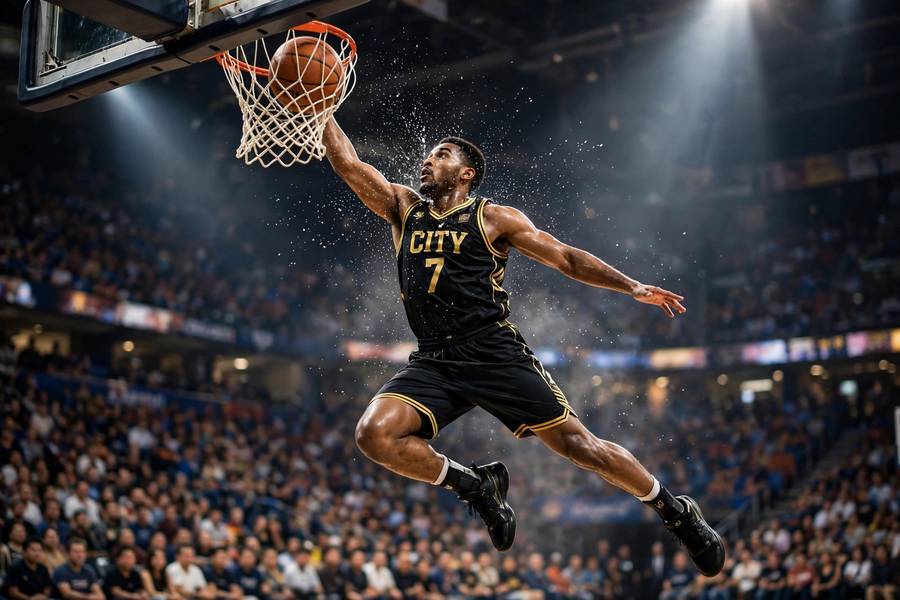
The loudest sound in basketball isn’t the buzzer. It’s the crack of a rim after a dunk — that metallic bang that makes 20,000 people stand up at once. I’m Ryan, and I still remember the first time I heard it live: a college game, some six-foot guard who had no business being that far off the ground.
Here’s the thing most people miss: the slam dunk isn’t just the highlight reel. Let’s break it down — what a dunk actually is, the rules around it, every type you’ll see, and why coaches have quietly built entire offenses around getting to the rim.
In This Guide
- What Exactly Is a Slam Dunk?
- How Many Points Is a Slam Dunk Worth?
- The Anatomy of a Dunk
- Types of Slam Dunks You’ll See
- A Quick History of the Dunk
- Why Coaches Love the Dunk: The Numbers
- Can Anyone Learn to Dunk?
- Dunking Rules Across Leagues
- Frequently Asked Questions
What Exactly Is a Slam Dunk?
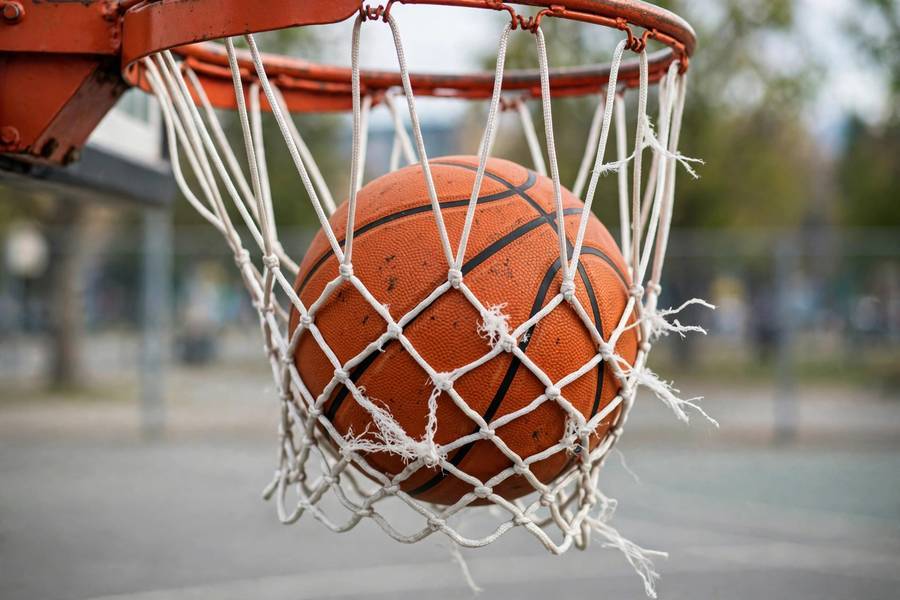
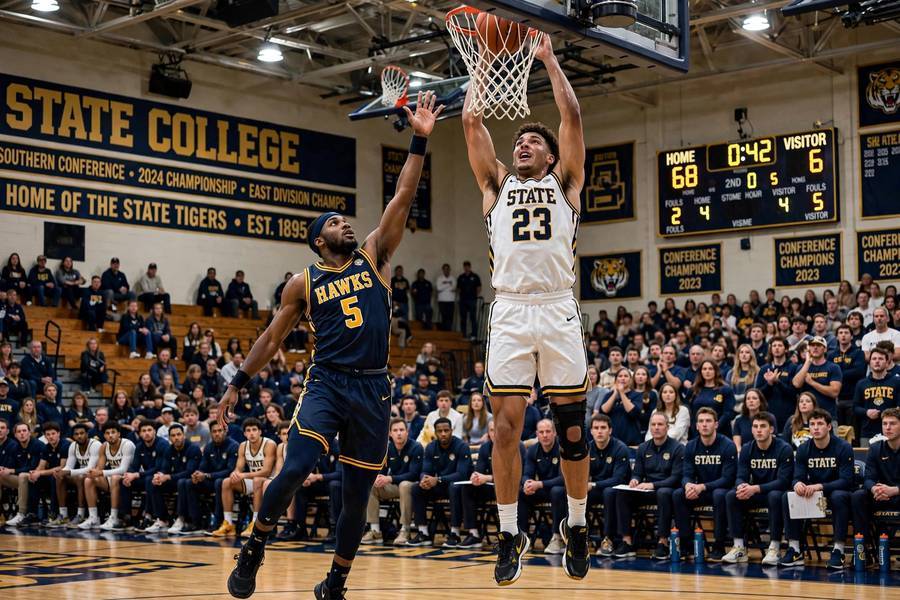
A slam dunk is a shot where a player jumps and forces the ball down through the basket with one or both hands, making contact with the rim. The ball goes in from above the rim rather than being tossed or shot up from below it.
For a play to count as a dunk (rather than a layup or tip-in), the player has to be holding the ball above the plane of the rim and push it down through the hoop. A fingertip roll at the rim is a layup; tapping a rebound in is a tip-in. Grabbing the ball with authority and throwing it down is a dunk. Commentators call it a “dunk,” a “jam,” or a “slam” — same thing.
How Many Points Is a Slam Dunk Worth?
Two. A slam dunk is always worth two points in standard basketball — NBA, NCAA, FIBA, high school, all of it. There’s no bonus for style in real games, no matter how much the crowd wishes there were.
A couple of rule quirks worth knowing:
- You can’t dunk a free throw. The shooter must release from behind the line, making a dunk physically impossible.
- Hanging on the rim is a technical foul in most leagues (NBA, NCAA). Exception: hanging to protect yourself or another player from a bad landing, which refs allow. The rule exists because broken backboards were genuinely a thing in the 70s and 80s.
- Offensive goaltending applies to dunks too. If a teammate’s shot is sitting on the rim, you can’t dunk it in — that’s basket interference, and the basket won’t count.
The Anatomy of a Dunk
Every dunk, from a basic two-hander to a between-the-legs contest winner, runs through the same sequence:
- The approach. One or two long strides build speed, ending in a slightly longer “penultimate step” that loads the legs like a spring. Horizontal speed converts into vertical lift here.
- The plant. The final step plants hard — off one foot for in-game dunks, two feet for power dunks through contact — while the arms swing down and back to generate upward momentum.
- The gather. The ball gets secured at the top of the jump. Timing is everything: gather too early and you peak before the rim; too late and you’re stuffing it into the front of the iron.
- The finish. Arms extend and the ball gets driven down through the cylinder. Elite dunkers keep their eyes on the rim the whole way.
The rim sits 10 feet off the floor. To dunk cleanly, a player needs their hand to reach roughly 10 feet 6 inches — the extra inches clear the ball past the front of the rim. That’s why a 6-foot player with a great vertical can dunk, while a 6-foot player with an average one can’t. Reach plus vertical leap is the whole equation.
Types of Slam Dunks You’ll See
Once you start watching for them, you’ll notice dunks have their own vocabulary. Here’s the full catalog, from routine to ridiculous:
- Two-hander. Both hands slam it home. The safest, most powerful dunk — the one players use when a defender is closing.
- One-hander / tomahawk. Ball cocked back behind the head in one hand, then swung down like an axe. Pure intimidation.
- Windmill. The ball swings in a full circular motion before going down. Dominique Wilkins made this his signature.
- 360. The player spins a full rotation in the air before dunking. Contest gold.
- Reverse. Facing away from the basket, dunking it backward over the shoulder. Usually happens on baseline drives.
- Alley-oop. A teammate throws the ball up near the rim and the dunker catches it mid-air and slams it. Requires absurd timing from both players.
- Putback dunk. Grabbing an offensive rebound in the air and dunking it without coming down first. The most demoralizing play in basketball.
- Between-the-legs. The ball passes under one leg mid-air before the dunk. Almost exclusively a dunk-contest move — too risky in real games.
- Off the backboard (self alley-oop). Player throws it off the glass to themselves and dunks the rebound. Tracy McGrady did it in an actual NBA game.
- Free-throw line dunk. Taking off from roughly 15 feet out. Julius Erving made it famous, Michael Jordan perfected it. Almost nobody does it in games — but as a statement, nothing tops it.
A Quick History of the Dunk
The dunk is older than most fans think. Bob Kurland — a 7-footer at Oklahoma A&M — is generally credited with the first dunk in organized basketball back in the 1940s. It was such a novelty that defenders would just stand there and watch.
In 1967, the NCAA banned dunking entirely — a rule widely believed to have targeted UCLA’s Lew Alcindor, who became Kareem Abdul-Jabbar. The ban lasted until 1976. College basketball outlawed its most exciting play for nearly a decade.
The dunk’s cultural explosion came from the ABA. Julius “Dr. J” Erving won the first-ever slam dunk contest at the 1976 ABA All-Star Game, and his free-throw-line dunk in that contest is still the most imitated dunk in history. When the ABA merged with the NBA, the dunk came with it.
The NBA ran its first official Slam Dunk Contest in 1984 (Larry Nance won it), and the event became All-Star Saturday’s centerpiece. The golden eras: Michael Jordan vs. Dominique Wilkins in 1988 — still the greatest head-to-head dunk battle ever — and the 2000 contest, when Vince Carter essentially ended the debate about the greatest in-game dunker of all time in a single night.
Since then, the dunk has gone from spectacle to strategy. Teams now track “shots at the rim” as a core offensive metric, and the three-pointer-and-dunk shot diet has reshaped how the entire sport is played. The dunk’s rise mirrors how other sports built their own signature spectacles — soccer’s biggest being the World Cup; here’s how the World Cup works.
Why Coaches Love the Dunk: The Numbers
I’m a numbers guy, so here’s my favorite part. Dunks are not just exciting — they’re the most efficient shot in basketball by a comical margin.
- Dunks convert at roughly 90-95% at the NBA level. The average NBA field goal percentage hovers around 47-48%. A dunk is nearly twice as likely to go in as a typical shot.
- Expected value is king. An average three-pointer is worth about 1.05-1.1 points per attempt. A dunk is worth about 1.8-1.9. No contest.
- Fouls follow dunks. Defenders who can’t stop a dunk cleanly tend to foul, and the foul rate on dunk attempts is high. Even a missed dunk often means free throws.
- Second chances spike. The chaos around the rim creates offensive rebounds.
This is the entire logic behind modern NBA offense: shoot threes, or get all the way to the rim. The mid-range jumper got squeezed out because the math said a dunk or a three beats it every time. The dunk didn’t just survive the analytics era — it helped create it.
Can Anyone Learn to Dunk?
Honest answer: more people than you’d think, fewer than want to. The raw requirement is getting your hand about 10-foot-6 off the ground. For a 6-foot player with an average 8-foot standing reach, that means a 30-inch vertical — achievable with serious training, but it takes months of dedicated plyometrics, strength work, and technique practice.
Shorter than 6 feet? It’s been done — Spud Webb won the 1986 NBA Dunk Contest at 5-foot-7, and Nate Robinson won it three times at 5-foot-9. But those are generational athletes. For most people under 6 feet, dunking on a regulation rim is a multi-year project, if it’s possible at all.
The realistic path: build single-leg strength, train reactive jumping with depth jumps and bounding, fix your approach technique, and learn to control the ball with one hand. Grip strength matters more than people think.
And if dunking turns out to be a multi-year project you’d rather not sign up for, plenty of sports are friendlier to pick up — pickleball rules take about ten minutes to learn.
Dunking Rules Across Leagues
The basics are universal, but a few differences are worth noting:
- NBA: Dunking fully legal. Technical foul for hanging on the rim without cause.
- NCAA: Legal in games since 1976. Same rim-hanging technical.
- FIBA (international): Legal, same two points, similar rim-hanging rules.
- WNBA: Legal but rare — only a handful of players in league history have dunked in a game (Lisa Leslie was the first, in 2002).
Youth leagues sometimes restrict dunking for safety, so check local rules first. Every sport has its one confusing rule, by the way — basketball has goaltending, soccer has the offside rule.

Frequently Asked Questions
A slam dunk is a shot where a player jumps and forces the ball down through the basket with one or both hands. The ball must go through the hoop from above the rim while the player is holding it — it’s worth two points in every major league.
A slam dunk is always worth two points in standard 5-on-5 basketball, including the NBA, NCAA, WNBA, and FIBA competitions. There is no style bonus — a windmill and a basic two-hander count exactly the same.
Yes. The NCAA banned dunking from 1967 to 1976 — a rule widely seen as targeting Lew Alcindor (Kareem Abdul-Jabbar) — but dunking has been fully legal in college basketball since the ban was lifted in 1976.
Bob Kurland, a 7-foot center at Oklahoma A&M, is generally credited with the first dunk in organized basketball in the 1940s. Julius Erving later made the dunk famous worldwide through the ABA Slam Dunk Contest in 1976.
The dunk. NBA dunks convert at roughly 90-95%, giving them an expected value of about 1.8-1.9 points per attempt — far above the average three-pointer (around 1.05-1.1). That’s why modern offenses are built around threes and shots at the rim.
Yes, with training. A 6-foot player typically needs around a 30-inch vertical jump to dunk on a regulation 10-foot rim. It requires months of dedicated plyometric and strength training, but it’s achievable for many athletic people — height helps, but vertical leap and technique matter more.