How to Start a Car Detailing Business: Low-Cost Launch Guide

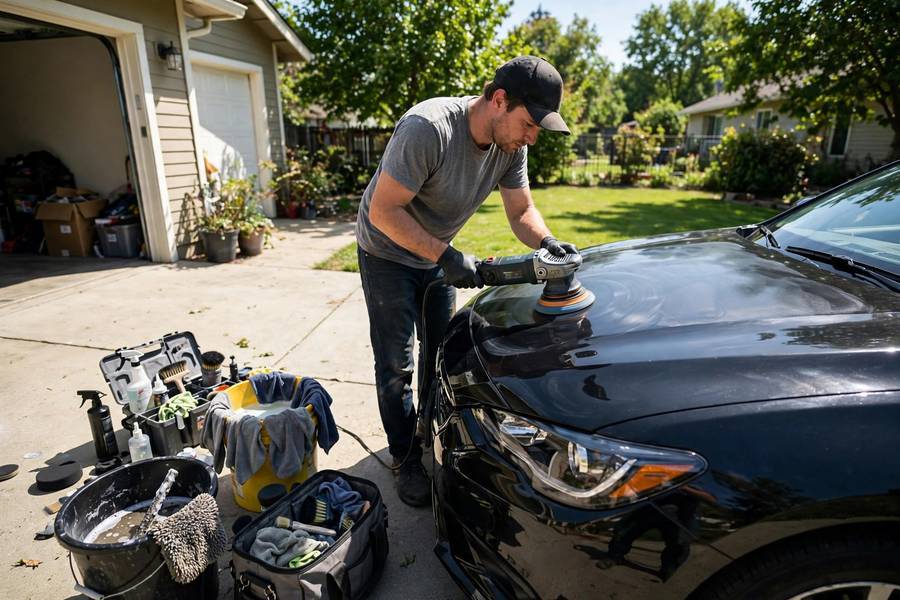
Car detailing is one of the best low-capital businesses going: start for a few thousand dollars, no storefront needed, cash flow from week one. I’ve watched people build genuine six-figure operations from a Honda Civic full of supplies.
But “low barrier” cuts both ways — every guy with a vacuum is your competitor. The ones who win don’t have better soap. They have better systems: pricing that respects their time, booking that removes friction, and quality consistent enough to earn referrals. This is an execution business, not an ideas business.
Table of Contents
- Mobile vs Shop: Pick Your Battlefield
- Startup Costs: The Honest Breakdown
- Equipment That Matters (And What’s Marketing)
- Pricing: The Math Most Detailers Get Wrong
- Legal Basics: Don’t Skip These
- Getting Your First 50 Customers
- Scaling Past Yourself
- Frequently Asked Questions
Mobile vs Shop: Pick Your Battlefield
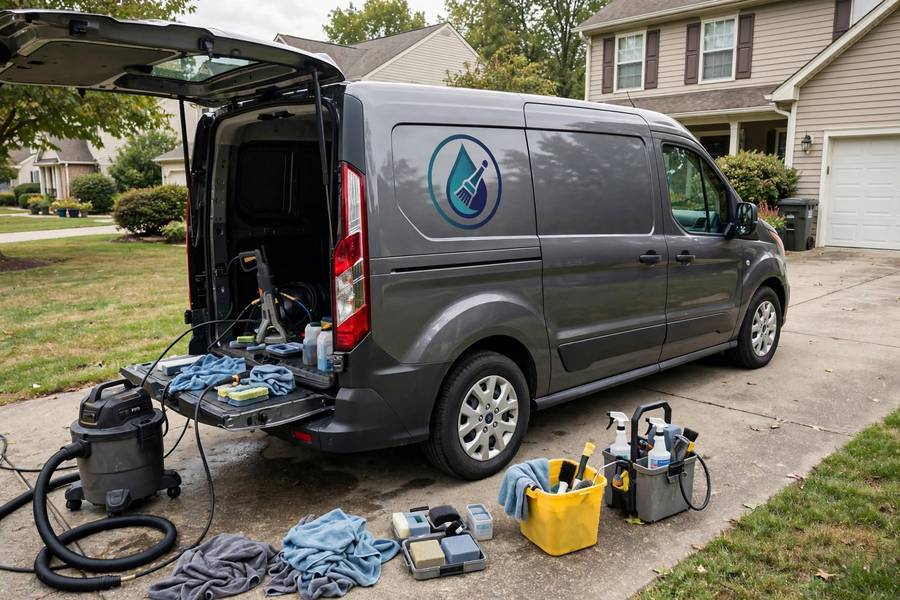
Mobile detailing (you go to the customer): startup $2,000-$10,000. No rent, you charge a convenience premium (20-40% above shop prices), and your market is everyone with a driveway. Downsides: weather dependence, water/power logistics, drive time between jobs eating your day.
Fixed shop: startup $15,000-$75,000+. Controlled environment, higher throughput, ability to offer paint correction and ceramic coatings properly (dust-free matters). Downsides: lease, utilities, and you need enough volume to cover fixed costs from month one.
The smart progression most successful operators follow: start mobile (low risk, learn the craft, build clientele), add a small shop or garage bay at 6-12 months when demand justifies it, keep mobile as the premium tier. Starting with a shop is betting big before you know if you can sell.
One more model worth knowing: dealership and fleet contracts. Regular weekly work detailing dealer inventory or company fleets. Lower per-car margins, but predictable volume — the closest thing to recurring revenue in this business.
Startup Costs: The Honest Breakdown
Mobile setup ($2,000-$10,000):
– Pressure washer + water tank (or customer water hookup): $300-$1,500
– Generator (if no power access): $500-$1,200
– Vacuum (commercial wet/dry): $150-$400
– Extractor (hot water, for interiors): $300-$1,000
– Polisher/buffer (dual-action): $150-$400
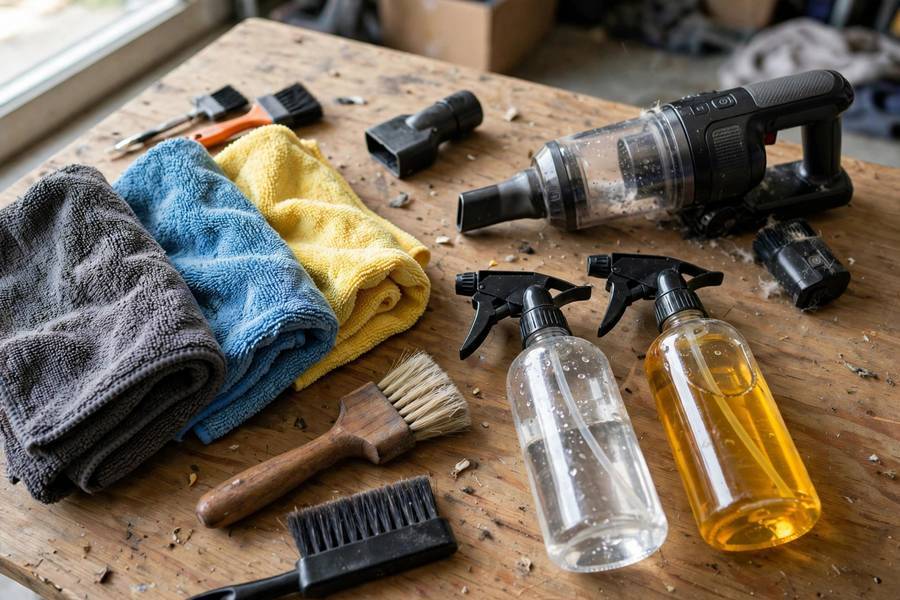
– Chemicals (soaps, degreasers, dressings, waxes): $300-$800 initial stock
– Microfiber towels, brushes, buckets, grit guards: $200-$400
– Vehicle setup (racks, branding/magnets): $200-$1,000
– Insurance (liability): $500-$1,500/year
– Business registration, basic website: $300-$800
Add for shop: first/last/security deposit, utility deposits, signage, waiting area basics — another $10,000-$40,000.
Notice what’s missing: no franchise fee, no massive buildout, no inventory that expires. That’s the beauty of the model — your capital goes into tools that earn, not rent that burns.
Equipment That Matters (And What’s Marketing)
Spend on:
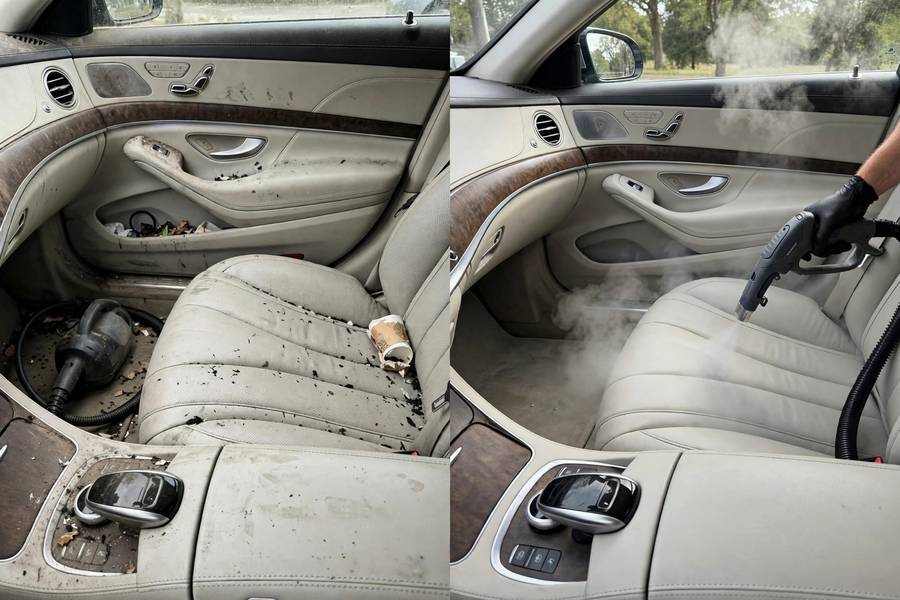
– Extractor. The difference between “cleaned” and “detailed” interiors. A heated extractor ($500-$1,000) pulls grime no vacuum touches. This is what justifies premium pricing.
– Dual-action polisher. For paint enhancement and swirl removal. Learn on junk panels first — burning through clear coat on a customer’s car is a career-ending afternoon.
– Quality chemicals, in bulk. Professional lines (not auto-parts-store retail bottles). Buying concentrates in gallons cuts chemical cost per car by 60%+.
– Lighting. A good inspection light reveals what daylight hides. Customers pay for what they can see — show them the swirls before, the gloss after.
Save on:
– Branded everything at launch. Magnets on your car, not a $5,000 wrap.
– The 47th specialty brush. Master the core 10 tools first.
– Ceramic coating certifications until you have paint-correction skills to support them.
Pricing: The Math Most Detailers Get Wrong
The classic beginner mistake: charging $50 for a full detail that takes 4 hours, then wondering why they’re broke. Let’s do it right.
Know your effective hourly rate. Target $50-$100+/hour depending on market. A 3-hour interior detail at $75/hour = $225. Price the package, but think in hours.
Standard mobile pricing tiers (adjust to your market):
– Express wash + interior wipe-down (1-1.5 hrs): $60-$100
– Full interior detail (2.5-4 hrs): $150-$300
– Full detail in/out (4-6 hrs): $250-$450
– Paint correction (1-3 days): $400-$1,500+
– Ceramic coating: $600-$2,000+
Pricing rules:
– Never compete on price with the $20 car wash guys. You’re selling a different product to a different customer.
– Charge for condition: “prices starting at” with an upcharge scale for pet hair, stains, smoke. Heavily soiled vehicles take 2x the time — price accordingly, stated upfront.
– Raise prices as you book out. Two-week wait list = 15% price increase. This is how you find your market rate.
– Deposits for large jobs (50%). No-shows cost you the day.
The pricing confidence in how to become an entrepreneur applies directly — underpricing is the #1 self-inflicted wound in service businesses.
Legal Basics: Don’t Skip These
- Business entity. LLC is standard — separates personal assets if you damage a $90,000 car (it happens).
- Liability insurance + garage keeper’s coverage. General liability ($1M) plus care/custody/control coverage for customer vehicles in your possession. $800-$2,000/year. Non-negotiable.
- Water runoff compliance. Many municipalities regulate wash water discharge (soapy water into storm drains is illegal in most places). Use waterless/rinseless methods or containment mats where required. A fine wipes out a month’s profit.
- Contracts/waivers. Pre-existing damage documentation (photos before every job), service agreements stating what’s included, and liability limitations. The $0 waiver is the most expensive document you’ll never sign.
Getting Your First 50 Customers
Forget branding exercises. Do these in order:
- Friends and family at full price. Not free — free customers give useless feedback and never refer. Charge properly; do impeccable work.
- Before/after content. Every single job: 6-10 photos, good lighting, posted same day. This is your entire marketing department for the first year. TikTok/Instagram Reels of transformations outperform any ad.
- Google Business Profile. “Car detailing near me” + 30 five-star reviews = a lead machine. Ask every happy customer, the same day.
- Neighborhood Facebook groups + Nextdoor. “Mobile detailer, booked this week, here’s my work” with photos. Hyperlocal trust converts fast.
- Apartment complexes and offices. Fleet-style deals: “I’ll be here every Saturday, book your slot.” Recurring location = recurring revenue.
- Referral incentive. $25 credit for every referred customer who books. Your customers’ driveways are billboards — make it worth their while to talk.
What doesn’t work early: expensive websites (a simple booking page suffices), print advertising, and discount platforms (Groupon customers never return at full price).
Scaling Past Yourself
The ceiling of a solo detailer is ~$80k-$150k/year working hard. Breaking through means leverage:
- Hire detailer #1 when you’re booked 2+ weeks out consistently. Train on your system, pay above market, and accept that quality control becomes your new full-time job.
- Systematize everything. Checklists per package, chemical dilution charts, photo standards. The business must produce your quality without you touching a car.
- Add high-ticket services. Paint correction and ceramic coatings: fewer jobs, 3-5x revenue per job, less physical grind.
- Commercial contracts. Dealerships, rental agencies, corporate fleets — bid on recurring volume. Lower margin per unit, but predictable.
- The shop decision. When mobile demand consistently exceeds your capacity, the shop becomes an investment, not a gamble.
The jump from operator to owner is the hardest transition in any service business — covered well in what a startup actually is. More playbooks in what branding actually means.
Frequently Asked Questions
Mobile detailing: $2,000-$10,000 for equipment, chemicals, insurance, and basic branding. A fixed shop adds $10,000-$40,000 for deposits, buildout, and signage. It’s among the lowest-capital service businesses.
Yes — solo operators can net $50k-$100k+ with proper pricing ($50-100+/hour effective rate). Profitability depends on pricing discipline, repeat/referral customers, and controlling drive time (mobile) or fixed costs (shop).
Start mobile: $2k-$10k startup, no rent, premium pricing for convenience. Add a shop later when demand justifies it — shops enable paint correction and ceramic coatings properly but need volume to cover fixed costs from day one.
You need a business license/LLC registration, liability insurance with garage keeper’s coverage ($800-$2,000/year), and compliance with local water runoff regulations. Some areas require mobile vendor permits.
Before/after photos on social media, Google Business Profile reviews, neighborhood groups (Facebook/Nextdoor), apartment/office recurring deals, and referral incentives. Visual proof of transformations is the highest-converting marketing in this business.