How to Start a Mobile Detailing Business: Startup Costs, Rig Setup & First Clients

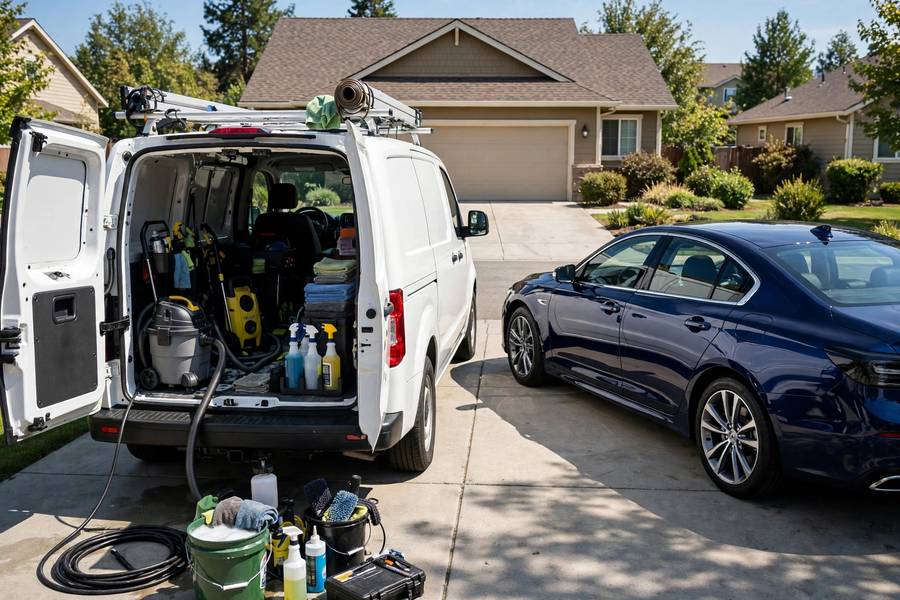
The smartest way into auto detailing in 2026 is on wheels. A shop lease is a $2,000-a-month anchor; a van is a rolling billboard that goes where the customers are. I have watched operators go from weekend side hustle to $120,000-a-year routes without ever signing a lease.
That is not to say mobile is effortless. You trade rent for logistics: water, power, weather, and drive time between jobs. But the math is brutally favorable, and if you are learning how to become an entrepreneur in a trade, mobile detailing is one of the few businesses where you can be profitable in month one. Here is the complete playbook, built around the full guide to starting a car detailing business, narrowed to the mobile model.
Why Mobile Detailing Is the Cheapest Way In
A fixed detailing shop needs $30,000 to $80,000 before the first customer walks in: lease deposit, buildout, signage, utility accounts. A mobile operation needs $8,000 to $18,000, and most of that is equipment you keep even if the business model changes.
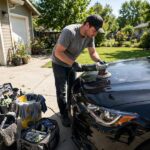
The deeper advantage is customer acquisition. People do not enjoy dropping their car off and killing three hours. When you come to them — the office parking lot, the driveway, the kid’s soccer practice — you are not selling a detail, you are selling convenience, and convenience commands a 15-25% price premium over shop rates. I have seen mobile operators charge $199 for a package shops sell at $149, with zero complaints, because the customer never left their couch.
The tradeoff is throughput. A shop runs 3-4 bays in parallel; you run one car at a time and burn 30-45 minutes a day in transit. That caps you at roughly 4-6 jobs daily. But for a solo operator or a two-person crew, that is not a cap — that is a full book. At an average ticket of $175 and 5 jobs a day, 22 working days, you are grossing $19,250 a month from a vehicle. That is the deal that makes mobile worth it.
Startup Costs: The Real Numbers
Here is the honest budget for a professional launch — not the “bucket and sponge in your trunk” version, which will not survive a month of real customers:
- Vehicle: $0-$12,000. Use what you own first. A used van or truck with $3,000-$8,000 in financing is the sweet spot; a trailer setup runs $2,500-$6,000. Do not buy a new van to start a detailing business.
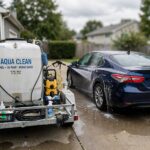
- Water system: $400-$900. A 65-100 gallon water tank, pump, and hose reels. Gravity-fed is cheapest; a 12V on-demand pump is the professional standard.
- Power: $600-$1,500. A 3,500W inverter generator handles a pressure washer, vacuum, and polisher. Battery-powered tools cut this cost but raise tool costs.
- Pressure washer: $250-$600. Electric units are quieter and fine for 90% of work; gas gives more punch for undercarriage and fleet work.
- Vacuum and extractor: $300-$800. A heated extractor is the single biggest quality differentiator for interiors — budget $400-$600 for it.
- Polishers, chemicals, towels: $800-$1,500. Chemicals are cheap per job ($8-$15 in product per vehicle) but you need a full shelf.
- Insurance: $1,200-$2,500/year, paid up front or monthly.
- Marketing launch: $300-$800. Google Business Profile is free; spend on decals, a website, and initial ads.
Total: $8,000-$18,000 to launch properly. Compare that to what a startup actually is in most industries — tech founders raise millions to find out if anyone wants their product. You will know by Friday of week two.
Your Vehicle and Rig Setup
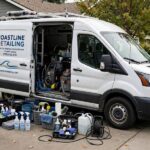
You do not need the perfect vehicle on day one. You need a reliable one with room for a tank, a generator, and organized storage. A cargo van (Transit, Sprinter, Promaster) is the industry standard because you can stand up inside and everything stays locked. A pickup with a bed cap works; a trailer works if you already tow.
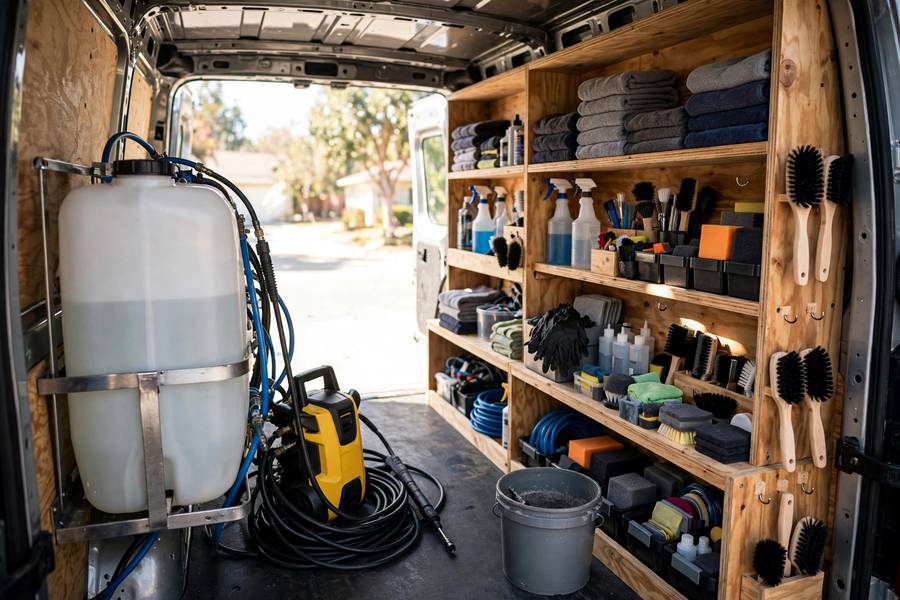
The rig layout matters more than the vehicle badge. Every efficient mobile setup has four zones: water (tank + pump + reels), power (generator + cords), chemicals (shelved, secured, labeled), and tools (wash mitts, brushes, polishers, vacuum). Build a simple shelving unit from plywood before buying anything fancy — organization is what separates a $90-an-hour professional from a guy with a messy trunk.
One non-negotiable: a branded wrap or quality magnets on the vehicle. A plain white van is invisible; a wrapped van is a marketing asset that parks in driveways all over town. A full wrap runs $1,500-$3,000 and typically generates more calls per month than $400 in Facebook ads. If cash is tight, start with $150 door magnets and upgrade within 90 days.
Water, Power, and Waste Rules
Water is the constraint that ends more mobile startups than competition does. A full detail uses 15-40 gallons; a 65-gallon tank gives you 2-3 cars before refill. Refilling at home is fine until you are doing 5 cars a day, at which point you need a commercial fill arrangement or a larger tank.
The smarter play is reducing water use. Modern rinseless wash products let you do a full exterior with 2-3 gallons of water — a technique called rinseless washing. Learn it. It extends your tank to 8-10 cars, eliminates runoff problems, and lets you work in apartment garages and office lots where a pressure washer is impossible. Many top mobile operators run rinseless-only setups and are faster because of it.
Runoff rules are real. Many cities restrict soapy water running into storm drains. A $80-$150 wash-water containment mat keeps you compliant and looks professional. Some municipalities require a water reclamation system for commercial washers — check your city code before you take your first job. The fine for illegal discharge can be $500-$5,000, which is a painful way to learn about environmental regulations.
Power is simpler: a 3,500W generator runs everything, though noise matters in residential areas. Inverter generators are quieter (58-62 dB) and worth the premium. Battery ecosystems (EGO, DeWalt 60V) now cover vacuums, polishers, and blowers — many solo operators run hybrid: generator for the pressure washer, batteries for everything else.
Licenses, Insurance, and Permits
The paperwork is unglamorous and absolutely necessary. Minimum viable legal setup:
- Business license from your city/county ($50-$150/year). Some areas require a mobile vendor permit on top.
- LLC registration ($50-$500 depending on state). Separates your personal assets from the business — non-negotiable when you are working on $80,000 cars.
- General liability insurance ($1,000-$2,000/year). Customers hand you vehicles worth more than your annual revenue. One scratch on a Porsche and you will be glad you paid for the policy.
- Garage keepers coverage ($300-$800/year add-on). Covers damage to vehicles in your care — a swirl mark, a chemical stain, a scuffed wheel.
- Commercial auto insurance if the vehicle is dedicated to the business ($800-$1,500/year).
Insurance is also a sales tool. Put “Licensed & Insured” on every quote, every ad, every shirt. It is the fastest trust signal in a business where strangers hand you their second-most-expensive possession.
Sales tax varies by state — in some states detailing is a taxable service, in others it is not. Your accountant (yes, get one, $200-$400 for a setup consult) will tell you in ten minutes.
Mobile-Friendly Services and Pricing
Not every service works mobile. Paint correction in direct sunlight is miserable; ceramic coatings cure badly in dusty driveways. Design your menu around what mobile does best:
- Maintenance details ($99-$149): your volume product. Wash, wheels, tires, interior wipe-down, windows. 60-90 minutes. Recurring monthly plans are the gold mine — 50 monthly customers at $129 is $6,450 in recurring monthly revenue.
- Full details ($199-$349): interior deep clean plus exterior. 2.5-4 hours. Your flagship.
- Interior-only details ($129-$229): perfect for offices and apartments where water is limited. Rinseless exterior or none.
- Add-ons ($25-$75 each): engine bay, headlight restoration, pet hair removal, odor treatment. Add-ons are pure margin — the customer is already sold, and the labor is 20-40 minutes.
Charge a mobile convenience fee of $0-$25 built into prices rather than itemized — itemized fees annoy people, baked-in premiums do not. And set a service radius of 20-25 miles. Beyond that, either charge a travel fee ($25-$50) or require a two-car minimum. Drive time is the silent killer of mobile margins; protect it.
Getting Your First 20 Customers
Forget brand awareness. You need 20 paying customers, and there is a proven sequence:
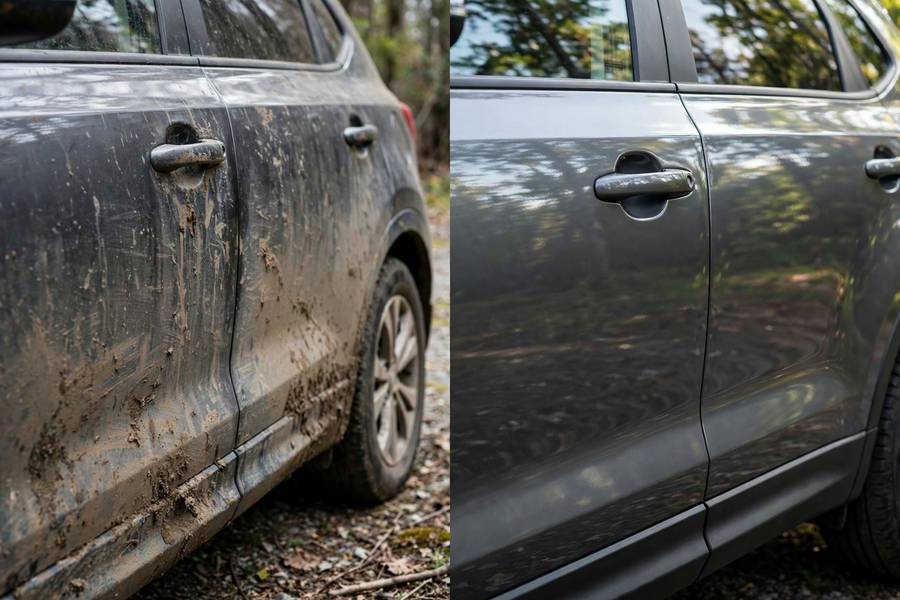
- Week 1-2: The inner circle. Text everyone you know. Offer 10 free or half-price details to friends, family, and coworkers in exchange for Google reviews and before/after photos. You need 10+ five-star reviews before paid ads will convert.
- Week 2-3: Google Business Profile. Set it up with 30+ photos, every service listed, and your 10 seed reviews. “Mobile detailing near me” searches convert at 15-25% — this is your single most important marketing channel. It is free.
- Week 3-4: Nextdoor and neighborhood groups. Post before/after photos with a first-time-customer offer. Neighborhood groups convert absurdly well for services because the trust is baked in.
- Ongoing: Office parks and dealerships. Walk into 5 businesses a week with a flyer offering employee detailing days or fleet pricing. One office park with 200 employees can feed you for a month.
- Referrals from day one. Every job ends with: “If you know two people who need this, I’ll give you $20 off your next detail for each one who books.” Referral customers close at 3x the rate of cold leads and cost you nothing up front.
The first 20 are the hardest. Customers 21-100 come from the reviews and referrals the first 20 generate. That is the flywheel — and it is why the operators who obsess over the first month win the year.
Frequently Asked Questions
A professional mobile detailing launch costs $8,000-$18,000: vehicle (use what you own), water tank and pump ($400-$900), generator ($600-$1,500), pressure washer ($250-$600), vacuum and extractor ($300-$800), chemicals and tools ($800-$1,500), insurance ($1,200-$2,500/year), and a marketing launch ($300-$800).
A traditional wash uses 15-40 gallons per car, so a 65-gallon tank covers 2-3 vehicles. Rinseless washing drops that to 2-3 gallons per car, stretching one tank to 8-10 cars — which is why most successful mobile operators learn rinseless techniques early.
Yes. At minimum you need a city or county business license ($50-$150/year), an LLC for liability protection, general liability insurance ($1,000-$2,000/year), and garage keepers coverage ($300-$800/year) for damage to vehicles in your care. Some areas also require a mobile vendor permit.
Yes. At 5 jobs a day at a $175 average ticket over 22 working days, monthly gross is about $19,250. After chemicals ($8-$15/job), fuel, insurance, and supplies, solo operators commonly net $8,000-$12,000 a month once booked solid.
A cargo van (Transit, Sprinter, Promaster) is the industry standard — you can stand inside and everything stays locked. A pickup with a bed cap or a towable trailer also works. Use what you already own first; do not buy a new van to start the business.
The proven sequence: seed 10+ Google reviews from friends and family, optimize a Google Business Profile for “mobile detailing near me” searches, post before/after photos in Nextdoor and neighborhood groups, pitch office parks and dealerships weekly, and run a referral incentive ($20 off) from the very first job.