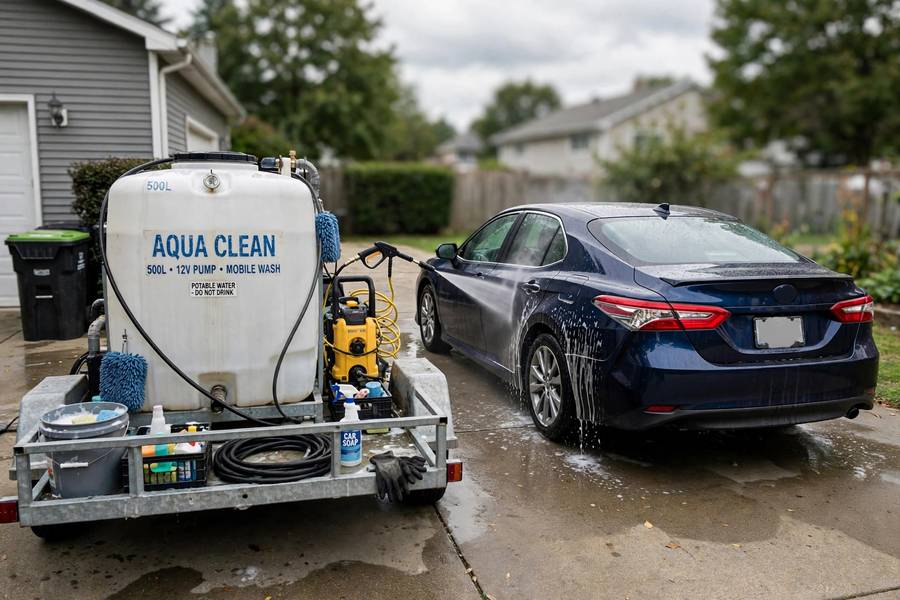
Newcomers use “car wash” and “detailing” interchangeably. Veterans know they are different businesses with different economics, different customers, and different futures. Choosing wrong costs you a year — I have watched founders build a wash business when they wanted a detailing career, and detailers starve chasing wash volume.
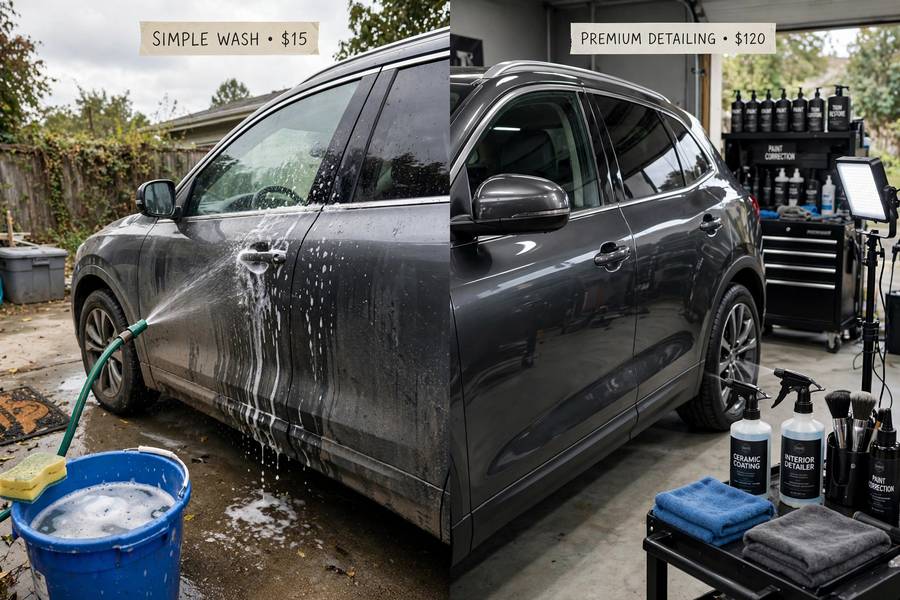
The distinction in one sentence: a car wash sells cleanliness; detailing sells transformation. Everything — pricing, skills, equipment, marketing, margins — flows from that difference. Here is the honest comparison so you choose the right model for your goals. (For the detailing path specifically, see how to start a car detailing business.)
Table of Contents
- What Each Business Actually Sells
- Startup Costs Compared
- Skills and Learning Curve
- Pricing and Margins
- Customers: Who Buys What
- Operations: A Day in Each Business
- Scalability and Exit Value
- The Hybrid Model: Why Most Winners Blend
- Which Should You Choose
- Frequently Asked Questions
What Each Business Actually Sells
Mobile car wash: Convenience cleaning. Exterior wash, basic interior wipe-down, windows, tires — done at the customer’s location in 30–60 minutes. The value proposition is “your car gets clean while you do something else.” It is a maintenance service, recurring and habitual.
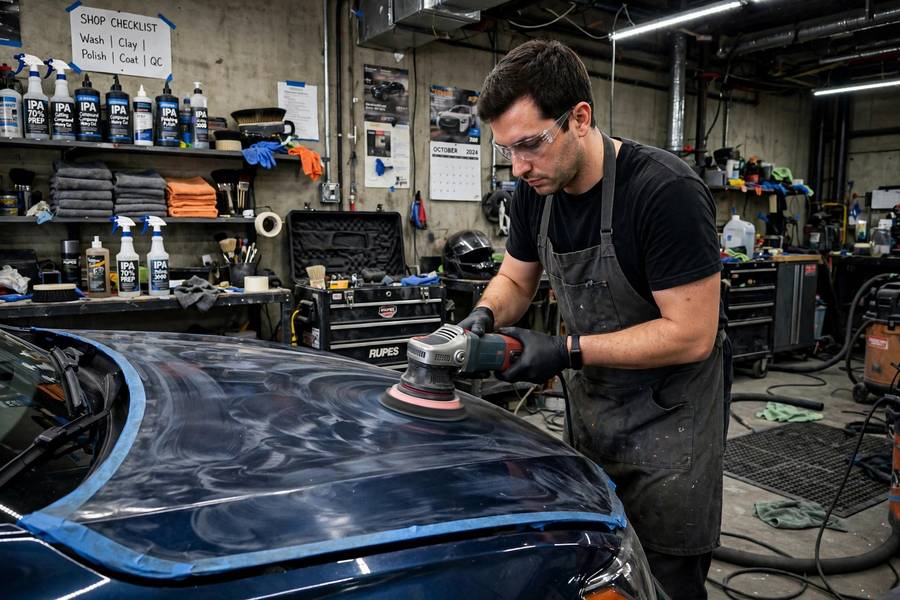
Detailing business: Restoration and protection. Deep interior extraction, paint decontamination, machine polishing, ceramic coatings — services measured in hours and priced in hundreds. The value proposition is “your car looks better than new.” It is a transformation service, occasional and emotional.
The practical difference: wash customers buy on price and convenience; detailing customers buy on trust and results. One is a commodity with loyalty; the other is a craft with reputation.
Startup Costs Compared
Mobile car wash: $1,500–$5,000. Pressure washer, water tank, vacuum, basic chemicals, towels. You can genuinely start this weekend with equipment from a big-box store. The barrier is so low that competition is fierce — which is the model’s central challenge.
Detailing business: $3,000–$15,000+ (mobile), $30,000+ (shop). Polishers, extractor, lighting, paint gauge, professional chemicals, and — the real cost — training. The higher barrier is also the moat: fewer competitors can do what you do.
The cost gap reflects a skill gap. Anyone can learn a good wash in a week. Paint correction takes a year. That difference is your pricing power — if you choose the detailing path and actually master it.
Skills and Learning Curve
Car wash skills (weeks to learn): Proper wash technique (two-bucket method, no swirls), efficient interior cleaning, streak-free glass, basic upsells. The ceiling is low but the floor matters — a bad wash damages paint, and “I can do it myself” is your constant competitor.
Detailing skills (months to years): Everything in washing, plus paint decontamination, machine polishing (dual-action then rotary), wet sanding judgment, ceramic coating application, leather restoration, odor remediation, headlight restoration. Each skill is a revenue line; the full stack is a career.
Here is the strategic point most newcomers miss: wash skills are a subset of detailing skills. Every detailer can wash; few washers can detail. Starting with detailing training gives you both businesses as options. Starting with only wash skills gives you one.
If you are starting from zero, how to start a mobile detailing business covers the path that keeps both doors open.
Pricing and Margins
Mobile car wash pricing: $30–$75 per wash, with monthly subscription plans ($80–$150/month for 2–4 washes) as the smart model. Gross margins run 60–70% — chemicals and water are cheap — but the average ticket is small, so volume is everything. A solo washer needs 8–12 cars/day to make real money. That is a grind.
Detailing pricing: $150–$350 for full details, $500–$1,200 for paint correction, $800–$2,500 for coatings. Gross margins run 70–85% on premium services. Two coating jobs a week can gross what a washer makes in a month — with far less physical wear.
The margin story: detailing wins on profit per hour by a wide margin. Washing wins on revenue predictability — subscriptions create recurring income that detailing’s project-based work lacks. The best operators I know run detailing as the profit engine and wash subscriptions as the recurring base. For the pricing mechanics, see how to price car detailing packages.
Customers: Who Buys What
Wash customers are busy and price-aware: commuters, parents, fleet managers, rideshare drivers. They want fast, cheap, and regular. Loyalty exists but it is convenience loyalty — lose the convenient slot and you lose the customer. Acquisition is constant because churn is constant.
Detailing customers are enthusiasts and the affluent: car collectors, luxury owners, people preparing cars for sale, new-car buyers protecting investments. They research, they read reviews, they pay for reputation. Acquisition is slower but lifetime value is 5–10x a wash customer, and they refer friends like themselves.
The customer difference shapes your entire marketing approach. Wash marketing is local SEO and subscription offers — transactional. Detailing marketing is portfolio, education, and trust — relational. Be honest about which game you want to play.
Operations: A Day in Each Business
Wash operator’s day: 8–12 appointments, 30–45 minutes each, driving between locations. Physically repetitive, mentally simple. The challenge is logistics — routing, scheduling density, weather cancellations. Rainy weeks kill revenue; you learn to watch forecasts like a farmer.
Detailer’s day: 1–3 jobs, each 2–8 hours. Deeply focused work — paint correction is meditation with a polisher. The challenge is craftsmanship under time pressure and managing customer expectations on transformative work. Slow weeks hurt less because each job pays more; the stress is quality, not volume.
Neither is easy; they are hard in different ways. Wash grinds your body with volume. Detailing grinds your nerves with perfectionism. Choose your hard.
Scalability and Exit Value
Wash businesses scale through systems: routes, subscriptions, employees following checklists. A wash operation with 200 subscribers and two vans is a sellable asset — recurring revenue is what buyers pay for. The ceiling is operational excellence, not craftsmanship.
Detailing scales through reputation: premium pricing, coating certifications, a booked-out calendar. It scales less easily — quality is hard to delegate — but commands higher multiples because the brand and skills are defensible. The best exit I have seen in this space: a coating studio with manufacturer certifications and a two-month waitlist, sold for a multiple that reflected its moat.
The employee question. Wash employees are trainable in weeks; detailing employees take months and may leave with your skills. This is detailing’s structural scaling challenge — and why documented processes and non-competes (where enforceable) matter more in detailing.
The Hybrid Model: Why Most Winners Blend
Here is what the most successful operators actually do: they run both, positioned correctly.
The wash side — branded as maintenance plans — provides recurring revenue, keeps the schedule full in slow weeks, and feeds the detailing side: every wash customer with a swirled black car is a future paint-correction client. The detailing side provides the margins, the reputation, and the portfolio that makes the whole brand premium.
The structure: “Express Maintenance” (wash subscriptions, $99–$149/month) and “Signature Detailing” (full details, correction, coatings). Same brand, two doors. The wash customers see the detailing results on your Instagram; the detailing customers buy maintenance plans to protect their investment. Each side feeds the other.
This hybrid is harder to start — it needs both skill sets — but it is the most resilient model in the industry. Pure wash businesses get commoditized; pure detailing businesses get seasonal. The blend survives both.
Which Should You Choose
Choose mobile car wash if: you want the fastest path to revenue, you prefer systems and volume over craftsmanship, you are building recurring subscription income, or you plan to scale with employees quickly.
Choose detailing if: you are drawn to the craft, you want premium margins and are willing to invest 1–2 years in skill, you prefer fewer deeper customer relationships, or coatings and correction excite you more than volume.
Choose the hybrid if: you want the most resilient business and can invest in both skill sets. Start with detailing training (it includes wash skills), launch wash subscriptions for cash flow, add premium services as your skills and portfolio grow.
The wrong choice is the one you make by default — drifting into wash work because it is easy, or into coatings before your correction skills are ready. Decide deliberately, train accordingly, and price like you mean it.

Frequently Asked Questions
A car wash sells convenient cleanliness (30–60 min, $30–$75); detailing sells transformation (hours to days, $150–$2,500) — deep cleaning, paint correction, and protection. Wash is a volume commodity business; detailing is a craft reputation business with far higher margins per job.
Detailing wins on profit per hour by a wide margin (70–85% gross margins on premium services vs 60–70% on washes at much smaller tickets). Car wash wins on revenue predictability through subscriptions. The most profitable model blends both: wash subscriptions for recurring base revenue, detailing for margin.
$1,500–$5,000 for a genuine start: pressure washer, water tank, vacuum, basic chemicals, and towels. It’s the lowest-barrier entry in the industry — which also means the most competition. Differentiation comes from subscriptions, reliability, and service quality.
Yes — and the best operators do. Structure it as two tiers under one brand: wash subscriptions for recurring revenue and schedule density, premium detailing (correction, coatings) for margins and reputation. Wash customers become detailing prospects; detailing customers buy maintenance plans.
As a pure wash play, it’s competitive but viable with subscriptions and tight routing — expect to need 8–12 cars/day solo. As an entry point that grows into detailing, it’s excellent: wash cash flow funds your skills training, and every wash route is a prospecting channel for premium services.