What Is Slow Fashion? Definition & Getting Started

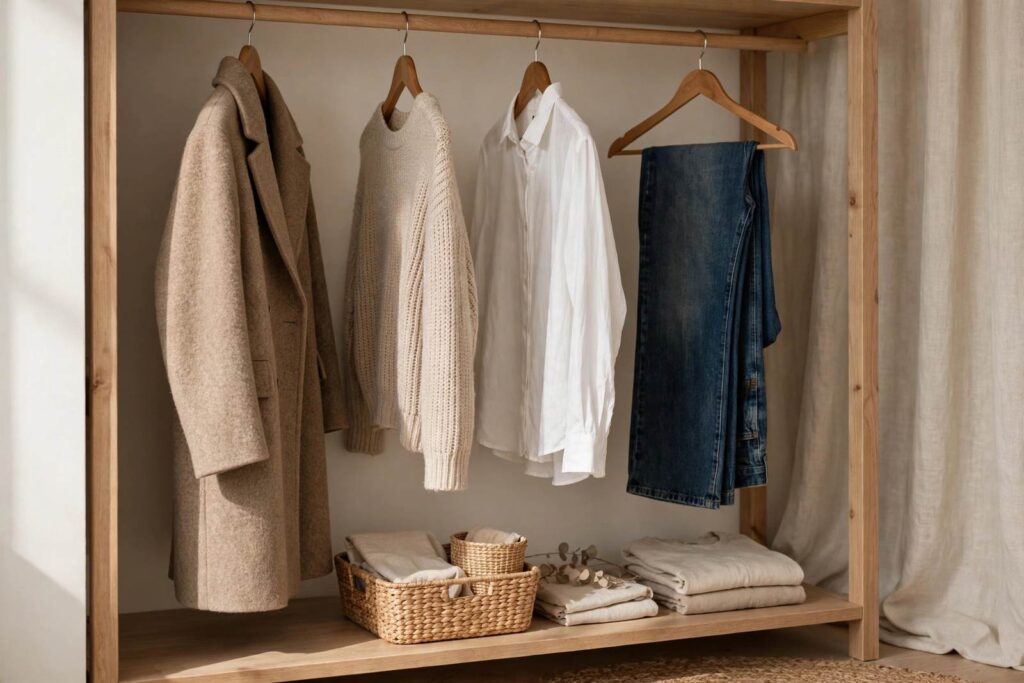
Slow fashion, in one sentence: buy less, choose better, wear longer. It’s the opposite of fast fashion — not as an aesthetic, but as a way of thinking about your wardrobe.
Before you roll your eyes at another lecture about conscious consumption, let me be clear about my angle: this is closet-first and guilt-free. We’re not starting with what’s wrong with the fashion industry (though we’ll get to the numbers). We’re starting with your wardrobe — the clothes you already own — and five practical steps that cost nothing. No fortune required, no purity test. Just better decisions, one garment at a time.
Slow Fashion in One Sentence
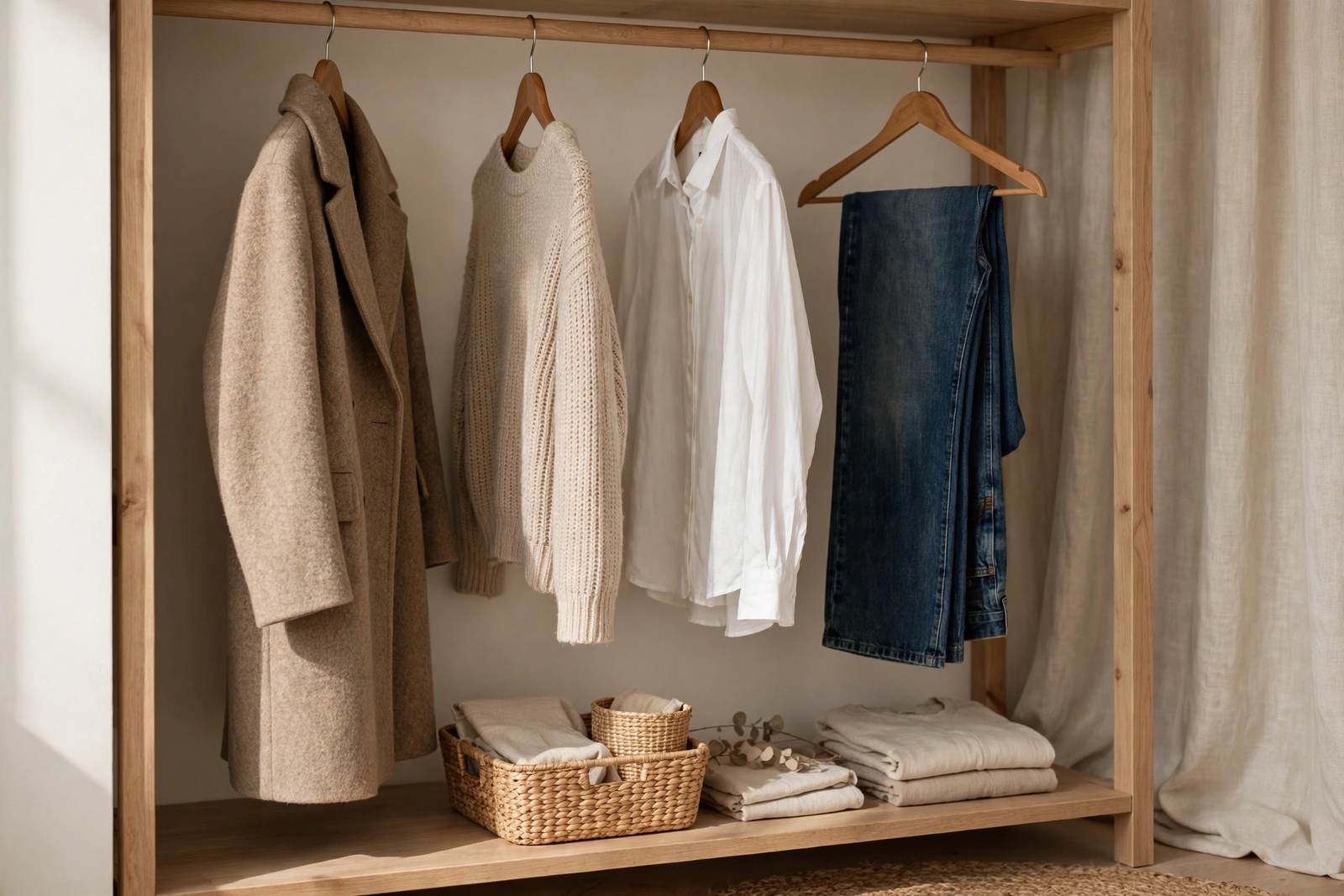
Slow fashion means buying less, choosing better, and wearing longer — the deliberate opposite of fast fashion’s churn of cheap, disposable clothing.
It’s a philosophy, not a brand. You don’t “buy slow fashion” the way you buy a label. You practice it: in what you keep, what you buy, how you care for it, and when you let it go.
Slow Fashion vs Fast Fashion — The Simple Table
| Fast fashion | Slow fashion | |
|---|---|---|
| Production speed | Weeks from design to store | Seasons; made to last |
| Collection rhythm | Dozens of “drops” per year | Few, timeless collections |
| Lifespan | Designed for a season | Designed for years |
| True cost | Cheap per item, expensive per year of use | Higher per item, cheaper per year of use |
That last row is the one that matters, and it’s where most people get the math backwards. We’ll do the real numbers below.
Where the Idea Came From (One-Minute History)
The “slow” movement started with food: Slow Food, founded by Carlo Petrini in 1986, was a protest against fast food and the industrialization of eating — a call to value quality, tradition, and pleasure over speed.
The fashion version came later. The term “slow fashion” was coined by Kate Fletcher in 2007, in an article for The Ecologist — applying Slow Food’s logic to clothing: thoughtfulness over throughput, quality over quantity.
And the movement’s moral urgency crystallized in April 2013, when the Rana Plaza garment factory complex in Bangladesh collapsed, killing 1,134 workers. It was the deadliest garment-factory disaster in history, and it forced the world to look at who makes cheap clothes and under what conditions. Slow fashion stopped being an aesthetic preference and became an ethical position.
The 6 Principles
The philosophy, distilled:
- Quality over quantity — fewer, better things
- Timeless design — clothes that don’t expire with a trend cycle
- Fair, transparent production — knowing (or caring) who made your clothes
- Responsible materials — fabrics chosen for impact, not just price
- Longevity through care — maintenance as part of ownership
- Conscious consumption — buying deliberately, not reflexively
You don’t need all six on day one. Start with one and two — they carry most of the weight.
Why It Matters — The Numbers
The fashion industry’s footprint, in four figures:
- 92 billion garments produced every year
- Around 30% of garments are never sold or worn
- Fashion accounts for roughly 10% of global CO₂ emissions
- Less than 1% of textiles are recycled globally
Read those again slowly. Nearly a third of everything made is never worn. Less than one percent gets recycled. The system produces 92 billion garments a year largely to throw most of them away. “Cheap” clothes aren’t cheap — the cost is just paid by someone else, somewhere else: the planet, the garment worker, and eventually you, replacing the same things over and over.
Cost-per-Wear — The Real Math
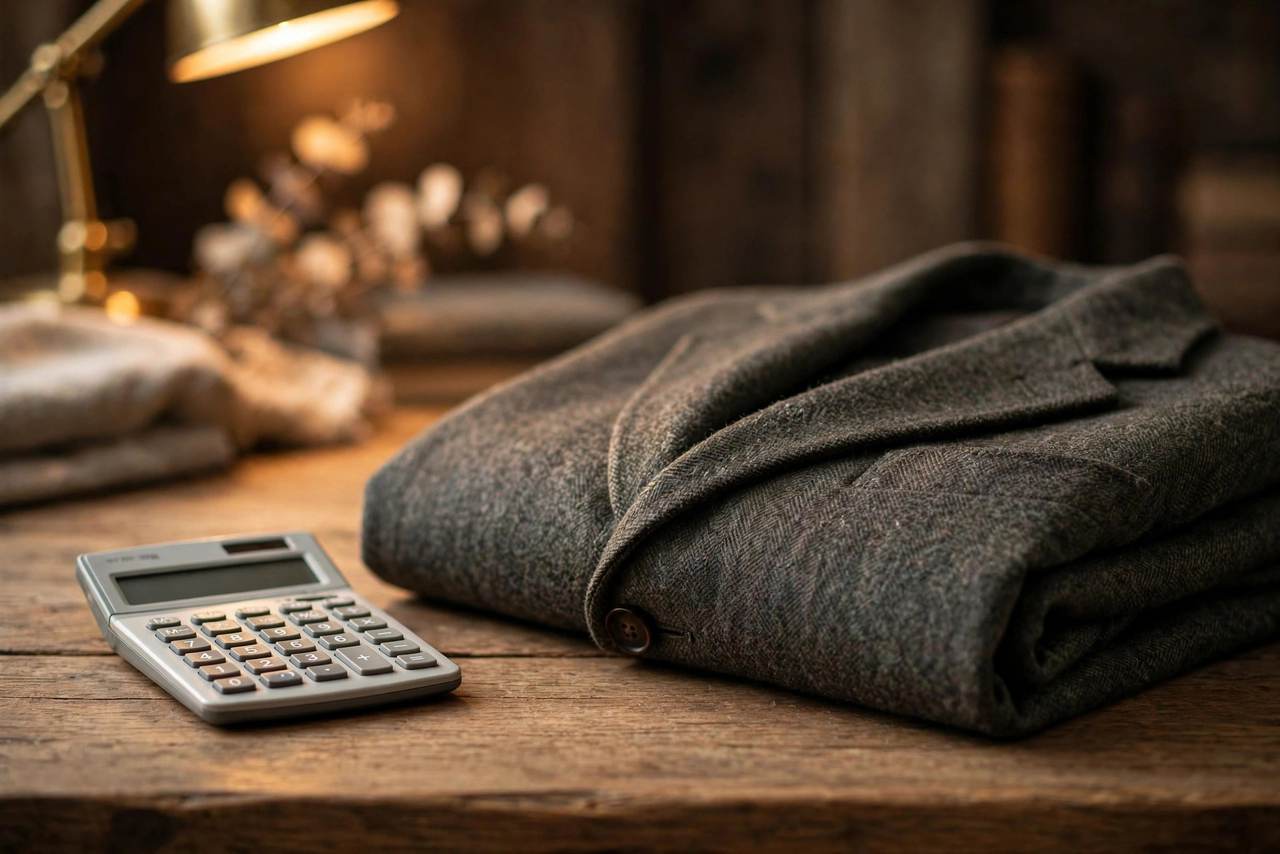
Here’s the math fast fashion hopes you never do. Cost-per-wear = price ÷ estimated number of wears.
Here’s my own illustration — the arithmetic is mine:
- Cheap jeans: $40, worn 20 times before they stretch out, fade, or fall apart → $2.00 per wear
- Quality jeans: $140, worn 200 times over years → $0.70 per wear
- Cheap sweater: $35, worn 15 times → $2.33 per wear
- Quality sweater: $120, worn 150 times → $0.80 per wear
- Cheap coat: $80, worn 2 winters (~60 wears) → $1.33 per wear
- Quality coat: $300, worn 8 winters (~240 wears) → $1.25 per wear
The pattern: the durable piece costs less per use than the cheap replacements, every time — because the denominator (wears) grows faster than the numerator (price). A related real-world datapoint: a €160 bag worn for 8 years costs €20 per year — less than replacing a €40 bag every year.
Fast fashion isn’t cheap. It’s expensive in installments.
Start With Your Own Closet — 5 Practical Steps
Don’t buy anything. Start here:
- Take stock. Pull out what you own. What do you actually wear? What’s been sitting with tags for a year? The audit is free and it’s the most honest conversation you’ll have with your wardrobe.
- Choose quality over quantity — going forward. Not a purge; a policy. The next thing you buy should be the better version, not the cheaper one.
- Question materials. Start reading labels. Natural fibers and well-made synthetics last; mystery blends pill and sag. You don’t need a textile degree — just the habit of checking.
- Choose transparent brands — when you buy. Brands that say where and how their clothes are made. Transparency isn’t a guarantee, but opacity is a warning.
- Care, repair, pass on. Wash gently, mend what’s mendable, and when something’s done with you, pass it on — resale, donation, clothing swaps. The garment’s life doesn’t have to end in your closet.
How to Check Quality in the Store (Checklist)
My own in-store checklist — the hands-on part:
- Seams: straight, even stitching; no puckering. Turn it inside out — the inside tells the truth.
- Fabric feel: does it feel substantial? Hold it up to light — if you can see through it, it won’t survive washing.
- Lining: lined garments (jackets, skirts) last longer and hang better. Unlined isn’t always bad, but lined is usually better-made.
- Buttons and hardware: sewn on firmly, not glued. Spare button included? Good sign.
- Stitching density: more stitches per inch = stronger seams. Compare two similar items and you’ll feel the difference.
- Pattern matching: on plaids and stripes, do the patterns align at the seams? Matching takes care (and costs money) — it’s a quality tell.
Sixty seconds with this checklist in the fitting room saves you from the $40 jeans that die in 20 wears.
Care and Repair ARE Slow Fashion
This is the unglamorous core of the philosophy: how you treat clothes determines how long they live.
- Wash gently — cold water, less often, inside out. Most garment death happens in the washing machine, not on your body.
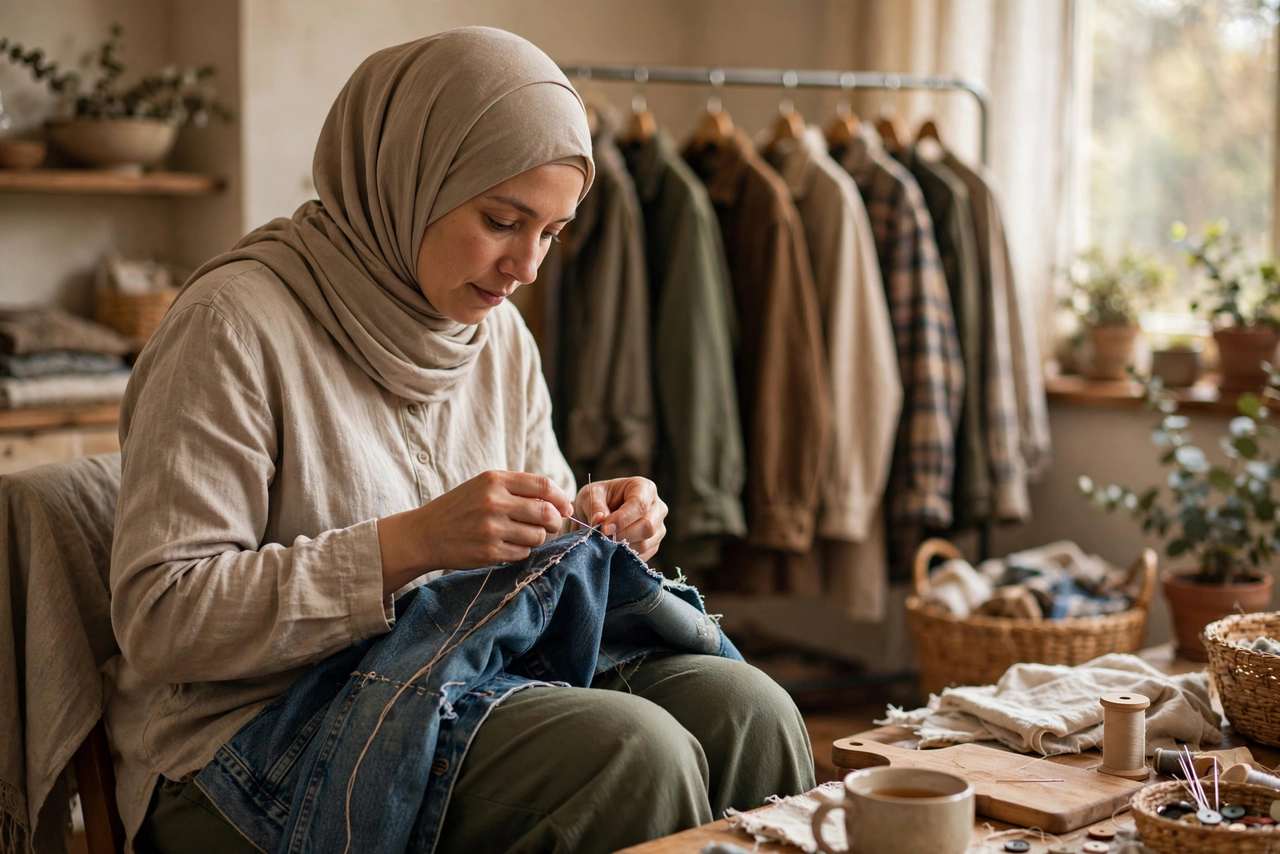
- Mend — a loose button, a small tear, a fallen hem. Basic repairs take minutes and add years.
- Hang in shade instead of tumble-drying — heat is the enemy of elastic, prints, and shape. Air-drying is free and gentler.
Care isn’t a chore attached to slow fashion. Care is slow fashion — the daily practice of the philosophy.
Slow Fashion on a Budget — No Guilt
The biggest misconception: that slow fashion means expensive clothes. Mindset first, not expensive purchases. The cheapest slow-fashion moves are free:
- Buy less. The single highest-impact choice, and it saves money.
- Wear what you own. The most sustainable garment is the one already in your closet.
- Secondhand. Thrift, vintage, resale — quality garments at fast-fashion prices, with the good stuff already proven durable.
- Mend. A $5 repair beats a $50 replacement.
No guilt about what’s already in your closet. No purity tests. The goal isn’t a perfect wardrobe — it’s a direction: fewer, better, longer. Start where you are.
If your closet audit leaves you with pieces that don’t work together, what a capsule wardrobe is and how to start one gives you the rebuild system — a small, coordinated set of pieces you actually wear is slow fashion’s favorite structure, and how to build a capsule wardrobe walks through it step by step.
3 Mistakes to Avoid
- Mistaking fast-fashion “eco” lines for slow fashion. A green-labeled collection from a brand built on weekly drops is marketing, not philosophy. The business model is the message — and the model hasn’t changed.
- Equating expensive with slow. Price is not the criterion. An expensive trendy piece worn twice is fast fashion with a bigger receipt. A thrifted coat worn for a decade is slow fashion at any price.
- Confusing slow and sustainable as identical. They overlap heavily, but they’re not the same word. “Sustainable” usually describes materials and production impact — what sustainable fashion means covers that side; “slow” describes the pace and philosophy of consumption. A sustainably-made garment you discard in a season misses the point.
Frequently Asked Questions
What is the simple meaning of slow fashion?
Buy less, choose better, wear longer — the deliberate opposite of fast fashion’s cycle of cheap, disposable clothing. It’s a philosophy of consumption, not a brand.
Is slow fashion always expensive?
No. The cheapest slow-fashion moves are free: buy less, wear what you own, mend, and buy secondhand. Cost-per-wear math shows quality pieces cost less per use than cheap replacements.
What is the difference between slow fashion and sustainable fashion?
They overlap but aren’t identical: “sustainable” usually describes materials and production impact, while “slow” describes the pace and philosophy of consumption — fewer, better, longer.
How can I follow slow fashion on a small budget?
Buy less (the highest-impact free choice), wear what you own, thrift and buy secondhand, and mend instead of replacing. Mindset first — not expensive purchases.
What is cost-per-wear and how do I calculate it?
Cost-per-wear = price ÷ estimated number of wears. Example: $140 jeans worn 200 times = $0.70/wear, vs $40 jeans worn 20 times = $2.00/wear. The durable piece costs less per use.
Is a fast-fashion brand’s “sustainable” line slow fashion?
No — a green-labeled collection from a brand built on weekly drops is marketing, not philosophy. The business model is the message, and the model hasn’t changed.