How to Become a Fashion Designer: The Real Roadmap

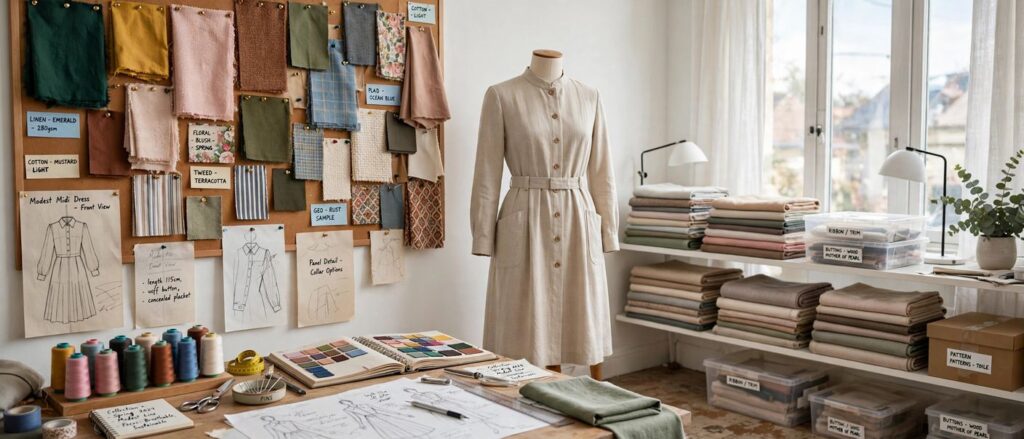
So you want to know how to become a fashion designer. Maybe you have been sketching dresses in notebook margins since you were twelve, or maybe you binged a design competition show and thought — I could do that. Either way, welcome. I have spent years adjacent to this industry, watching talented people build careers and watching equally talented people flame out, and I can tell you the truth upfront: it is a real, achievable career, but it looks very little like television. Here is the actual roadmap, without the montage.
The first thing to understand is that “fashion designer” covers a wide territory. There are haute couture designers, ready-to-wear designers, fast-fashion designers, costume designers, textile designers, knitwear specialists, accessories designers, and technical designers who never sketch a runway look but shape every garment you buy. Most working designers are not famous. They are skilled professionals with stable jobs at brands you wear every day. That is the realistic, excellent goal.
Step 1: Learn to See (and to Draw)
Every designer starts with the eye. Before anything else, train yourself to really look at clothes: how a sleeve is set, why a drape falls the way it does, what makes one blazer cost ten times another. Visit museums with costume collections, study vintage garments, take apart thrift-store finds to see their construction. This obsessive attention to how clothes are made is the foundation everything else builds on.
Drawing matters, but not in the way beginners think. You do not need fine-art talent; you need fashion illustration skills — the ability to communicate a garment’s shape, proportion, and details clearly on paper. Croquis (the elongated fashion figure), flat sketches (technical drawings of garments), and fabric rendering are the core skills. Take a class, follow structured tutorials, and practice daily. Your sketches are your professional language; fluency takes time.
Step 2: Learn How Clothes Are Actually Made
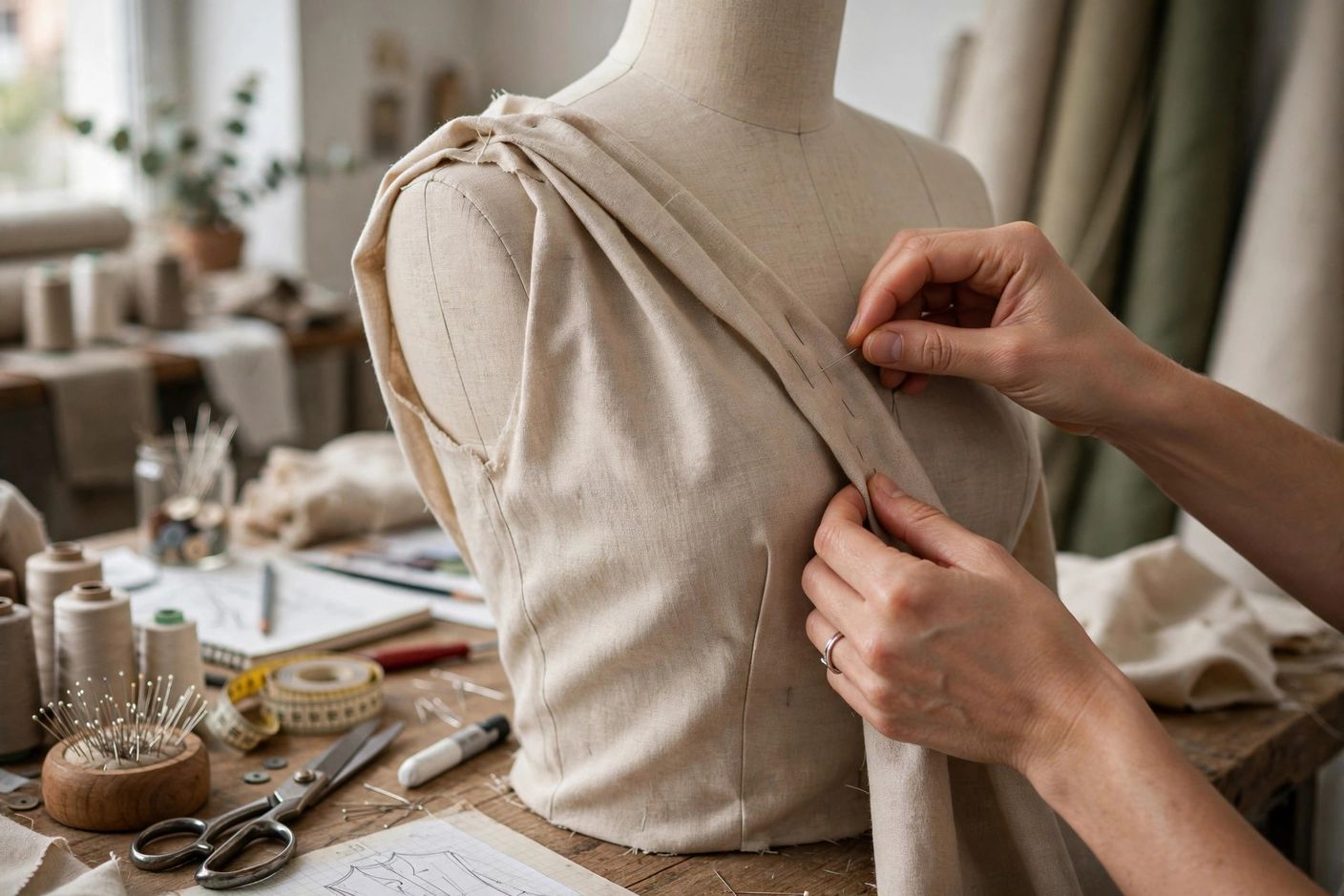
This is where dreamers separate from designers. A beautiful sketch is worthless if you do not understand pattern-making, draping, sewing, and fabric behavior. The designers who thrive are the ones who can speak the language of the sample room — who know why a pattern needs adjusting, how a fabric will behave, what a seam finish costs.
Learn to sew, properly. Take pattern-making and draping courses. Understand textiles: fiber content, weaves, weights, and how each behaves on the body. This technical knowledge is also what makes you employable — brands hire designers who can execute, not just imagine. The romantic image is the sketch; the real job is the tech pack.
Step 3: Decide on Education
The honest answer about fashion school: it helps enormously, but it is not the only path, and it is expensive. The top schools — and you know their names — offer unmatched networks, facilities, and industry access. Their graduates dominate the industry’s upper tiers. But talented designers also emerge from smaller programs, from adjacent degrees, and from pure self-education plus hustle.
What matters more than the school’s name: the portfolio you build there, the internships you complete, and the connections you make. If you go the school route, choose based on program strength in your area of interest, internship placement, and alumni outcomes — not prestige alone. If you skip school, you will need to be ruthlessly self-directed about building equivalent skills and, critically, equivalent connections.
Either way, supplement formal education with the unglamorous stuff: business courses (most designers eventually freelance or run labels), digital design tools, and technical design skills. The industry runs on software now — learn it.
Step 4: Build a Killer Portfolio
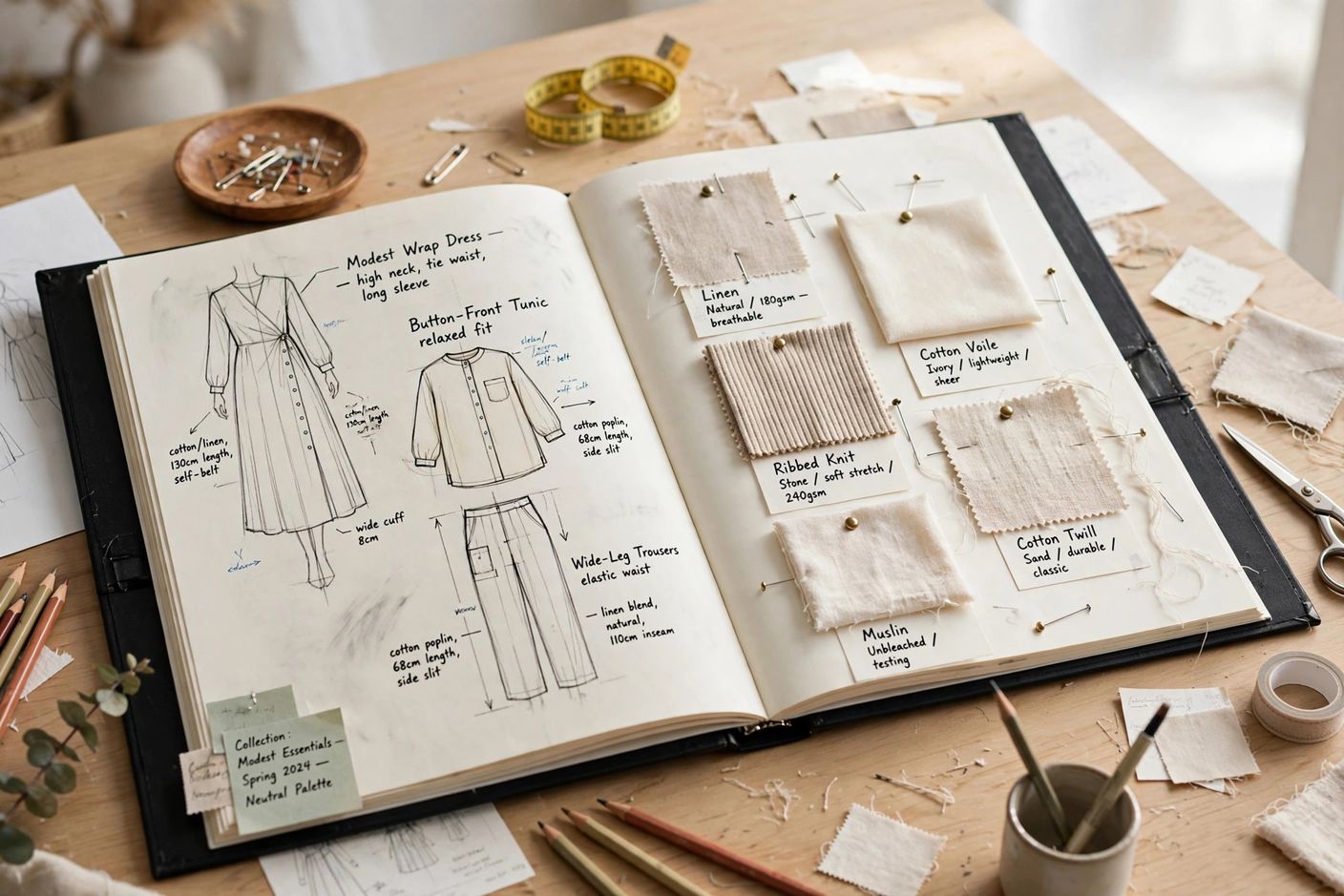
Your portfolio is your resume, your interview, and your reputation in one document. It should show: original design concepts with a clear point of view, technical flats that prove you understand construction, fabric and color stories, and ideally photos of finished garments you have made. Range matters — show you can design across categories — but so does a recognizable aesthetic. Employers want to see both versatility and vision.
Build the portfolio around real projects, not just class exercises. Design a mini-collection with a concept, mood boards, flats, and finished samples. Document your process — sketches to muslin to final garment — because process thinking is what employers are actually buying. And keep it current: a portfolio is a living document, not a graduation artifact.
Step 5: Get Industry Experience (Internships)
Internships are the industry’s real education and its main hiring pipeline. A good internship teaches you how a design department actually functions: calendars, costing, fittings, factory communication, the thousand compromises between sketch and store. It also puts you in rooms with people who hire.
Be strategic: intern at companies whose aesthetic aligns with yours, in roles adjacent to design if pure design internships are scarce (production, technical design, and merchandising internships all build relevant knowledge). Treat every internship as a months-long interview, because it is. The fashion industry is small and memory is long — reputations are built in internships.
Step 6: Land the First Job
Entry-level design jobs have unglamorous titles: assistant designer, associate designer, technical designer. The work involves a lot of tech packs, spec sheets, fittings, and revisions — the unsexy machinery of making clothes. This is normal and valuable. Nearly every successful designer spent years in these roles learning how the industry actually works.
Where to look: brand career pages, fashion-specific job boards, recruiters who specialize in the industry, and — most effectively — your network from school and internships. The hidden job market is real in fashion; many roles are filled through referrals before they are ever posted. Keep your portfolio sharp and your LinkedIn current, and tell everyone you know that you are looking.
The Skills That Actually Get You Hired
Beyond design talent, employers consistently value: technical proficiency (pattern-making, garment construction, tech packs), digital skills (industry-standard design software, 3D design tools increasingly), speed and reliability (the calendar does not move for anyone), communication (you will explain your vision to patternmakers, factories, and merchants who do not share your vocabulary), and commercial awareness (beautiful clothes that cannot be produced at the target price are just drawings).
The designers who advance fastest are usually not the most avant-garde — they are the most complete. The full package of creativity plus technical skill plus professionalism is rare, and the industry rewards it.
How to Become a Fashion Designer: Alternative Paths
The traditional path — school, internships, assistant roles, designer — is not the only one. Some designers start in adjacent roles: buyers who learn product from the commercial side, patternmakers who develop design vision, stylists who move into creation. Others build independent labels slowly while working day jobs, growing through direct-to-consumer channels that did not exist a generation ago.
Costume design for film, theater, and television is a parallel industry with its own training paths and often more stable employment. Textile and print design is a specialization with strong demand. And the rise of independent brands sold online has lowered the barrier to starting a label — while raising the barrier to making it profitable, since you are now also the marketer, the accountant, and the shipper.
The Money Question
Let us be direct: entry-level fashion design pay is modest, especially in expensive fashion cities, and the hours during crunch periods are long. Mid-career designers at established brands earn comfortable professional salaries. The famous-designer wealth you see on television belongs to a tiny fraction of a fraction. Go in with eyes open: this is a career you choose because you love the work, with the understanding that the financial rewards come with seniority, or with successful entrepreneurship — which is a business achievement as much as a design one.
That said, it is a real profession with real demand. People will always need clothes designed, and skilled designers who understand both creativity and commerce stay employed. The industry is competitive, but it is not a lottery — it rewards preparation, persistence, and professionalism.
Staying Inspired and Relevant
Careers in fashion are marathons, and the designers who last share certain habits. They keep sketching, even when the day job is all tech packs. They study the industry’s history — knowing what came before is what lets you see what is next. They follow not just trends but culture: art, film, music, street style. A working knowledge of how style moves through the world, like the dynamics explored in guides to how celebrity style shapes fashion, keeps your commercial instincts sharp.
And they protect their love of the craft. The industry can grind down the romance — deadlines, costing battles, creative compromises. The designers who thrive decades in are the ones who kept a private relationship with clothes: the sketchbook nobody sees, the vintage market Sunday habit, the joy in a perfectly set sleeve. Protect that, and the career takes care of itself.
Frequently Asked Questions
What do fashion schools look for in a portfolio?
Range and process: fashion sketches, technical flats, fabric experiments, and at least a few finished garments. Schools want to see how you think, not just how you draw — include your inspirations and revisions.
Is fashion design school worth the cost?
It depends on what you need. School buys you structure, equipment, and industry contacts. But many working designers learned through assisting, interning, or self-directed study. Be honest about whether you need the credential or just the skills.
What software should a fashion designer learn?
Adobe Illustrator for technical flats and CLO3D for 3D garment visualization are the industry standards right now. Photoshop helps for presentations. You do not need to master everything before starting — learn alongside your projects.
How do I get an internship with no connections?
Cold-email smaller studios and independent designers with a short note and your portfolio link. Big houses get thousands of applications; a ten-person studio might actually read yours. Follow up once, politely.
Can I become a fashion designer later in life?
Yes. Fashion has plenty of second-career designers, and life experience is an asset — you understand customers better than a 22-year-old does. Your portfolio and skills matter far more than your age.
Common Questions
Do I need a degree to become a fashion designer?
No, but it helps significantly. What you need is the skill set (design, construction, technical knowledge), a strong portfolio, and industry connections. A degree is the most structured way to get all three, but self-directed paths exist for the disciplined.
How long does it take to become a fashion designer?
Typically four years of education plus one to three years of internships and assistant-level work before holding a designer title. Career progression after that depends on talent, specialization, and opportunity.
Can I become a fashion designer if I cannot sew?
You will need to learn. Sewing knowledge is fundamental to understanding garment construction, and employers expect it. It does not need to be couture-level, but it needs to be real.
What is the difference between a fashion designer and a technical designer?
Fashion designers focus on the creative concept — silhouette, aesthetic, collection vision. Technical designers focus on execution — fit, construction, specs, factory communication. Both are essential, and many careers move between the two.
Is fashion design a dying career with AI and fast fashion?
The tools are changing, but the core need is not. Someone has to decide what clothes look like, how they are constructed, and what is worth making. Designers who combine creativity with technical and digital skills remain in demand; the role is evolving, not disappearing.