How to Start a Personal Blog That People Actually Read


Learning how to start a personal blog is one of the best decisions a curious mind can make. I started my first blog on a clunky free platform back when I barely knew what a domain name was, and that messy little site eventually taught me more about writing, audience, and online business than anything else I have done. A personal blog is simply a website where you write about what you think, know, and love — and in this guide I will walk you through the whole process, from picking your focus to publishing your first posts, without the overwhelm.
Here is the honest truth first: starting a blog is easy, but starting a blog that lasts takes intention. Most blogs die in the first three months because the owner picked a topic they did not truly enjoy or quit when the first posts got five readers. This guide is built to prevent both mistakes. We will cover choosing a focus you can sustain, picking the right platform, naming your blog, designing it simply, writing content people want to read, and getting your first real readers.
How to Start a Personal Blog in 7 Practical Steps
Let us get straight to the roadmap. These are the seven steps I would give any friend who asked me how to start a personal blog today, in the order I would have them do things.
Step 1: Choose a focus you can write about for a year
A personal blog does not have to be about one rigid niche, but it does need a theme. Ask yourself: what could I write about every week for a year without getting bored? Your blog can blend a few interests — my own writing mixes blogging craft, simple living, and notes from my reading life — but there should be a thread that connects it. Think of your blog as a conversation with a specific kind of reader, not a diary addressed to nobody. Write down five topics you could never get tired of talking about at dinner. Your blog lives somewhere in the overlap of those topics and what other people find useful.
Avoid choosing a topic purely because it looks profitable. Readers smell borrowed enthusiasm instantly, and you will quit before the money arrives. Passion plus usefulness is the formula: pick something you love that also solves a problem, answers a question, or entertains someone.
Step 2: Pick your platform
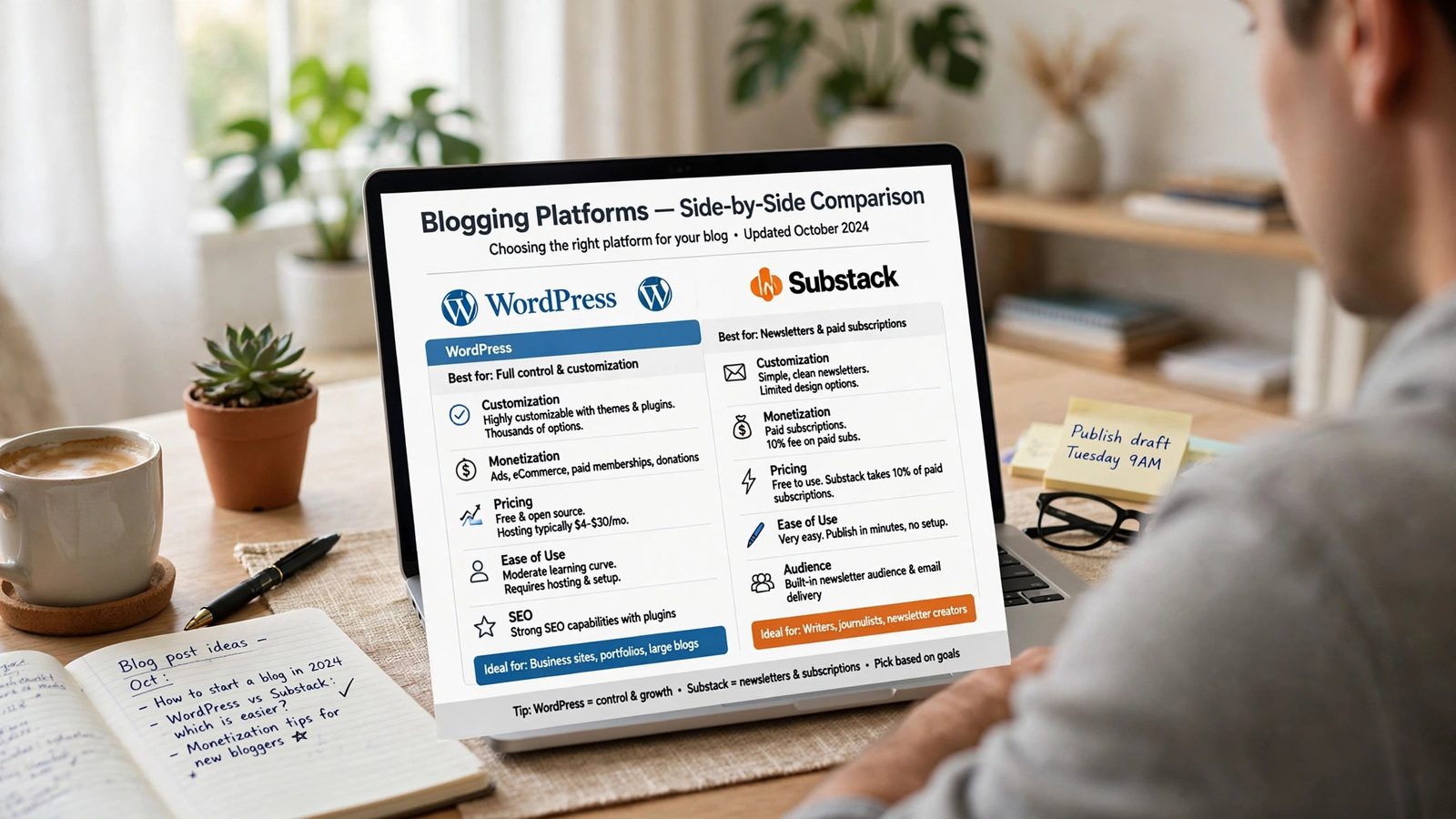
For most beginners, WordPress is the right answer. The free WordPress.com plan lets you start today at zero cost, and you can upgrade to a self-hosted setup later without losing your content. Squarespace and Wix are fine if you want everything drag-and-drop and do not mind paying a monthly fee, and Substack is worth a look if your blog will be mostly newsletters and essays. What matters is not the perfect platform — it is the one you will actually publish on. If you want the full breakdown of the decision, read our guide on how to start a blog before you commit.
Step 3: Give it a name and a home
Your blog’s name should be easy to remember, easy to spell, and broad enough to grow with you. Many personal bloggers simply use their own name — it is flexible, trustworthy, and never traps you in a niche you outgrow. If you want a brand name instead, keep it short and say it out loud a few times before deciding. Then grab the matching domain name (yourblogname.com) through a registrar; it usually costs less than a takeaway meal per year, and it makes your blog feel real from day one.
Step 4: Design it simply
New bloggers lose weeks to design. Do not. Pick a clean theme, choose a readable font, add an about page with a real photo of yourself, and stop. Your readers came for your words, not your sidebar widgets. A simple design also loads fast on phones, which is where most of your readers will find you. You can always redesign later when you have fifty posts and actual opinions about what needs changing.
Step 5: Write your first five posts before launching
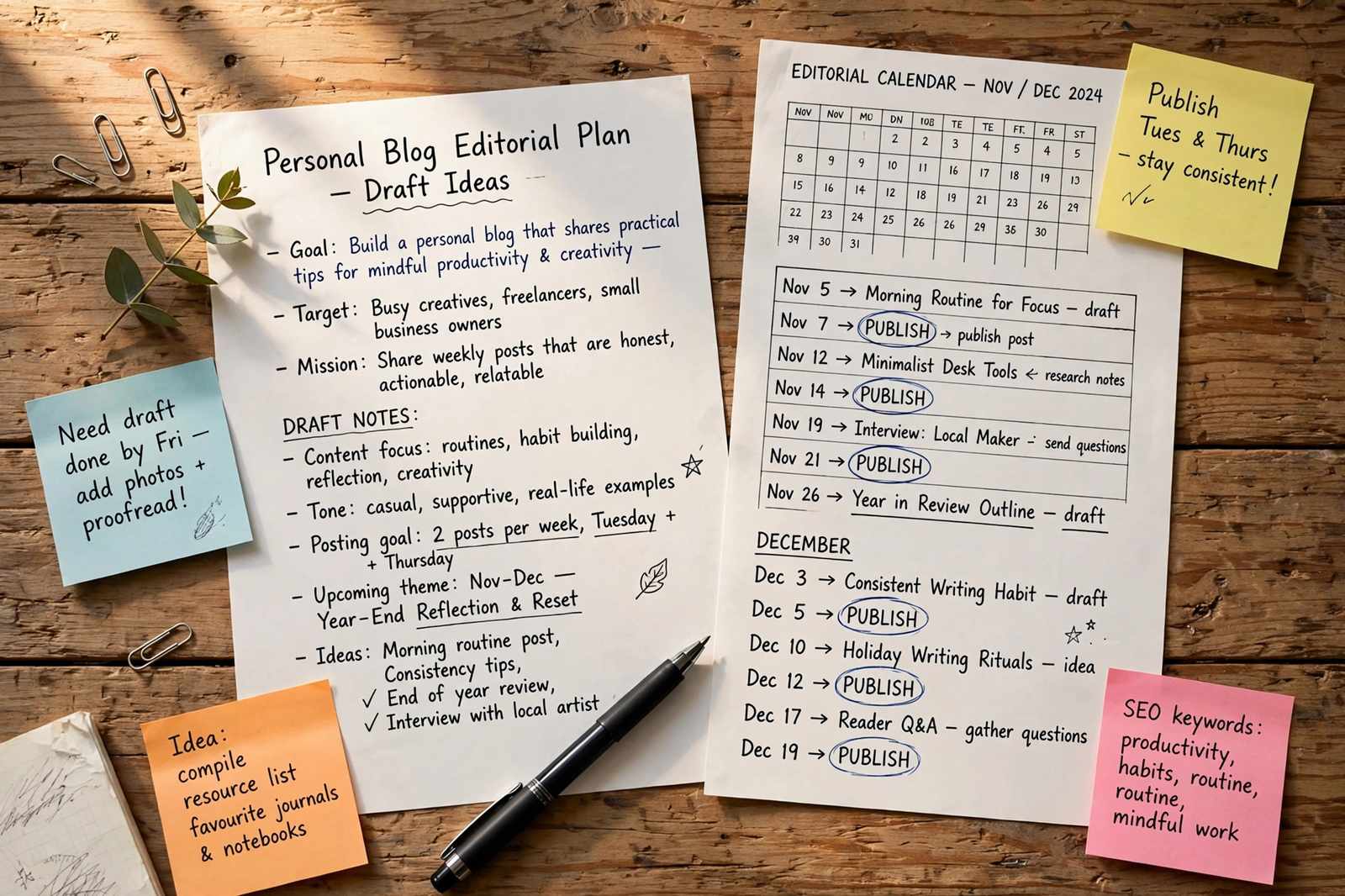
Here is the trick that separates blogs that launch from blogs that linger in draft mode: write five posts before you tell anyone the blog exists. Five posts give a new visitor something to browse, and they give you proof that you can do this repeatedly. Make your first post an introduction — who you are, why this blog exists, and what readers can expect. Then write four posts that each answer a real question your ideal reader has.
Do not aim for perfection. Aim for helpful and honest. A 700-word post that genuinely helps one person beats a 3,000-word epic that never gets finished. You can set a modest schedule — one post a week is plenty at the start — and protect it like an appointment.
Step 6: Publish and tell people
Now go live. Share your launch post on whatever social platform you actually use, email five friends who care about your topic, and post in one community where your readers already hang out. Early promotion does not need to be grand; it needs to be genuine. Tell people what the blog is about and who it is for, not just that it exists. And make sure every post is easy to share — add share buttons and a simple email signup so interested readers can follow along. For a deeper look at attracting an audience with useful content, our article on content marketing explains the approach that works for small blogs.
Step 7: Keep going and measure what matters
The unglamorous secret of every successful personal blog is consistency. Publish on schedule for six months before judging anything. Track two numbers only at the start: how many posts you published, and which ones readers responded to. Double down on what resonates. Many bloggers eventually turn their audience into income — through freelance work, digital products, or affiliate recommendations — and if that appeals to you, browsing online business ideas for beginners can spark ideas for where your blog could lead.
What Do You Need Before You Start?
Less than you think. You need a topic you care about, a platform account, a name, and the willingness to publish imperfect work. You do not need a logo, a professional headshot, a business plan, or expensive equipment. A phone and a laptop are enough. The biggest requirement is time: plan for two to three hours a week, most of it spent writing rather than fiddling with settings.
One more thing you need is a thick skin about slow starts. Your first twenty posts will reach a small audience. That is normal, and it is actually a gift — it gives you room to find your voice before many people are watching.
How Much Does It Cost to Start a Personal Blog?
You can start for free on platforms like WordPress.com or Substack, and plenty of good blogs began exactly that way. If you want your own domain and a self-hosted WordPress site, budget roughly $50 to $100 for the first year: a domain name plus basic shared hosting. Optional extras — a premium theme, an email tool, a nicer microphone for a podcast spin-off — can wait until the blog earns its keep. My advice is to start free or cheap, and spend money only after you have published twenty posts and proven to yourself that you will stick with it.
Common Mistakes New Personal Bloggers Make
After watching hundreds of blogs start and stall, the same mistakes repeat. First, writing for everyone instead of someone — a post that tries to please all readers pleases none. Second, publishing three posts in a burst and then disappearing for two months; consistency beats intensity. Third, obsessing over traffic stats in month one instead of writing post number eleven. Fourth, copying a big blogger’s voice instead of developing your own — readers follow people, not imitations. And fifth, treating the blog as a project to perfect rather than a practice to repeat. The bloggers who win are the ones still publishing a year later.
Never Run Out of Post Ideas: A Simple System That Works
The question I get more than any other from new bloggers is not about platforms or SEO. It is: “What do I write about after the first five posts?” Here is the system I have used for years, and it has never left me staring at a blank screen for long.
First, keep a running idea list. Not a fancy system — just a note on your phone where you capture every half-thought, question someone asks you, or headline that makes you curious. Ideas are slippery; if you do not write them down in the moment, they evaporate. Review the list every Sunday, and you will always have five to ten posts waiting.
Second, let your readers hand you topics. Every comment, every reply, every question a friend asks about your niche is a future post. When someone asks you the same question twice, that is not a coincidence — that is an article begging to be written. I keep a “reader questions” column in my idea list, and some of my most-read posts started life as a single confused comment.
Third, study the search box. Type your topic into Google and look at the “people also ask” suggestions. Each one is a real question real people type in. Answer those questions better than the current top results and you have a post idea and an SEO target in one move.
Finally, give yourself themes. Pick three or four content pillars — recurring columns you return to, like “things I am learning,” “reader questions,” “behind the scenes,” and “deep dives.” A pillar structure means you never start from nothing; you start from a template you have already proven. Between your running list, reader questions, search suggestions, and pillars, you will have more ideas than you can ever publish. The blank page problem is really a capture problem. Solve the capture, and the ideas take care of themselves.
Frequently Asked Questions
Can I start a personal blog for free?
Yes. WordPress.com, Substack, and Blogger all offer free plans that are genuinely enough to start. A free start is smart while you learn whether you enjoy blogging; you can move to a self-hosted setup with your own domain later and take your content with you.
How long does it take for a personal blog to get readers?
Expect the first three to six months to be quiet. Most personal blogs see meaningful traffic after 30 to 50 published posts and consistent promotion. Blogging rewards patience — the compound effect of a growing archive is where the real traffic comes from.
Do I need to be an expert to start a personal blog?
No. You need to be one or two steps ahead of your reader on your topic, or willing to learn in public. Many beloved personal blogs are simply the honest record of someone figuring something out — learning in public builds trust faster than pretending to know everything.
Should my personal blog use my real name?
Using your real name builds trust and keeps your options open, and I recommend it for most people. If you write about sensitive topics or prefer privacy, a pen name or brand name works fine — just be consistent so readers can find and remember you.
How often should I publish on a new personal blog?
Once a week is the sweet spot for most beginners: frequent enough to build momentum, sustainable enough to maintain alongside a job or studies. Whatever schedule you choose, protect it — a reliable rhythm matters more than a heroic posting streak.
Starting a personal blog is really starting a habit: the habit of thinking clearly, writing honestly, and showing up for readers week after week. Pick your focus, choose a platform, publish your first five posts, and keep going. A year from now you will be amazed at what that simple habit built.