
How to Create a Blog Editorial Calendar That You Will Actually Use


I have built elaborate editorial calendars in fancy tools and abandoned every single one within a month. The one that finally stuck was embarrassingly simple: a spreadsheet, a weekly rhythm, and honest planning. If you want to know how to create a blog editorial calendar that survives contact with real life, this guide is for you. We will cover what belongs on a calendar, how far ahead to plan, how to balance post types, and the lightweight system I have used for years without burning out.
First, what an editorial calendar actually is: a simple plan of what you will publish and when. That is it. It is not a content strategy deck, not a project management certification — just a visible commitment that turns I should blog into this Thursday I publish the sourdough guide. The calendar’s job is to remove daily decision-making so your limited writing energy goes into writing, not wondering what to write about.
How to Create a Blog Editorial Calendar in 6 Steps
Step 1: Decide your publishing rhythm honestly
Everything flows from this number. Look at your actual life — work, family, energy — and pick a frequency you can sustain for a year: weekly, biweekly, or twice monthly. Weekly is the sweet spot for growth, but a biweekly schedule you keep beats a weekly one you abandon by March. Write the number down and treat it as a promise. Your calendar exists to protect this rhythm, not to impress anyone with ambition.
Step 2: Define your content pillars
Content pillars are the three to five themes your blog returns to again and again. A food blog’s pillars might be weeknight dinners, baking science, and kitchen equipment. Pillars keep your calendar balanced — instead of ten dessert posts in a row, you rotate through themes so every reader segment gets fed. List yours, then assign each upcoming slot a pillar. If one pillar keeps getting skipped, that tells you something honest about your interests; adjust the pillars rather than forcing posts you dread writing.
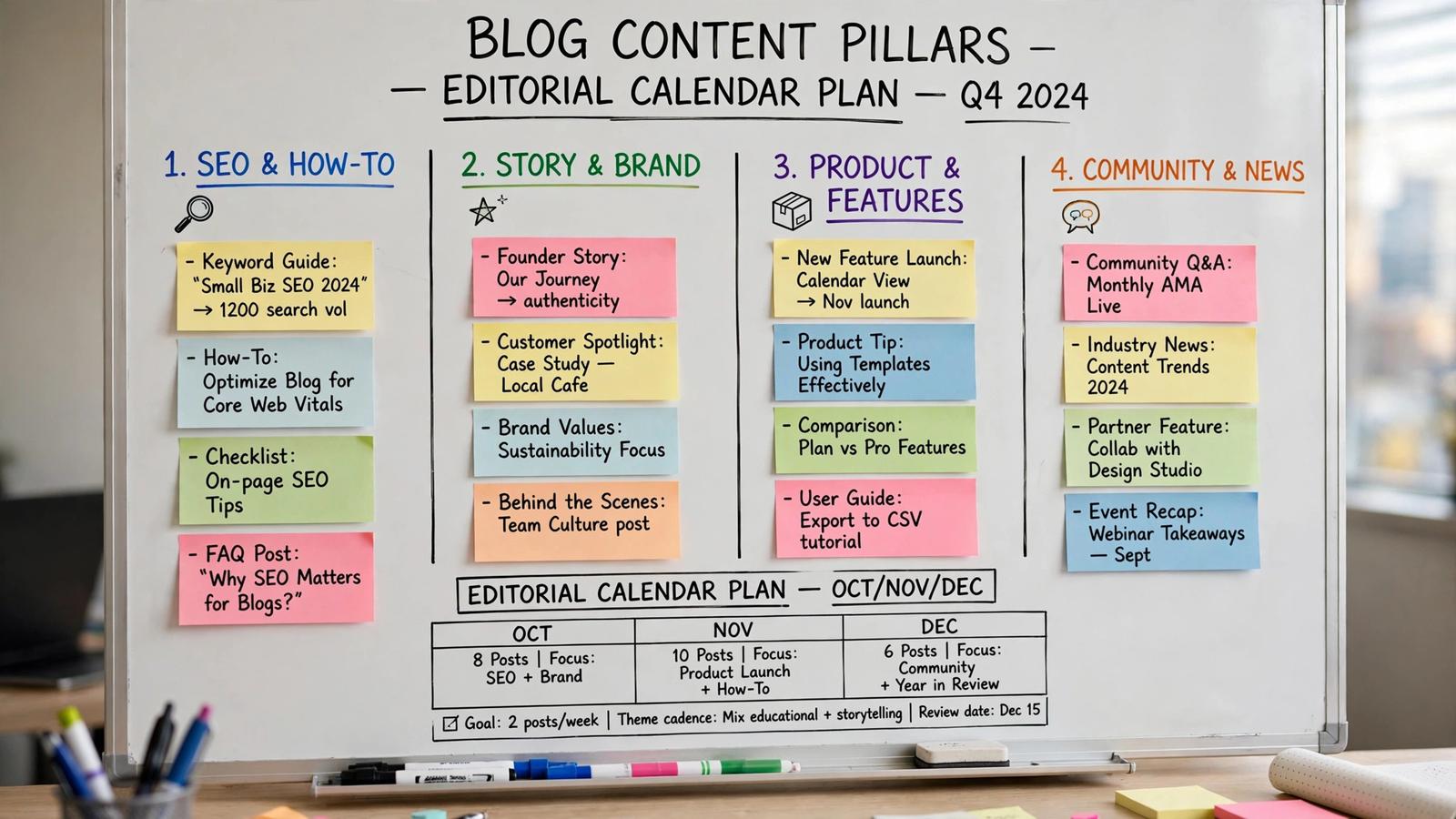
Step 3: Build a backlog of post ideas
A calendar without ideas is just empty boxes causing guilt. Maintain a running idea list — every question a reader asks, every topic that excites you, every keyword your research surfaces goes in. Aim to keep twenty to thirty ideas banked at all times. When planning day comes, you choose from abundance instead of staring at a blank row. The idea list is also where half-formed notions mature; some of my best posts sat in the backlog for months before their moment came.
Step 4: Plan in quarters, schedule in months
Here is the horizon system that finally worked for me. Quarterly, sketch big themes: seasonal content, series you want to run, launches or collaborations. Monthly, assign specific post ideas to specific dates, working from your backlog and pillars. Weekly, confirm or adjust — life happens, and a calendar that cannot flex will be abandoned. Never plan individual posts more than a month out in detail; beyond that, ideas go stale and the plan becomes fiction. Quarterly direction plus monthly specifics is the balance between vision and reality.
Step 5: Add the invisible work to the calendar
Beginners schedule publish dates and forget everything around them. A working calendar also tracks idea deadlines, draft due dates, image creation, promotion slots, and newsletter sends. I schedule writing days separately from publishing days — drafting on Tuesday, publishing on Thursday — because context-switching between creating and promoting in one sitting exhausts me. Put the unglamorous tasks on the calendar too: monthly analytics review, quarterly backlog pruning, annual pillar review. What gets scheduled gets done; what lives in your head gets forgotten.
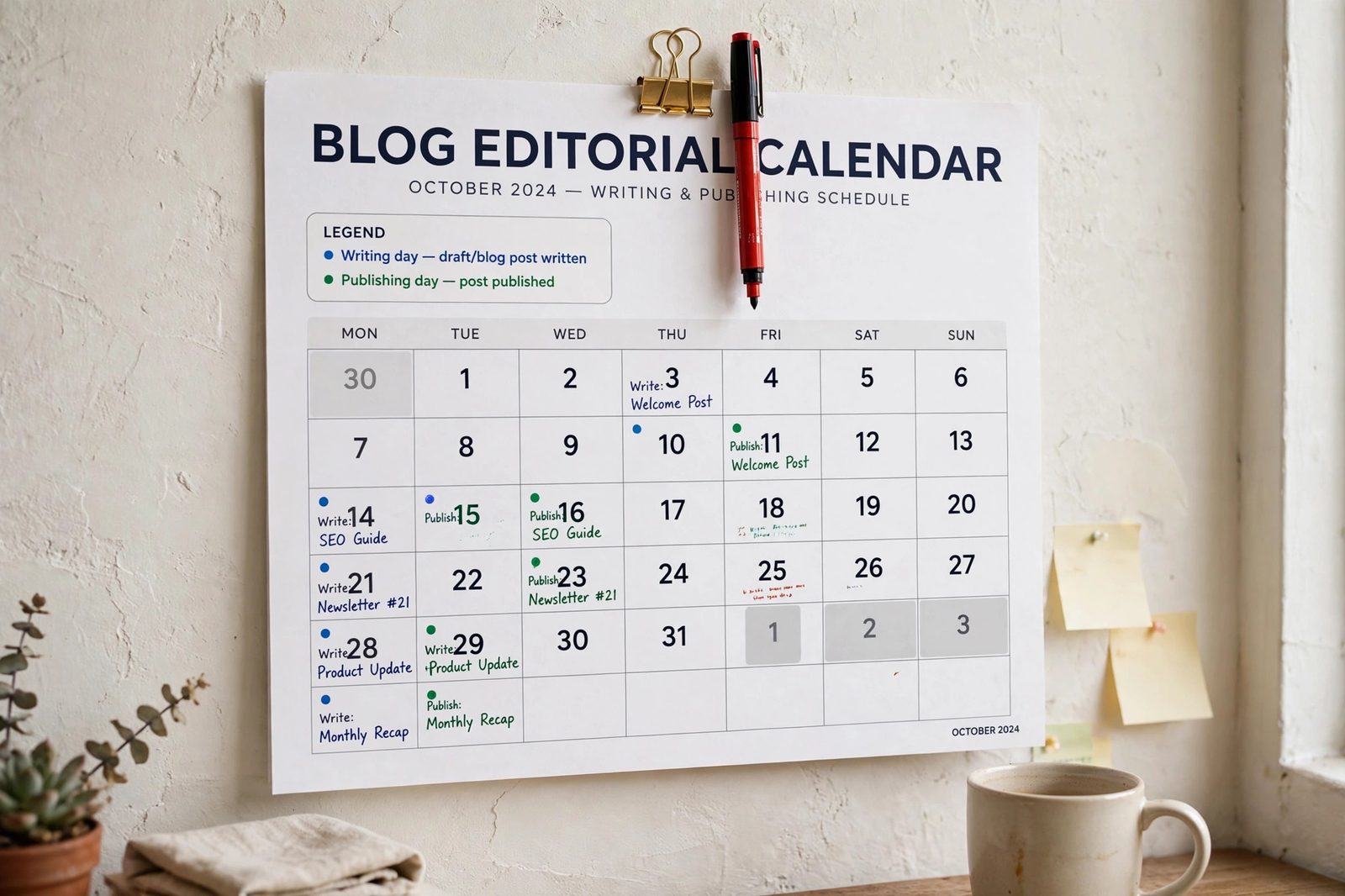
Step 6: Build in batching and buffers
Batching means doing similar tasks together: outline three posts in one sitting, draft two in another, create all month’s images in an afternoon. It is dramatically more efficient than the write-publish-promote scramble per post. And buffers are your insurance: aim to stay one to two posts ahead of your publishing schedule, so a sick week or a busy week does not break your streak. The buffer is the difference between a calendar that survives real life and one that collapses at the first disruption.
What Your Editorial Calendar Should Track
Keep the columns simple: publish date, working title, content pillar, primary keyword or topic, status (idea, outlining, drafting, editing, scheduled, published), and promotion checklist. That is enough. Resist adding columns for every metric you can imagine — a calendar cluttered with data becomes a chore to maintain, and unmaintained calendars die. One optional column worth having: performance notes, added a month after publishing, recording what worked. Over time this becomes a private playbook of your audience’s preferences.
As for tools, use whatever you will actually open. A spreadsheet works perfectly and is what I still use. Trello or Notion work if you like visual boards; dedicated editorial plugins work if you live in WordPress. The tool does not matter — the habit of opening it every planning day does. Fancy systems fail exactly as fast as simple ones when the habit is missing, so choose for habit, not features.
Balancing Evergreen and Timely Content
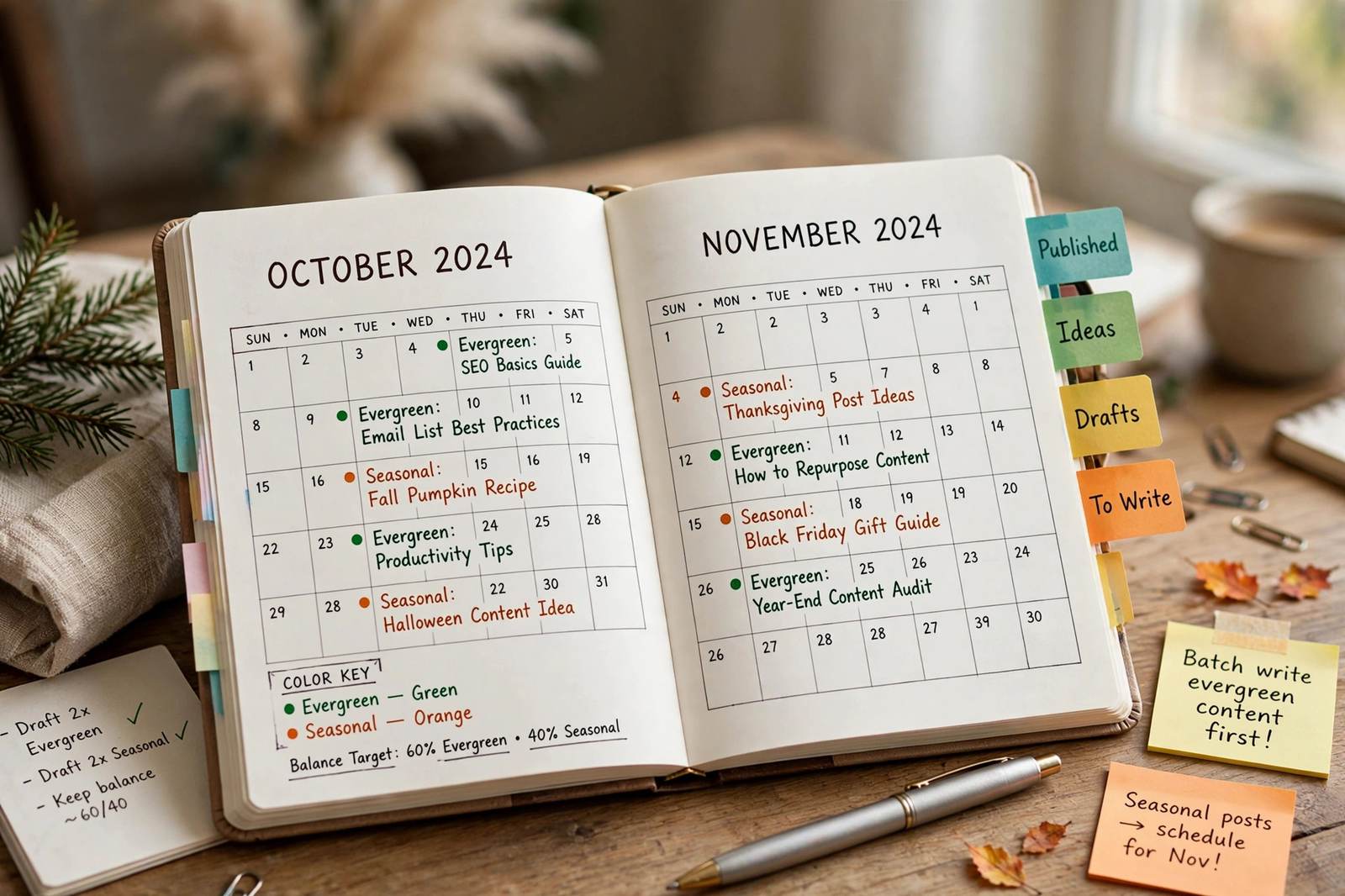
A healthy calendar mixes content lifespans. Evergreen posts — tutorials, guides, fundamentals — build compounding traffic for years and should form the backbone of your plan, roughly seventy percent. Timely posts — seasonal content, trend responses, news commentary — bring spikes of attention and keep the blog feeling alive. Schedule seasonal content six to eight weeks before the season, since search traffic builds ahead of events. And leave occasional flex slots each month for timely ideas; a calendar with zero slack cannot seize the moment when something in your niche erupts.
This balance is part of thinking like a publisher rather than a diarist. Our overview of content marketing puts the editorial calendar in its strategic context — the calendar is the execution layer of a larger plan to serve your audience consistently. And if consistency itself is the struggle, the habit-building principles in how to create a daily routine transfer surprisingly well to publishing rhythms.
Common Editorial Calendar Mistakes
The number one mistake is over-planning: filling six months of specific posts that reality immediately invalidates. Plan direction quarterly, specifics monthly. Number two is the all-or-nothing calendar — missing one date and abandoning the whole system instead of simply rescheduling. A calendar is a tool, not a test; adjust it without guilt. Number three is planning only publishing while ignoring promotion, so great posts launch to silence. And number four is never reviewing: a monthly fifteen-minute review of what worked turns your calendar from a schedule into a strategy.
A Real Example: What One Month Looks Like
Abstract advice is nice; a concrete example is better. Here is a realistic month for a weekly food blogger. Week one: publish the evergreen guide to weeknight stir-fries (pillar: quick dinners), draft the baking science post, and outline the equipment review. Week two: publish the baking science post (pillar: baking), photograph the equipment review, and write the newsletter. Week three: publish the equipment review (pillar: gear), draft the seasonal soup post six weeks before soup season, and spend an hour pruning the idea backlog. Week four: publish a timely post responding to a trending ingredient (flex slot), batch-create next month’s images, and do the monthly review.
Notice what is happening: pillars rotate so no theme dominates, evergreen and timely content mix, writing and publishing happen on separate days, and administrative work has its own slot instead of bleeding into writing time. Nothing here requires heroic effort — just a visible plan and the discipline to follow it loosely. Adapt the pattern to your niche and rhythm; the structure holds whether you publish weekly or monthly.
The Quarterly Review Ritual
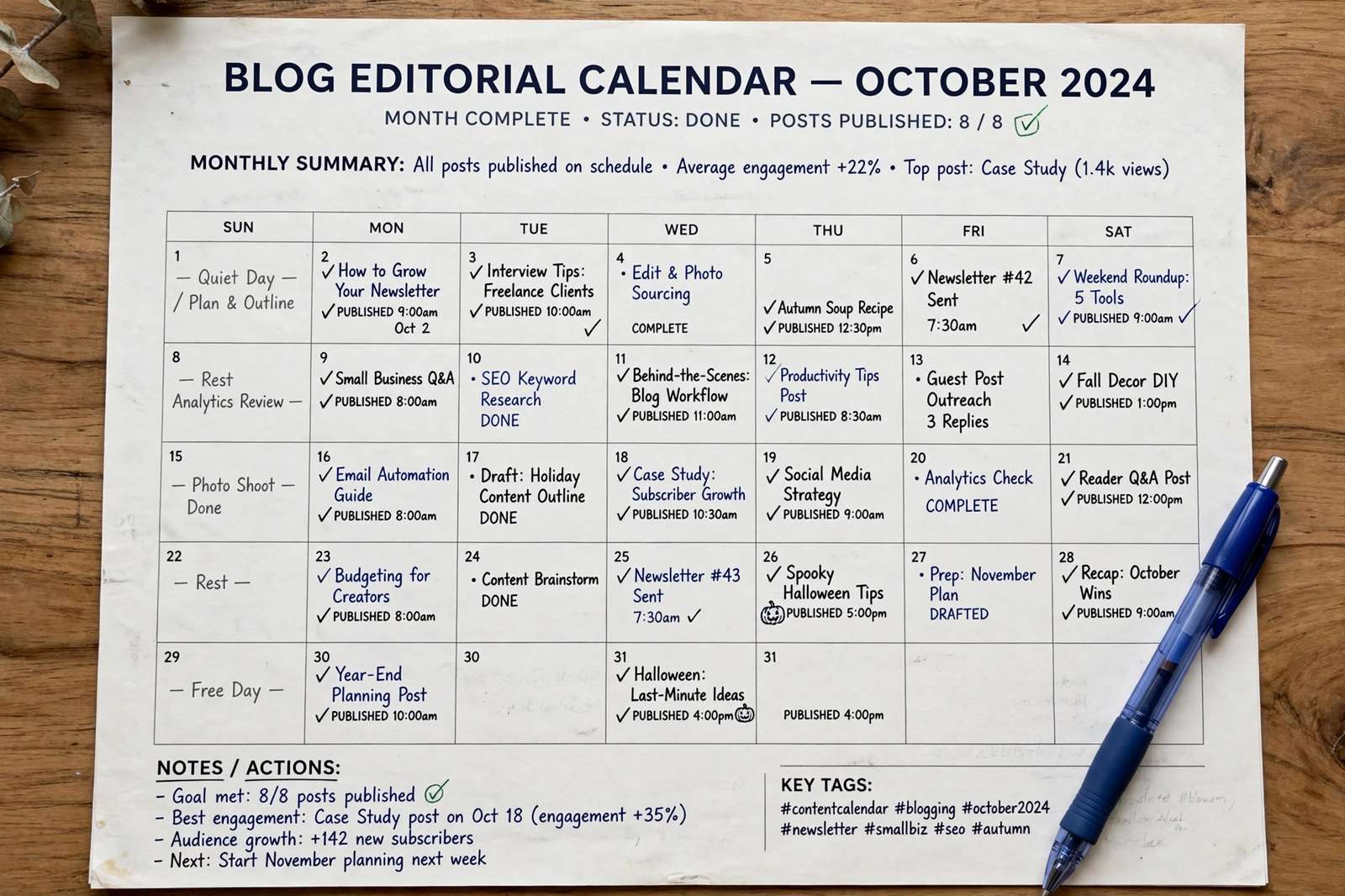
Four times a year, spend an hour with your calendar and your analytics. Which pillars earned the most engaged readers? Which post types — tutorials, opinion pieces, roundups — performed best? What did you plan but never write, and does that reveal a pillar to drop or a fear to face? Prune ruthlessly: delete stale ideas, retire underperforming themes, and double down on what the data says your readers love. Then sketch next quarter’s big themes with fresh eyes.
This ritual is what separates a calendar from a treadmill. Without review, you can publish on schedule for a year while slowly drifting away from what works. With review, every quarter sharpens your focus. I keep a one-page quarterly note — three wins, three lessons, three priorities — and it has done more for my blog’s direction than any strategy document. The calendar handles the weeks; the quarterly review handles the direction.
Frequently Asked Questions
How far ahead should I plan my blog content?
Plan themes quarterly and specific posts monthly. Detailed planning beyond a month tends to go stale as ideas evolve and life intervenes. Keep a long idea backlog for the future, but commit to dates only about four weeks out.
What is the best tool for a blog editorial calendar?
Whichever you will actually use consistently. A simple spreadsheet handles everything a solo blogger needs. Visual thinkers may prefer Trello or Notion; WordPress users can try editorial plugins. Choose for habit, not features — the best tool is the one you open every week.
How many posts should be on my calendar at once?
Keep about a month of scheduled posts plus a backlog of twenty to thirty ideas. Also aim to stay one to two finished posts ahead as a buffer. More than that becomes rigid; less than that invites last-minute scrambling.
Should I schedule social promotion on my editorial calendar?
Yes. Add promotion tasks to each post’s row — social shares, newsletter inclusion, community posts. Content without a promotion plan is a tree falling in an empty forest; the calendar should remind you to amplify, not just publish.
What if I fall behind on my editorial calendar?
Reschedule without drama. Move posts forward, and if you are chronically behind, reduce your publishing frequency to something sustainable rather than abandoning the system. A slower rhythm you keep always beats an ambitious one you quit.
Creating a blog editorial calendar is really about making one decision — your publishing rhythm — and then building the lightest possible system that protects it. Pillars for balance, a backlog for abundance, monthly planning for realism, batching for efficiency, and buffers for real life. Start with a spreadsheet this week, and give the system a month. Future you, publishing calmly on schedule, will be grateful.