
How to Choose a Domain Name for a Blog You Will Love in 5 Years


Figuring out how to choose a domain name for a blog feels oddly high-stakes for something that costs about the same as a pizza. I know, because I once spent an entire weekend agonizing over mine, made a spreadsheet, polled my friends — and then renamed the whole blog eighteen months later anyway. A domain name matters, but not the way most beginners think it does. In this guide I will show you how to pick a name that sounds good today and still fits in five years, plus the traps that make bloggers regret their choice.
First, a reframe: your domain name is your blog’s address, not its destiny. Content and consistency decide whether a blog succeeds. The name just needs to be memorable, easy to share, and free of regrets. That is a much lower bar than perfection — and reaching it is mostly about avoiding a handful of common mistakes.
How to Choose a Domain Name for a Blog: 9 Tips That Work
1. Keep it short enough to say in one breath
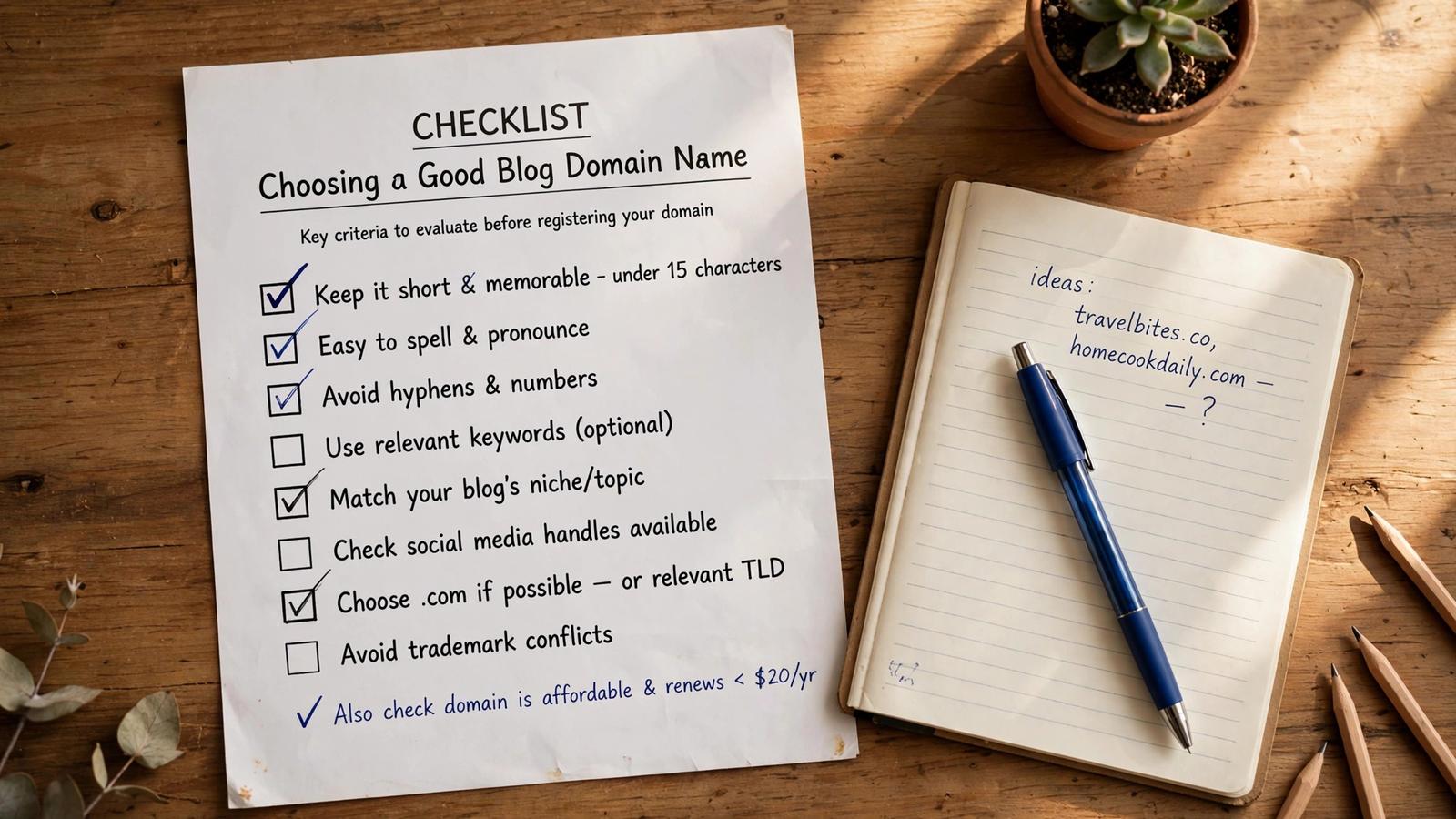
Aim for two to three words, ideally under fifteen characters before the dot. Short names are easier to remember, faster to type on a phone, and simpler to say out loud on a podcast or in conversation. If you catch yourself spelling it out letter by letter every time you mention it, it is too complicated. Try the phone test: imagine telling someone your domain over a bad connection. If it survives that, it is a keeper.
2. Make it easy to spell and pronounce
Avoid unusual spellings, silent letters, and words people commonly misspell. Clever respellings look fun on a logo but cost you traffic every time someone types the obvious version and lands elsewhere. The same goes for homophones — if your name sounds exactly like another common phrase, you will be explaining yourself forever.
3. Skip the hyphens and numbers
Hyphens make domains look spammy and are a pain to communicate verbally — is it my-blog.com or myblog.com? Numbers create the same confusion: was that the number 4 or the word four? There are rare exceptions, but as a rule, letters only. Your domain should work when someone hears it once.
4. Choose .com if you can
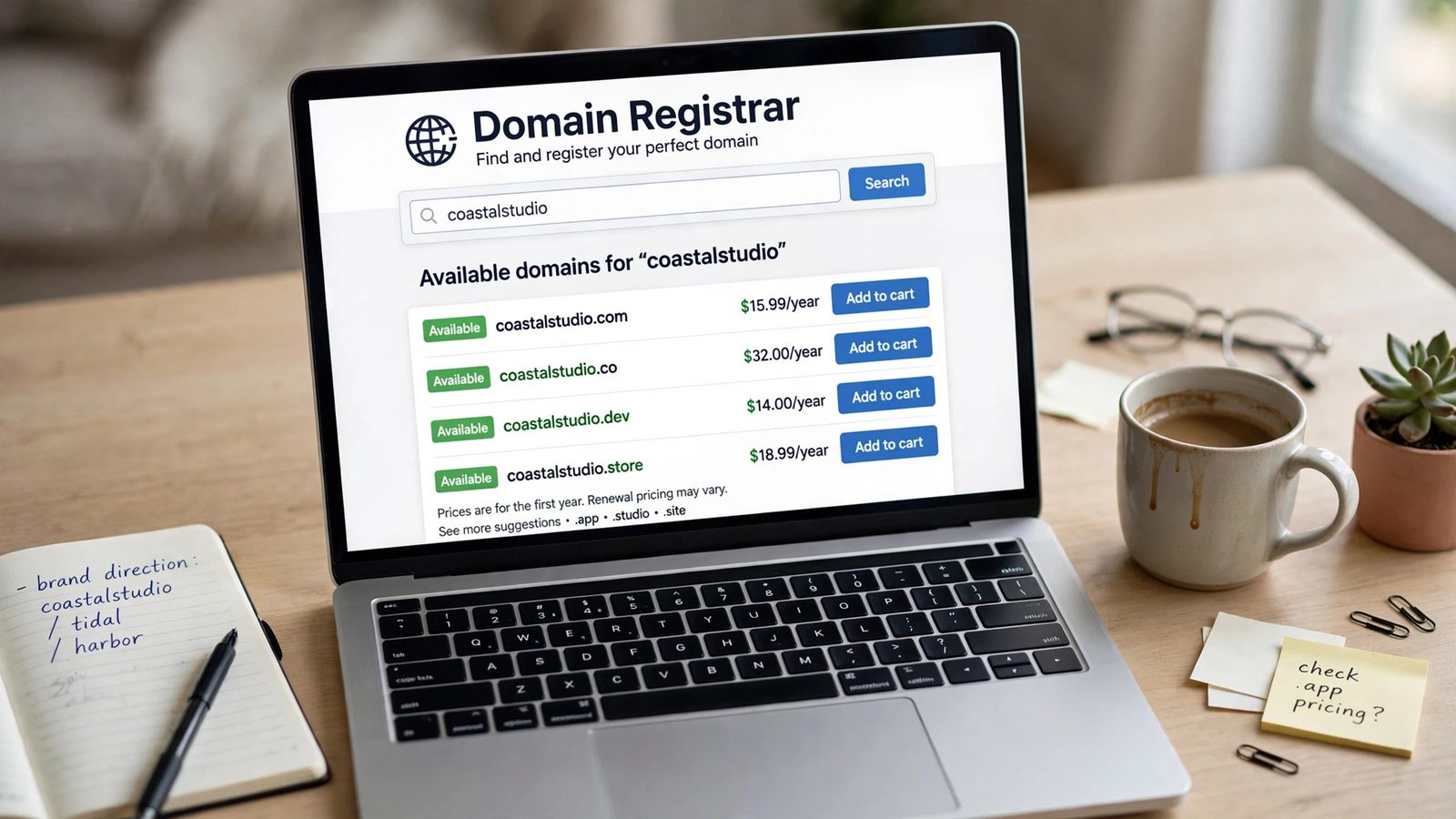
The .com extension is still what most people assume and remember. It is not a ranking factor and it will not make or break your blog, but it removes one tiny moment of friction every time you share your address. If your ideal .com is taken, try adding a short word (get, the, daily) or consider .co or a relevant newer extension like .blog — but check that the .com version is not owned by a direct competitor, or you will leak their traffic to them and vice versa.
5. Think brand, not keyword-stuffed
Ten years ago, exact-match domains like best-cheap-running-shoes.com had an SEO edge. That era is over. Today, a brandable name you can build a reputation around beats a keyword-stuffed one every time. That said, a hint of your topic in the name helps humans instantly get what you are about — there is a balance, and our guide on whether your business name should include keywords walks through exactly where that line sits.
6. Leave room to grow
This is the mistake I made. I named my first blog around a topic I was obsessed with for exactly one year, and then I was stuck writing about something I had outgrown or facing a rebrand. Choose a name broad enough to follow your curiosity. Using your own name is the ultimate flexible option — it never boxes you in. For more on the naming process itself, see how to name a business, which covers the creative side in detail.
7. Check availability beyond the domain
Before you fall in love with a name, check three things: the domain itself, the matching social media handles, and whether the name clashes with an existing trademark or well-known brand. A quick search on the major platforms takes ten minutes and saves you from building an audience on a name you cannot fully own. Consistency across your domain and social handles makes your blog far easier to find and remember.
8. Say it out loud — then sleep on it
Names that look great typed out sometimes sound awkward spoken. Say your candidate names out loud a few times, imagine introducing your blog at an event, and then wait a day before registering. The names that still feel right the next morning are the real contenders. Ask two honest friends which one they would actually remember tomorrow.
9. Register it and move on
At some point, deliberation becomes procrastination. Register the domain through a reputable registrar, set it to auto-renew so you never lose it by accident, and get back to the work that actually grows a blog: writing. A good-enough name with fifty great posts beats a perfect name with five drafts every single time. And if you want to learn from other people’s regrets first, our roundup of business naming mistakes to avoid is a quick, cautionary read.
Domain Name Ideas to Spark Your Thinking
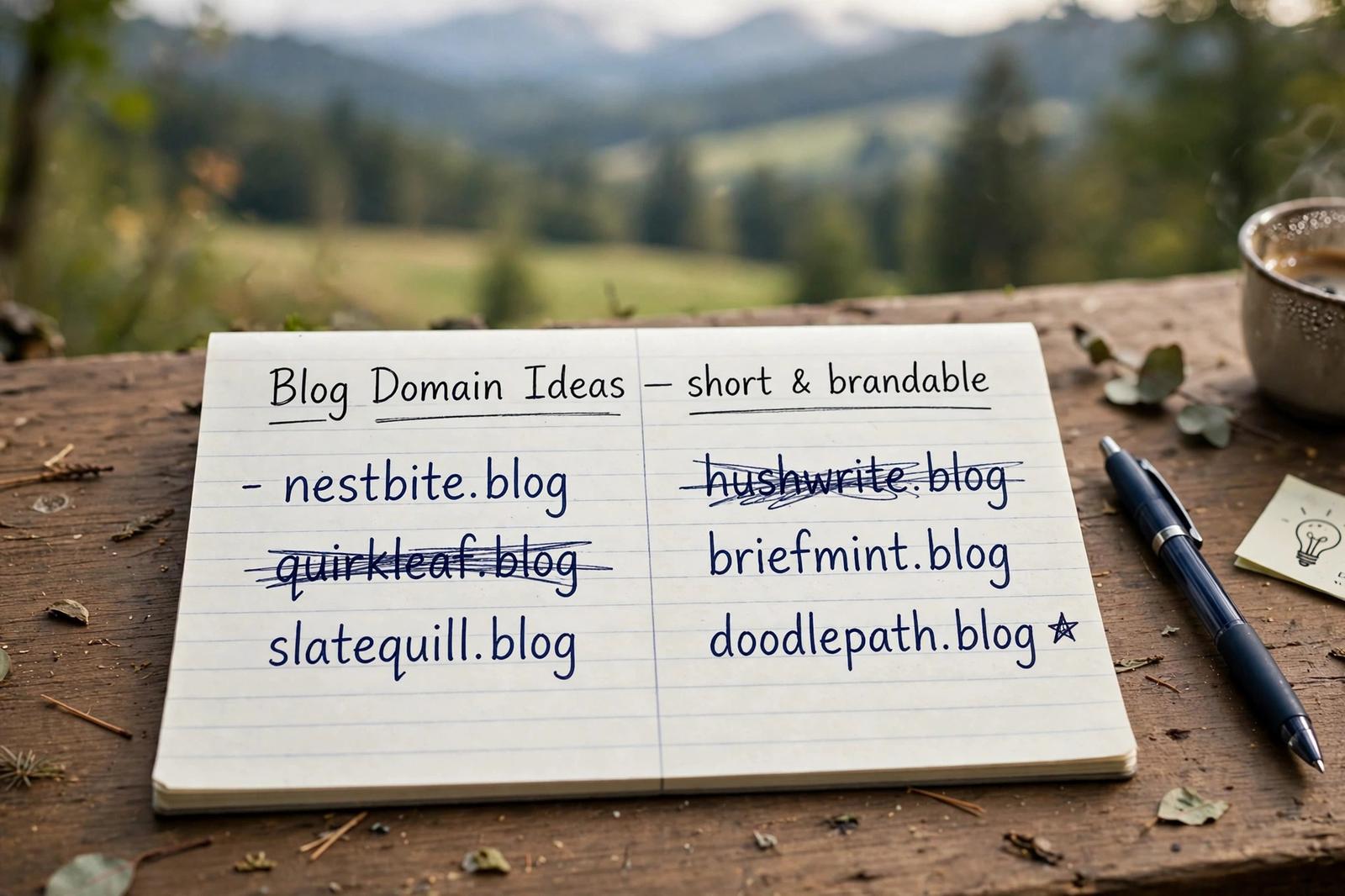
If you are staring at a blank page, try these brainstorming angles. Combine two words from your topic area (a noun plus an evocative adjective). Use your name plus a descriptor, like emilywrites.com or hartnotes.com. Borrow a metaphor from your topic — gardeners might use roots, writers might use margins. Play with alliteration, which is naturally memorable. Or pick a short, invented word and own its meaning through your content. Set a timer for twenty minutes, write fifty candidates without judging, then circle the five that survive a second look.
What If Your Perfect Domain Is Taken?
This happens constantly, and it is not the disaster it feels like. First, check whether the taken domain is actually in use — many registered domains sit parked and unused. You can try a variation: add a verb (get, try, hello), a short descriptor (daily, notes, journal), or your first name. You can also try a different extension. What you should not do is pay a premium of hundreds of dollars for a domain before your blog has a single reader, and you should never pick a name so close to an established site that visitors confuse the two.
How to Brainstorm Domain Names That Do Not Sound Generic
Most brainstorming sessions die because people judge ideas too early. The trick is volume first, judgment later. Start by writing down every word connected to your blog’s topic — nouns, verbs, feelings, places, metaphors. Then mix them: pair an unexpected adjective with a plain noun, mash two short words together, or borrow a word from another language that captures your blog’s spirit. Wordplay works when it is effortless; it backfires when readers need the joke explained.
Another approach I love is the reader test in reverse. Instead of asking what sounds clever, ask what your ideal reader would type, say, or remember. A gardening blog named something like soilandsoul is evocative; a gardening blog named xqztgardeningtips is a cry for help. Read each candidate as if you saw it for the first time with no context. The ones that make you curious are doing their job.
If you are stuck, free name generators can break the logjam — type in a seed word and they will suggest combinations, rhymes, and variations. Treat their output as raw material, not finished names. The best names usually come from your own list after a generator shakes something loose in your thinking. And remember: write down at least thirty candidates. The first ten will be obvious, the next ten will be weird, and somewhere in the last ten the good ones hide.
Before You Register: A Quick Final Checklist
Run every finalist through this checklist before you pay. Is it under fifteen characters? Can a stranger spell it after hearing it once? Does it contain hyphens, numbers, or doubled letters that cause confusion? Is the .com available, or at least not owned by a competitor? Are the social handles free? Does it still make sense if your blog’s topic shifts in three years? Does it pass the say-it-out-loud test? If a name survives all seven questions, register it immediately — good names get taken while people hesitate.
When you register, use a well-known registrar, turn on auto-renewal, and add domain privacy protection so your personal contact details are not published publicly. These three small steps take five minutes and prevent the most common domain headaches bloggers run into later, like losing a domain to an expired card or getting spammed because your address was listed in a public directory.

Frequently Asked Questions
Does my domain name affect my blog’s SEO?
Barely. Search engines have long stopped giving meaningful ranking boosts to keyword-rich domains. What matters for SEO is your content quality, your site’s reputation, and how well you serve search intent. Pick a name humans love; Google will follow the humans.
Should I use my own name as my domain?
For a personal blog, usually yes. Your name is unique, flexible, and builds personal trust. The only real downsides are if your name is very hard to spell or if you plan to sell the blog someday — personal-name blogs are harder to transfer.
How long should a blog domain name be?
Shorter is better. Aim for under fifteen characters excluding the extension, and two to three words at most. Every extra syllable is one more chance for someone to mistype or forget it.
Is .com really necessary for a blog?
Not strictly, but it is still the safest default. If your ideal .com is taken by an active site in a similar space, pick a different name rather than a different extension — you do not want to spend years clarifying which version is yours.
Can I change my domain name later?
Yes, and many bloggers do. With proper redirects, you keep most of your search traffic. It is a hassle but not a catastrophe — which is exactly why you should not let naming perfectionism stop you from starting.
Choosing a domain name for your blog comes down to this: short, spellable, brandable, and broad enough to grow. Run your favorites through the tips above, register the winner, and then forget about it and write. The name opens the door; your words are what invite people to stay.