What Is Cottagecore Aesthetic? A Complete Guide

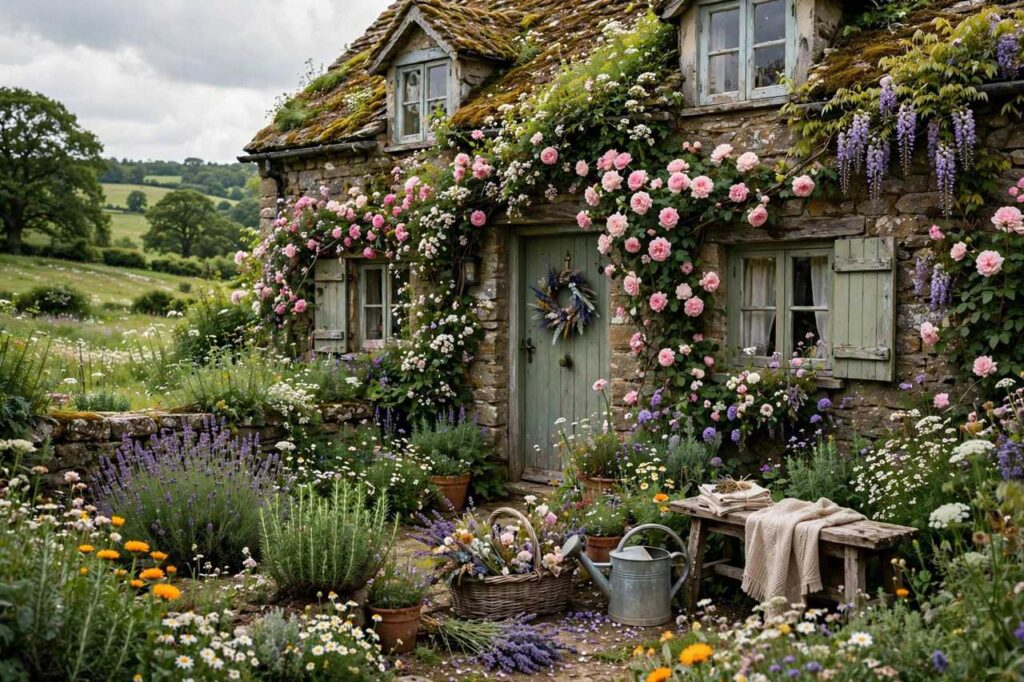
If you have spent any time on social media in the last few years, you have probably seen the dreamy photographs: sunlit meadows, hand-knitted cardigans, jars of homemade jam lined up on a wooden shelf, and a cottage with ivy climbing its walls. So what is cottagecore aesthetic? At its heart, it is an aesthetic and lifestyle movement that romanticizes simple, rural living, celebrating nature, handmade crafts, and a slower pace of life.
I first came across it the way most people do, through a photograph I couldn’t stop looking at. A woman in a linen dress was gathering blackberries in a field, and everything about the image felt like an exhale. No noise, no rush, no screens. Just fruit, sunlight, and patience. That feeling is the entire point of cottagecore, and understanding it means looking past the pretty pictures to the longing underneath them.
What Is Cottagecore Aesthetic at Its Core?
The cottagecore aesthetic is built on an idealized vision of life in the countryside, particularly an imagined version of pastoral England. Think thatched cottages, wildflower meadows, vegetable gardens, fresh bread cooling on a windowsill, and afternoons spent reading poetry under a tree. It borrows heavily from romantic literature, fairy tales, and a nostalgic version of rural history that probably never existed quite as beautifully as the pictures suggest.
But it is a mistake to treat it as purely visual. The aesthetic comes with a set of values: sustainability, self-sufficiency, craftsmanship, and a deliberate step back from digital overload. People drawn to cottagecore often learn to bake bread, grow herbs, sew their own clothes, or forage for mushrooms. The pictures are the doorway; the lifestyle is the house.
What makes it different from other internet aesthetics is how much of it happens offline. You can collect cottagecore images all day, but the movement’s real currency is doing things with your hands. A sourdough starter you keep alive for a year is more cottagecore than a thousand saved photos.
Where Did Cottagecore Come From?
Cottagecore did not appear out of nowhere. It grew out of older romantic movements that idealized nature, the English Arts and Crafts movement of the 19th century, and a long literary tradition from the Brontë sisters to Beatrix Potter. The name itself started circulating online around 2018, and the aesthetic exploded in 2020, when lockdowns trapped millions of people in cities and apartments, scrolling through images of open fields and homemade pie.
The timing was not a coincidence. When daily life felt uncertain and overwhelming, the fantasy of a quiet cottage with a big garden and no deadlines became a form of comfort. Searches and social media tags for cottagecore soared during the pandemic years, and what started as a mood board turned into a genuine cultural current.
Its roots also run through earlier internet subcultures that mixed nostalgia with nature, and through a growing frustration with fast fashion and throwaway consumer culture. Cottagecore folded all of that into one soft, floral package.
The Visual Language of Cottagecore
Every aesthetic has its own vocabulary, and cottagecore’s is written in linen, wildflowers, and warm light. The color palette leans toward creams, sage greens, soft browns, and dusty pinks. Patterns are floral and gingham rather than geometric. Furniture looks secondhand or handmade. Nothing is sleek, chrome, or minimalist in the modern sense.
Key visual elements include prairie dresses and oversized knitwear, wicker baskets, ceramic teapots, pressed flowers, handwritten letters, and tables set with mismatched vintage dishes. Nature is always close: ivy on walls, herbs on windowsills, fields just beyond the garden gate. The lighting in cottagecore photography is almost always golden, the hour before sunset when everything looks softer than it is.
If you want to recognize it instantly, look for the combination of the domestic and the wild. A perfectly set table next to an overgrown garden. A lace curtain with a view of sheep. The aesthetic lives in that tension between the home you keep and the wilderness just outside it.
Cottagecore Beyond the Screen: Home and Garden
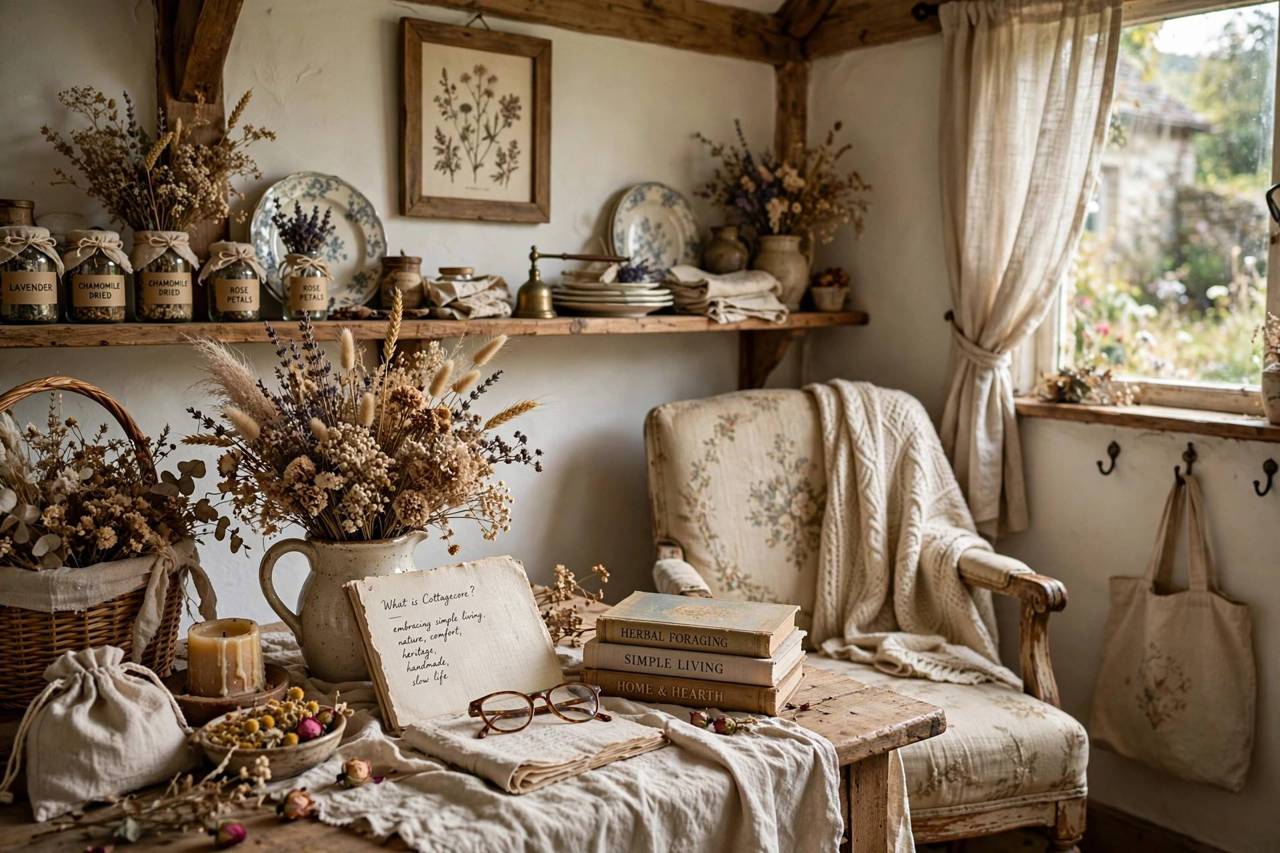
Here is the part nobody tells you at first: you do not need a cottage in the Cotswolds to live some version of this. The principles of cottagecore home style translate surprisingly well to apartments and suburban houses. Start with what you can touch. Swap synthetic fabrics for linen and cotton. Bring in secondhand wooden furniture instead of flat-pack pieces. Grow something, even if it is just basil on a windowsill.
The garden is the soul of the aesthetic, and it does not have to be grand. A few pots of lavender, a tomato plant, and some wildflowers in a jar capture more of the spirit than a professionally landscaped lawn ever will. The cottagecore garden is a little messy by design: it should look like nature is winning, gently.
For city dwellers, the aesthetic often becomes a weekend practice. Farmers’ markets instead of supermarkets. Baking instead of ordering in. Small-space decorating ideas can help you bring that warmth into even the tiniest flat, because the feeling of a lived-in, loved space matters more than square footage. The goal is a home that feels gathered over time rather than purchased in a weekend.
Fashion, Food, and the Cottagecore Lifestyle
Cottagecore fashion is probably its most recognizable face. Flowing midi dresses, prairie skirts, puff sleeves, embroidered collars, straw hats, and well-worn boots. The look is feminine in a historical sense, modest, and deliberately un-trendy. Thrifted pieces fit perfectly, which is part of the appeal: the aesthetic rewards patience and secondhand hunting over fast fashion.
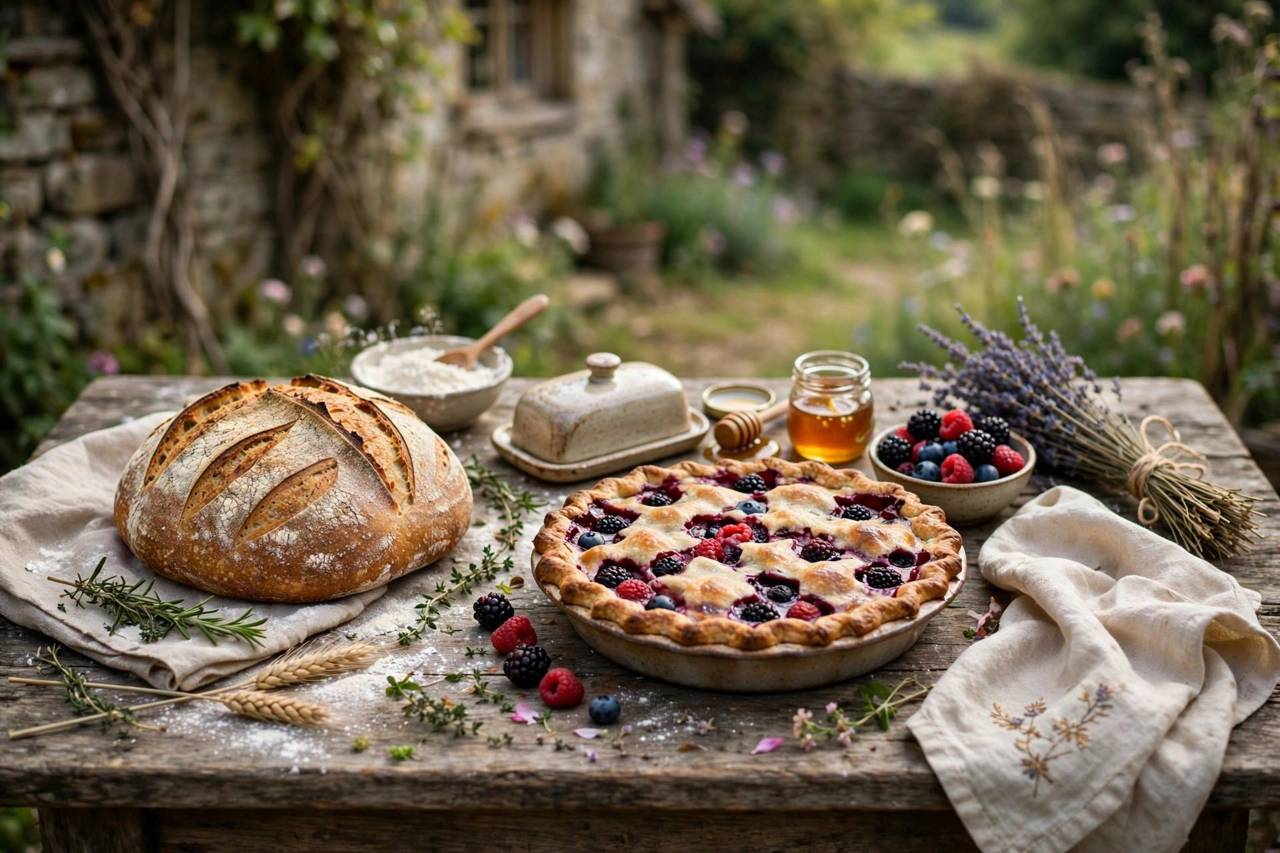
Food is the other pillar. Cottagecore cooking is rustic and seasonal: sourdough bread, berry pies, mushroom soup, garden salads, homemade preserves. The point is not culinary perfection but participation, the satisfaction of eating something you grew or made yourself. Recipes get passed around like folk songs, and there is a strong bias toward the traditional and the slow.
The broader lifestyle touches reading, music, and craft. Poetry, folk tales, and nature writing sit on the bookshelf. People take up embroidery, candle-making, watercolor painting, and beekeeping. None of this requires quitting your job and buying a farm. It asks only that you spend some of your free hours making things instead of consuming them.
Is Cottagecore Just a Passing Trend?
Every few years, commentators declare cottagecore dead, and every few years it keeps going. The truth is that the visual trend will eventually fade, as all trends do, but the desires underneath it are old and durable. People have romanticized rural simplicity for centuries, from ancient pastoral poetry to the back-to-the-land movements of the 1970s.
What gives cottagecore staying power is that it is secretly practical. Learning to cook, garden, mend clothes, and buy less are useful skills in any economy. The aesthetic may be the sugar coating, but the habits underneath genuinely improve daily life. That is why so many people who arrived for the pictures stayed for the sourdough.
My own take, after years of watching it evolve: treat the aesthetic as an invitation, not a rulebook. You do not need the dress or the cottage or the perfect garden. You need one small thing made by your own hands, and the willingness to slow down long enough to enjoy it. Everything else is decoration.
Cottagecore and Sustainability: More Than a Look
Strip away the Instagram filter and cottagecore has a serious point to make about how we live. The movement’s emphasis on mending clothes, growing food, buying secondhand, and cooking from scratch lines up almost perfectly with what environmentalists have recommended for decades. It just packages those habits in something far more appealing than a lecture.
This is why the aesthetic resonates beyond its visual charm. A person who learns to darn socks, bake bread, and grow tomatoes has quietly opted out of several wasteful supply chains. They did not set out to save the planet; they set out to live beautifully, and the planet benefits as a side effect. Movements that make virtue feel like pleasure tend to outlast movements built on guilt.
That said, the commercialization is real. Retailers now sell mass-produced “cottagecore” collections, which is delightfully ironic: factory-made nostalgia for handmade life. The participants who take the values seriously tend to roll their eyes at this. Their test is simple: did you make it, grow it, or buy it secondhand? If the answer is a fast-fashion haul tagged with a pastoral hashtag, you have the costume without the substance.
How to Start Living It This Weekend
You do not need a five-year plan. Pick one small, tangible thing and do it this weekend. Bake a loaf of bread from scratch, flour, water, salt, and patience. Plant herbs in whatever containers you own. Spend an afternoon at a thrift store looking for a ceramic teapot or a linen tablecloth. Write a letter by hand to someone you love.
Notice what these activities have in common: they are slow, they use your hands, and they produce something real. That is the entire operating system of cottagecore. You can add layers over time, a garden bed, a sewing machine, a sourdough starter with a name, but the first step is just choosing the slow, handmade option once.
And give yourself permission to be bad at it initially. Your first loaf will be dense. Your embroidery will look like a seismograph reading. The aesthetic photographs beautifully, but the lived version is gloriously imperfect, and that imperfection is the point. A handmade life shows the hand that made it.
Frequently Asked Questions
What does cottagecore mean exactly?
Cottagecore is an aesthetic and lifestyle movement that romanticizes rural life, nature, and traditional crafts. It celebrates slow living, handmade goods, gardening, and a nostalgic vision of countryside simplicity.
Is cottagecore only for women?
Not at all. While its most visible imagery leans feminine, the underlying values of nature, craftsmanship, and slow living appeal to everyone. Many men participate through gardening, woodworking, baking, and outdoor life.
Do you need to live in the countryside to be cottagecore?
No. The aesthetic is about a way of living, not a location. Apartment dwellers practice it through cooking, crafting, houseplants, thrifting, and spending time in parks and green spaces.
What is the difference between cottagecore and farmcore?
Farmcore focuses more on actual farm life, agriculture, and rural work, while cottagecore is softer and more romantic, centered on the home, garden, crafts, and an idealized pastoral fantasy.
Is cottagecore expensive to get into?
It can actually be one of the cheapest aesthetics to adopt. Thrifted clothes and furniture fit the look perfectly, and the lifestyle encourages making things yourself rather than buying them.