How to Host a Small Dinner Party Without the Stress

Learning how to host a small dinner party is one of those skills that pays off forever, because the small ones are honestly the best ones. Four to eight people around a table, real conversation, food you actually had time to enjoy making — that beats a chaotic twenty-person buffet every time. I used to think dinner parties required a perfect house and restaurant-level cooking. Then I started hosting tiny ones and realized the whole formula is simpler: a short guest list, one impressive-but-easy main dish, and a host who is relaxed enough to sit down. Here is the complete playbook I wish someone had handed me before my first attempt, from planning the menu to the moment you wave everyone off at the door.
Why Small Dinner Parties Work Better Than Big Ones
There is a sweet spot for dinner parties, and it sits somewhere between four and eight guests, host included. At that size, everyone fits around one table, which changes the entire dynamic. Nobody gets stranded at the far end shouting across a room. You can cook one dish instead of running a catering operation. And the cost stays sane — feeding six people a genuinely nice meal costs less than taking two of them to a restaurant. Small also means forgiving. A slightly overcooked side dish at a six-person table gets laughed about and forgotten. The same mistake at a formal event feels like a crisis. If you are debating whether to go bigger, read up on how to host a dinner party at full scale first — the contrast will show you exactly why small is the smarter starting point. Pick your guest list with chemistry in mind rather than obligation. Six people who enjoy each other beat ten people who merely know each other. Mix one great storyteller with a couple of good listeners, invite the friend who always asks interesting questions, and skip anyone who makes the room tense. Your guest list is the single biggest lever you have on the evening, bigger than the menu.
Planning: Invitations, Timing, and the Guest List
Send invitations two to three weeks ahead for a weekend evening. That gives people enough notice without requiring the military planning of a wedding. A simple text or message works fine for a small gathering — save the printed invitations for milestone events. Be specific in the invite: the date, the start time, your address, and whether it is a full dinner or drinks plus a light meal. “Dinner at my place Saturday at 7” removes all guesswork. Ask about dietary restrictions right away, not the day before. A quick “any foods I should avoid?” in the invitation thread saves you from discovering a guest’s nut allergy while the pesto is already on the table. For timing, plan for the evening to run about three hours. Guests arrive, drinks and nibbles for thirty to forty-five minutes, then everyone sits down. If you tell people 7 o’clock, expect arrivals between 7:00 and 7:20 — that is normal, not rude, so have the snacks out and the first bottle open. One more planning note: do not seat more people than you have proper chairs for. Pulling in a wobbly desk chair or a garden stool signals that the guest list outgrew the plan, and comfort matters more than capacity.
Designing a Menu That Won’t Stress You Out
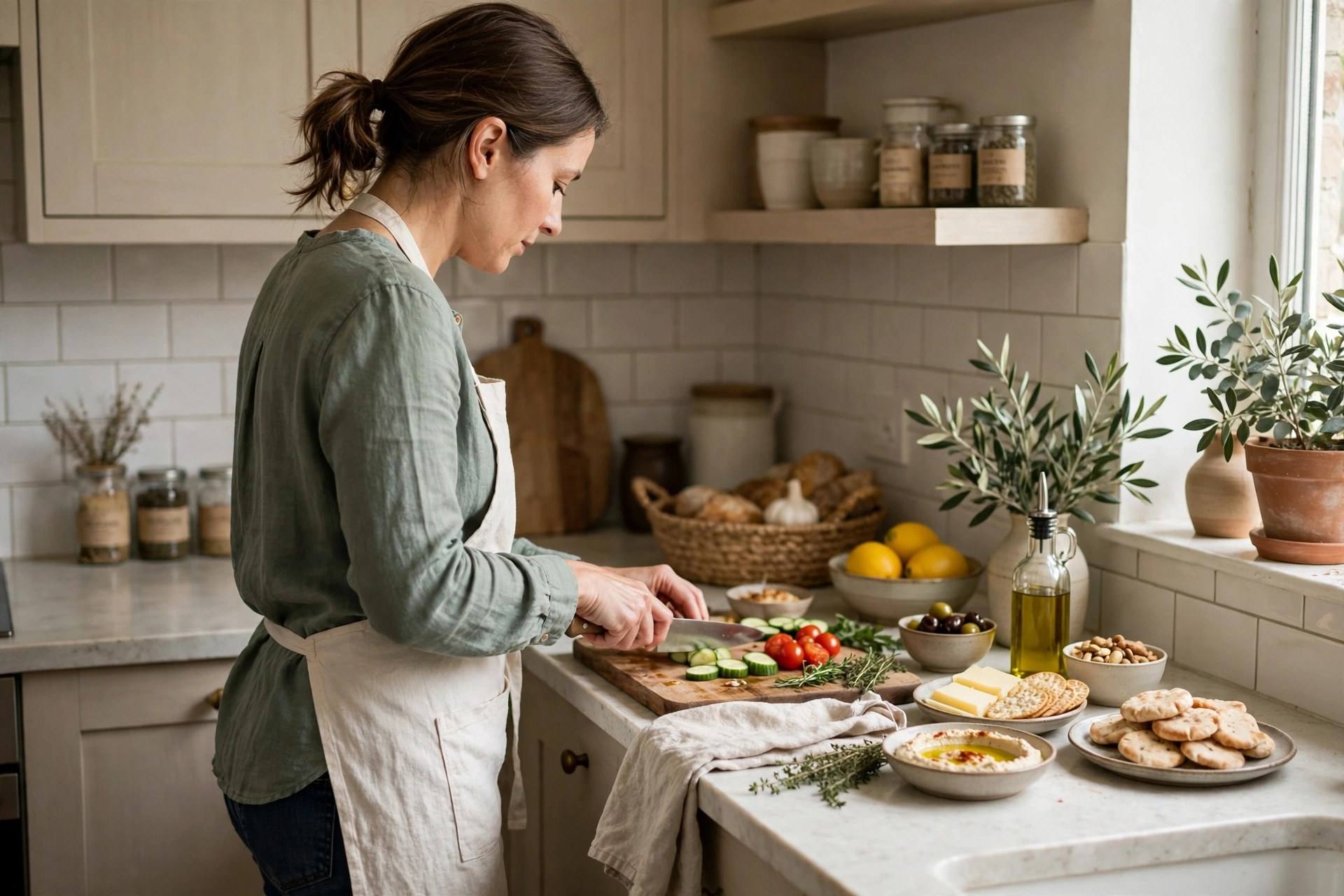
The golden rule of small dinner party menus: one hero dish, simple sides, and a dessert you could make in your sleep. Your hero dish should be something you have cooked at least once before — a dinner party is the worst possible time to test-drive a complicated new recipe. Braises, roasts, and slow-cooked dishes are perfect because they improve with time and free you from the stove. A pork shoulder, a chicken roasted with lemons, a big pot of short ribs — these all cook themselves for hours while you set the table and pour yourself a glass of wine. Keep sides to two, and make at least one of them cold or room temperature so it can wait. A grain salad, roasted vegetables that hold well, good bread from a bakery — nobody will complain. For dessert, choose something you can make the day before: panna cotta, chocolate mousse, a simple fruit crisp that just needs reheating. Write the menu down on paper and tape it to a cabinet door. Then work backward from serving time and write the actual schedule: when the roast goes in, when the salad gets dressed, when the dessert comes out of the fridge. This little timeline is the difference between a calm host and one who is frantically Googling “how long to rest chicken” at 7:45.
Setting the Table and the Mood
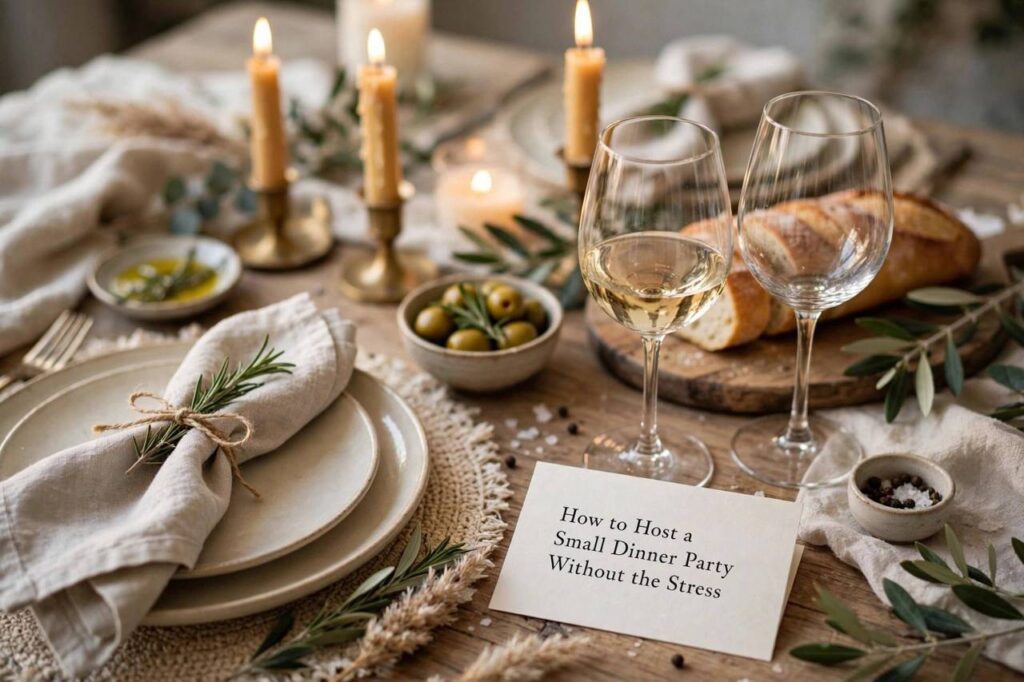
You do not need matching china or a tablescape from a magazine. You need a clean surface, enough space per person, and lighting that flatters everyone. Clear the table completely — move the mail pile, the laptop, the random keys — and start from empty. A simple runner or a plain tablecloth instantly makes the table feel intentional. Plates, one fork, one knife, one spoon, a water glass and a wine glass per person is plenty. Fold the napkins however you like; nobody inspects napkin folds except other napkin folders. Lighting does more for atmosphere than any decoration. Turn off the harsh overhead light. Light candles — real ones if you are comfortable, good LED ones if you have kids or pets around. Put on music before the first guest arrives, at a volume where conversation flows easily over it. A playlist of mellow jazz, acoustic covers, or bossa nova runs itself for hours. One small touch goes a long way: a little bowl of olives or nuts and a first drink ready the moment someone walks in. It tells guests to relax immediately, which is exactly what you want.

The Timeline: Your Evening Hour by Hour
Here is how a typical small dinner party flows when everything goes right. Two days before: shop for everything non-perishable, confirm the guest count, make the dessert. The day before: shop for fresh ingredients, prep anything that holds well — chop vegetables, marinate the meat, set the table if you have the space. Morning of: cook anything that reheats beautifully, like a braise or a grain salad, and do a quick house tidy focused on the rooms guests will see. Nobody opens your closets. Two hours before: start the roast or main dish, shower, get dressed. One hour before: set out serving dishes and utensils, chill the wine, arrange the snacks, light the candles, start the music. Fifteen minutes before: pour yourself a drink, take a breath, and stop working. When guests arrive, greet them at the door, take their coat, hand them a drink within sixty seconds. That first minute sets the tone for the whole night. During the evening, resist the urge to fuss. Once people are seated with food, your job is to be a guest at your own party. Refill glasses, clear plates between courses without making a production of it, and keep the conversation moving by asking the quiet person a direct question now and then.
Handling the Tricky Bits Gracefully
Every host faces a few awkward moments, and having a plan keeps them tiny. Late guests: do not hold dinner more than twenty to thirty minutes. Serve the first course to whoever is there and warm a plate for the latecomer — announcing it cheerfully removes any guilt. Dietary restrictions you missed: keep one flexible side dish, like a grain or vegetable plate, that can stand alone as a meal. A guest who drinks too much: slow the pours, put out water and substantial food, and have a rideshare app ready. It is your house, and it is fine to switch the group to coffee. Conversation that dies: have two or three open-ended questions in your back pocket — “What is the best trip you have taken?” beats “How is work?” every time. A dish that fails: this is why the menu rule exists, but if it happens, laugh, order backup if needed, or pivot to the sides and dessert. Guests remember how you made them feel, not whether the sauce broke. And the ending: when energy dips, start clearing the table and offer coffee or tea. Most guests take the hint gracefully. Walk everyone to the door, thank them genuinely, and resist apologizing for anything. Confidence is the final course.
How to Host a Small Dinner Party on a Budget
A small dinner party is already the budget-friendly format, but a few deliberate choices stretch your money further without anyone noticing. Build the menu around one affordable hero ingredient: chicken thighs instead of tenderloin, pork shoulder instead of ribeye, seasonal vegetables instead of out-of-season imports. A slow-cooked cut that costs a few dollars a pound tastes luxurious after four hours in the oven, and nobody at the table is doing cost accounting. Buy wine by the case discount or choose one good bottle over three mediocre ones — a single well-chosen red and a single white cover the evening. For décor, raid your own home before you shop: cloth napkins you already own beat paper ones you buy, candles from the bathroom drawer beat a centerpiece from the craft store, and a bowl of lemons or apples from the kitchen makes a prettier table than wilting grocery-store flowers. The biggest budget lever is the guest count itself. Six guests at fifteen dollars a head is ninety dollars for a memorable evening; the same menu for twelve doubles everything. Keep it small, cook smart, and spend the savings on the one thing guests actually remember: being welcomed warmly into a home where the host is relaxed.
Frequently Asked Questions
How many people should I invite to a small dinner party?
Four to eight people total, including you, is the sweet spot. Everyone fits around one table, the cooking stays manageable, and conversation includes the whole group. Fewer than four can feel intense unless everyone knows each other very well.
What should I cook if I am not a confident cook?
Choose a forgiving slow-cooked dish like pulled pork, chicken thighs with vegetables, or a hearty stew. These are hard to ruin, they feed a crowd from one pot, and they taste better the longer they cook. Buy good bread and a ready-made dessert to round out the menu.
Should guests bring anything?
It is perfectly fine to say “just bring yourselves” — you are the host, hosting is the gift. If a guest insists, suggest wine or dessert rather than a dish, so it does not clash with your menu. Never assign cooking tasks unless it is explicitly a potluck.
How do I handle different dietary needs?
Ask when you invite, plan one dish that works for everyone (many sides naturally do), and avoid making the restricted guest the center of attention. Label nothing, fuss over nothing. A quiet “I made the salad without cheese so it works for you” said privately is perfect.
What time should a dinner party end?
Plan for roughly three hours from the stated start time. When you start clearing plates and offering coffee, most guests understand the evening is winding down. If a few linger happily, that is a compliment — let the night end naturally.