7 Best Blogging Platforms for Beginners, Honestly Compared

Picking from the best blogging platforms for beginners should take an afternoon, not a month — yet I have watched friends research themselves into paralysis while their blog stayed a daydream. I have built blogs on five of the platforms below and helped friends launch on the rest, so this comparison comes from actual publishing, not feature lists. Below you will find what each platform costs, who it suits, and the honest downsides nobody mentions on the sales page, so you can choose confidently and start writing.
One thing to settle first: there is no perfect platform, only the right trade-off for you. Some platforms are free but limit what you own; others give you full control but ask more of you technically. Decide what matters most — zero cost, full ownership, or absolute simplicity — and the right choice gets obvious fast.
Best Blogging Platforms for Beginners: Quick Comparison
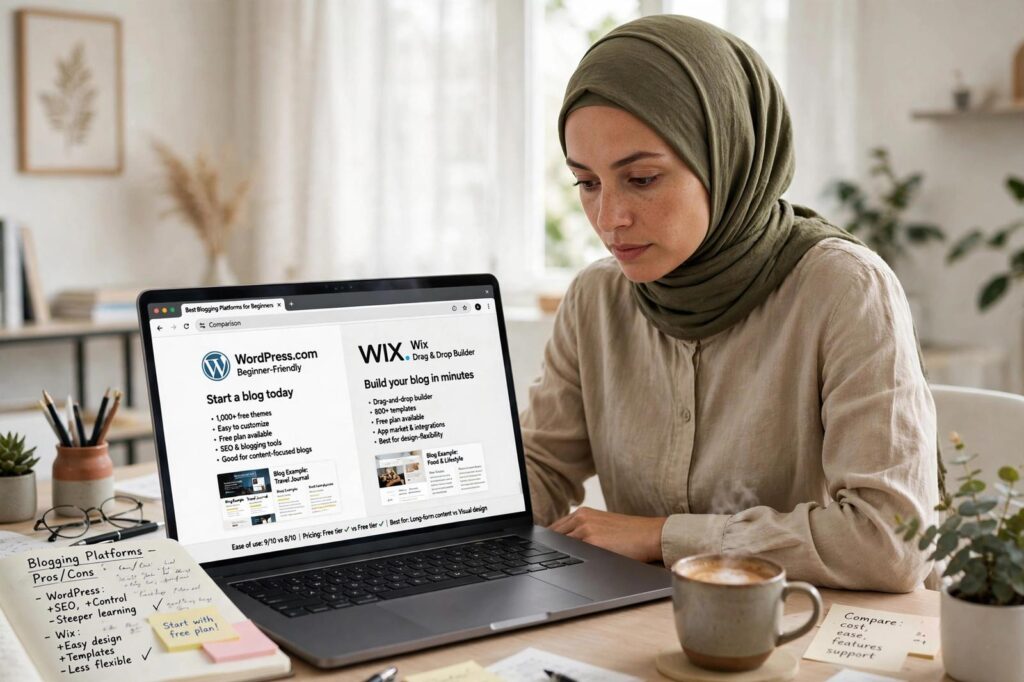
Here is the short version before we go deep. WordPress.com is the easiest free start with a real upgrade path. Self-hosted WordPress (WordPress.org) is the most powerful and what most serious bloggers end up on. Wix and Squarespace are the simplest all-in-ones if you want design without thinking. Substack is best if your blog is really a newsletter. Medium is great for writing with zero setup but you own nothing. Blogger is the old reliable free option that Google still maintains. Ghost is the sleek modern choice for writers who want speed and memberships built in.
1. WordPress.com — the safest free start
WordPress.com gives you a real blog in minutes with no technical setup, and its free plan is genuinely usable. The writing experience is clean, themes look professional, and — crucially — you can upgrade to a paid plan or migrate to self-hosted WordPress later without starting over. The downside of the free plan is the WordPress.com subdomain and ads you cannot remove, plus limited customization. Best for: absolute beginners who want to test blogging before spending anything.
2. Self-hosted WordPress (WordPress.org) — the long-term winner
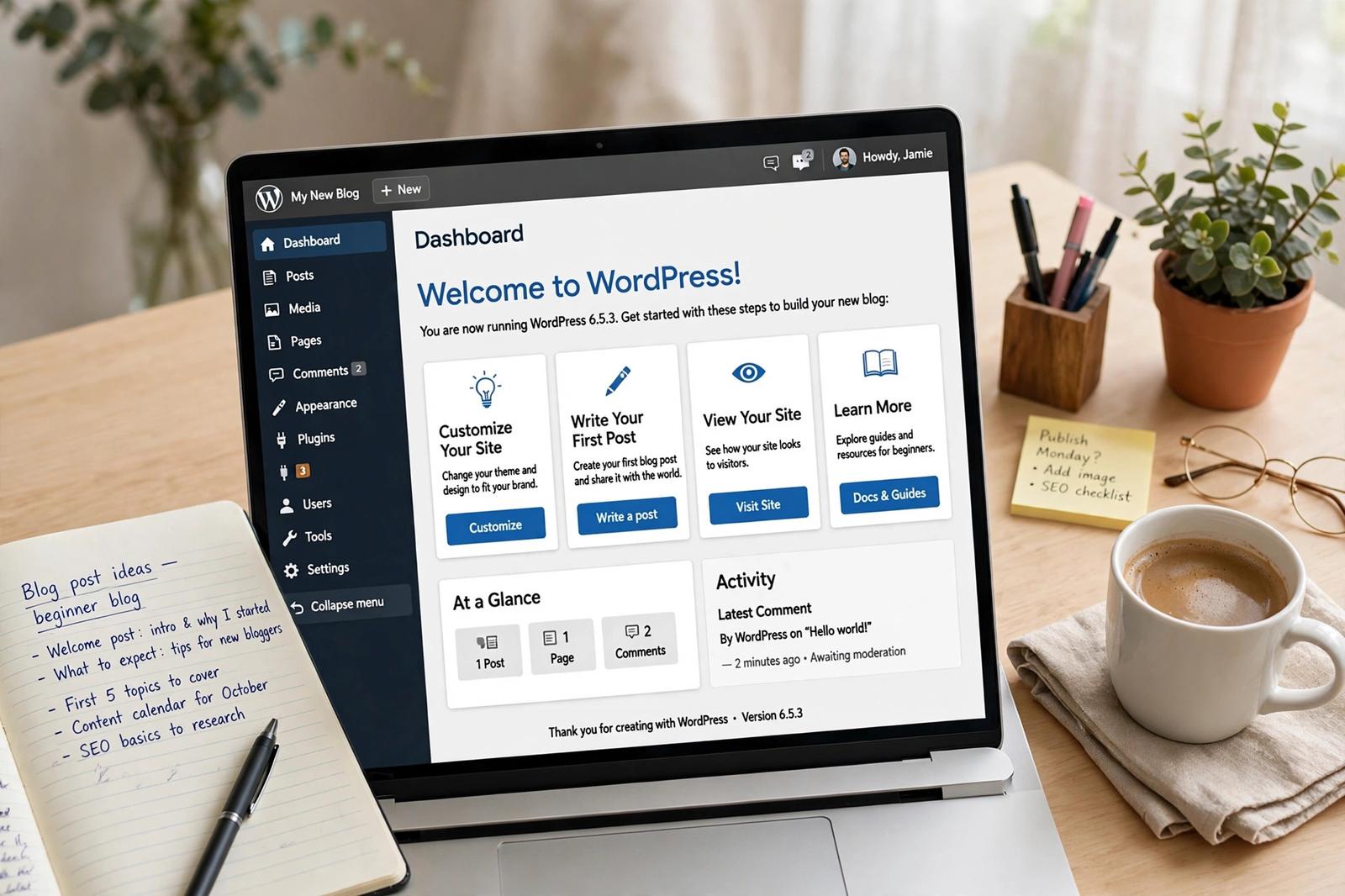
This is the platform behind a huge share of the world’s blogs, and for good reason: you own everything, you can install any theme or plugin, and there is no ceiling on what your blog can become. The catch is that you arrange your own hosting and domain, which costs a little and involves a one-time setup of about an hour. If you are fairly sure you will blog for more than a year, starting here saves you a migration later. Best for: beginners who want maximum control and are willing to spend a weekend learning the basics. Our walkthrough of how to start a blog covers the setup step by step.
3. Wix — the easiest drag-and-drop builder
Wix is famously easy: pick a template, drag things where you want them, publish. Its blog tools are solid for a website builder, and the free plan lets you experiment. The trade-offs are real, though — the free plan shows Wix ads and gives you a Wix subdomain, paid plans cost more than basic WordPress hosting, and moving your site away from Wix later is painful. Best for: people who want a pretty site fast and do not plan to get deeply technical.
4. Squarespace — the design-first option
Squarespace templates are beautiful out of the box, which is why so many portfolio-style blogs and creative businesses land here. Everything — hosting, domain, design — is bundled into one monthly price, and support is genuinely helpful. The downsides: there is no free plan (only a trial), blogging features are simpler than WordPress, and costs add up over the years. Best for: beginners who care deeply about visual design and want everything handled.
5. Substack — the newsletter-first blog
Substack flipped the model: instead of hoping readers find your site, you publish essays and they arrive by email. It is free to start, dead simple, and has built-in paid subscriptions if you later want to charge readers. The catch is that your blog lives on Substack’s platform and design options are minimal — it feels more like a publication than a personal website. Best for: writers whose strength is essays and opinions, and who like the idea of an email audience from day one.

6. Medium — zero setup, zero ownership
Medium lets you publish beautifully formatted writing in seconds to a built-in audience, and it costs nothing. Many writers use it to test ideas or republish posts for extra reach. But you do not own your audience, Medium controls how your work is distributed and monetized, and building a brand there is building on rented land. Best for: trying out writing in public or syndicating posts from your main blog — not as your only home.
7. Ghost — the modern writer’s platform
Ghost is the sleek, fast, open-source platform built specifically for publishing and newsletters, with memberships and paid subscriptions baked in. The writing experience is a joy and sites load quickly. The beginner friction is that the easiest path is Ghost’s own paid hosting, and self-hosting it yourself is more technical than WordPress. Best for: writers who want a modern, fast site with memberships and are comfortable with a small learning curve.
How to Choose Among the Best Blogging Platforms for Beginners
Ask yourself three questions. First, what is my budget? If it is zero, start with WordPress.com, Substack, or Medium. Second, how much control do I want in a year? If the answer is total control, self-hosted WordPress is where you will end up anyway, so consider starting there. Third, what will I actually publish? Essays and opinions thrive on Substack; visual portfolios shine on Squarespace; everything else fits WordPress comfortably.
My honest recommendation for most beginners: start on WordPress.com’s free plan, publish ten posts, and only then decide whether to invest in self-hosting. Ten posts of evidence beats ten hours of research. If blogging turns into something bigger — a business, a portfolio, an income stream — browsing online business ideas for beginners will show you how far a simple blog can go.
Mistakes to Avoid When Choosing a Platform
The biggest mistake is choosing based on features you will not use for a year. Beginners do not need advanced SEO plugins, membership systems, or custom code — they need a publish button they will press weekly. The second mistake is ignoring the exit: before committing, check how you would export your content if you ever leave. The third is paying for a year of premium hosting before writing a single post. Earn the upgrade with published work, not intentions.
Free vs Paid: What Beginners Actually Get for Their Money
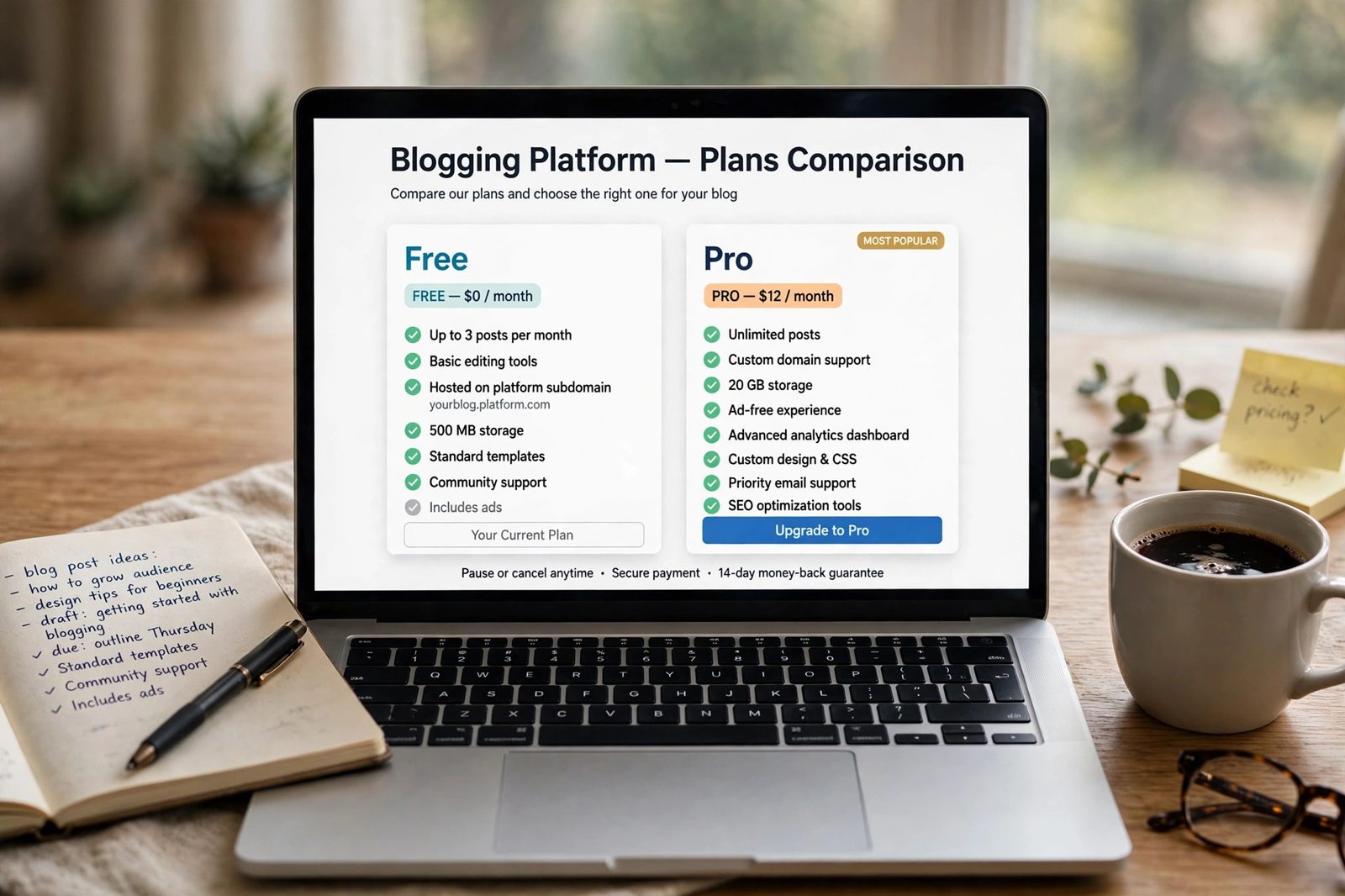
Free plans are perfect for the testing phase, but it helps to know what paying unlocks. On most platforms, the first paid tier removes platform branding and ads, gives you a custom domain, and unlocks basic customization. Higher tiers add things like advanced analytics, e-commerce, or membership features. Here is my rule of thumb: stay free until you have published at least ten posts and know you will continue. Then the cheapest paid tier that gives you a custom domain is money well spent — your own domain is the single upgrade that most improves how seriously readers take a new blog.
What you should not pay for early: premium themes (free ones are fine to start), expensive email tools (free tiers cover your first subscribers), and any course promising to teach you the platform. Every platform on this list has excellent free documentation and video tutorials. Spend your first blogging budget on your domain and, if you go self-hosted, decent basic hosting — everything else can wait until the blog proves itself.
Which Platform Is Best for SEO as a Beginner?
Beginners worry about SEO far too early, but since you asked: self-hosted WordPress wins on SEO flexibility, with full control over every technical detail. Squarespace and Wix handle the basics competently out of the box — sitemaps, mobile-friendliness, and clean URLs are all automatic. Substack and Medium can rank well for individual posts because the domains themselves carry authority, but you cannot optimize much beyond the content itself. Ghost is technically excellent and fast, which search engines like.
The honest caveat: for a new blog, platform SEO differences barely matter. Google ranks helpful content that matches search intent, and all of these platforms can publish that. I have seen Substack posts outrank WordPress sites and vice versa. Pick the platform you will publish on consistently, write genuinely useful posts, and worry about advanced SEO after your fiftieth article. Content and consistency beat platform choice every time at the beginner stage.
Frequently Asked Questions
What is the easiest blogging platform for a complete beginner?
Wix and WordPress.com are the easiest to start on — both get you publishing within an hour with no technical knowledge. If you want the absolute simplest writing experience, Substack is even simpler, though it works best for newsletter-style writing.
Can I start a blog completely free?
Yes. WordPress.com, Blogger, Medium, and Substack all have free plans that let you publish real posts at no cost. The trade-off is usually a platform subdomain, limited customization, or less ownership — fine for starting, worth upgrading from once you are committed.
Is WordPress still the best choice for new bloggers?
For most bloggers who want to grow, yes. Self-hosted WordPress offers unmatched flexibility, ownership, and a massive ecosystem of help. The learning curve is real but manageable, and it is the platform you are least likely to outgrow.
Can I switch blogging platforms later?
Usually yes, though some moves are easier than others. WordPress makes importing and exporting straightforward; leaving closed builders like Wix takes more effort. This is one reason to favor platforms with easy export from the start.
Do I need to know how to code to start a blog?
Not at all. Every platform on this list is designed for non-technical users — if you can use email and social media, you can publish a blog. Coding only becomes relevant if you want heavy customization later, and even then it is optional.
The best blogging platform for beginners is the one you will actually use. Pick the option that matches your budget and patience, publish your first post this week, and revisit the decision after ten posts. Momentum beats optimization — every successful blogger I know started on an imperfect platform and upgraded when their writing earned it.