What Is a Lifestyle Blog? Definition, Niches & Examples

So — what is a lifestyle blog, really? If you’ve ever fallen down a rabbit hole at 1am reading someone’s perfectly organized pantry tour, their honest take on moving to a new city, or a recipe that actually worked, you’ve been reading one. At its core, a lifestyle blog is a website where the author shares content about everyday life: home, food, travel, style, wellness, work, relationships — the texture of a life, curated and published. But that simple definition hides a surprisingly interesting ecosystem, with real taxonomy, real business models, and a few traps for newcomers. Let’s unpack it properly.
I’ve been reading blogs since the era when everyone had a Blogspot with a tiled background, and writing them long enough to watch the format get declared dead roughly six times. It isn’t dead. It just grew up.
What Is a Lifestyle Blog, Exactly?
A lifestyle blog is a content website organized around the author’s life, interests, and tastes rather than a single narrow topic. Where a tech blog covers gadgets and a finance blog covers money, a lifestyle blog covers how someone lives — which means it can roam across home decor, recipes, travel diaries, fashion, parenting, wellness routines, and personal essays, all under one roof.
The unifying thread isn’t the topic; it’s the voice. Readers come for the information and stay for the person. The best lifestyle blogs feel like a friend with suspiciously good taste who also happens to test every recipe twice. That personal connection is the format’s superpower — and the reason lifestyle content outperforms faceless content on trust, even when the faceless version is technically better.
Lifestyle Blogs vs. Other Blog Types
It helps to see where lifestyle blogs sit in the broader blog family:
- Niche blogs go deep on one subject — think a sourdough-only baking blog. Lifestyle blogs go wide, trading depth for range.
- Personal blogs are primarily journals; the author is the whole point. Lifestyle blogs are personal too, but they’re organized around useful content — the life is the lens, not the entire subject.
- Magazine-style blogs have teams and editorial calendars. Most lifestyle blogs are solo or tiny-team operations, which is exactly why they feel intimate.
In practice the lines blur. Plenty of successful sites started as personal journals, drifted into lifestyle territory as the audience grew, and eventually hired help and became mini-magazines. The format is a spectrum, not a set of boxes.
The Big Lifestyle Niches
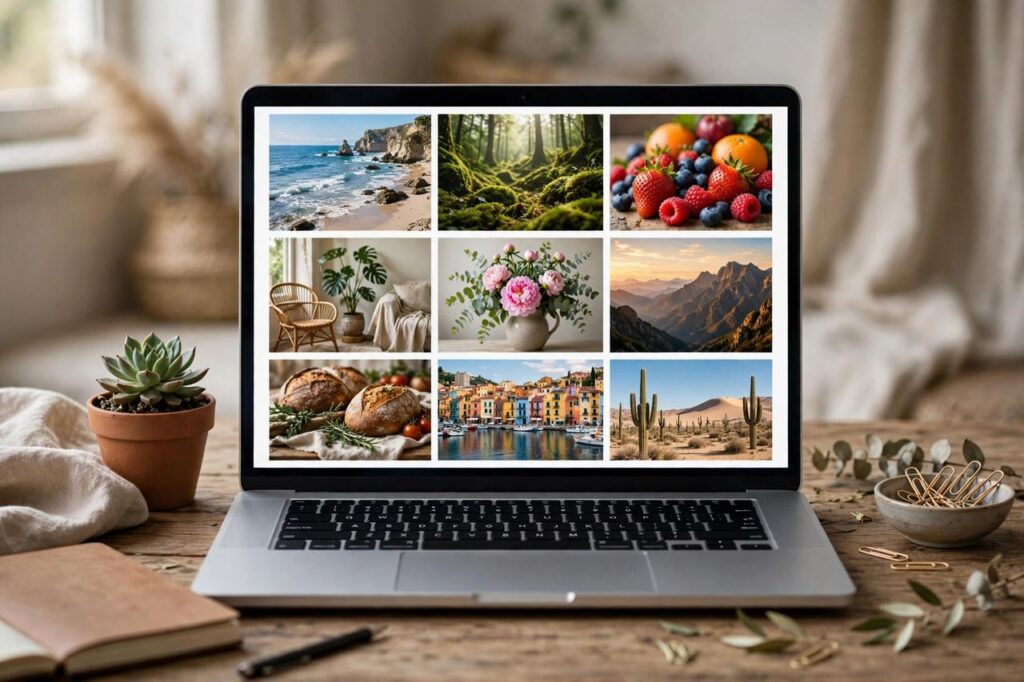
“Lifestyle” is an umbrella. Under it, most blogs cluster around a few major niches — and smart bloggers usually anchor in one or two rather than covering all of them thinly:
- Home & living: decor, organizing, DIY, gardening. The pantry-tour economy lives here.
- Food & entertaining: recipes, meal prep, hosting. Hugely competitive, hugely evergreen.
- Travel: guides, itineraries, packing, slow travel. Lives and dies on original photography.
- Style & beauty: outfits, capsule wardrobes, skincare routines. The most trend-driven corner.
- Wellness: fitness routines, mental health, habits, morning routines. Readers are loyal; claims need care.
- Family & parenting: pregnancy through teens, plus the honest chaos in between.
- Money & work: budgeting, freelancing, career pivots — lifestyle-adjacent and increasingly popular.
Notice the pattern: every niche is something the author genuinely lives. That’s not a coincidence — it’s the business model. Authenticity is the inventory.

Real Examples of Lifestyle Blogs
Theory is nice; examples are better. A few long-running sites that show what the format looks like done well:
- Cup of Jo — Joanna Goddard’s site is the archetype: personal essays, style, motherhood, and culture, held together by a warm, curious voice.
- The Blonde Abroad — Kiersten Rich turned solo female travel into a full lifestyle brand spanning guides, photography, and tours.
- A Beautiful Mess — Elsie Larson’s colorful DIY-and-decor world; proof that a strong aesthetic is a moat.
- Pinch of Yum — technically a food blog, but Lindsay Ostrom’s transparent income reports and behind-the-scenes posts made it a lifestyle-blog case study.
- The Everygirl — career, home, and wellness for millennial women; an example of the format scaled into a media brand.
What do they share? A recognizable voice, original photography, consistency over years (not weeks), and content that solves small real problems — what to cook, how to decorate, where to go — wrapped in personality.
How to Start a Lifestyle Blog
Thinking of starting one? The mechanics are the easy part — pick a platform, choose a name, publish regularly. If you want the full walkthrough, my guide on how to start a blog covers the setup step by step. The strategic part is harder, and it’s where most new bloggers stumble:
- Pick your lane. “My life” is not a niche. “Small-space organizing for renters” is. Start narrow; you can widen later.
- Find your angle. There are ten thousand home blogs. What’s yours? Budget? Rentals? A specific aesthetic? Your angle is your only defensible territory.
- Publish on a schedule you can sustain for a year. Weekly for a year beats daily for a month. The algorithm rewards consistency; so do readers.
- Learn basic SEO early. Social traffic is fickle; search traffic compounds. You don’t need to become an expert — just learn to match content to what people actually search for.
- Take your own photos. Stock photos are the fastest way to look like everyone else. A phone camera and window light are enough to start.
Can You Actually Make Money?
Honest answer: yes, but the distribution is brutal. The income playbook is well established — display ads, affiliate links, sponsored posts, digital products (presets, planners, courses), and eventually brand partnerships. What nobody tells beginners is the timeline: most lifestyle blogs earn little or nothing for the first year or two, because traffic and trust both compound slowly.
The bloggers who make it treat the blog like a small business from day one: they learn what their audience buys, they diversify income (never rely on one platform), and they protect the trust that makes the whole thing work. One deceptive sponsored post can cost you the audience that took two years to build. The math only works if the trust stays intact.

The Honest Pros and Cons of Lifestyle Blogging
Before you start one, the unvarnished version — because the glossy version is everywhere already.
The pros: creative freedom that’s genuinely rare — you choose the topics, the schedule, the aesthetic. A real asset that compounds: old posts keep earning traffic for years, unlike social posts that die in 48 hours. Location independence, eventually. And the strange, specific joy of a stranger emailing to say your post helped them — that never gets old, I promise.
The cons: the first year is mostly shouting into a void; growth is slow and the metrics will test your resolve. Income is unpredictable and platform-dependent — algorithm changes can halve your traffic overnight through no fault of yours. The personal nature that makes lifestyle blogs work also makes criticism personal; you’re the brand, so every bad comment lands differently. And the content treadmill is real: audiences expect consistency, and consistency while living an actual life requires systems, not just inspiration.
My take after years in this world: start a lifestyle blog because you want the practice — writing regularly, thinking in public, building something that’s yours. If money follows, wonderful. If the money is the only reason, the void-years will break you.
What’s Changed for Lifestyle Blogs in 2026
The format I started in doesn’t quite exist anymore, and that’s fine — it’s been replaced by something arguably better. A few shifts worth knowing:
- Search got smarter, not deader. Every year someone declares SEO finished; every year the blogs answering real questions keep getting traffic. What’s changed is the bar — thin, generic posts don’t rank anymore. Depth wins.
- Newsletters and blogs merged. The smartest lifestyle bloggers now run both: the blog as the searchable public library, the newsletter as the intimate front porch. Email lists are the only audience you truly own.
- Video is the top of the funnel. Short-form video discovers; long-form blogs convert and retain. The bloggers thriving now treat video as the trailer and the blog as the film.
- AI content raised the value of lived experience. Generic advice is now free and infinite, which paradoxically made personal content more valuable. \”Here’s what actually happened when I did this\” beats \”10 tips for\” every time now.
- Trust is the currency. Readers have been burned by fake reviews and undisclosed sponsorships. The bloggers winning in 2026 disclose everything, recommend sparingly, and protect their credibility like the asset it is.
One last honest note: the bloggers who survive the void-years almost always say the same thing — they kept going because they liked the work itself, not because a spreadsheet told them to. Passion doesn’t pay the bills, but it does pay the patience. And patience, in blogging, is the whole game.
Frequently Asked Questions
What is the difference between a lifestyle blog and a personal blog?
A personal blog is primarily a journal — the author’s thoughts and experiences are the whole point. A lifestyle blog uses the author’s life as a lens for useful content: recipes, guides, and recommendations organized by topic. Most successful blogs blend both.
What should I write about on a lifestyle blog?
Write about what you genuinely live and know: your home, your cooking, your city, your routines. The test is simple — could you write 50 posts on this topic without faking enthusiasm? If yes, that’s your niche.
Are lifestyle blogs still popular in 2026?
Yes, though the landscape shifted. Short-form video stole the casual scrollers, but long-form blogs still dominate for search-driven, evergreen content — recipes, guides, and detailed how-tos. Newsletters and blogs have actually converged, with many bloggers running both.
How do lifestyle bloggers make money?
The main streams are display advertising, affiliate commissions, sponsored content, and digital products like courses or templates. Most bloggers combine several; relying on a single income source is fragile.
Do I need to be an expert to start a lifestyle blog?
No — but you need to be honest about where you are. “I’m learning to decorate my first apartment, here’s what worked” is a perfectly good premise. Readers connect with the journey; they distrust fake expertise.
How often should I post on a lifestyle blog?
Consistency matters more than frequency. One quality post a week, sustained for a year, will outperform a frantic month followed by silence. Pick a cadence you can maintain alongside the rest of your life.