Blog vs Vlog Difference: An Honest Comparison


I started as a blogger in the era when “content creator” was not yet a job title, and I have watched the blog vs vlog difference confuse almost everyone who wants to start creating. The short version: a blog is written content published on a website; a vlog is video content, usually published on YouTube or social platforms. But the real difference — the one that determines which you should start — is not the format. It is the skills, costs, and daily life each one demands.
I have done both, and I will be honest: they are different jobs that happen to share an audience. This guide breaks down the full comparison — skills, equipment, costs, time, monetization, and discoverability — then gives you a decision framework so you pick the one you will actually stick with.
Blog vs Vlog: The Core Difference
A blog is a website (or section of one) where you publish written articles, often with images. Readers find you through search engines, you own your platform, and your archive compounds in value over time. A vlog — video blog — is episodic video content where you talk to the camera, document your life, or teach on screen. Viewers find you through YouTube search, recommendations, and subscriptions, and the platform owns the distribution.
Think of it this way: blogging is publishing, vlogging is broadcasting. Both build audiences, both can earn money, but the daily work feels completely different.
Full Comparison: Blog vs Vlog
Primary skill. Blogging rewards writing, research, and SEO. Vlogging rewards on-camera presence, speaking clearly, and video editing. Ask yourself honestly which of those sounds like a good Saturday.
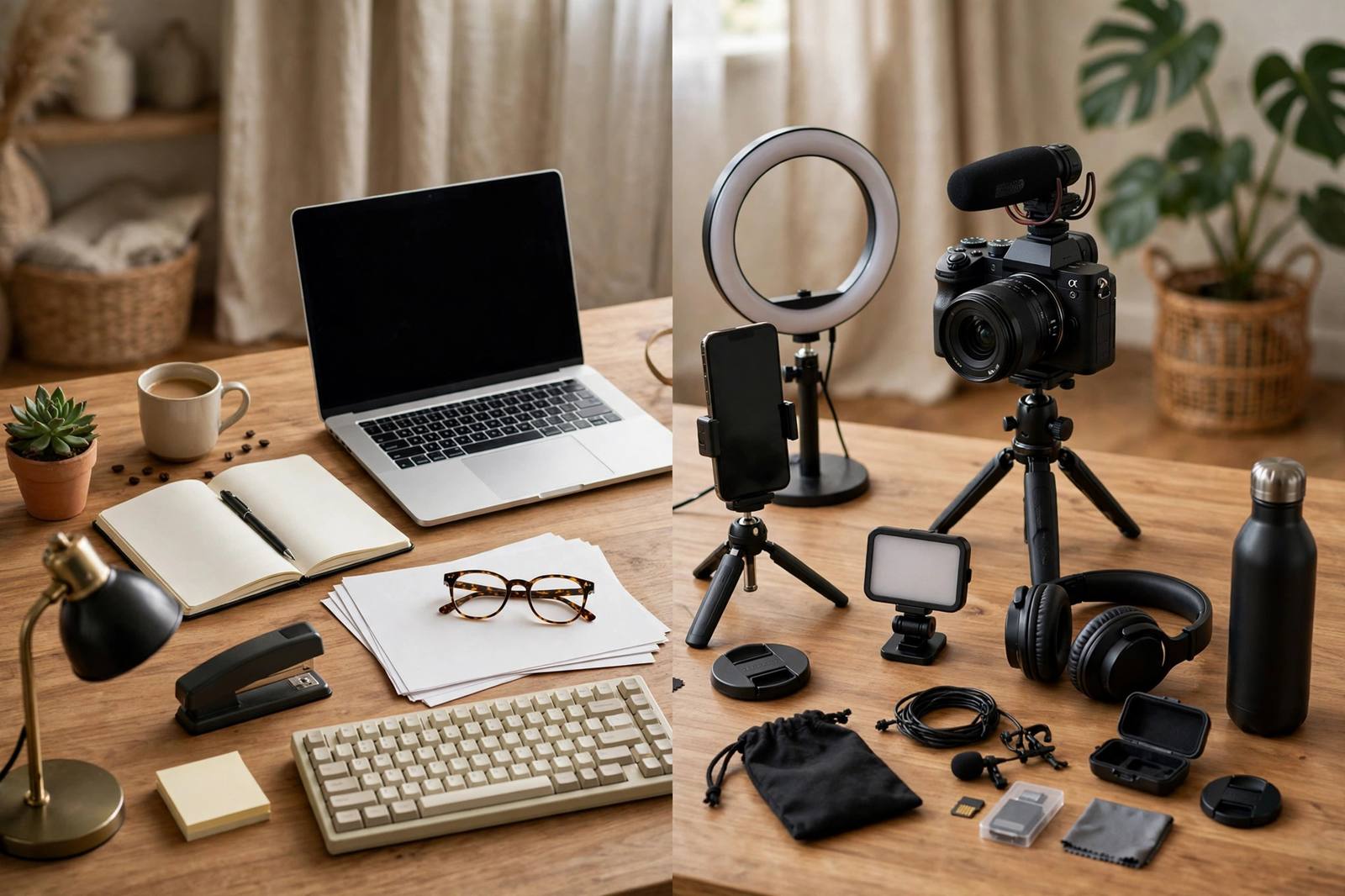
Startup cost. A blog needs a domain (roughly $10-15/year), hosting (a few dollars a month), and a laptop you already own. A vlog needs a decent camera or recent smartphone, a microphone (audio quality matters more than video quality — viewers forgive blurry video but not bad audio), lighting, and editing software. Vlogging’s real startup cost is higher, mostly in audio and lighting.
Time per piece. A solid blog post takes me 4-8 hours including research and editing. A comparable vlog takes longer: filming, then editing footage down, color, audio, thumbnails. Video editing is the hidden time sink — beginners routinely spend 3-5x the filming time in editing.
Discoverability. Blogs live on Google: search traffic is intent-driven and compounds for years. A post I wrote three years ago still brings readers daily. Vlogs live on YouTube’s recommendation engine: discovery can be explosive but is algorithm-dependent, and older videos decay faster in most niches.
Ownership. This is the big one. Your blog is yours — your domain, your email list, your rules. Your vlog audience belongs to YouTube; a policy change or algorithm shift can cut your reach overnight. Smart vloggers eventually start blogs or newsletters for exactly this reason.
Monetization. Blogs monetize through ads, affiliates, sponsored posts, and digital products — diversified and largely passive once traffic exists. Vlogs monetize through YouTube ad revenue, sponsorships, and memberships — often higher per-viewer revenue but more platform-dependent.

The Personality Question Nobody Asks
Here is what the comparison tables miss: the formats demand different versions of you. Blogging lets introverts thrive — you can be thoughtful, precise, and private. Your face never has to appear. Vlogging requires being watchable: energy on camera, comfort with your appearance and voice being public, and resilience to comments about how you look, not just what you say.
I am not saying shy people cannot vlog — many successful vloggers are introverts who learned camera presence. But it is a skill you must actively build, whereas writing rewards the temperament many people already have. Be honest about which learning curve excites you rather than drains you.
Which Should You Start? A Decision Guide
Start a blog if: you love writing or want to get better at it; your topic is informational (tutorials, reviews, guides — anything people Google); you want an asset you fully own; you prefer working privately; or your budget is minimal. If this is you, read how to start a blog for the practical setup steps.
Start a vlog if: you are comfortable on camera (or want to be); your topic is visual or personality-driven (travel, lifestyle, comedy, demos); you enjoy the performance side of creating; or you want faster audience feedback and community.
Do both if: you have the time — and I mean genuinely, not aspirationally. The creators who win long-term usually anchor on one format and repurpose into the other: bloggers turning posts into videos, vloggers turning scripts into articles. Repurposing is efficient; running two separate content strategies from scratch is a burnout machine.
Costs Broken Down Honestly
Blog, year one: domain and hosting under $100, a free WordPress theme to start, and optionally an email tool’s free tier. You can launch a real blog for the price of two pizzas. The real cost is your time writing consistently.
Vlog, year one: a smartphone you own works to start, but plan for a $50-100 microphone (non-negotiable), $30-50 in lighting, and a tripod. Editing software ranges from free (DaVinci Resolve, CapCut) to subscription. The bigger cost is time: scripting, filming, and editing each video is a part-time job before you earn a cent.
Can You Turn One Into the Other?
Yes, and the smartest creators do. Every blog post is a video script waiting to happen — I have turned high-traffic articles into videos that found entirely new audiences. Every vlog is a transcript waiting to become an article that ranks on Google. The content is the asset; the format is just the container.
My recommendation for beginners: pick the format that matches your natural strengths, publish consistently for six months, then repurpose your winners into the other format. You get two audiences from one body of work, and you learn which format actually fits your life.
Blog vs Vlog Difference in Earnings: Realistic Timelines
Let us talk money honestly, because both formats have a mythology problem. Blogging income typically starts with display ads once you reach meaningful traffic — realistically 6 to 12 months of consistent publishing for most niches — then diversifies into affiliates, which often out-earn ads, and eventually digital products or services, which is where the real money lives. The curve is slow then compounding: year one is foundation, year two is traction, year three is where blogs often become genuinely profitable. The income is also the most passive of any format — old posts earn while you sleep.
Vlogging income through YouTube ads requires 1,000 subscribers and 4,000 watch hours just to qualify for monetization, which takes most creators the better part of a year. But per-viewer revenue runs higher: a loyal audience of 50,000 subscribers can support a creator through sponsorships far beyond what ad revenue alone pays. The catch is consistency pressure — the algorithm rewards frequent uploads, so vlogging income is more active and more volatile. My honest summary: blogging builds a slower, more stable asset; vlogging offers faster audience growth with less stability. Neither makes anyone rich quickly, whatever the gurus claim.
The Hybrid Creator: Running Both Without Burning Out
The creators I see thriving long-term usually end up hybrid, but they get there in the right order. Phase one: master one format for six to twelve months until publishing feels routine. Phase two: repurpose, don’t duplicate — turn each blog post into a video script, or each video into a transcribed article. Repurposing one piece of research into two formats is efficient; creating separate content calendars for both is how people quit.
Phase three, for the ambitious: let each format do what it does best. Use the blog for searchable, evergreen, in-depth content that compounds on Google. Use the vlog for personality, community, and timely content that thrives on recommendations. Cross-promote lightly — mention the video in the article, link the article under the video — and build an email list from both, because the list is the only audience you truly own regardless of format. Done this way, the two formats multiply each other instead of competing for your energy.
Equipment You Can Skip as a Beginner
Beginners in both formats overspend on gear they do not need yet. Bloggers: you do not need a premium theme, paid SEO tools, or a fancy logo on day one. A clean free theme, free analytics, and consistent publishing beat expensive tooling every time for the first year. Spend money only when a specific limitation is costing you — slow hosting that hurts rankings, for example.
Vloggers: you do not need a cinema camera, a gimbal, or acoustic treatment to start. A recent smartphone, a decent microphone, and a window for lighting produce genuinely good video — some of the biggest channels still film this way. What beginners actually need is not gear but reps: your fiftieth video will be better than your first regardless of what you film it on. Upgrade gear to solve specific problems you have actually encountered, not hypothetical ones.
Frequently Asked Questions
What is the main difference between a blog and a vlog?
A blog publishes written articles on a website, discovered mainly through search engines. A vlog publishes video episodes, usually on YouTube, discovered through recommendations and subscriptions. The work, skills, and costs behind each are quite different.
Which earns more money, blogging or vlogging?
It depends on niche and scale rather than format. Vlogging can pay more per viewer through sponsorships, while blogging builds more diversified, passive income through affiliates and ads. Both take consistent effort over months or years to monetize meaningfully.
Do I need to show my face to vlog?
No — faceless vlogging is a whole genre: screen recordings, voiceover animations, stock footage with narration. But on-camera vlogs generally build stronger personal connection with viewers.
Is blogging dead in the age of video?
Not even close. People still Google questions every day, and written content remains the best format for detailed tutorials, comparisons, and reference material. Blogs and vlogs serve different search intents.
Can I start both a blog and a vlog at the same time?
You can, but most beginners burn out trying. Start with the format that fits your strengths, build a consistent habit, then repurpose your best content into the other format.