What Is NATO? The Alliance Explained Simply

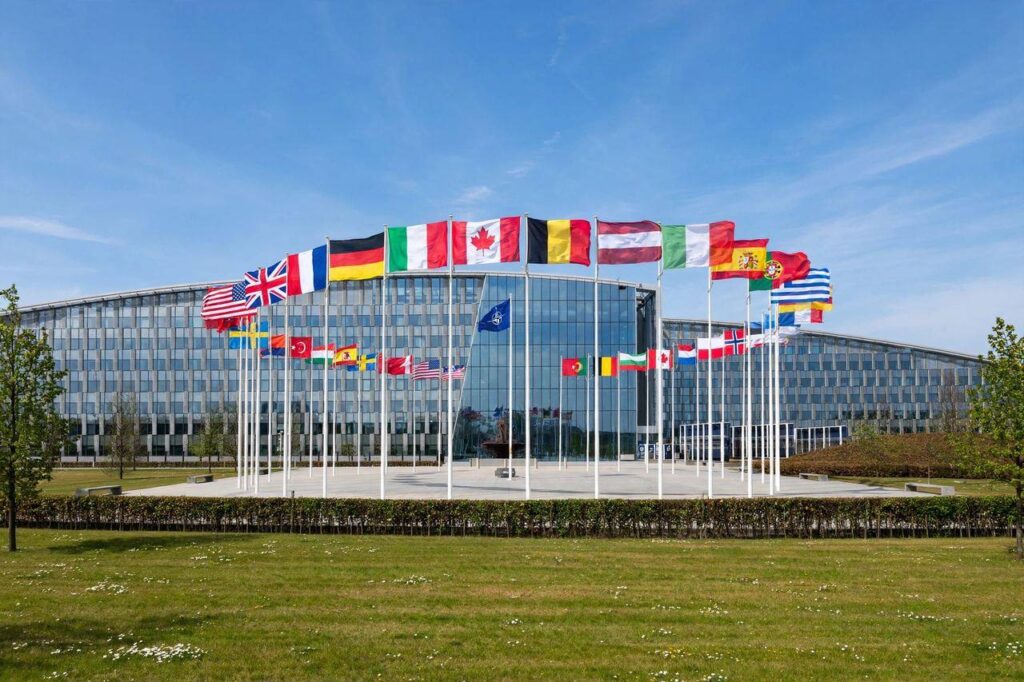
What is NATO? At its simplest, NATO — the North Atlantic Treaty Organization — is a military alliance of 32 countries across North America and Europe, founded in 1949, whose members promise to defend one another if attacked. That promise, known as Article 5, is the most famous sentence in modern alliance politics: an attack on one is treated as an attack on all. But the alliance that began as a Cold War pact against the Soviet Union has become something larger and more complicated — a crisis-management body, a cyber-defense coordinator, and the center of one of today’s sharpest geopolitical debates. Here’s the full picture, with the facts separated from the spin.
What Is NATO? The Short Answer
NATO is an intergovernmental military alliance established by the North Atlantic Treaty — also called the Washington Treaty — signed on April 4, 1949. Its headquarters sits in Brussels, Belgium. The alliance currently has 32 member countries, and its core job is collective defense: deterring aggression by making clear that attacking any member means facing all of them. Beyond that, NATO runs joint military exercises, coordinates crisis response, sets defense standards so allied forces can operate together, and increasingly works on cyber defense and counterterrorism.
One important clarification: NATO is not a world government, not a UN agency, and not an army unto itself. It has no standing army of its own in the traditional sense — the forces are contributed by member nations and placed under NATO command for specific missions and exercises.
How NATO Started: 1949 and the Cold War
To understand what NATO is, you have to start in the rubble of World War II. By 1949, the Soviet Union had installed friendly regimes across Eastern Europe, and Western nations feared further expansion. Twelve countries — Belgium, Canada, Denmark, France, Iceland, Italy, Luxembourg, the Netherlands, Norway, Portugal, the United Kingdom, and the United States — signed the treaty in Washington, D.C.
The alliance’s first Secretary General, Lord Ismay, reportedly joked that NATO existed to “keep the Soviet Union out, the Americans in, and the Germans down.” Blunt, but it captured the logic: bind American military power to Europe’s defense, deter Moscow, and anchor a recovering West Germany inside a cooperative framework rather than leaving it isolated.
When the Soviet Union collapsed in 1991, many expected NATO to fade away. It didn’t. Instead it redefined itself — intervening in the Balkans in the 1990s, invoking Article 5 for the first time after the September 11 attacks, and leading the long mission in Afghanistan.
Article 5: The Heart of the Alliance
Article 5 is the treaty’s collective-defense clause: if a member is attacked, each other member will take “such action as it deems necessary, including the use of armed force,” to restore security. Note the careful wording — it doesn’t automatically trigger war. Each country decides how to respond, though the political expectation of solidarity is enormous.
Article 5 has been invoked exactly once: after the 9/11 terrorist attacks on the United States in 2001. That invocation led to NATO’s mission in Afghanistan and to allied cooperation in counterterrorism that continues in various forms today. Every other major NATO operation — Kosovo, Libya, maritime patrols — was authorized under different legal and political frameworks, not Article 5.
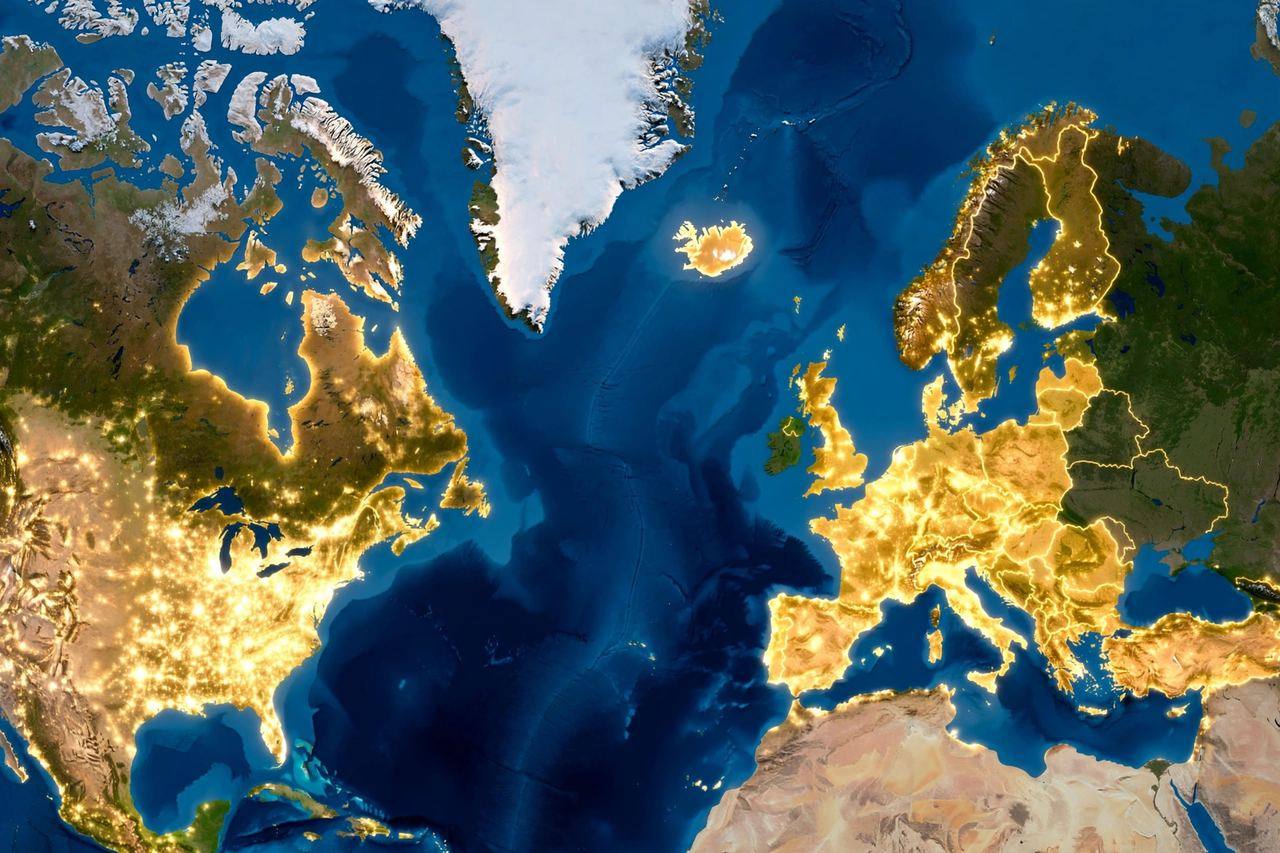
The 32 Member Countries
NATO began with 12 founders and has grown through successive waves of enlargement:
- 1952: Greece and Turkey joined, anchoring the alliance’s southeastern flank.
- 1955: West Germany joined — a landmark decision that completed its integration into the Western security order.
- 1982: Spain joined after its transition to democracy.
- 1999: The Czech Republic, Hungary, and Poland — the first former Warsaw Pact members.
- 2004: The biggest single wave: Bulgaria, Estonia, Latvia, Lithuania, Romania, Slovakia, and Slovenia — including three former Soviet republics on Russia’s border.
- 2009: Albania and Croatia.
- 2017: Montenegro. 2020: North Macedonia.
- 2023–2024: Finland and then Sweden joined, ending decades of non-alignment and — in Finland’s case — adding over 800 miles of direct NATO-Russia border.
No country has ever left NATO. France did withdraw from the alliance’s integrated military command between 1966 and 2009 while remaining a political member — a nuance that still trips people up.
How NATO Is Run
NATO makes decisions by consensus — every member has an effective veto. The main political body is the North Atlantic Council, where ambassadors (or heads of state at summits) meet. Day-to-day leadership comes from the Secretary General, the alliance’s top civilian official; since October 2024 that has been Mark Rutte, the former prime minister of the Netherlands. Military operations are directed through NATO’s command structure headed by the Supreme Allied Commander Europe.
Consensus decision-making is both NATO’s strength and its weakness: it guarantees that no member is dragged into something it fundamentally opposes, but it also means a single country can slow or block action — something that has played out publicly during debates over enlargement and aid to partners.
What NATO Actually Does Today
Collective defense is still the core, but the day-to-day work is broader:
- Deterrence on the eastern flank. Since 2014, NATO has stationed multinational battlegroups in the Baltic states and Poland, scaled up after 2022.
- Joint exercises. Large-scale drills test whether 32 different militaries can actually fight together — communications, logistics, and command all have to mesh.
- Cyber defense and hybrid threats. The alliance now treats cyberattacks as potentially triggering collective defense and runs a cyber operations center.
- Partnerships. NATO works with non-members including Ukraine, Georgia, and partners in Asia and the Middle East through training and intelligence sharing.
- Defense spending pressure. For years the target was 2% of GDP on defense; at the 2025 summit in The Hague, members agreed to raise the ambition to 5% of GDP — 3.5% on core military spending plus 1.5% on security-related needs — by 2035. Hitting those numbers is now the alliance’s biggest internal debate.

The Expansion Debate
Here’s where confirmed facts end and contested interpretations begin — and I’ll mark the line clearly. Confirmed: NATO maintains an “open door” policy; Ukraine, Georgia, and Bosnia and Herzegovina are recognized as aspiring members. Russia has consistently described NATO enlargement as a threat and cited it as a justification for its 2022 invasion of Ukraine. Contested: whether Western leaders made binding promises in the 1990s not to expand eastward — historians and diplomats genuinely disagree, and declassified documents support multiple readings.
What isn’t disputed is the strategic consequence: Finland and Sweden’s accession — widely seen as a direct response to the war in Ukraine — significantly strengthened NATO’s northern position. Whether further enlargement stabilizes or destabilizes Europe is the defining security argument of this decade.
NATO and Russia: The Complicated History
No honest explainer of what NATO is can skip the Russia question — it’s the central tension in the alliance’s modern story. During the Cold War, the relationship was straightforward adversarial: NATO and the Soviet-led Warsaw Pact stared at each other across divided Europe for four decades without direct war, a standoff historians credit with both preventing conflict and nearly causing catastrophe several times over.
After 1991, there was a genuine attempt at partnership. Russia joined NATO’s Partnership for Peace program, cooperated on counterterrorism after 9/11, and even allowed NATO supply routes to Afghanistan. But two trends pulled the relationship apart: NATO’s eastward enlargement — which Moscow viewed as encroachment despite Western insistence that sovereign states choose their own alliances — and Russia’s own turn toward confrontation, visible in Georgia (2008), Crimea (2014), and the full-scale invasion of Ukraine (2022).
What’s confirmed: Russia cites NATO expansion as a core grievance and a justification for its actions in Ukraine. NATO members cite Russia’s invasion as proof the alliance remains necessary — pointing to Finland and Sweden’s decision to join as evidence. What’s contested: whether different Western choices in the 1990s could have produced a different outcome. That’s a debate for historians, and an honest one admits good-faith arguments on multiple sides.
How NATO Compares to Other Military Alliances
It helps to place NATO alongside its counterparts. The Collective Security Treaty Organization (CSTO), led by Russia, is the closest structural parallel — a mutual-defense pact of post-Soviet states — but it lacks NATO’s integrated command, joint exercises at scale, and interoperability standards. The U.S. alliance network in Asia (treaties with Japan, South Korea, Australia, the Philippines) is a hub-and-spoke system of bilateral deals rather than one multilateral alliance, though partnerships between NATO and countries like Japan and South Korea have deepened in recent years.
What makes NATO unusual is its combination of durability and integration: 75+ years without a member leaving, common funding for shared infrastructure, standardized equipment and procedures, and a consensus political structure. Critics call it a Cold War relic; supporters call it the most successful alliance in modern history. Both can point to evidence. What neither disputes is that nothing else quite like it exists.
Frequently Asked Questions
Is NATO the same as the United Nations?
No. The UN is a global diplomatic body with 193 members focused on peace, development, and international law; NATO is a 32-member military alliance focused on collective defense. They cooperate but are entirely separate organizations with different memberships and missions.
Has NATO ever gone to war?
NATO has conducted military operations — in Bosnia and Kosovo in the 1990s, Afghanistan from 2001, and Libya in 2011, among others — but it has never fought a war against another major power, and Article 5 has only been invoked once, after 9/11.
Does NATO have its own army?
Not in the way people usually mean. NATO commands forces contributed by member countries for specific missions and maintains a rapid-response force, but the troops, ships, and aircraft belong to the member nations.
Which countries are trying to join NATO?
NATO officially recognizes Bosnia and Herzegovina, Georgia, and Ukraine as aspiring members. Any new member requires unanimous approval from all current members, so the politics of each candidacy are complex.
Why do some countries oppose NATO?
Critics — most prominently Russia and China — argue that NATO is a Cold War relic whose eastward expansion threatens their security. Supporters counter that sovereign democracies have the right to choose their alliances and that NATO has kept the peace among its members for over 75 years. Both claims are political positions, not settled facts.
How is NATO funded?
Members fund their own militaries individually. NATO’s common budgets — for headquarters, joint operations, and shared infrastructure — are funded by contributions based on each country’s gross national income, with the United States and Germany among the largest contributors.