What to Wear to the Airport: Comfort Meets Style

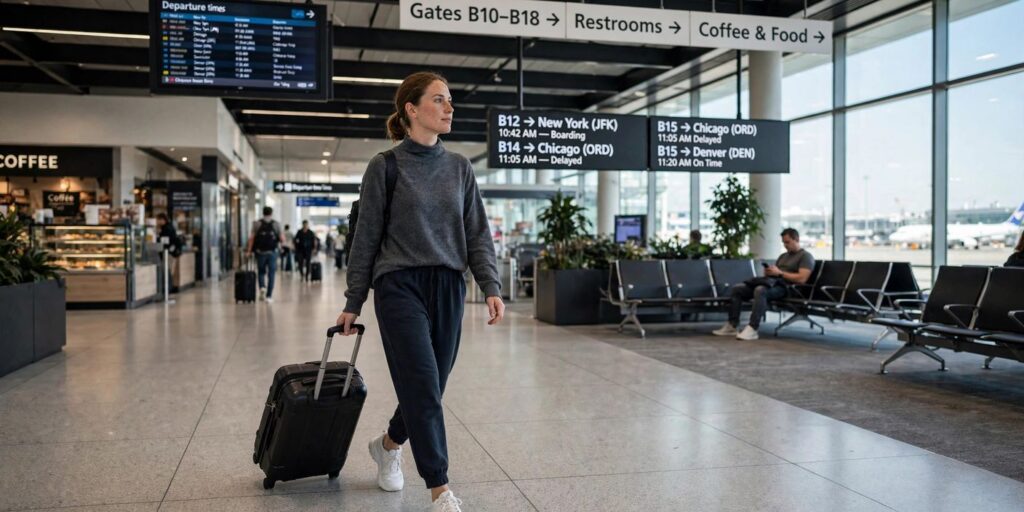
What to wear to the airport is a question with a deceptively simple answer and a surprisingly passionate debate behind it. On one side: comfort maximalists in leggings and hoodies. On the other: the “dress for the destination” romantics. I have flown enough to have been both people, and here is where I landed: the perfect airport outfit is comfortable enough for a six-hour delay, polished enough that you would not be embarrassed to be upgraded, and practical enough to get through security without a meltdown. It is a formula, not a vibe — and once you know it, packing it takes five minutes.
The airport outfit has a harder job than almost any other outfit you own. It needs to handle temperature swings (freezing terminal, warm plane, unknown destination), hours of sitting, security screening, miles of walking, and the small but real chance that your checked bag goes on its own adventure — meaning what you are wearing might be your outfit for the next 24 hours. Dress for all of that, and you will never be the person sprinting barefoot through security in socks with holes.
The Formula
Here it is, the whole thing: soft, stretchy bottoms + a comfortable top + a warm layer + slip-on or easy-off shoes + minimal metal. That is the airport uniform, and every good travel outfit is a variation on it. The bottoms: joggers, leggings (with a top long enough for coverage), stretch trousers, or soft jeans. The top: a tee, a knit top, or a lightweight sweater. The layer: a hoodie, a cardigan, an oversized scarf, or a packable jacket. The shoes: slip-on sneakers, loafers, or boots you can get on and off quickly.
Why this formula works: every piece is comfortable for sitting, none of it fights you at security, and the layer handles the temperature lottery. It is not glamorous, but it is the outfit equivalent of a good travel pillow — unglamorous and essential.
Fabric Choices That Matter
Fabric is where airport outfits succeed or fail. Natural fibers with stretch — cotton blends, jersey, ponte, merino wool — breathe, move, and do not wrinkle into a topographical map after four hours in seat 32B. Merino wool deserves special mention: it regulates temperature, resists odor (critical if this becomes a 24-hour outfit), and looks more polished than its comfort suggests.
Avoid: anything 100% linen (wrinkles if you look at it), stiff denim with no stretch (misery by hour three), and delicate fabrics that snag on armrests and seatbelts. Dark colors hide travel grime; patterns hide wrinkles. The seasoned traveler’s palette is dark neutrals for exactly these reasons.
Shoes: The Most Important Decision
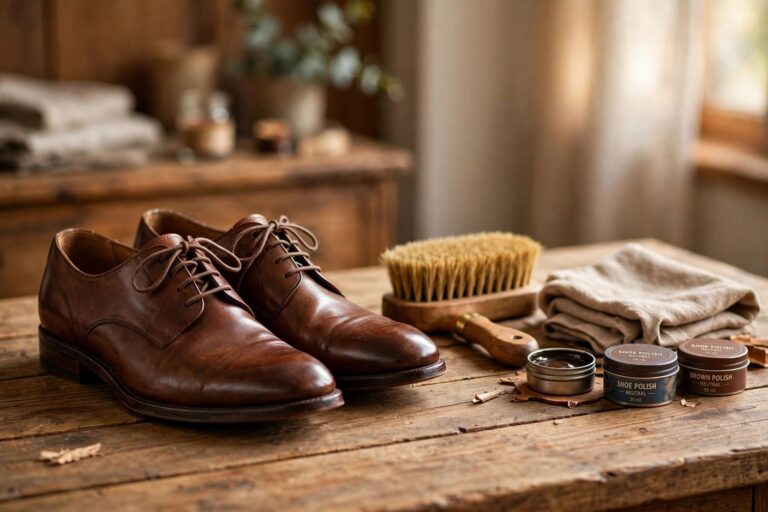
Let me be emphatic: wear shoes you can walk miles in, because you might. Terminal transfers, gate changes, the hike from the curb to the far concourse — airport walking is real exercise. Sneakers, supportive slip-ons, or comfortable boots are the answer. Whatever you choose, make sure they are broken in; the airport is not the place to discover that new shoes bite.
Security-friendliness is the second criterion. Slip-ons save everyone time and dignity. If you wear lace-ups or boots, practice the quick on-off. Avoid anything with excessive metal — not because it will necessarily set off the detector, but because every extra second at security is a second of your life you will not get back. And wear socks. Always wear socks. The security floor has seen things.
Layers: Your Climate Control System
Airports and airplanes are climate chaos: the terminal is freezing, the jet bridge is sweltering, the plane is arctic, your destination is unknown. Layers are the only sane response. The ideal travel layer is warm, packable, and doubles as a pillow — a hoodie, an oversized scarf or wrap, or a packable down jacket.
The scarf-as-blanket trick is beloved by frequent flyers for good reason: a large wrap serves as a layer, a blanket, a pillow, and a modesty cover in one. If you run cold, it is the single highest-value item in a travel wardrobe. Pack it in your personal item, not your carry-on — you want it accessible the moment you sit down.
What to Wear to the Airport: Women
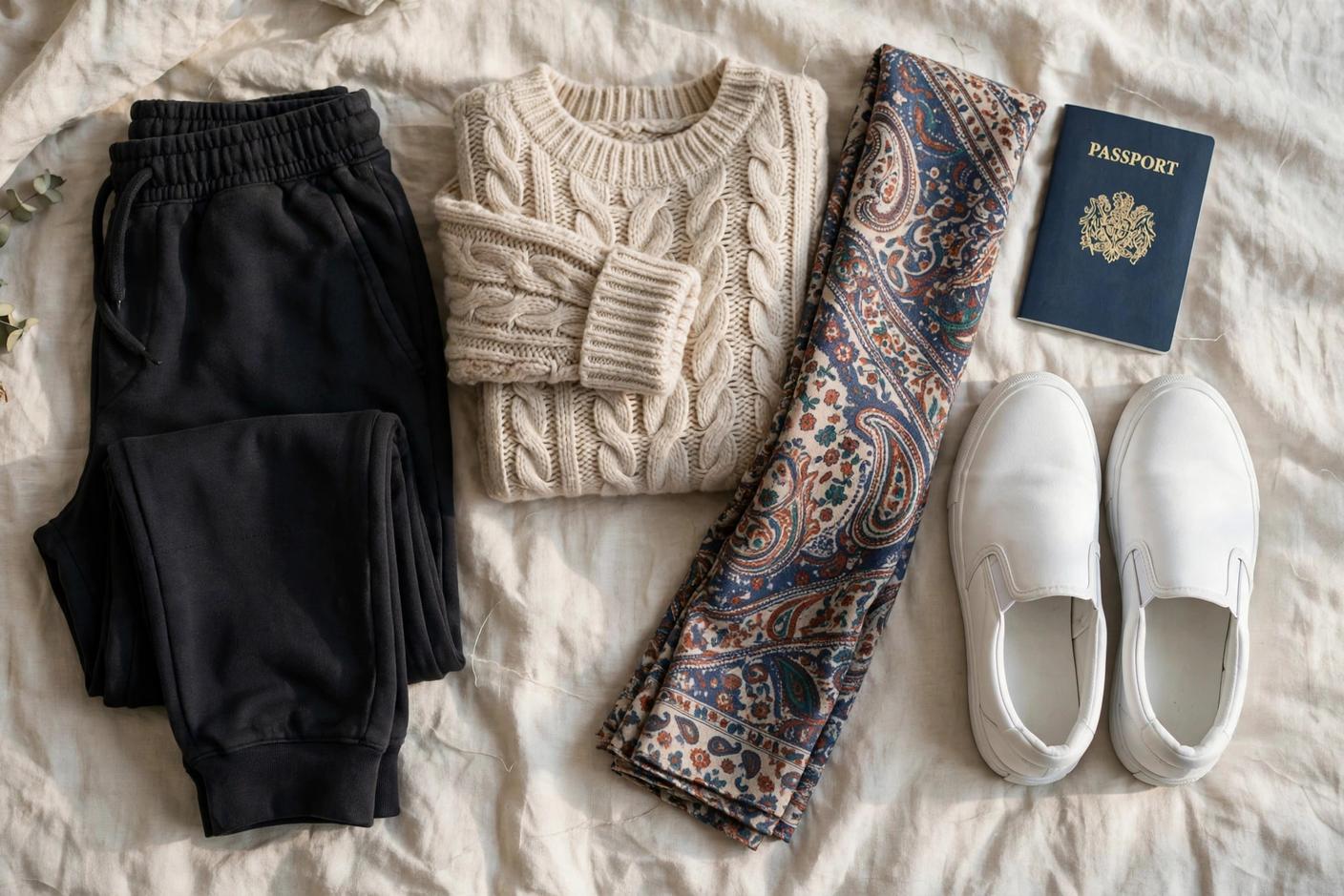
The classic: leggings or joggers with an oversized sweater or a long top, sneakers, and a big scarf. It is comfortable, it is modest with the right top length, and it looks intentional rather than sloppy. Alternatives: ponte trousers with a knit top and loafers for a more polished version; a midi dress in jersey with leggings underneath and sneakers for the dress-wearers (surprisingly comfortable and security-friendly).
Hair: tie it back or braid it. Airplane air is dry, headrests are communal, and loose long hair becomes a project by hour five. Minimal makeup — the cabin will undo anything elaborate, and you will feel better with less. Jewelry: keep it simple and metal-light for security.
What to Wear to the Airport: Men
Joggers or stretch chinos with a tee and a hoodie or quarter-zip, clean sneakers. That is the uniform, and it is correct. The upgrade path: dark jeans with stretch, a polo or henley, and a casual jacket — comfortable but sharp enough for an upgrade or a business trip arrival. Avoid the full sweatsuit unless the sweatsuit is genuinely nice; there is a line between comfortable and “I have given up,” and it matters if you are flying for work.
Security Screening: Dress to Glide Through
A few outfit choices make security painless. Minimal metal: skip the big belt buckle, the steel watch, the layered necklaces — or put them in your bag before the line. Empty pockets before you reach the bins: phone, wallet, keys, coins all go in your bag, not the bin, to save time. Jackets and hoodies come off, so wear something underneath you are comfortable being seen in.
The seasoned move: as you approach the checkpoint, you are already unzipping, unlacing, and depocketing. The goal is to go from person to tray-contents in under thirty seconds. Your outfit either helps or hinders this — choose helpful.
Long-Haul and Overnight Flights
For flights over six hours, upgrade the comfort: this is where the outfit might genuinely become your clothes for a full day. Prioritize softness and odor-resistance (merino, again, is the champion). Compression socks are worth considering for circulation on very long flights — they are unglamorous and effective. Bring an extra top in your personal item; changing your shirt mid-journey is a small luxury that makes a remarkable difference to how human you feel on arrival.
Sleep strategy affects the outfit too: if you plan to sleep, the softer and looser the better. Some travelers change into dedicated “plane pajamas” after takeoff — it sounds excessive until you have done a fourteen-hour flight, at which point it sounds like wisdom.
Arriving Polished: The Destination Factor
Sometimes the airport outfit is also the arrival outfit — a work trip, a wedding, dinner straight from the airport. The trick is the “arrival layer”: pack a blazer, a nice scarf, or a statement accessory in your personal item, and do a two-minute refresh in the arrivals bathroom. Change the top, add the layer, fix the hair, and the travel outfit becomes a presentable outfit.
This is also an argument for the polished end of the comfort spectrum. Ponte trousers and a knit top with loafers handle a travel day and a business dinner with one accessory change; leggings and a hoodie do not. Match the outfit to the stakes of your arrival.
Packing the Airport Outfit (and the Rest)
Your airport outfit should be the bulkiest thing you own — wear the heavy sweater, the boots, the jacket on the plane to save luggage space and weight. This is standard one-bag travel strategy: wear the weight, pack the light stuff. And if you are trying to travel carry-on only, your airport outfit is doing double duty as luggage space — the carry-on packing approach starts with what is on your body, not what is in your bag.
Red-Eyes and Time Zones
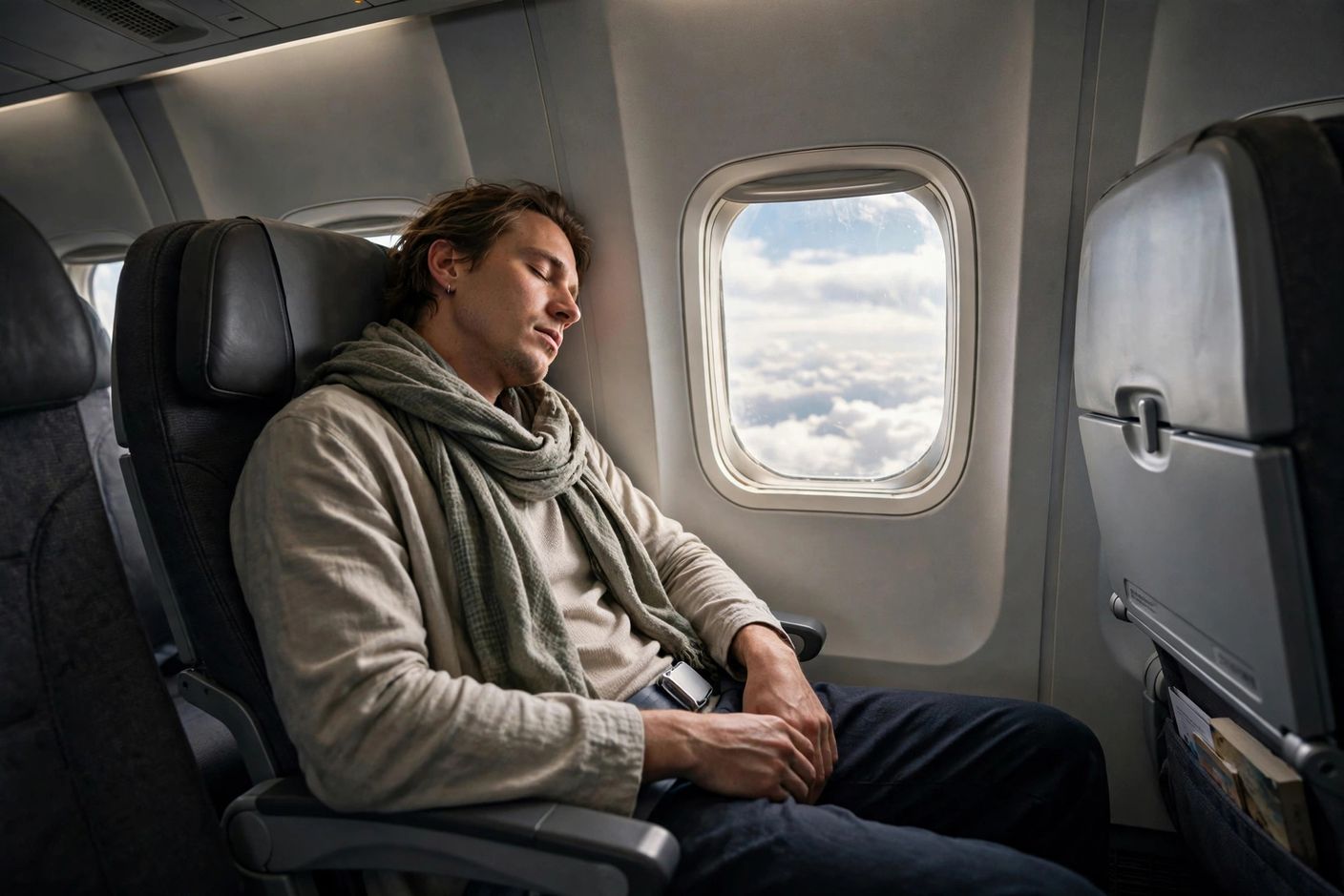
Overnight flights are where the airport outfit truly earns its keep. The goal shifts from “comfortable for the terminal” to “sleepable, survivable, and presentable at 6 a.m. in a new time zone.” Soft, loose layers are non-negotiable. An eye mask and earplugs do more for your arrival appearance than any outfit choice — sleep is the best beauty product on a red-eye.
For the time zone transition, dress for your destination’s morning, not your departure’s evening. Check the arrival weather and have a layer ready. And the arrival refresh — wash your face, change your top, brush your hair, add the polished layer — is the difference between emerging from a red-eye looking like luggage and looking like a traveler. It takes five minutes in an airport bathroom and it is the highest-ROI grooming of any trip.
Traveling With Kids: The Airport Outfit Multiplies
Flying with children turns the airport outfit into a team sport. Dress kids in comfortable layers with easy-off shoes (velcro is a gift at security), avoid outfits with complicated buttons or overalls for the under-five set — every bathroom trip becomes an expedition — and pack a full change of clothes for each child in your carry-on. Spills, blowouts, and mysterious stickiness are not possibilities; they are certainties.
For parents, add practicality: pockets (you will be carrying everyone’s everything), shoes you can run in (because you will be running — for the gate, for the dropped lovey, for the child who has decided the terminal is a racetrack), and a top you do not mind getting smeared. The well-dressed family at the airport is the comfortable one, not the coordinated one.
Frequently Asked Questions
What is the best outfit for a long-haul flight?
Soft, stretchy layers: leggings or joggers, a breathable top, and a warm layer like a hoodie or cardigan. You want to be comfortable for ten hours and presentable when you land.
Can I wear jewelry through airport security?
Keep it minimal. Chunky metal pieces often trigger the scanner and slow you down. Simple studs and a watch are fine; save the statement pieces for your destination.
What should I wear if I have a business meeting right after landing?
A wrinkle-resistant blazer over a knit top with dark trousers. It reads as professional on arrival but stays comfortable in the air. Pack the meeting shirt separately so it is crisp.
Are compression socks worth wearing on flights?
For flights over four hours, yes. They reduce swelling and fatigue, and they are invisible under trousers. Frequent flyers swear by them for a reason.
What bag is best for the airport?
A backpack or tote with a secure zip, a luggage sleeve that slides over your suitcase handle, and an outside pocket for your passport. Hands-free and organized beats fashionable here.
Common Questions
Can I wear leggings to the airport?
Yes — with a top long enough to cover the hips and rear. Leggings with a short top read as gym wear; with an oversized sweater or tunic, they are the standard travel uniform.
What shoes are best for the airport?
Comfortable, broken-in, easy to remove: slip-on sneakers, supportive loafers, or easy boots. Avoid new shoes, heels, and anything with complicated lacing.
Should I dress up for first class?
You do not need to, but the polished end of comfortable — dark jeans, a nice top, a blazer — never hurts. Crew and fellow passengers notice effort, and upgrades (the rare operational kind) have been known to follow the well-dressed.
What should I wear to the airport in summer?
Light, breathable layers: a tee or light top, comfortable bottoms, and a warm layer for the arctic plane cabin. The plane will be cold regardless of the weather outside — never skip the layer.
Can I wear a dress to the airport?
Yes — a jersey or knit midi dress with leggings underneath and comfortable shoes is a great travel outfit. Avoid anything fussy, wrinkly, or hard to sit in for hours.