What to Wear on a Cruise: The Complete Packing Guide

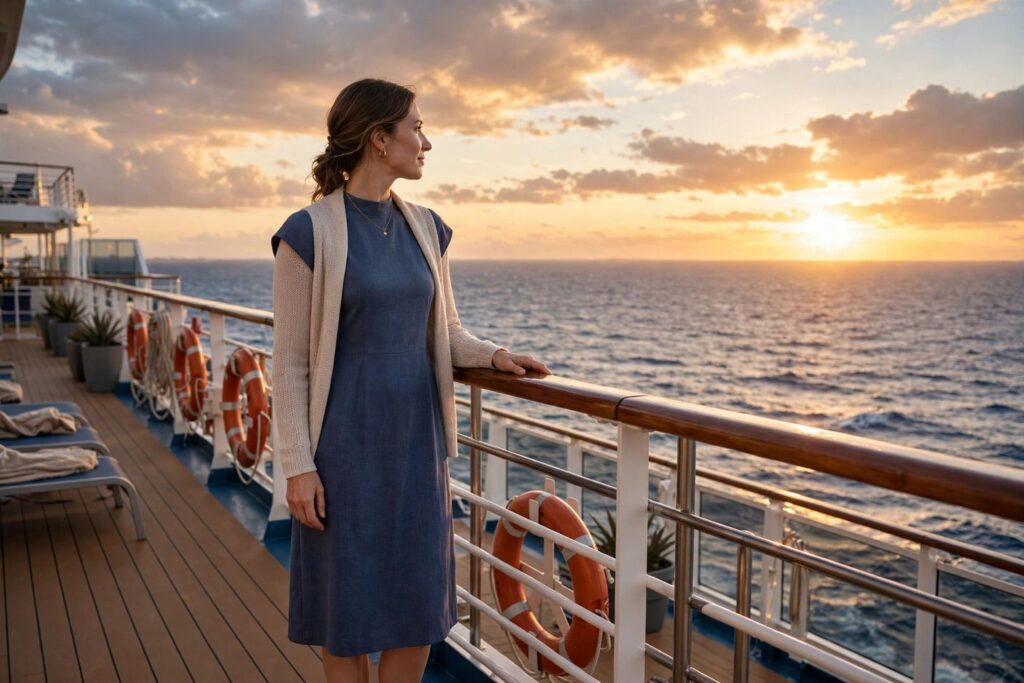
Packing for a cruise is a special kind of puzzle. You need outfits for pool days, port days, casual dinners, and at least one formal night — all fitting into luggage that has to survive airports, cruise terminals, and a cabin closet the size of a shoebox. I have cruised enough to learn this the generous way and the hard way, and here is everything I know about what to wear on a cruise, from embarkation day to the final disembarkation shuffle.
The secret that experienced cruisers all discover eventually: you need far less than you think, and the pieces need to work harder than they do at home. A cruise wardrobe is a capsule wardrobe with a passport — every item should earn its place by working in at least two settings.
How Cruise Dress Codes Actually Work
Most mainstream cruise lines run three dress codes across the voyage: casual, smart casual, and formal. Casual days mean resort wear — sundresses, nice shorts, polo shirts, sandals. Smart casual evenings mean what you would wear to a nice restaurant: a dress or a skirt-and-top for women, slacks and a collared shirt for men. Formal nights — usually one or two per sailing — mean cocktail dresses or evening gowns for women, suits or tuxedos for men.
The trend across the industry has been toward relaxation, and many lines have softened or dropped strict formal nights. But here is my advice: check your specific sailing’s dress code before you pack, and when in doubt, bring one formal outfit. Being overdressed on a cruise is a non-event; being underdressed at the captain’s dinner is a memory you will keep.
Daytime: Pool, Deck, and Port Days
Daytime on a cruise splits into two modes: ship days and port days. Ship days are resort days — swimwear (kept modest and tasteful; remember families share these decks), cover-ups, sundresses, shorts, and sandals. Bring two swimsuits so one can dry while you wear the other; nothing is sadder than a damp swimsuit at 9 a.m.
Port days are excursion days, and your outfit should match your plans. Walking tours mean comfortable walking shoes, sun protection, and modest clothing that works for churches or temples — many Mediterranean and Caribbean ports have sacred sites with dress requirements (covered shoulders and knees). Beach excursions mean swimwear under a cover-up and water-friendly sandals. Active excursions like hiking or zip-lining mean athletic wear and closed shoes. Always bring a small day bag for water, sunscreen, and your ship card.
Evening: Dinners and Smart Casual Nights
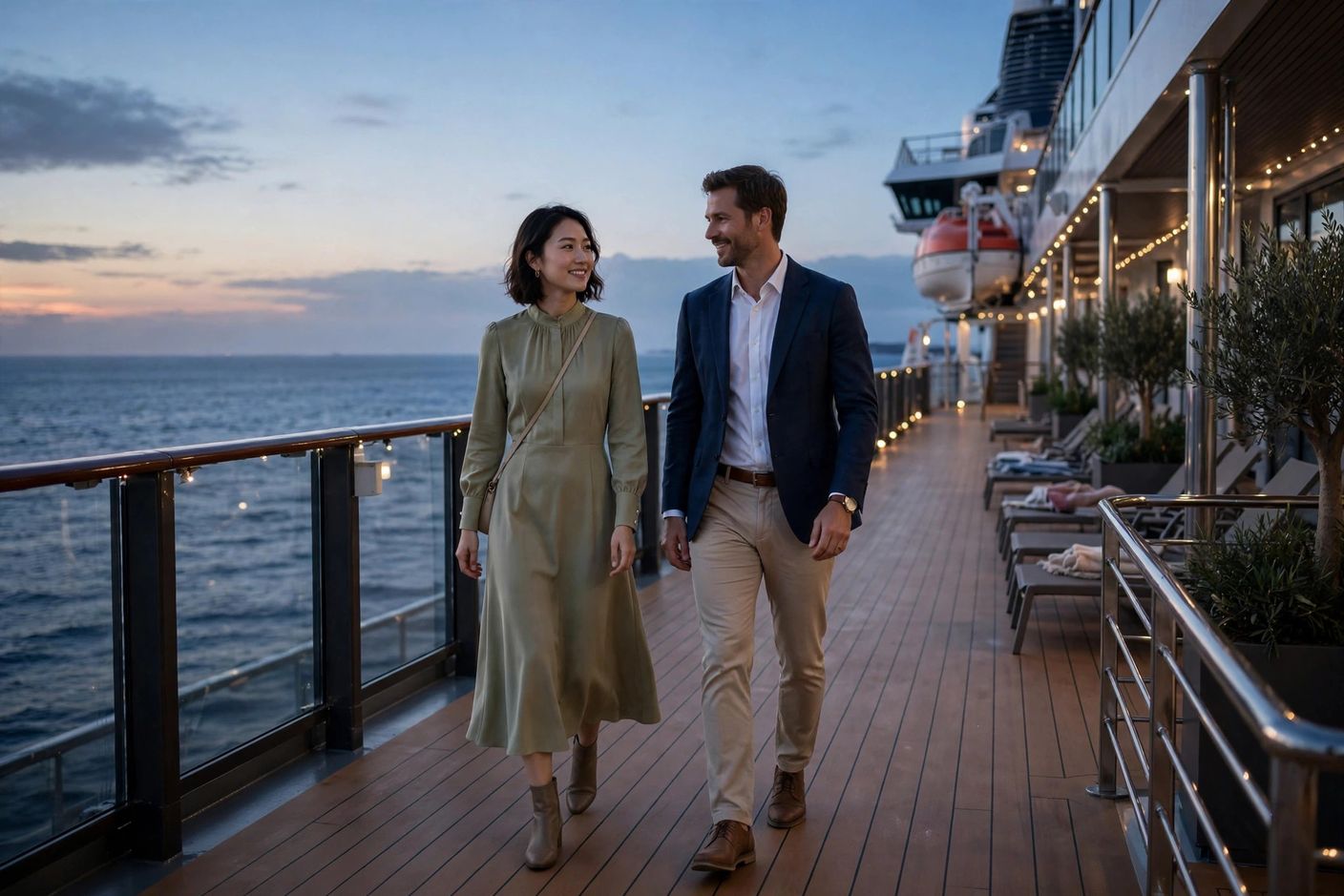
Evenings are when cruise dressing gets fun. Most nights are smart casual, and the main dining room has an atmosphere that rewards a little effort. For women: a knit dress, a skirt with a nice top, or elegant trousers with a blouse. For men: slacks or chinos with a collared shirt; a sports coat is welcome but not required.
The practical consideration is re-wearing. You will eat dinner every night for a week, and nobody — not the waitstaff, not your tablemates — is tracking your outfits. Three or four evening looks in rotation are plenty for a seven-night sailing. Accessories and a change of top transform a repeat bottom into a “new” outfit.
Formal Night: What to Actually Wear
Formal night is the most overthought part of cruise packing. For women, a cocktail dress or an elegant long dress is the standard; it does not need to be a gown unless you want it to be. Dark, rich colors photograph beautifully against the ship’s evening lighting. For men, a dark suit with a tie is the baseline; a tuxedo is welcome on luxury lines but a suit is never wrong.
What people get wrong about formal night: buying something new and uncomfortable for one evening. Wear something you already own and love, or buy something you will wear again at home. And break in the shoes before the cruise — formal night blisters are a special kind of misery on a ship where you cannot exactly go home and change.
What to Wear on a Cruise: The Packing Formula
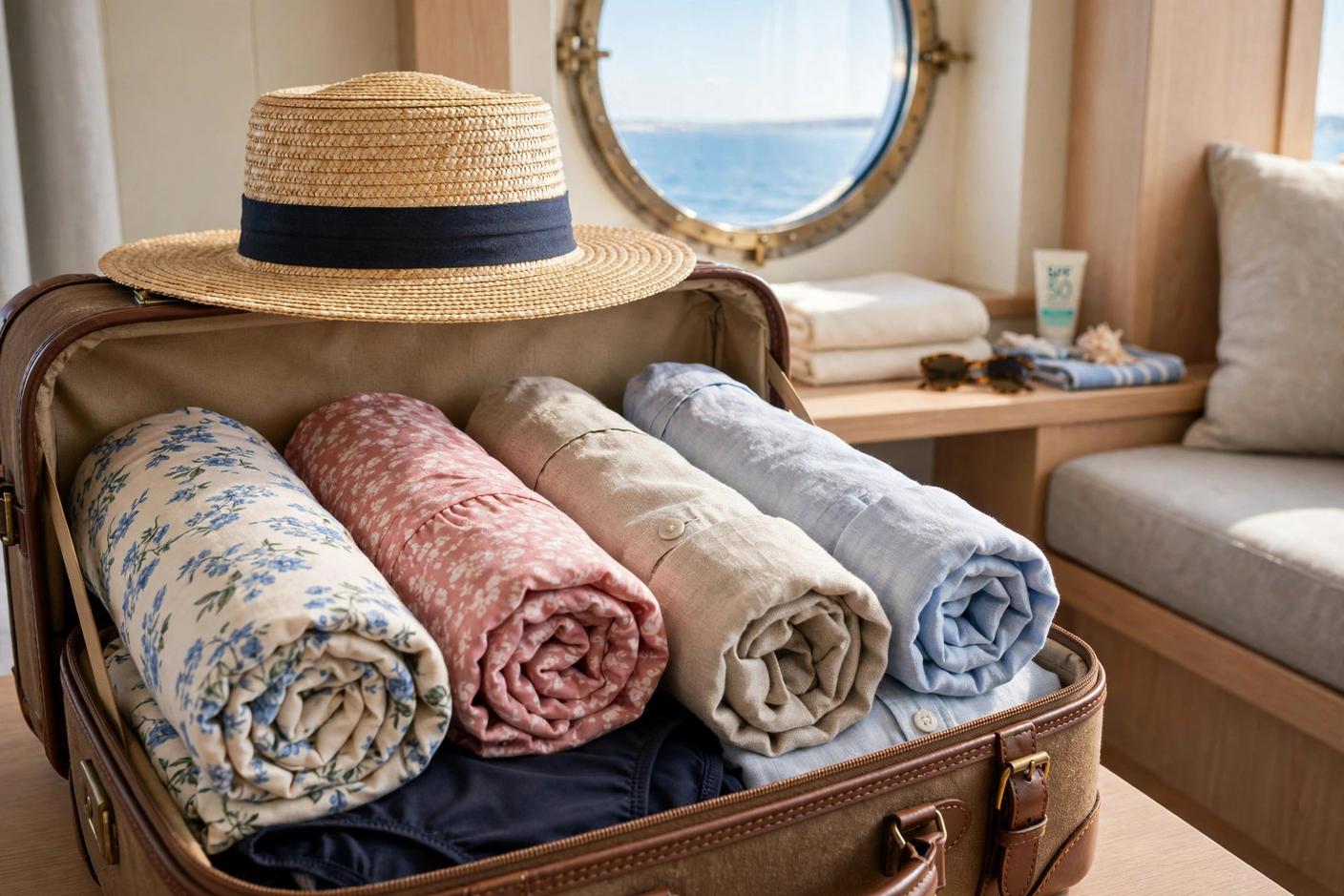
Here is the formula I give friends, refined over many sailings. For a seven-night cruise: 3–4 daytime outfits (mix of port-day and pool-day clothes), 2 swimsuits, 1–2 cover-ups, 3–4 evening outfits, 1 formal outfit, 1 light jacket or wrap for air-conditioned interiors and breezy decks, walking shoes, dress shoes, sandals, and workout clothes if that is your thing.
Everything should coordinate in a tight color palette — navy, white, and one accent color, for example — so every top works with every bottom. This is the same packing logic that works for international travel: fewer, better pieces that all talk to each other. Roll your clothes instead of folding to save space and reduce wrinkles.
Fabrics That Survive a Ship
Cruise cabins are humid, closet space is minimal, and there is no iron (open flames and heating elements are banned in cabins). Choose fabrics that resist wrinkles: jersey knits, ponte, wrinkle-resistant blends, and linen only if you embrace the rumpled look. Hang everything the moment you unpack — ship closets are small but gravity works the same at sea.
Quick fixes for wrinkles: hang the garment in the bathroom during a hot shower, or use a wrinkle-release spray. Most ships offer pressing services for formal night outfits, usually with same-day turnaround if you send them early in the cruise.
Embarkation Day and Disembarkation Day
These two days have their own logic. On embarkation day, wear something comfortable for travel that also looks decent — you will be photographed, you will explore the ship, and your luggage may not arrive until evening, so whatever you are wearing is your outfit for hours. Layers are smart: terminals are chaotic and temperatures vary.
On disembarkation day, you need an outfit that works for early-morning logistics, possibly a final breakfast, and travel home. Comfortable, presentable, with shoes you can walk in — you will be hauling luggage and navigating terminals. This is not the day for the formal wear.
Themed Nights and Special Events
Many cruises include themed nights — white night, tropical night, 80s night, masquerade — and participation is optional but fun. You do not need a costume; a white outfit for white night or a floral shirt for tropical night is plenty. Check your cruise line’s app or daily planner once onboard for the theme schedule, and pack one or two adaptable pieces (a white dress, a colorful top) that can play along.
What Not to Bring
The “do not pack” list is as valuable as the packing list. Skip: more than one formal outfit per person (one is enough), anything that needs ironing, excessive shoes (three pairs max: walking, evening, casual), full-size toiletries (the ship provides basics), beach towels (provided), and valuables you would hate to lose. Cabins have safes, but the simplest security is not bringing it.
Also skip the overpacking instinct. Every cruiser overpacks the first time and underpacks slightly the second time, and the second time is more fun. You will live in half of what you bring and wonder why you lugged the rest across an ocean.
Beach and Shore Excursion Wardrobe
If your itinerary is beach-heavy, weight your packing toward swim and sun: that second swimsuit becomes essential, a good cover-up that doubles as a lunch outfit saves space, and water shoes are worth their weight for rocky beaches. A dedicated beach packing checklist is useful here — the shore-day kit (reef-safe sunscreen, hat, sunglasses strap, waterproof phone pouch) is easy to forget and annoying to buy onboard at ship prices.
Alaska, Europe, and Specialty Cruises
Not all cruises are Caribbean cruises, and the wardrobe shifts with the itinerary. Alaska cruises are the biggest departure: think layers, waterproof outerwear, warm hats and gloves for glacier viewing, and sturdy walking shoes for port towns that can be rainy and chilly even in July. Formal nights still happen, but the overall vibe is more expedition than resort — pack for comfort and weather, not for the pool deck.
Mediterranean and European cruises lean dressier, especially in the evenings, and port days often involve historic city centers with cobblestones — leave the stilettos home and bring elegant walking shoes. Sacred sites across Southern Europe enforce dress codes, so a light scarf or shawl that covers shoulders is essential kit. River cruises in Europe are notably more casual and intimate than ocean cruises; smart casual covers nearly every evening.
Transatlantic crossings and repositioning cruises have many sea days, which means more daytime hours to fill — pack comfortable day clothes, workout wear if you use the gym, and a couple of extra casual outfits since port-day clothes get less use. The rhythm is slower, the dress code is relaxed, and the packing math changes accordingly.
Cruise Packing Mistakes to Avoid
A few classics worth naming so you can dodge them. Overpacking formal wear: one formal outfit is enough, and on many modern sailings even that is optional. Packing for the fantasy instead of the itinerary: the Alaska cruiser with six sundresses, the Caribbean cruiser with a parka “just in case.” Forgetting a jacket for the ship’s interior: cruise ships are air-conditioned to arctic levels, and you will spend evenings indoors. Bringing brand-new shoes: break everything in before you sail, because there is no comfortable alternative once you are at sea. And the sneakiest one — packing outfits but not the small things: medications, chargers, a nightlight for the windowless cabin, magnetic hooks for the metal cabin walls (a veteran cruiser trick for hanging hats and lanyards).
Frequently Asked Questions
Do I need a tuxedo for formal night?
No. A dark suit with a tie is completely appropriate for formal night on most mainstream cruise lines. A tuxedo is welcome but far from required — you will see far more suits than tuxedos.
What do you wear on embarkation day?
Comfortable travel clothes, plus pack a swimsuit and a change of clothes in your carry-on. Your checked luggage may not reach your cabin until evening, and the pool deck is open from the moment you board.
Can I wear shorts in the main dining room?
Not for dinner — most dining rooms require long trousers for men and equivalent smart dress for women in the evening. Shorts are fine at lunch, at the buffet, and everywhere on deck during the day.
What should I pack for a repositioning cruise?
More variety than a standard week-long sailing. With many consecutive sea days, plan a wider rotation of outfits and bring extra layers — weather can swing dramatically as the ship changes regions.
How dressy is the captain’s dinner?
It is the dressiest night of the sailing, often overlapping with formal night. This is the one to dress up for — dark suit or cocktail dress — because the photos last forever.
Common Questions
How many formal nights are on a typical cruise?
Most seven-night sailings have one or two formal nights, usually on sea days. Shorter cruises may have one or none. Check your specific sailing — dress codes vary by cruise line and are trending more casual.
Can I skip formal night?
Yes. The buffet and specialty restaurants remain open, and many passengers skip it. But formal night is part of the classic cruise experience, and one good outfit is a small price for it.
What do men wear on a cruise at dinner?
On smart casual nights: slacks or chinos with a collared shirt. On formal nights: a dark suit and tie. On casual nights: nice shorts or trousers with a polo or casual shirt. Tank tops, gym shorts, and flip-flops are not welcome in the main dining room in the evening.
How do I keep clothes wrinkle-free on a cruise?
Pack wrinkle-resistant fabrics, roll instead of fold, hang everything immediately on arrival, and use the hot-shower steam trick. Irons are banned in cabins, but the ship’s pressing service handles formal wear.
What shoes should I bring on a cruise?
Three pairs cover nearly everything: comfortable walking shoes for port days, dress shoes for evenings, and sandals for the pool deck. Make sure the walking shoes are broken in before you sail.