What Is a Capsule Wardrobe and How to Start One: The 24-Piece Plan

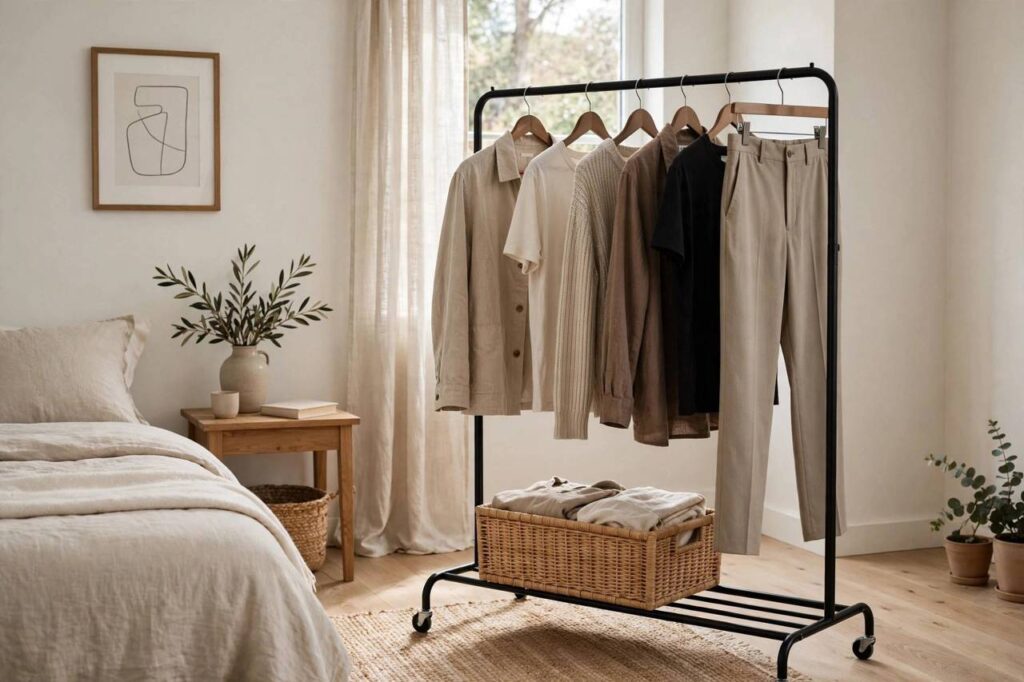
What is a capsule wardrobe and how to start one — without throwing out everything you own in a fit of minimalist zeal? A capsule wardrobe is a small, curated collection of versatile pieces that all work together, usually 25 to 40 items per season, chosen so that nearly everything matches nearly everything else. The promise is simple: fewer clothes, more outfits, zero morning panic. I have built capsules for myself and for clients for years, and the difference between the people who love it and the people who quit in three weeks comes down to one thing: a system, not just a purge.
Most guides on this topic are heavy on philosophy and light on instructions. This one is the opposite. You will get a concrete 24-piece starter checklist, a color-palette system that does the matching for you, and a seasonal rotation method that keeps the whole thing running. Let us build yours.
What Is a Capsule Wardrobe and How to Start One: The Core Idea
The concept is older than the Instagram aesthetic suggests — London boutique owner Susie Faux coined “capsule wardrobe” in the 1970s, and designer Donna Karan popularized it in the 1980s with her “Seven Easy Pieces” collection. The idea: a wardrobe built from timeless, high-quality essentials in coordinating colors, supplemented by a few seasonal pieces. Every item earns its place by pairing with multiple others.
The math is what sells it. Thirty pieces that all coordinate can produce hundreds of outfit combinations. A closet of 150 random pieces, half of which match nothing, produces the familiar “I have nothing to wear” crisis. A capsule is not about owning less for the sake of it — it is about raising the hit rate of everything you own to near 100 percent.
Starting one does not require a dramatic clear-out on day one. In fact, I advise against it. The method that works is: audit first, define your palette, build the checklist, then acquire slowly. Most people can assemble a working capsule from what they already own plus a handful of strategic purchases.
The 24-Piece Starter Checklist
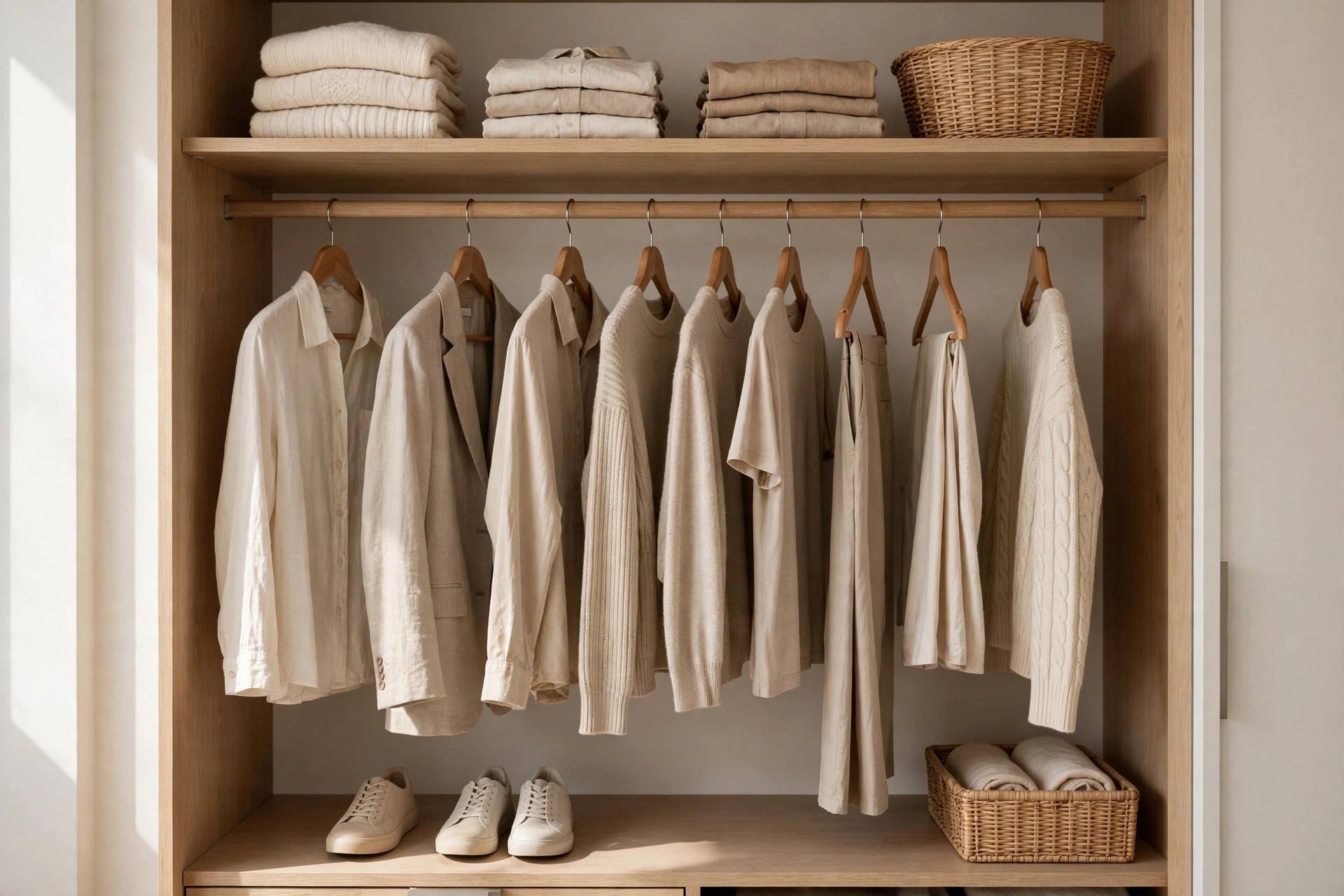
Here is a beginner-friendly 24-piece foundation. Treat it as a template to adjust for your climate and lifestyle — a teacher, a nurse, and a remote designer will weight the categories differently.
| Category | Pieces | Notes |
|---|---|---|
| Tops | 5 (3 tees, 2 blouses/shirts) | Mix of neutrals + 1 accent color |
| Bottoms | 4 (2 trousers, 1 jeans, 1 skirt) | Dark wash jeans; trousers in base neutral |
| Layering | 3 (blazer, cardigan, denim jacket) | The outfit multipliers — choose carefully |
| Dresses/jumpsuits | 2 | One casual, one elevated; solid colors |
| Shoes | 4 (sneakers, flats/loafers, boots, heels) | Comfort first; nude or black heels |
| Outerwear | 2 (coat, light jacket) | Season-appropriate weights |
| Accessories | 4 (bag, scarf, belt, watch/jewelry) | Where personality lives — have fun here |
Notice what is missing: statement pieces that only work one way, “someday” clothes in the wrong size, and duplicates. Every item on this list should pair with at least five others. If a piece only works with one specific partner, it does not belong in a capsule — it belongs in a costume box.
The Color-Palette System That Does the Matching for You
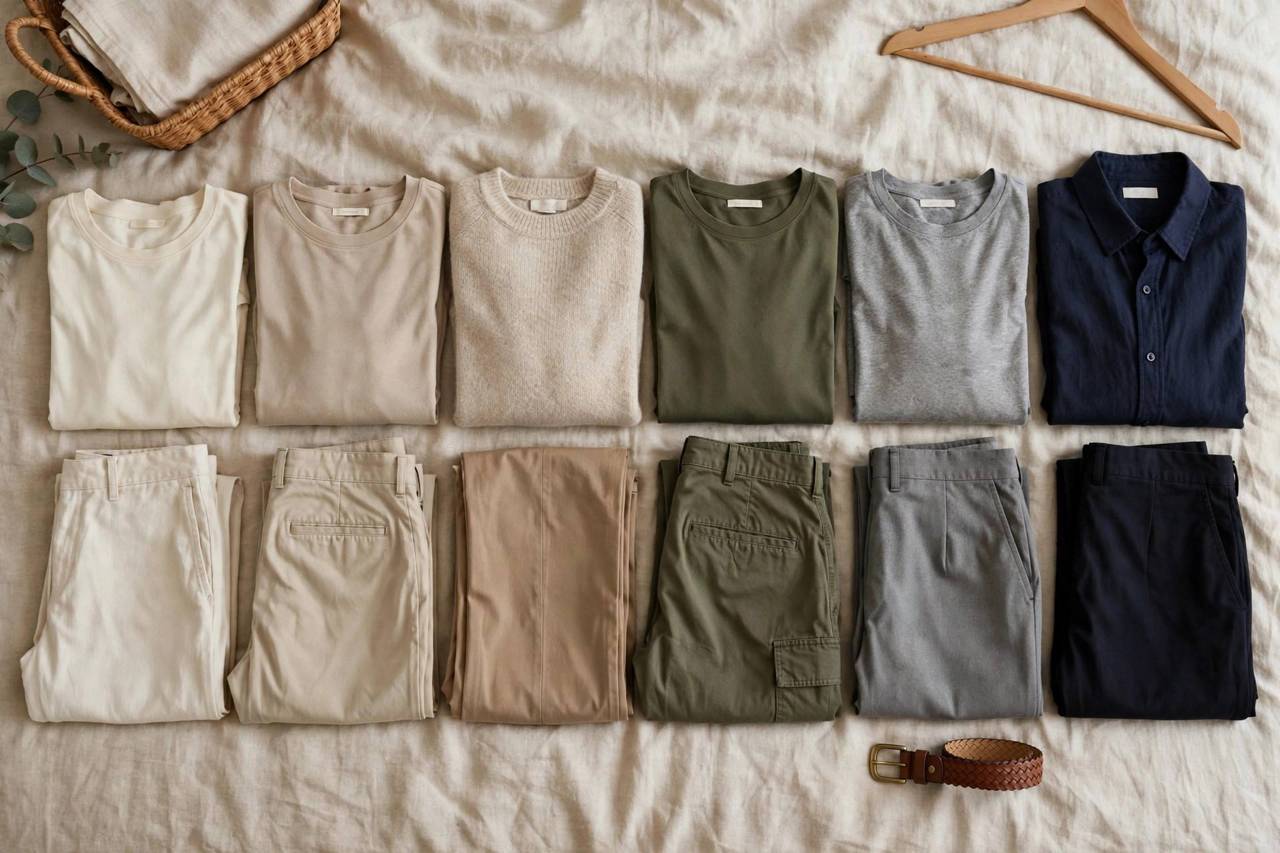
This is the engine of the whole concept. Choose two base neutrals (navy + white, black + gray, camel + cream — pick what suits your coloring and existing wardrobe), one or two accent colors you love (burgundy, olive, cobalt, rust), and one metallic or pattern wildcard (a striped tee, a leopard flat). Every purchase must fit the palette. When everything shares a color language, getting dressed becomes combinatorics instead of guesswork.
The practical test: hold any two random items from your closet together. If they clash, your palette is broken. A working capsule should survive the blind-grab test — reach in without looking, and whatever comes out should be wearable together. That sounds like a parlor trick until you experience it; then it feels like a superpower on busy mornings.
Resist the urge to build your palette around trends. Trendy colors date your capsule and force a rebuild every season, which defeats the purpose. Neutrals plus one timeless accent (navy, burgundy, forest green, camel) will look current for years. If you want a full walkthrough of building around a single anchor color, this capsule wardrobe guide goes deeper on the method.
The 4-Step Build Method
Step 1: Audit. Pull everything out — yes, everything — and sort into love, maybe, and no. Be honest about the “maybe” pile: if you have not worn it in a year, it is a “no.” This is also where a proper closet declutter earns its keep before you start building.
Step 2: Define. Choose your palette and count what from the “love” pile already fits it. Most people discover they own 60 percent of a capsule already — it is just buried under the other 40 percent.
Step 3: List the gaps. Compare what you have against the 24-piece checklist. Your shopping list is the difference. This list is your armor against impulse buys: if it is not on the list, it does not come home.
Step 4: Acquire slowly. Buy one or two gap pieces per month, prioritizing the highest-impact items first (usually shoes and layering pieces). Living with a partial capsule for a season teaches you what you actually miss, which is invaluable information. The people who buy all 24 pieces in a weekend almost always get it wrong.
Seasonal Rotation Without Rebuying Everything
A capsule is per-season, not forever. The standard rhythm: a spring/summer capsule and an autumn/winter capsule, with a small core of year-round pieces (dark jeans, white tees, a blazer) that live in both. At each seasonal switch, store the off-season pieces out of sight — under-bed boxes or a high shelf — so your daily choices stay limited to the current capsule.
The switch is also your audit moment. Anything you did not wear during the season gets a hard look: was it the wrong size, the wrong color, or just not you? Remove it before it dilutes next season’s capsule. And allow yourself 3–5 new seasonal pieces per rotation — a couple of trend-aware items keep the wardrobe feeling fresh without destabilizing the system. The capsule is a framework, not a prison.
Mistakes Beginners Make
Purging before planning. Donating everything and starting from zero is dramatic and almost always regretted. Audit first, plan second, remove last. Copying someone else’s list exactly. A capsule must reflect your actual life — a work-from-home parent does not need four blazers. Ignoring fit. A capsule multiplies the cost of bad fit, because you will wear each piece constantly. Tailoring a $40 trouser is the best money in fashion. Forbidding all fun. The system works because it is sustainable, and it is sustainable because your accent pieces and accessories carry your personality. A capsule of pure beige worn joylessly is not minimalism; it is a uniform you resent.
Capsule Wardrobes for Different Lifestyles
The 24-piece checklist is a starting template, not a universal uniform. A work-from-home professional might swap two blazers for elevated loungewear and keep just one true “office” outfit for video calls that matter. A nurse or teacher on their feet all day should weight the shoe category toward support and keep a separate small “scrubs/workwear” capsule outside the main count — uniforms do not count against your pieces, because they are not choices.
Parents of young children need a washability filter: if it cannot survive frequent laundering, it does not belong in a hard-working capsule. Silk blouses are beautiful and incompatible with toddler life; save the delicate pieces for a small “occasion” sub-capsule stored separately. Frequent travelers benefit from a wrinkle-resistance filter and a strict color discipline, since a travel capsule is just a capsule under pressure — every piece must earn its place in a carry-on.
The adjustment method is the same in every case: start from the template, then reweight the categories toward your real week. Track what you actually wear for two weeks — a simple note on your phone each morning — and let the data redistribute your pieces. Your capsule should mirror your life, not an influencer’s.
Caring for a Smaller Wardrobe
Owning fewer clothes means each piece works harder, so maintenance becomes part of the system. Wash less often than you think — most garments (jeans, sweaters, blazers) need washing far less frequently than habit suggests; airing and spot-cleaning extend life dramatically. Learn the basics: how to de-pill a sweater, how to iron or steam properly, how to store knits folded (never hung) and shoes with trees or stuffing.
Build a small repair kit and actually use it: needle and thread, spare buttons, a fabric shaver, stain remover. A $15 repair kit will save hundreds in replacements over a capsule’s lifetime. And institute the one-in-one-out rule once your capsule is complete: a new piece arrives only when an old one leaves. This single habit prevents the slow creep that kills most capsules by month six.
The 30-Day Capsule Trial
Not ready to commit? Run a 30-day trial: box up everything except your trial capsule (about 20 pieces in your palette), seal the boxes, and live with the capsule for a month. Keep a one-line log of any moment you genuinely missed something boxed away. At day 30, open the boxes — most people find they missed two or three specific items and forgot the rest existed. Those two or three items get added; the rest gets donated. The trial converts skeptics better than any argument.
FAQ
How many pieces are in a capsule wardrobe?
Most systems suggest 25–40 pieces per season, not counting underwear, workout gear, or occasion-specific clothing. The 24-piece checklist in this guide is a lean starter version — add pieces as you learn what you need.
What is the 3-3-3 rule for capsule wardrobes?
A popular minimalist challenge: 3 tops, 3 bottoms, 3 pairs of shoes for 3 months. It is a good experiment but too strict for most people’s real lives — treat it as a trial, not a permanent system.
Can a capsule wardrobe include patterns?
Yes, but ration them. One or two patterns (stripes, a subtle print) per capsule add interest without breaking the mix-and-match math. Make sure each patterned piece coordinates with your base neutrals.
How much does it cost to start a capsule wardrobe?
Often less than you expect, because most people already own the majority of the pieces. Budget for the gaps — typically 5–10 items — and buy the best quality you can afford for the hardest-working pieces (shoes, coat, blazer).
Do capsule wardrobes work for men?
Absolutely — the system is arguably even simpler for menswear, where the palette (navy, gray, white, brown) and the uniform (shirt, trousers, jacket) are already capsule-friendly. The same audit-palette-checklist method applies.
Conclusion
A capsule wardrobe is not a aesthetic — it is a decision-making system. Define your palette, work from the 24-piece checklist, build slowly, and rotate seasonally. Do that, and getting dressed stops being a daily negotiation with a chaotic closet and starts being the easiest part of your morning. Your future self, standing calmly in front of 24 pieces that all work, will thank you.