What Colors Go With Navy Blue Clothing? 12 Pairings That Always Work


What colors go with navy blue clothing? Short answer: almost everything — navy is the hardest-working neutral in any wardrobe. But “almost everything” is not a styling strategy, and some pairings look expensive while others look accidental. After years of dressing clients, I can tell you the difference is rarely the colors themselves; it is the proportions, the occasion, and knowing which combinations to avoid. Here are the twelve pairings I reach for constantly, plus the simple ratio rule that makes all of them work.
Navy earns its reputation honestly. It is softer than black, richer than gray, flattering on nearly every skin tone, and it plays well with both warm and cool colors. If your closet had to keep one dark neutral, navy would be the smart choice. Let us make the most of it.
What Colors Go With Navy Blue Clothing? The No-Fail Neutrals
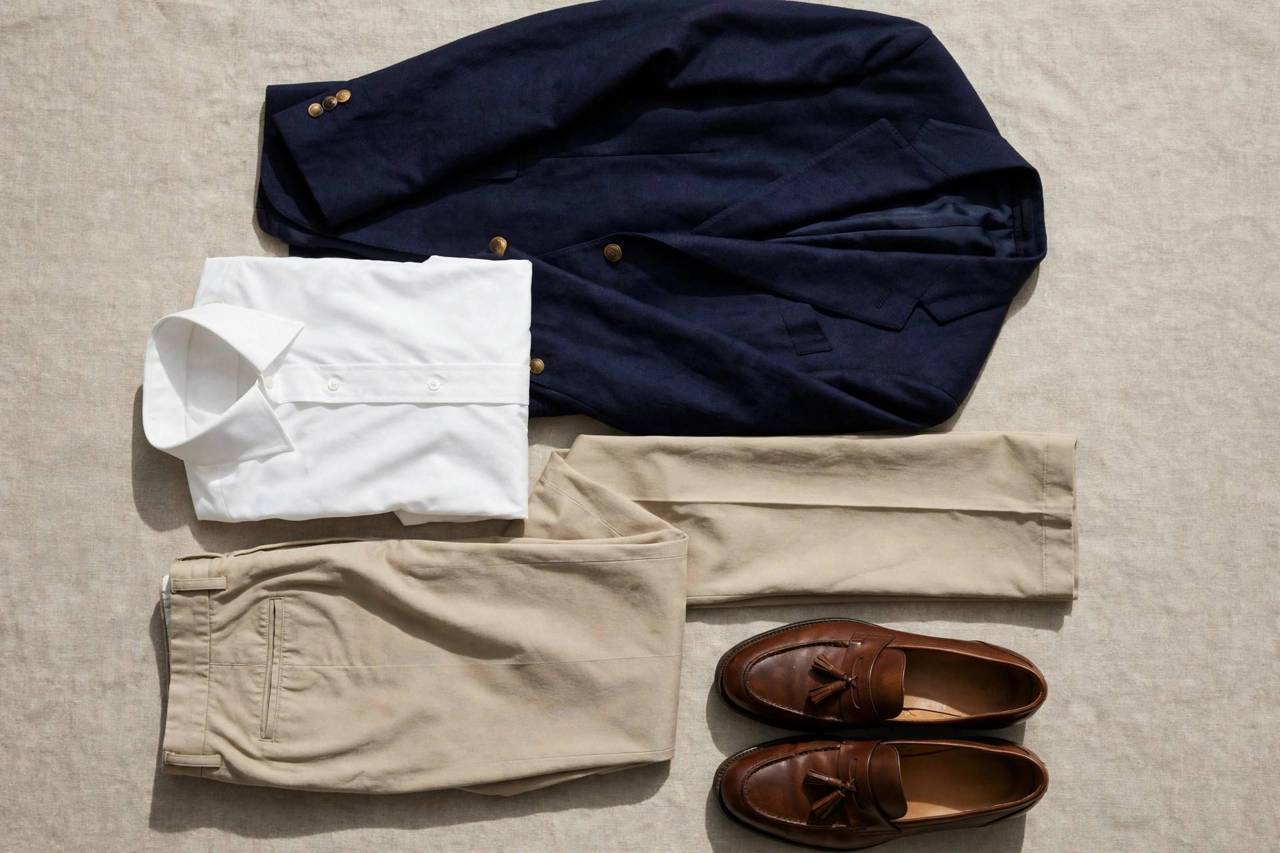
Start with the combinations that cannot miss. Navy + white is the classic — crisp, nautical, endlessly fresh. A navy blazer over a white shirt is the closest thing menswear and womenswear have to a universal uniform. Navy + gray (especially light heather gray) is softer and more modern; it is my pick for office wear when black feels too severe. Navy + beige/camel adds warmth and quiet luxury — a camel coat over navy tailoring looks expensive at any price point. Navy + black works despite the old rule against it, provided the textures differ (matte navy wool with black leather, for instance); the “no navy with black” rule died years ago, and good riddance.
These four are your foundation. If you own navy pieces and these neutrals, you already have dozens of outfits. Everything below is about adding personality on top of this base.
Warm Pairings: Mustard, Rust, Burgundy, Olive
Navy’s cool depth makes warm colors glow against it. Mustard and golden yellow are the high-contrast joy-bringers — a mustard sweater under a navy coat is autumn perfection. Rust and burnt orange feel earthy and confident; rust trousers with a navy knit is a combination that gets compliments. Burgundy with navy is rich and evening-ready without trying too hard. Olive green is the understated one — military-adjacent, masculine-leaning, and excellent in casual wear.
The trick with warm pairings is letting one color lead. Navy should be the anchor (the trousers, the blazer, the dress) with the warm color as the accent — or vice versa, but not 50/50. Equal halves of two strong colors fight each other; a clear lead and supporting act harmonize.
Bold Pairings: Red, Emerald, Pink, Cobalt
Feeling braver? True red + navy is a power combination — think navy suit, red tie or red heel. It is high energy, so keep the red to one piece. Emerald green + navy is jewel-toned and luxurious, beautiful for evening. Blush pink or hot pink + navy is the fashion-insider favorite; the softness of pink against navy’s depth is genuinely striking. Cobalt or royal blue + navy is tonal dressing — two blues in different depths, which looks intentional and modern when the shades are clearly distinct (avoid two blues so close they look like a matching mistake).
Bold pairings reward confidence and punish hesitation. Wear them with simple silhouettes and minimal additional color — let the pairing be the statement.
The 60-30-10 Rule for Getting Proportions Right
Here is the ratio that makes every pairing above work: roughly 60% dominant color, 30% secondary, 10% accent. A navy suit (60), white shirt (30), burgundy tie or scarf (10). A camel coat (60), navy dress (30), gold jewelry (10). The numbers are approximate — nobody is measuring — but the principle is strict: one color leads, one supports, one punctuates.
Most “this outfit isn’t working” moments are proportion problems, not color problems. Two colors at equal weight compete; three colors at equal weight look chaotic. Assign roles and the same three colors suddenly look deliberate. When in doubt, make navy the 60 — it is the most forgiving anchor color you own.
Occasion-Based Navy Pairings
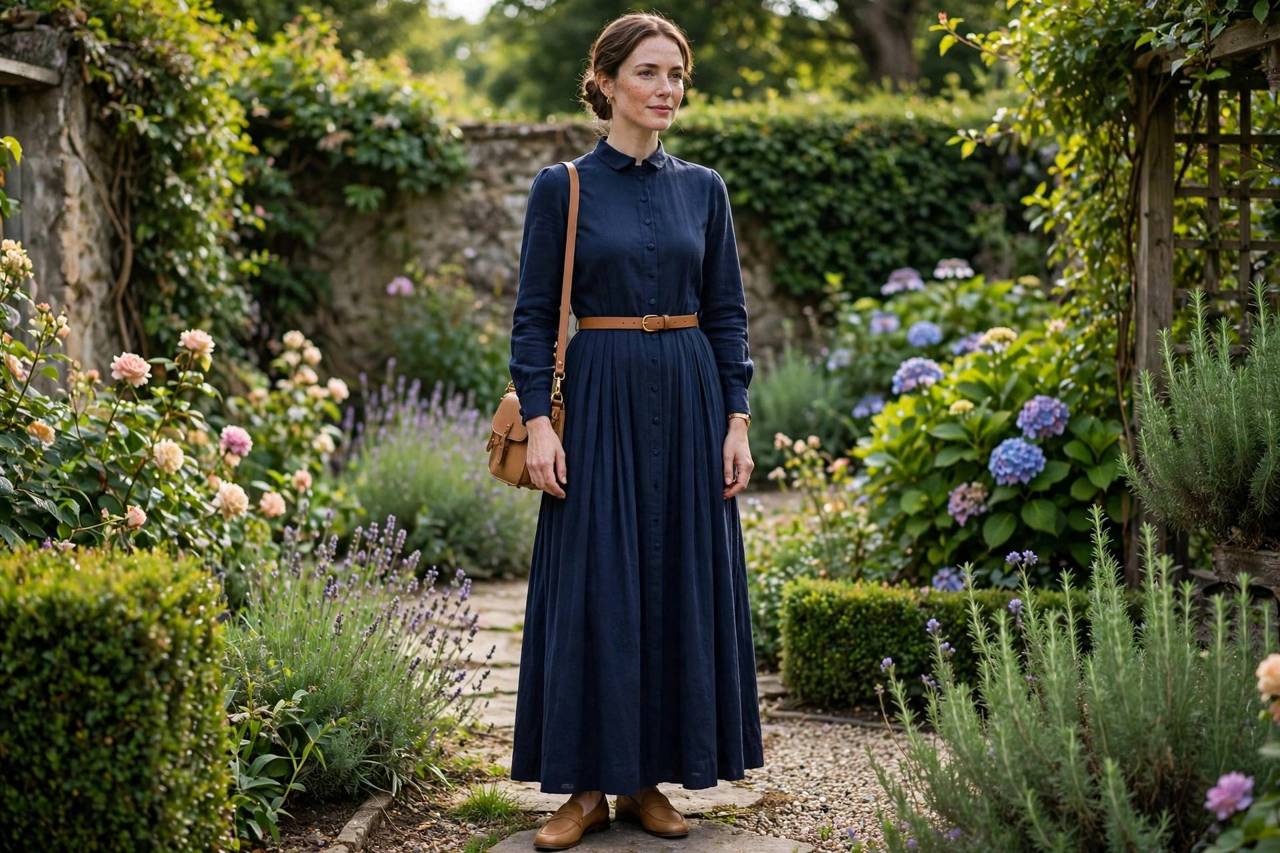
Office: navy + white + gray, or navy + light blue shirt. Conservative, sharp, zero risk. Evening: navy + black with metallic accessories, or navy + burgundy. Rich without the harshness of all-black. Weekend casual: navy + white sneakers + denim or khaki — the off-duty uniform. Summer: navy + white + tan leather; the nautical classic earns its cliché status. Winter: navy + camel + cream knits — warm, layered, expensive-looking.
One occasion note: for weddings and formal daytime events, navy is an excellent suit or dress choice — festive but not attention-stealing. Pair with lighter neutrals and one metallic accent, and you will look right in every photo.
Colors to Avoid With Navy (or Handle With Care)
Honesty requires the caution list. Neon brights against navy can look costume-y unless the neon is a tiny accent. Muddy brown (as opposed to rich camel or tan) can drag navy down into murkiness — keep browns warm and clear. Head-to-toe navy in slightly different shades reads as a mistake rather than tonal dressing; if you go monochrome navy, match the shades closely or separate them with a neutral. And navy + forest green in equal proportions can look muddy — make one clearly dominant or add a light neutral between them.
None of these are absolute bans — a skilled dresser can make any of them work. They are simply the combinations where the margin for error is thinnest, so approach them deliberately.
Navy in Menswear: The Suit and Beyond
Navy deserves special attention in menswear because the navy suit is arguably the single most versatile tailored garment a man can own. It works for weddings, interviews, funerals (with a dark tie), and evenings out — the only thing it does not do is black-tie formality. If you buy one suit, buy navy, in a mid-weight wool that works three seasons.
Beyond the suit, navy is the backbone of the classic masculine casual wardrobe: navy crewneck sweater, navy chinos, navy overshirt, navy polo. The pairing rules from this guide apply directly — white, gray, brown leather, and olive are the core companions. One menswear-specific tip: navy trousers with brown shoes is the combination that separates the well-dressed from the rest; black shoes with navy can work, but brown is where the magic is.
For tonal navy-on-navy outfits (a navy sweater over navy trousers), texture contrast is everything: knit over twill, suede with cotton. Identical fabrics in slightly different navy shades look like a laundry accident; deliberately different textures look like a choice.
Building a Navy-Centered Capsule
Navy makes an ideal capsule anchor because it coordinates with the widest range of colors. A navy-centered starter capsule: navy blazer, navy trousers, dark jeans, white shirts (2), light blue shirt, gray sweater, white tees (2), camel coat, brown shoes, white sneakers. That is 12 pieces producing 40+ outfits — the mix-and-match math is at its most generous when navy does the anchoring.
When shopping to fill gaps, apply the palette test ruthlessly: hold the candidate piece against your navy anchor in the store. If they harmonize instantly, it belongs. If you have to squint and imagine, it does not. Navy’s gift is that this test is easy to pass — which is exactly why it is the smartest foundation color for anyone building a wardrobe from scratch.
Navy for Different Skin Tones
One reason navy is universally recommended is that it flatters nearly everyone — but placement matters. If you have very fair skin, wearing navy right against your face (a navy turtleneck, a navy scarf) can wash you out; break it up with white, cream, or a warm accent near the face. Medium and olive skin tones can wear navy head-to-toe effortlessly. Deep skin tones make navy look especially rich, and high-contrast pairings (navy with white, mustard, or cobalt) are stunning.
The undertone of the navy itself also varies: some navies lean purple, others lean teal or nearly black. Against your skin in natural light is the only test that matters. When building a capsule, buy your navy anchor pieces in the same undertone family so they can be worn together without clashing — two “navys” from different dye lots are the most common tonal-dressing failure.
Quick-Reference: Navy Pairing Cheat Sheet
For the mornings when you cannot think: navy + white + tan (always right), navy + gray + white sneakers (off-duty), navy + camel + brown boots (autumn uniform), navy + black + silver (evening), navy + burgundy + brown (rich and warm), navy + blush + nude (soft and modern). Memorize three of these and you will never stare blankly at a navy garment again. The cheat sheet works because each combination follows the 60-30-10 rule automatically — one anchor, one support, one accent — which is why they feel effortless. Effortless is the whole point.
FAQ
What colors go with navy blue clothing for a wedding?
Navy pairs beautifully with blush pink, champagne, sage green, and metallics (gold or silver) for weddings — festive and photogenic without upstaging anyone.
Can you wear navy and black together?
Yes — the old rule is dead. Make it work by varying textures (matte navy with black leather) or separating them with a third color like white or gray.
What color shoes go with navy pants?
Brown and tan leather are the classics; white sneakers for casual; black for formal; burgundy/oxblood for personality. Nude heels elongate the leg with navy dresses and skirts.
Does navy go with gray?
Beautifully — especially light and heather grays. It is one of the safest, most modern pairings, ideal for office wear.
What is the best accent color for navy?
Mustard/gold for warmth, burgundy for richness, white for crispness. Pick based on the mood you want — navy accommodates all three.
Conclusion
Navy is the rare color that flatters everyone and pairs with nearly everything — the skill is in the proportions. Anchor with navy, support with neutrals, punctuate with one confident accent, and keep the 60-30-10 ratio in mind. Avoid the muddy combinations, respect the undertone of your specific navy pieces, and lean on the cheat-sheet pairings on busy mornings. Do that, and every navy piece you own will quietly work about three times as hard — morning after morning, season after season.