Best Tricep Exercises: 8 Moves (Triceps Are 2/3 of Your Arm)

Here is the math that changes arm training: the triceps make up roughly two-thirds of your upper-arm mass. Two-thirds. Yet most lifters spend 80 percent of their arm effort on biceps because those are the muscles they see in the mirror. I have measured clients’ arms before and after 12-week blocks, and the ones who finally prioritized triceps added more total size than the ones who just curled harder. If your arms are stuck, the answer is almost never more biceps; it is finally training triceps like they matter. These 8 exercises are ranked by effectiveness, with the form details that make each one work. The complete program is in my best arm exercises guide.
The 8, Ranked
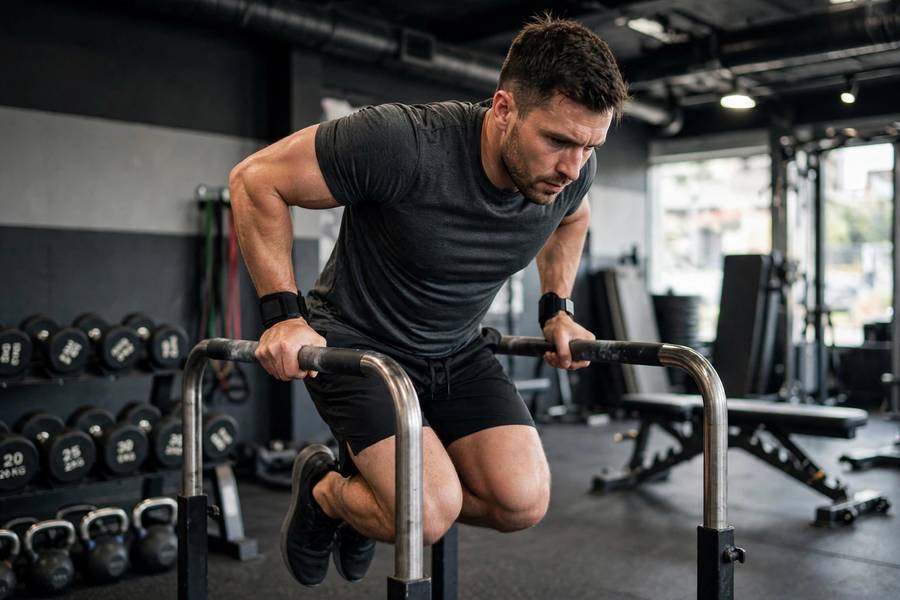
1. Weighted dips: 4×8. The king of tricep builders: heavy load, full range, compound pattern. Torso upright to emphasize triceps over chest. Add weight with a belt when 12 bodyweight reps get easy.
2. Close-grip bench press: 4×8. The heaviest tricep isolation-ish movement; hands shoulder-width, elbows tucked. Builds mass and pressing lockout simultaneously.
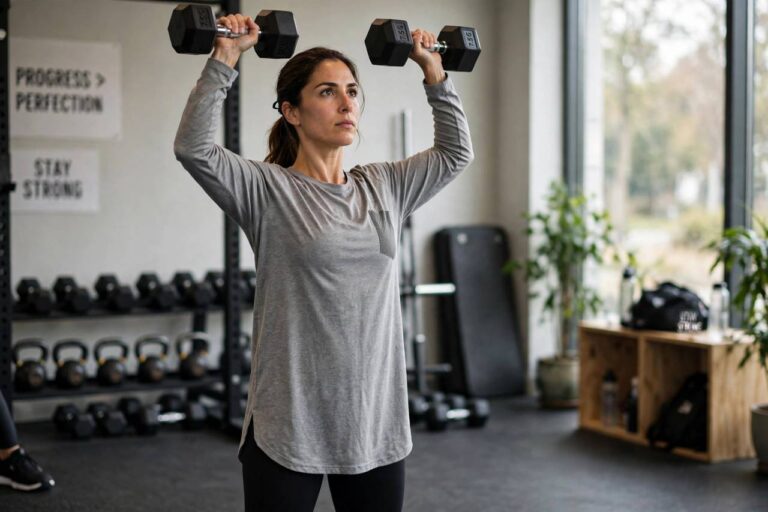
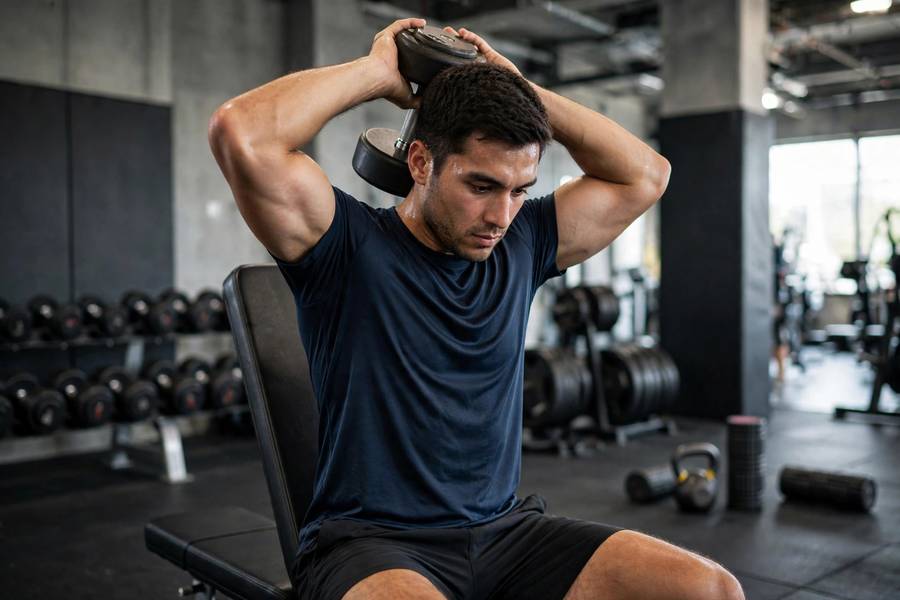
3. Overhead dumbbell extension: 3×10-12. The best long-head developer. Deep stretch behind the head, strict upper arms. My best dumbbell exercises guide covers dumbbell technique.
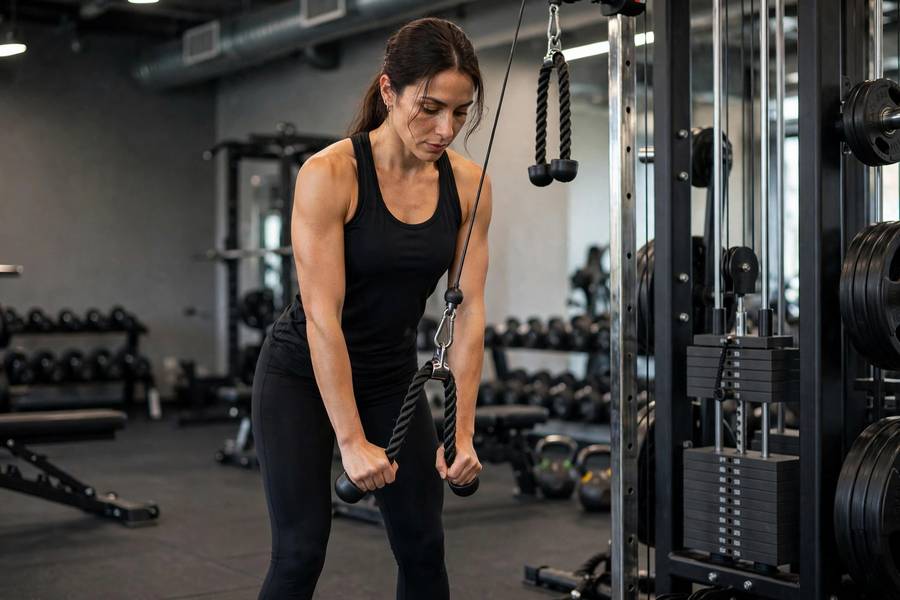
4. Cable pushdown: 3×12. Constant tension, perfect for high-rep finishers. Rope attachment allows the split at the bottom for a harder contraction.
5. Skullcrushers (lying extensions): 3×10. Heavy stretch-position loading. Lower to the forehead or behind the head; behind the head increases the stretch and the growth stimulus.
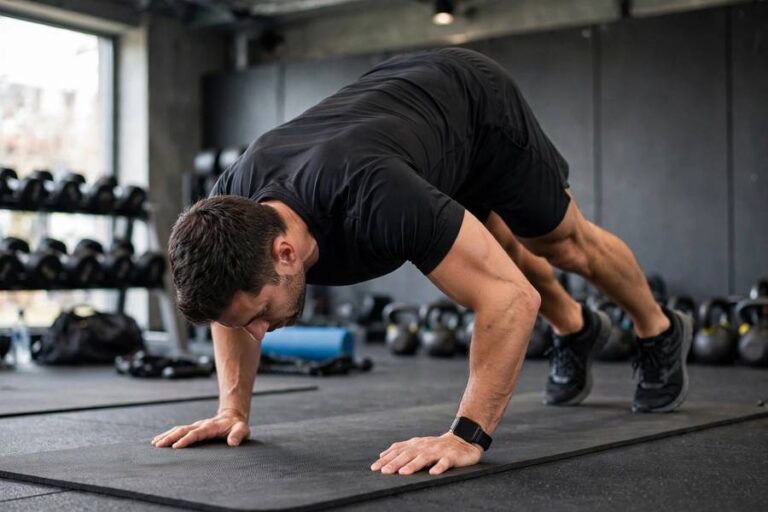
6. Diamond push-ups: 3x max. The best bodyweight tricep builder. Elevate feet or add a weight plate on the back for progression.
7. Tricep kickbacks: 3×12 per arm. Strict, light, maximum contraction. The best finisher; terrible as a primary builder because the load is limited.
8. Bench dips: 3×12. Accessible anywhere, easy to load by elevating feet. Hard on the shoulders for some; if they bother your shoulders, swap for pushdowns.
The Long Head: Why Overhead Work Matters
The triceps have three heads, and the long head is the largest and the only one crossing the shoulder joint. It gets fully stretched only when your arm is overhead, which means pushdowns and dips, with arms at your sides, undertrain it. This is the anatomical reason overhead extensions are non-negotiable in a complete tricep program: they are the only category that loads the biggest head through its full range. Clients who add overhead work to a pushdown-only routine consistently report the back of the arm filling out within two months. Program at least one overhead movement in every tricep session; it is the highest-value slot in the workout. The stretch under load is the growth driver, so control the lowering phase and pause one second in the deep position.
Keeping Elbows Healthy
Tricep training and elbow irritation are frequent companions, but the relationship is manageable. Rules: warm up with one light set of 15 before any heavy extension; never bounce out of the bottom of skullcrushers, control the turnaround; keep total weekly extension volume at 8-12 sets, counting dips and close-grip pressing; and if the elbow tendon aches, swap skullcrushers for pushdowns temporarily, since the cable is kinder to the joint. The EZ-bar beats the straight bar for extensions if your wrists or elbows complain. I have trained clients with cranky elbows for years using these rules without a single layoff; the ones who got hurt were the ones who treated elbow ache as a warm-up problem instead of a programming problem. When in doubt, the best shoulder exercises approach applies: joint-friendly variations done consistently beat aggressive variations done until injury.
Tricep Training for Women
The back-of-the-arm area is the number one arm concern I hear from female clients, and the answer is tricep training with real weights, not endless light reps. Overhead extensions and dips build the long head that shapes the area; pushdowns add the finishing detail. The programming is identical to men’s: 10-14 sets weekly, progressive overload, 8-15 rep range. The myth to kill: training triceps will not make arms bulky; it builds the firm, defined shape that light weights never produce because they never challenge the muscle enough to change it. Start with chair dips and light overhead extensions, progress steadily, and expect visible firming in 10-12 weeks. Every woman I have trained through this ended up wishing she had started with real weights years earlier.
Programming Triceps for Size
Triceps handle volume well: 10-14 hard sets per week across 2 sessions. Session A (heavy): weighted dips 4×8, close-grip bench 4×8. Session B (stretch and pump): overhead extensions 3×12, cable pushdowns 3×15, kickbacks 2×12. Rest 90 seconds on heavy compounds, 60 on isolation. Progress the heavy movements by load and the isolation movements by reps. Do not train triceps the day before heavy bench or overhead press; fatigued triceps cap your pressing and the pressing day is the priority. Pair with how to do pull-ups work on separate days for balanced upper-body development. Most lifters see measurable arm growth within 10-12 weeks of finally giving triceps their proper volume; the muscle was simply waiting to be trained.
Lockout Strength for Pressers
If you bench or overhead press, tricep strength is your lockout strength: the top half of every press is triceps. Weak lockout means missed reps and stalled press numbers, and the fix is tricep-specific work, not more benching. Board presses and pin presses from mid-range overload the exact lockout pattern; close-grip bench builds the base; pushdowns add volume without joint stress. I program 4-6 sets of dedicated lockout work weekly for pressing-focused clients, and bench plateaus that survived months of “bench more” break within weeks of “train triceps properly.” The carryover runs both ways: stronger triceps mean bigger presses, and bigger presses mean more load for tricep growth. It is the most productive cycle in upper-body training, and it starts with taking triceps seriously.
The Home Tricep Workout (No Cables)
Chair dips: 4×12, feet elevated when easy. Diamond push-ups: 3xmax. Overhead dumbbell extensions: 3×12. Bodyweight tricep extensions: 3×8, hands on floor, lower forehead down by bending elbows only. Band pushdowns: 3×15 if you have a band. That is a complete tricep session with a chair, the floor, and optionally one dumbbell and a band. Run it twice weekly, progressing dips by elevation and push-ups by tempo. No cable machine needed; the stretch-position work from overhead extensions and the heavy loading from dips cover the growth drivers. Home trainees who run this consistently build triceps that rival gym trainees, because the exercises that matter most for triceps were never machine-dependent in the first place.
One programming note for home trainees: without cables, lean harder on tempo. Slow every pushdown substitute and extension to a 3-second lowering phase; the increased time under tension compensates for the simpler equipment. Home tricep training done with strict tempo often outperforms sloppy gym training, because the constraint forces the quality that machines let you skip.
Frequently Asked Questions
Weighted dips, for most people: heaviest load through full range with a compound pattern. Close-grip bench press is the runner-up. Both beat isolation work for pure mass; use extensions and pushdowns as the essential supporting cast, especially overhead work for the long head.
Two to three. One heavy compound (dips or close-grip press), one overhead stretch movement, and optionally one pump finisher (pushdowns or kickbacks). Triceps need less variety than people think; they need load, stretch, and consistency.
Usually too much weight, bouncing the turnaround, or excessive weekly volume. Drop the weight 20 percent, control the bottom position, and cap total extension sets at 12 per week. If pain persists, swap to cable pushdowns for a month; the constant tension is much kinder to the elbow tendon.
They need more, not less: triceps are a larger muscle doing more work in pressing. The common mistake is 9 sets of curls and 3 sets of pushdowns. Flip it: 10-14 sets for triceps, 8-12 for biceps weekly. Your arms will grow faster than they ever did on curls alone.
Yes, well into the intermediate stage. Dips (progressing to weighted), diamond push-ups (progressing to feet-elevated and loaded), and chair dips cover everything. Add weight with a backpack or dip belt when bodyweight gets easy; the progression principles are identical to weighted training.
A sturdy backpack loaded with books or water bottles works well; wear it on your back for dips. Start with 5kg and add gradually. Alternatively, slow the tempo to 4 seconds down, which increases difficulty without any equipment. Both methods progress dips effectively for a long time.