How to Fall Safely From a Handstand: Bail-Outs That Work

The first time I taught a client the cartwheel-out, she looked at me like I had suggested she jump off the equipment on purpose. Twenty reps later she was bored of it, which was exactly the point. Fear of falling is the invisible ceiling on every beginner’s handstand: it makes kick-ups tentative, holds tense, and practice sessions short. Remove the fear by making the fall boring, and progress roughly doubles. This guide teaches the three bail-outs that cover every fall direction, drill by drill, in the order I teach them in person. Read it alongside my how-to-do-a-handstand guide, and do not attempt freestanding work until bail-out number one is automatic.
Why Bail-Outs Come Before Balance
Your nervous system will not commit to a skill it believes is dangerous. Every tentative kick-up, every tense three-second hold, is your brain protecting you from a fall it does not know how to handle. Teach the exits first and the brain relaxes its grip; kick-ups get confident, holds get calm, and the same practice time produces twice the learning. I teach bail-outs in week two of every handstand program, before any freestanding attempt. Clients always think it is early. It is never early. The ones who skip it are the ones still stuck at five seconds six months later, and fear is always the reason.
Bail-Out 1: The Cartwheel-Out
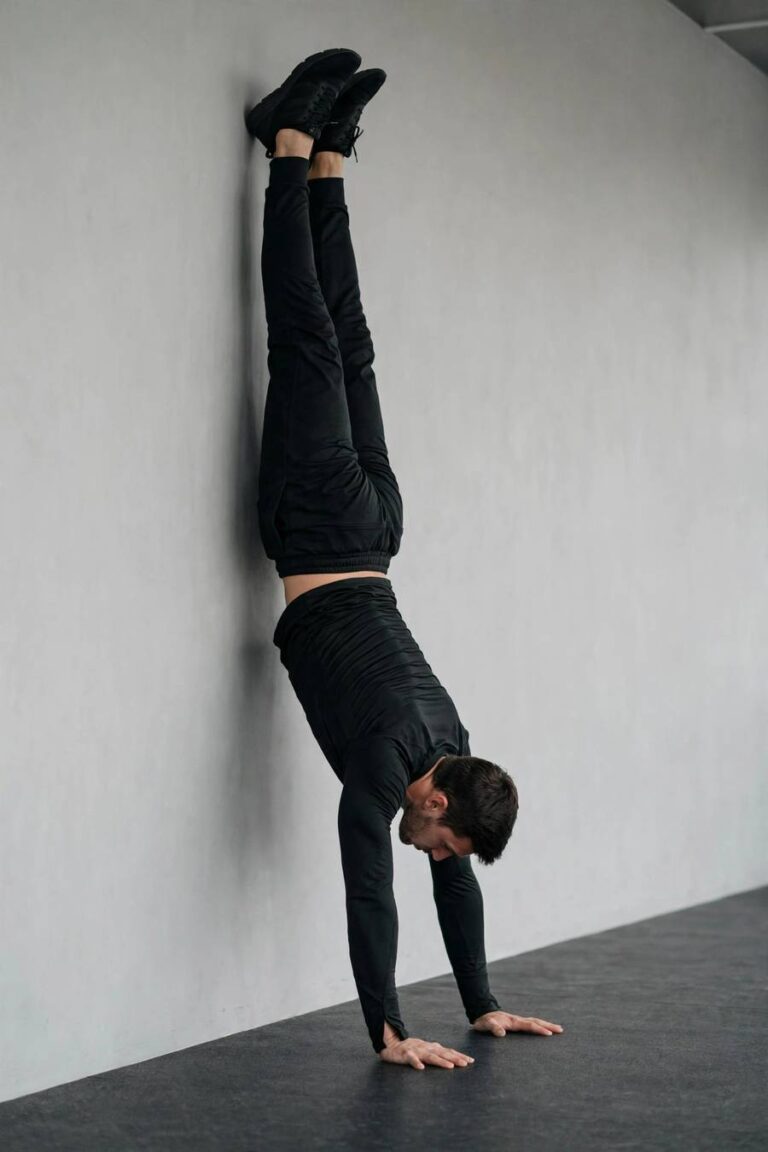
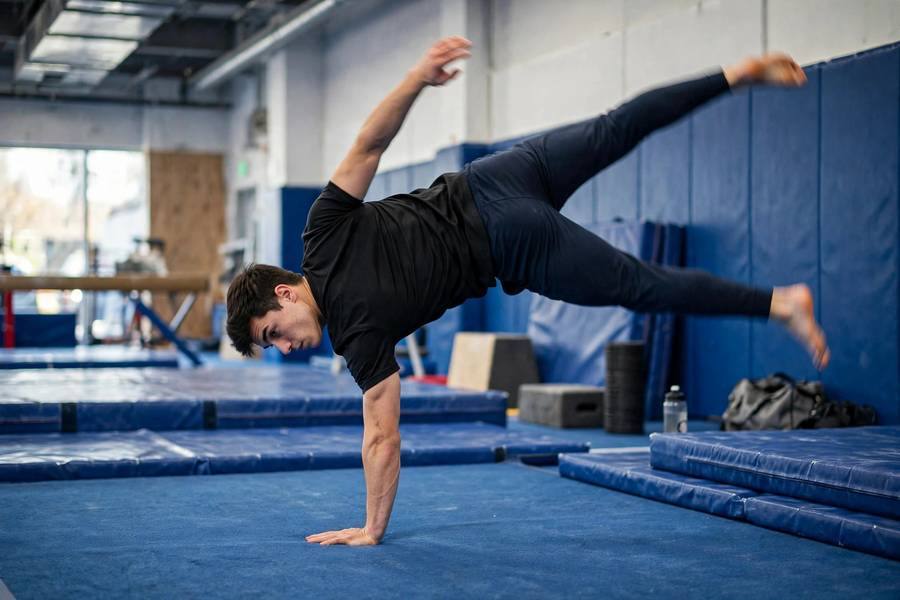
This is your primary exit, the one that must become reflex. From a handstand, shift your weight onto one hand, let your body tip sideways, and step down with the opposite-side foot, landing in a lunge. It is a quarter of a cartwheel, not a full one. Drill it first from a wall handstand: kick up to back-to-wall, shift to one hand, step down sideways. Do 10 per side per session. The key detail: commit to the sideways direction early. Beginners hesitate, try to save the handstand, and end up falling in the worst direction. Decide “I am bailing” and go sideways with confidence. After about 30 total reps across a week, most people do it without thinking. Test: have a partner randomly call “bail” during a wall hold; if you cartwheel out instantly without a flinch, it is grooved.
Bail-Out 2: The Forward Roll
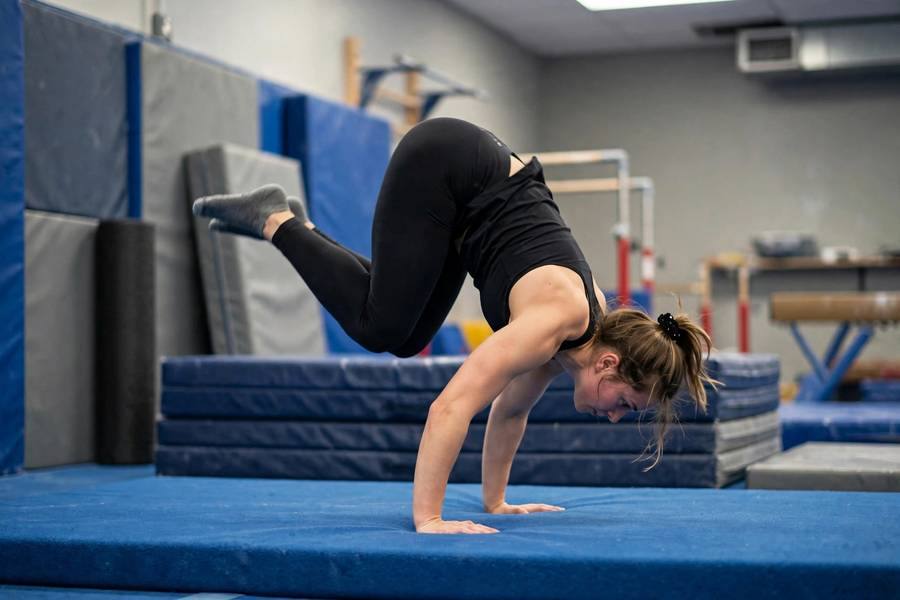
For when you overbalance forward and the cartwheel window has passed: tuck your chin hard to your chest, round your back, and roll forward over one shoulder. You must tuck the chin; a straight neck on a forward fall is how necks get hurt. Practice on a thick mat or grass first: from a low handstand position (partner holds your legs at hip height, or start from a headstand), tuck and roll. Build to full handstand height over two weeks. The forward roll feels scarier than the cartwheel-out but is actually very safe once the chin tuck is reflexive; gymnasts use it as a primary exit. Drill 5 rolls per session for two weeks. If you cannot yet do a confident forward roll on the ground, learn that first; the handstand version is just the same roll from higher up.
Bail-Out 3: The Wall Bail
For wall practice when you under-kick and start falling back toward the ground face-first: push off the wall with your feet and land on your feet, or if you are already falling, turn it into the cartwheel-out. The wall bail is mostly about the setup: never practice wall kick-ups with your hands so close that a missed kick puts your head near the floor with no room to turn. Keep hands 12 inches from the wall for kick-up practice. If you lose a wall handstand backward (away from the wall), that is just a freestanding fall, and the cartwheel-out covers it. The wall-specific skill is the push-off: feet hit wall, legs push, you land standing. Practice it deliberately 10 times; it takes five minutes and removes an entire category of worry.
Which Bail-Out, When
Falling sideways or backward in open space: cartwheel-out, always. It is the fastest, needs the least room, and works from any height. Falling forward past the point of finger correction: forward roll. Against the wall with feet on it: push off and land. The decision must be instant, which is why you drill each one separately until the body chooses without asking the brain. In practice, the cartwheel-out handles about 90 percent of real falls. The forward roll covers the dramatic over-kicks. The wall bail covers wall practice. Three exits, every direction covered, and that completeness is what lets your nervous system finally relax.
The 2-Week Bail-Out Drilling Plan
Days 1-3: cartwheel-outs from a wall handstand, 10 per side, slow and deliberate. Focus on committing early to the sideways direction. Days 4-6: add ground forward rolls, 3 sets of 5, chin tucked hard every rep. Days 7-9: forward rolls from elevated positions: a low box, then a partner-assisted handstand, 5 per session. Days 10-12: combine: kick up to wall, partner calls random “bail” commands, you exit with the correct bail-out instantly. Days 13-14: test on grass: ten freestanding kick-ups with the explicit goal of bailing out of every single one, alternating exits. By the end, falling should feel like a drill, not an accident. Total time investment: about 15 minutes a day for two weeks. It is the highest-return fortnight in handstand training.
Practice Safety Rules
Clear the area: 8 feet in every direction, nothing hard, nothing sharp, nothing you can hit your head on. I once watched a client kick up next to a bookshelf; the bookshelf won. Practice new exits on grass or thick mats until they are boring, then move to harder surfaces. Never practice bail-outs when exhausted; the whole point is grooving a clean reflex, and tired reps groove sloppy ones. Keep your core strength work current, because a strong midline keeps your body in one piece during rolls and exits. And maintain your best shoulder exercises routine: bail-outs load the shoulders suddenly, and conditioned shoulders absorb it without complaint.
Teaching Bail-Outs to Someone Else
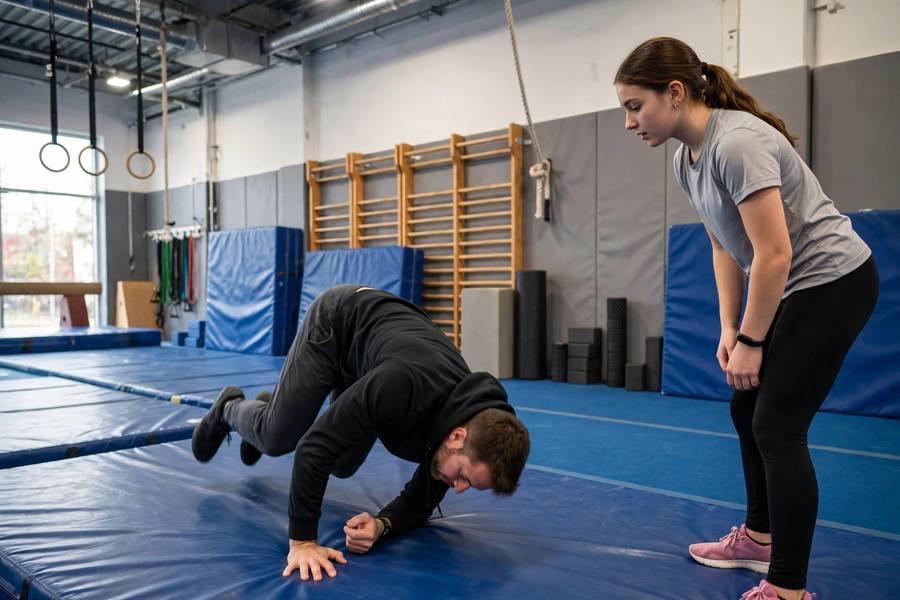
If you are the experienced one teaching a partner, the order matters more than the content. Teach the cartwheel-out first, from the ground: have them practice the sideways step-down from a low wheelbarrow position you hold, so the movement is familiar before they are ever upside down. Only then take it to the wall. Never teach by demonstrating once and saying “like that”; beginners copy the shape but miss the timing, especially the early commitment to the sideways direction. Use the random “bail” call test from week one: unpredictability is what makes it a reflex instead of a rehearsed trick. And resist the urge to catch them. A spotter who grabs a falling beginner teaches them that falling is something someone else handles, which is the opposite of the independence you are building. Your job is to clear the area, keep the surface soft, and let them fall correctly twenty times. The twentieth fall teaches more than your best explanation. Keep sessions short when teaching; beginners learn bail-outs best in 10-minute blocks when they are fresh and attentive. End every teaching session with five perfect easy reps so the last memory is success, not struggle.
Frequently Asked Questions
The cartwheel-out: shift to one hand and step down sideways into a lunge. It is fast, needs little room, and becomes reflexive after about 30 deliberate practices. It handles roughly 90 percent of real falls.
The risk is very low with proper bail-outs and sensible practice surfaces. The dangerous scenario is falling forward with a straight neck onto a hard surface, which is exactly what the chin-tuck forward roll prevents. Practice exits on mats or grass until they are automatic, clear the area, and the risk becomes minimal.
A spotter helps for the first forward-roll practices at height, holding your legs while you learn the tuck. For cartwheel-outs, a wall replaces the spotter. Once the exits are grooved, usually within two weeks, you do not need a spotter for regular practice.
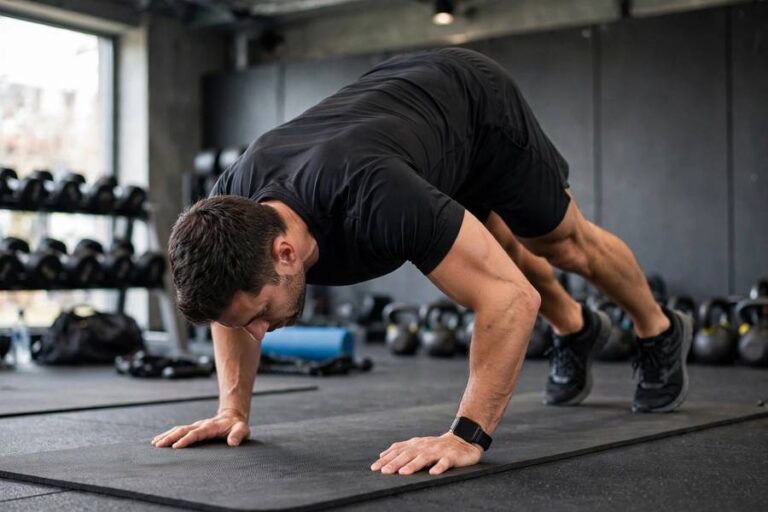
That is why straight-arm strength is a prerequisite: if your elbows buckle under load, you are not ready for freestanding exits. Build to 10 strict pike push-ups first. In a collapse, tuck your chin and turn it into a roll; never try to catch yourself with bent arms on a hard floor.
You do not think your way past it; you drill your way past it. Thirty deliberate cartwheel-outs and twenty forward rolls on soft surfaces convince your nervous system the fall is routine. Fear fades with evidence, and each clean bail-out is evidence. Avoidance feeds fear; practice starves it.