Best Pens for Improving Handwriting (What Actually Helps)

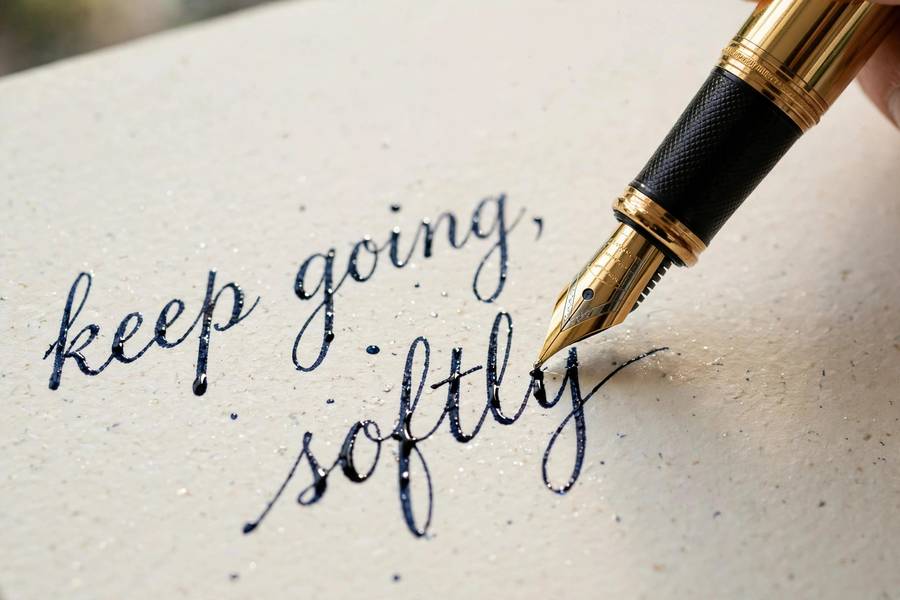
Here is something most handwriting advice skips: your pen is either helping or hurting, and most people write with pens that hurt. A scratchy ballpoint that needs pressure to write forces a death grip, and a death grip produces tense, ugly writing. I have watched students' handwriting visibly improve the day they switched pens — same hand, same practice, better tool.
This guide explains what makes a pen good for handwriting improvement, recommends specific types (not just brands) for different needs, and covers the grip and paper factors that multiply any pen's benefit.
I write with fountain pens daily myself, so this is not theoretical — but I will also tell you honestly when a simple gel pen is the smarter choice, because it often is.
In this guide:
- Why Your Pen Matters More Than You Think
- Fountain Pens: The Improvement Powerhouse
- Gel and Rollerball: The Practical Picks
- Grip, Ergonomics, and What to Avoid
- The Paper Half of the Equation
- Pen Maintenance Basics
Why Your Pen Matters More Than You Think
Good handwriting requires relaxed control, and relaxed control requires a pen that writes with light pressure. Cheap ballpoints demand force — you press to make the ink flow, your hand tenses, and tension destroys letterforms. This is physics, not opinion: less required pressure means more available control. improve your handwriting with proven techniques
Smooth ink flow also gives better feedback. When the pen glides, you feel the shapes you are making; when it drags and skips, your attention goes to fighting the tool. Beginners improving their writing need every bit of attention on letterforms, not on coaxing ink out.
The psychological effect is real too. Writing with a pen you enjoy makes you want to write — and handwriting improves with volume. A pen that feels good in daily use quietly multiplies your practice hours.
Fountain Pens: The Improvement Powerhouse
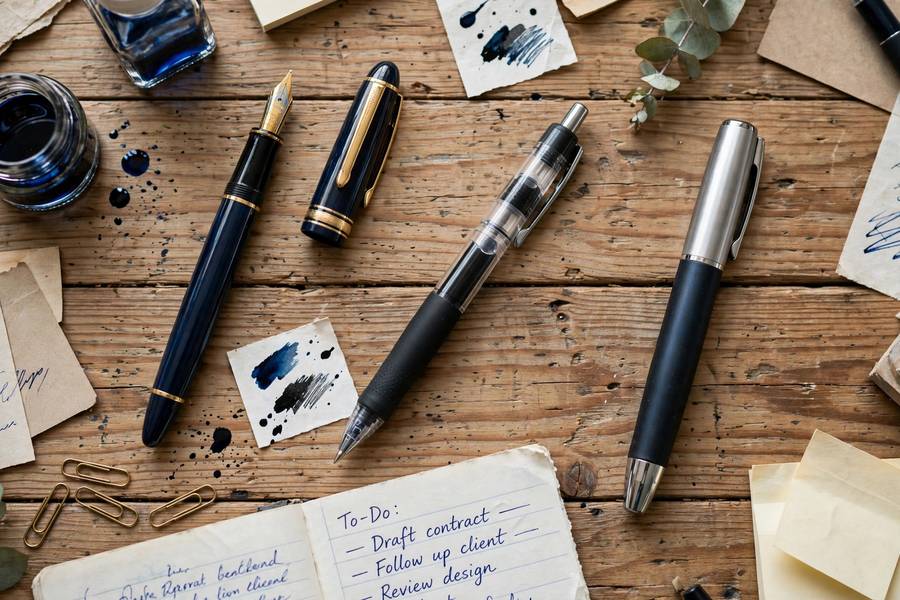
Fountain pens are the classic handwriting-improvement tool for good reason: they require almost zero pressure, which forces the relaxed grip that good writing needs. You literally cannot death-grip a fountain pen into writing well — it teaches lightness by design.
For beginners, a smooth medium-nib pen with a cartridge (no messy filling to start) is ideal. Write on decent paper — cheap copy paper feathers with fountain ink and discourages use. A basic smooth notebook transforms the experience.
The line variation of even a standard nib subtly rewards proper technique, and stub or italic nibs add beautiful variation that makes practice addictive. Many adults who 'fix' their handwriting trace the turning point to their first decent fountain pen.
Gel and Rollerball: The Practical Picks
If fountain pens feel like too much commitment, gel pens are the practical sweet spot: smooth, low-pressure writing with zero maintenance. A good 0.5mm or 0.7mm gel pen glides where ballpoints drag, and the darker lines make your writing look better immediately.
Rollerballs offer similar smoothness with a more traditional feel and often better performance on cheap paper. For students who need one pen for everything — exams, notes, forms — a quality rollerball is the low-friction choice that still helps. how to study for final exams
Avoid ultra-fine tips while improving: 0.38mm and smaller demand more precision than developing hands have and punish slight wobbles visibly. The 0.5 to 0.7 range is the improvement zone — forgiving enough for practice, precise enough for control.
Grip, Ergonomics, and What to Avoid
Pen weight and grip diameter matter as much as ink. A slightly heavier pen with a comfortable grip section reduces the gripping force your hand must supply — metal-barreled pens often feel 'easier' than light plastic ones for exactly this reason. Try before committing when you can.
Triangular or contoured grips help beginners find the correct tripod hold, though experienced writers often prefer simple round barrels. What matters is that your grip is relaxed: if your fingers ache after a page, the pen, the grip, or both need changing.
Avoid: pens that skip (they train pressing harder), pens that blob (they punish slow careful strokes), and novelty pens with awkward shapes. Boring, smooth, comfortable wins for improvement every time.
The Paper Half of the Equation
The best pen on bad paper still disappoints. Thin, rough paper creates friction and feathering that fight smooth writing; slightly smooth, decent-weight paper lets any good pen perform. You do not need expensive notebooks — just avoid the cheapest, roughest options for practice. what active recall is
For fountain pens, paper quality is non-negotiable: look for smooth, ink-resistant paper (many 'fountain-pen-friendly' notebooks exist at modest prices). For gel and rollerball, standard decent notebooks suffice. the best note-taking apps overall
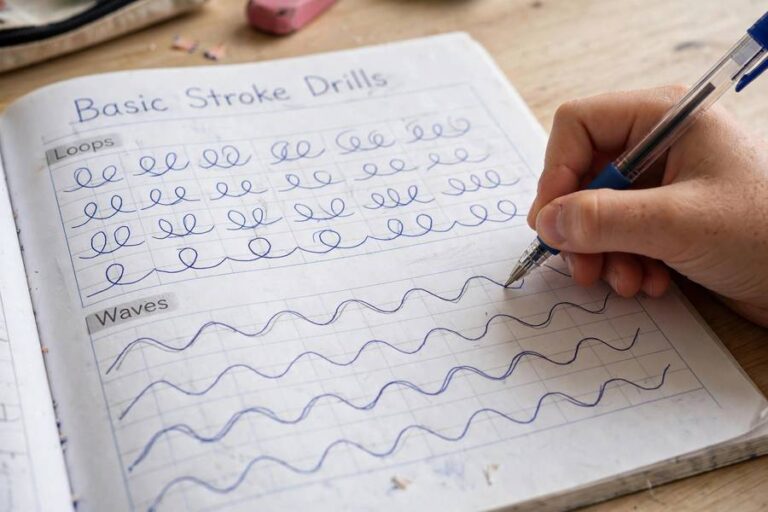
Practice drills on lined or grid paper with consistent spacing guides — the structure trains consistent sizing, which is half of 'good handwriting.' Then transfer to your daily notebook and notice how the trained consistency follows you.
Pen Maintenance Basics
Pens are tools, and tools need basic care — neglect is why good pens 'stop working' and get abandoned. For gel and rollerball pens, the main rule is simple: cap them. Every time. Uncapped gel pens dry at the tip within minutes, and a dried tip writes scratchy until the dried ink clears — which trains exactly the pressing habit you are trying to break.
Store pens horizontally or tip-down, never tip-up for long periods — gravity matters for ink flow, and pens stored tip-up starve the tip. A pen cup on your desk beats a drawer for daily writers: visible, accessible, and stored correctly.
Fountain pens need slightly more: flush with water every few weeks if used with the same ink, and never let ink dry inside for months. But do not let maintenance scare you — a cartridge pen used daily needs almost nothing. The horror stories come from pens abandoned for a year, not pens in daily use.
Rotate, do not hoard. Two or three working pens you love beat a drawer of twenty mediocre ones. When a pen consistently disappoints — skipping, blobbing, uncomfortable — retire it instead of fighting it. Life is too short and handwriting too important to battle bad tools.
Clean your hands' relationship with the pen monthly: check the grip section for ink buildup, wipe it clean, and notice whether your grip has drifted. Small maintenance, like small practice, compounds — the writers with the nicest hands are usually the ones with the best-kept pens.
Travel with care: pens leak in bags due to pressure and heat. A simple pen case prevents the ruined-shirt disaster, and for flights, keep fountain pens either full or empty — half-full pens are the ones that burp ink at altitude.
One more consideration: pen trials. Before committing to a box of twelve, buy two or three single pens of different types and use each for a full week of real writing. A week's daily use reveals comfort and reliability issues that a store scribble never shows.
Keep a 'pen log' for a month if you are serious: which pen you used, how your hand felt, how the writing looked. Patterns emerge quickly — and the data ends the endless 'which pen should I buy?' deliberation with evidence instead of opinions.
Remember the hierarchy: consistent practice matters more than the pen, but the right pen removes friction from practice. Get the pen sorted in a week, then forget about pens for a year and focus on the writing. Gear obsession is procrastination in disguise.
Test pens on your actual paper before judging them. A pen that feathers on cheap copy paper might sing on decent notebook paper — and since you control the paper, judge the combination you will actually use, not the worst case.
Give every new pen a full week before deciding. First impressions favor novelty; week-long use reveals comfort, reliability, and whether the ink keeps up with your speed. Pens are relationships, not first dates.
Once you find your pen, buy several — discontinuation is real, and finding that your perfect pen is gone mid-improvement is genuinely disruptive. A small stockpile is cheap insurance for your habit.
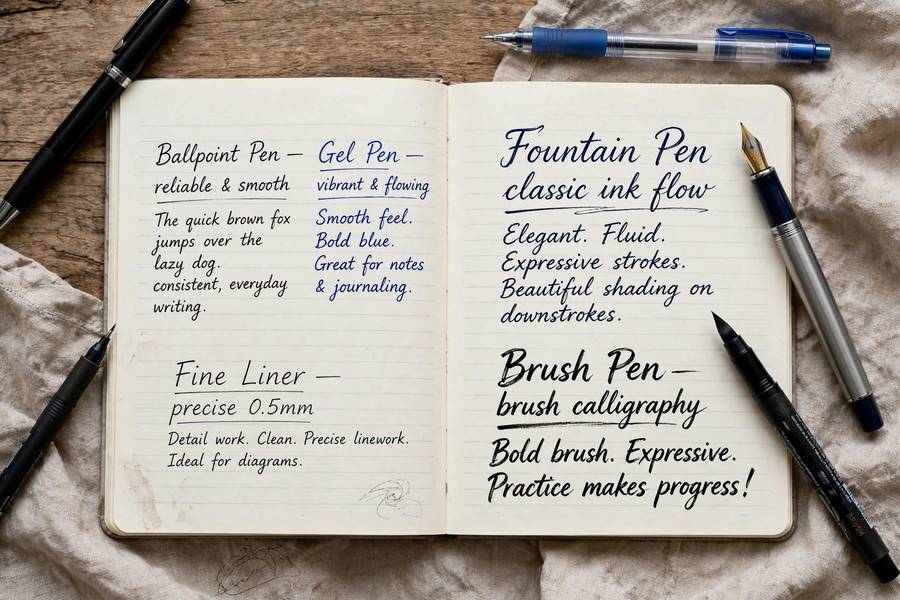
Fountain pens teach the relaxed, light-pressure grip that good writing requires; smooth gel pens (0.5-0.7mm) are the practical low-maintenance alternative. Both beat scratchy ballpoints that force tense gripping.
Not directly — a mid-range smooth pen helps as much as a luxury one. What matters is low required pressure, smooth ink flow, and comfortable grip, all available at modest prices.
Yes, with a smooth medium nib and cartridge filling to start — they enforce the light touch that improves writing. Use decent paper to avoid feathering frustration.
0.5mm to 0.7mm for most people — forgiving enough for developing control while precise enough to reward it. Ultra-fine tips punish small wobbles and slow improvement.
Significantly — rough thin paper creates drag and feathering that fight smooth letterforms. Decent smooth paper lets any good pen perform and makes practice more pleasant, which means more practice.
Two or three you love: a daily writer, a backup, and optionally a practice pen. Beyond that you are collecting, not improving — and the collection becomes its own distraction.