Handwriting Practice Sheets for Adults: Free Styles That Work

Practice sheets are the most underrated handwriting tool for adults: free, targeted, and endlessly reusable. But most adults print random alphabet sheets, trace them once, and wonder why nothing changed. Sheets work when they match your specific weakness and when you use them with the right method — slow, deliberate, and repeated.
This guide covers where to find quality free sheets, which types serve which goals, and the practice method that turns printed pages into genuinely better handwriting.
The sheets are free; the method is what you are really getting here. Used correctly, printed pages outperform expensive courses — used incorrectly, they are just paper.
In this guide:
- The Sheet Types That Matter
- Where to Find Quality Free Sheets
- The Method: How to Use Sheets
- Which Style Should Adults Practice
- A Sustainable Routine
- DIY Sheets: Making Your Own With a Printer
The Sheet Types That Matter
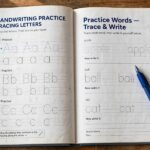
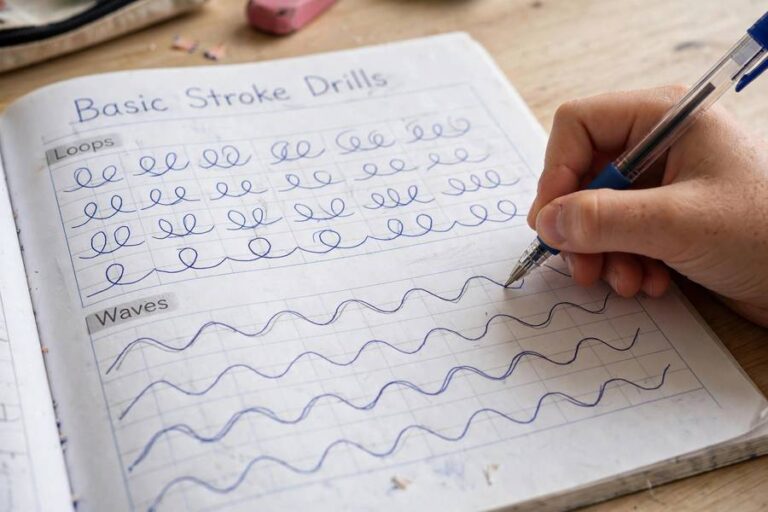
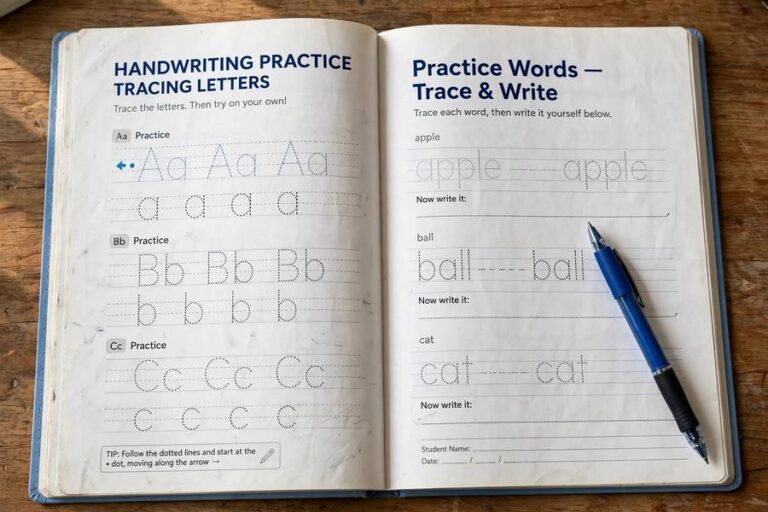
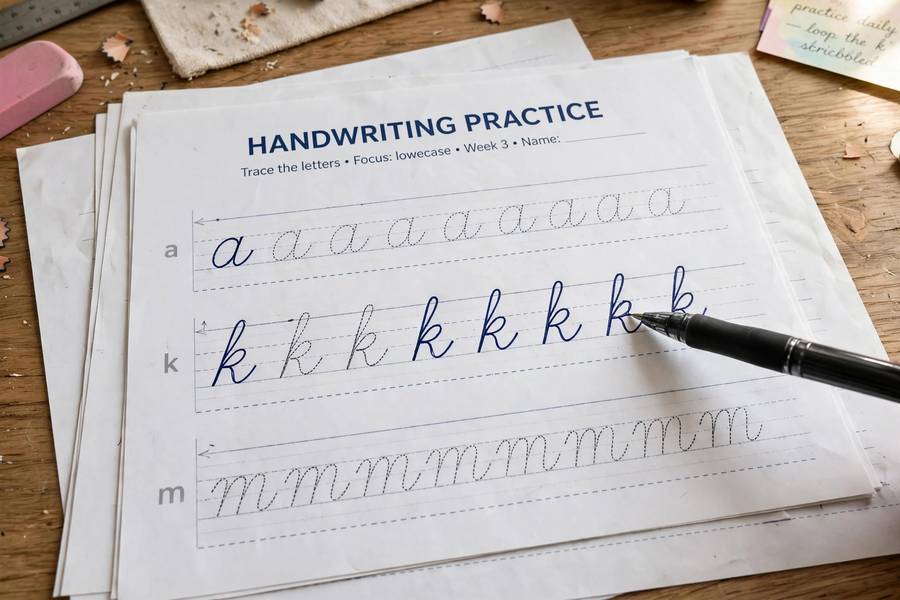
Guided alphabet sheets with stroke arrows teach correct formation — essential if you are rebuilding letterforms from scratch. Look for sheets that show stroke order and direction, not just outlines; tracing wrong strokes grooves bad habits deeper.
Sentence and paragraph copy sheets bridge the gap between letters and real writing. Isolated alphabets never teach spacing, rhythm, or transitions — paragraph sheets do. The best practice sets progress from words to sentences to paragraphs.
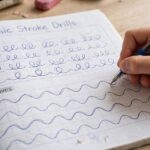
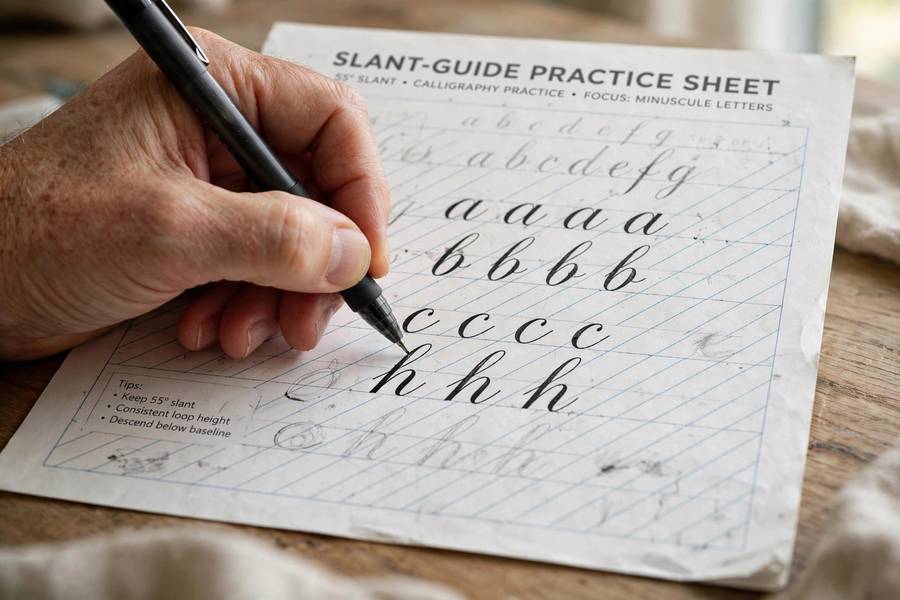
Specialty sheets target specific weaknesses: spacing grids for crowded writing, slant guides for inconsistent lean, x-height drills for sizing problems. Diagnose first (write a paragraph, circle your three worst habits), then print sheets for those habits specifically. Generic practice gives generic results.
Where to Find Quality Free Sheets
Calligraphy and handwriting communities offer excellent free printables — look for sheets from established lettering educators rather than random worksheet sites, where quality varies wildly. Printable guideline generators let you create custom lined, dotted, or grid sheets at your exact preferred sizing.
Educational resource sites often have adult-appropriate practice sets without childish themes — search specifically for adult or Spencerian-style sheets. Library websites sometimes host curated collections worth bookmarking.
Make your own with a guideline generator: set your x-height, slant angle, and spacing, then print. Custom sheets matched to your hand size and style beat generic ones, and generating them takes two minutes. This is the insider move most improvers never discover.
The Method: How to Use Sheets
Trace slowly first — half your normal speed, focusing on stroke order and consistent forms. Tracing is not cheating; it is motor programming. Two slow traces beat ten fast sloppy ones for building the right neural pattern.
Then cover and copy: fold the exemplar under and write the same content freehand beside it. The cover-and-copy step is where learning happens — tracing without it builds dependence. Alternate: trace a line, cover, copy a line.
Finish each session with free writing: a journal paragraph or copied text using the day's focus. Sheets build components; free writing assembles them. Sessions that end with application transfer far better than drill-only sessions.
Which Style Should Adults Practice
Improved print is the fastest win: keep your natural style but fix sizing, spacing, and slant consistency. Most adults do not need a new style — they need their current style disciplined. Print practice sheets with guides deliver this in weeks.
Italic hand offers the elegance upgrade: slanted, efficient, and learnable from dedicated practice sheets in a month of short sessions. If your goal is genuinely beautiful everyday writing, italic sheets are the path.
Spencerian or copperplate is calligraphy, not daily writing — gorgeous, but the ornate forms do not transfer to fast notes. Practice these for pleasure and art; practice italic or improved print for your actual life. how to study for final exams
A Sustainable Routine
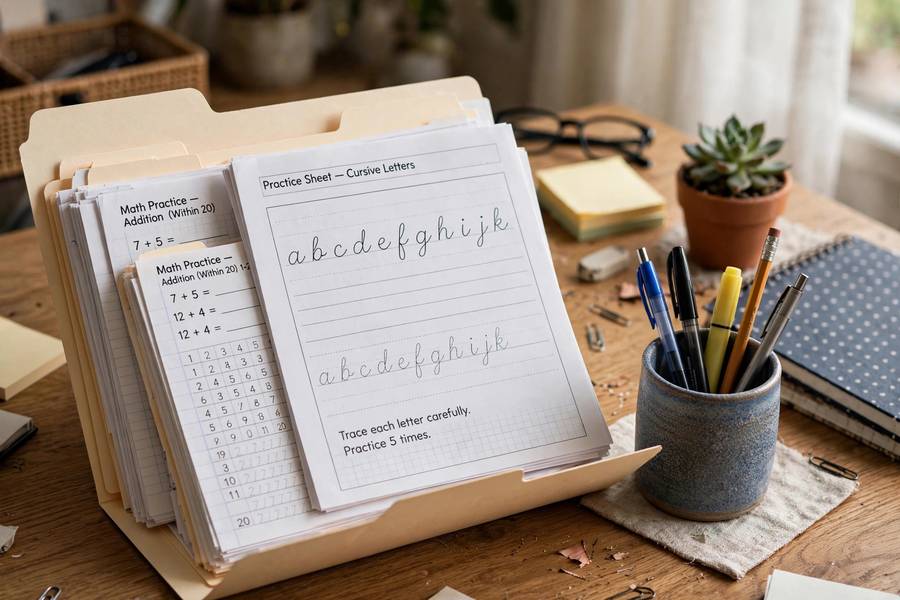
Ten minutes daily with one sheet type beats weekend sheet marathons. Keep printed sheets in a folder by your usual sitting spot — friction kills practice, so remove every barrier between you and starting. what active recall is
Rotate focus weekly: week one sizing, week two spacing, week three slant, week four review. Monthly, write the same test paragraph on blank paper and compare to last month — the comparison is your motivation and your diagnostic. the best note-taking apps overall
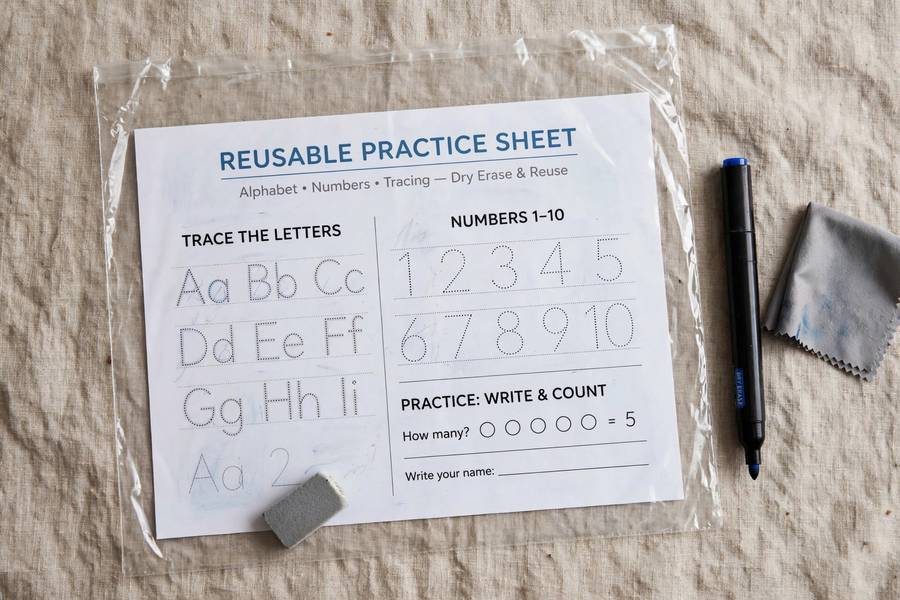
Reuse sheets by slipping them into a plastic sleeve and practicing with a dry-erase marker — unlimited repetitions, zero printing. Or simply reprint; the cost is trivial compared to the skill. The best sheet is the one you actually use daily.
DIY Sheets: Making Your Own With a Printer
Store-bought sheets are generic; your printer makes perfect ones. Free guideline generators online let you set exact x-height, line spacing, slant angle, and even custom headlines — print sheets matched to your hand size and your current weakness. Two minutes of setup, unlimited perfect sheets.
Design sheets for your specific drill, not generic alphabets. Working on spacing? Print widely-spaced guidelines with word-gap markers. Slant? Print your target angle as background guides. Sizing? Print x-height boxes. The sheet should make the right form easy and the wrong form obvious — that is what guides are for.
Print exemplar alphabets in fonts you admire: find a handwriting-style font close to your goal, print it large with stroke-order arrows you add by hand, and trace it. This builds custom practice material for any style — italic, Spencerian-inspired, your own hybrid — without hunting for the perfect commercial book.
Reuse everything: slip printed sheets into plastic sleeves and practice with dry-erase markers for infinite repetitions, or print on the back of scrap paper without guilt. The goal is volume of correct repetitions, and removing the 'wasting paper' guilt increases volume.
Build a personal workbook over time: print this week's focus sheets, practice them, date them, file them. In three months you will hold a physical record of your progress — dated proof that the work worked. That binder becomes powerfully motivating on days practice feels pointless.
Share your templates: if you design a sheet that works, share it with the handwriting communities online. The adult handwriting world runs on shared resources, and contributing puts you in contact with people whose feedback accelerates your own progress. improve your handwriting with proven techniques
One more sheet type to try: 'copy the masters' sheets — print a paragraph in a handwriting style you admire and copy it directly below, line by line. Imitation is the oldest learning method, and copying excellent models pulls your hand toward them faster than abstract drills.
Laminate your five most-used sheets and keep them with a dry-erase marker in your bag. Dead time — waiting rooms, commutes, queues — becomes practice time, and the novelty of the marker keeps it feeling like play rather than homework.
Date every sheet you complete and file them monthly. In six months, flip through the stack: the progression from shaky to confident is the most motivating thing in handwriting improvement, and it is also precise diagnostic data for what to work on next.
Try themed practice months: January italic, February spacing, March slant. Themes keep practice fresh across the year and ensure balanced development — without them, everyone over-practices strengths and neglects weaknesses.
Practice signatures separately — your signature is a distinct motor program from your writing, and it deserves its own sheets. Design it deliberately: legible enough to be professional, distinctive enough to be yours, practiced until automatic.
Consider teaching what you learn: show a friend your sheet method. Explaining the trace-cover-copy routine forces you to understand it deeply, and their progress becomes extra motivation for yours. The handwriting community grows one shared sheet at a time.
Set a 90-day goal with a defined finish line: 'write a full page I am proud to photograph.' Vague goals produce vague effort; a concrete target with a date focuses every session. Ninety days of daily sheets will get you there — the only variable is whether you start today.
On difficult days, lower the bar to a single sheet — one page, five minutes, done. The habit survives bad days only if bad days have an achievable minimum. Perfectionists quit; consistent minimalists transform their handwriting.
Handwriting and calligraphy communities offer quality free printables; guideline generators let you create custom lined, grid, or slant sheets at your exact sizing. Look for adult-appropriate sets from established educators.
Yes, when matched to your specific weakness and used with the trace-cover-copy method slowly and daily. Random sheets traced once do little; targeted sheets practiced deliberately transform writing.
Guided sheets for your specific flaw (spacing grids, slant guides, x-height drills), progressing from letters to words to paragraphs. Custom-generated sheets matched to your hand beat generic ones.
Ten focused minutes daily. Slip sheets into a plastic sleeve with a dry-erase marker for unlimited reuse, and rotate the focus weekly across sizing, spacing, and slant.
Improved print or italic for everyday writing — fastest results and practical. Save ornate scripts like copperplate for artistic practice; they do not transfer to daily speed writing.
Date and file every sheet, review the stack monthly, and rotate your focus weekly. Visible progress is the motivation — the filing system makes it visible.